
 English
  Polski
  Deutsch
  Nederlands
  Svenska
  Norsk
Norsk  Dansk
Dansk  Français
  Italiano
  Español
  Português
  Slovenčina
  Suomi
Suomi  Gaeilge
 A Forgotten Plum Like Fruit Is Returning to Gardens and Surprises with Its Practicality
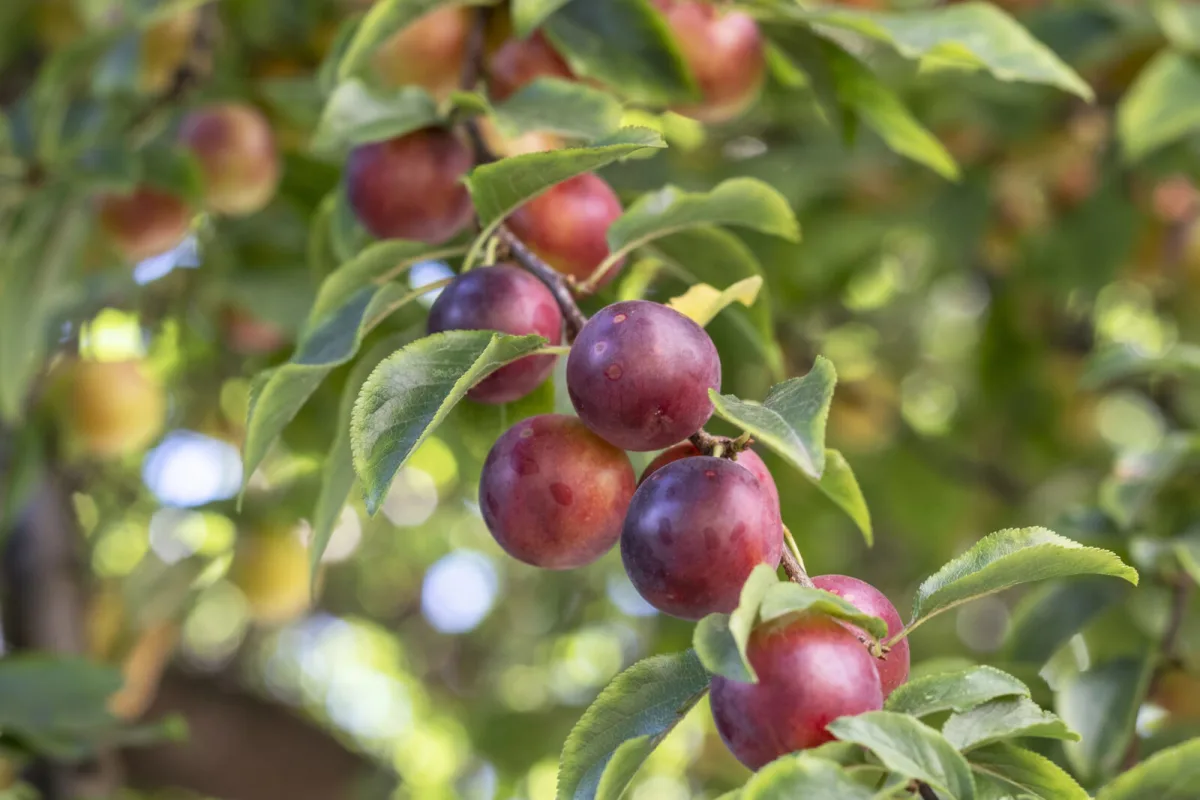
Myrobalan, in Czech often referred to as the cherry plum, is a woody plant that feels at home here both in gardens and out in the wider landscape. While classic plums are mainly associated with large fruit and spirits, myrobalan was long seen as more of a feral relative. Now, however, it is coming back into focus because it offers a combination of traits that make surprising sense at a time of weather swings and increasing disease pressure.
There are many types and forms of plums, differing in growth habit, crown shape, foliage and the colour and flavour of the fruit. Pomologists divide them into several groups based on origin and characteristics. Alongside commonly grown plums, we also have species that have adapted well to the local climate and in some areas thrive better than more demanding cultivars.
Where myrobalan matters most in fruit growing
In practice, plums are usually not propagated from seed but vegetatively, most often by grafting or budding. A key role is played by the rootstock, the root portion of the tree that influences vigour, anchorage and the ability to manage water. And this is exactly where myrobalan excels.
It grows as a tree roughly 3 to 9 metres tall and can develop a notably robust root system. Compared with some other plums, its roots tend to be both wider and deeper, which helps in drier periods and in lighter soils. In Slovakia, types have also been bred for areas with a shorter growing season and for warmer, drier sites. A major argument is its high resistance to plum pox virus (sharka), one of the most troublesome viral diseases for plums.
Not just a rootstock, but an ornamental tree with edible fruit
Today, myrobalan is not viewed only as a technical rootstock for plums. In many countries its fruit is commonly eaten fresh or processed. The advantage is that selected dessert varieties are not a compromise between ornament and usefulness. In spring the tree can impress with blossom, through the season with its foliage, and by late summer with fruit that has its own character and broad culinary uses.
At the breeding station in Klčov, dessert varieties known as Klaret, Klasik and Klar were developed. Although intended for eating, they also show good graft compatibility, meaning they knit reliably with the scion, which is practical for growers who want to use myrobalan in the fruit garden in more than one way.
Klaret as a hardy variety for cooler areas
The variety Klaret was created by selecting seedlings from crosses involving a purple-leaved myrobalan. Emphasis was placed on health and resilience, so it is described as having high tolerance to sharka, aphids and brown rot of the fruit. It is also frost-hardy, suitable even for cooler, more northerly regions.
The tree grows upright and forms a narrower pyramidal crown. The leaves are medium-sized and can shift from dark green tones to brownish-red-green. The flowers are small and self-fertile. The fruit is usually medium-sized, round, with skin in a matte violet-black shade. The flesh is firm, deep crimson and tastes sweet-tart, and it separates from the stone only partially. In warmer lowlands it ripens around mid-July, while at higher elevations it can be as late as the end of August. The fruit does not bruise easily in transport, does not crack even after heavy rain, and holds well on the tree for a longer period at good eating ripeness. It is suitable for compotes, juices, soft drinks and jams, and for a steady crop it needs maintenance pruning to keep the crown well lit.
Klasik as a reliable self-fertile myrobalan
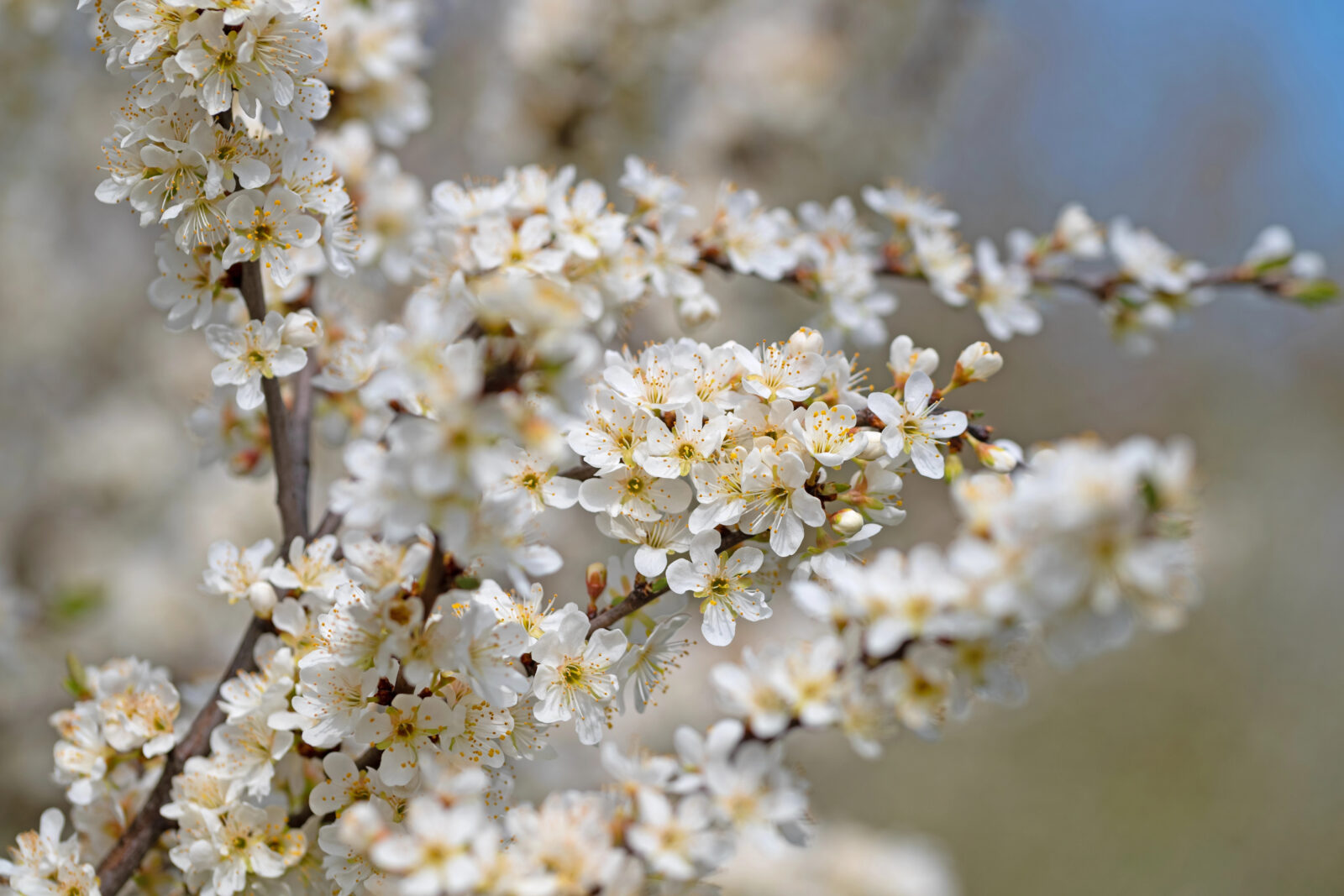
Klasik originated from open pollination of myrobalans in eastern Slovakia. It tends to grow more vigorously, often more like a large shrub with a rounded to flattened-rounded, sometimes weeping crown and finer framework branches. It usually flowers in the second ten days of May; the flowers are white, with a strongly wavy edge to the petals. An important practical trait is self-fertility, so it does not need other varieties nearby to set fruit.
The fruit is medium-sized, round, and uniform in both size and shape. The skin is glossy, yellow-orange, with conspicuous white lenticels. The flesh is golden orange, firmer and very juicy, with a sweet-tart flavour. In warmer areas it ripens at the turn of July and August; at higher elevations it is more from late August to mid-September. It is suitable for eating fresh as well as for compotes. Its resistance to sharka and brown rot is also valued, as is its ability to cope better with late spring frosts.
Klar as the earliest choice with a distinctly sweet flavour
Klar is described as the earliest dessert myrobalan, bred by selecting seedlings from open pollination. The tree forms a smaller, compact crown, making it suitable for gardens where space needs to be kept in check. The fruit is regularly round, with brownish-red skin, often with pronounced lenticels and small russet speckles. The flesh is juicy, golden yellow and tender. It separates from the stone better only when overripe.
It ripens shortly after cherries, usually from the third ten days of July to the first ten days of August. The fruit is suitable for eating fresh and for home and industrial jam production, and a distinctly sweet taste is typical.
Why myrobalan is returning to plantings beyond gardens
Myrobalans can also be grown under low-input, environmentally minded management because they are generally not overly demanding. Thanks to the combination of resilience, adaptability and an ornamental look, they work not only as a fruit tree but also as a specimen, or as part of tree avenues and fruit strips on agricultural land. They are also suitable near homesteads and out in the landscape, where they can fulfil both practical and aesthetic roles at the same time.
Source: Gardenia, Zahrádkár, BBC Gardener’s World, Pestrazahrada.cz

A lover of nature, gardens, and everything that moves, blooms, or grows. He literally grows everything, from herbs to rare species, and he enjoys caring for animals just as much. In his work, he connects modern technology with tried-and-tested grandmotherly methods and is happy when both paths lead to the same goal.
Related articles
The Christmas Amaryllis That Can Bloom for Years but Most People Throw It Away After Flowering
Hippeastrum is a spectacular winter-blooming bulb that, with the right care, will flower again year after year. Learn how to plant it correctly, look after it after flowering, and bring it into dormancy so it reliably reblooms.
How to Grow Winter Garlic for a Much Bigger Harvest
Autumn planting is the key to strong, healthy winter garlic, but the details make all the difference. With the right timing, bed choice, seed-clove treatment and a simple bicarbonate trick, you can noticeably boost yield.
A tree or shrub planted properly in autumn can outpace spring stock and improve fruiting
Many fruit trees and soft-fruit shrubs establish better when planted in autumn, because roots keep growing while the top is dormant. Done well, this head start means stronger spring growth, less watering, and a healthier first year.
Comments (0)
Be the first to comment.