
 English
 Polski
 Deutsch
 Nederlands
 Svenska
 Norsk
 Dansk
 Français
 Italiano
 Español
 Português
 Slovenčina
 Suomi
 Gaeilge
Walnut leaves contain a compound gardeners worry about but chicken keepers quietly put it to use
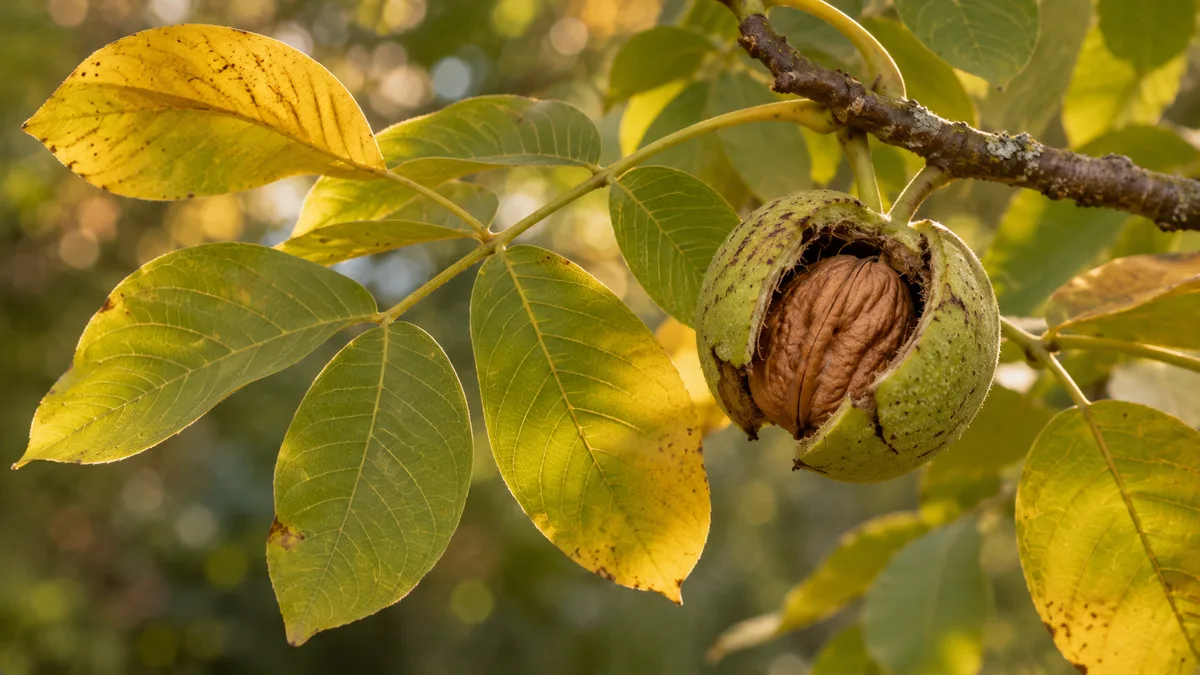
In autumn, few garden topics come up as often as walnut leaves. Many people see them as troublesome waste that’s best removed quickly. The reason is the presence of a compound called juglone, which restricts the growth of certain plants around the tree. In nature, walnuts benefit from this because it reduces competition and helps the tree keep more water and nutrients for itself.
But this trait doesn’t have to be purely a drawback. Even dry fallen leaves retain some of these effects, and used thoughtfully they can become a useful material for the garden and small-scale poultry keeping. The key is knowing where to put them and where they could cause problems.
Excellent bedding for the chicken coop
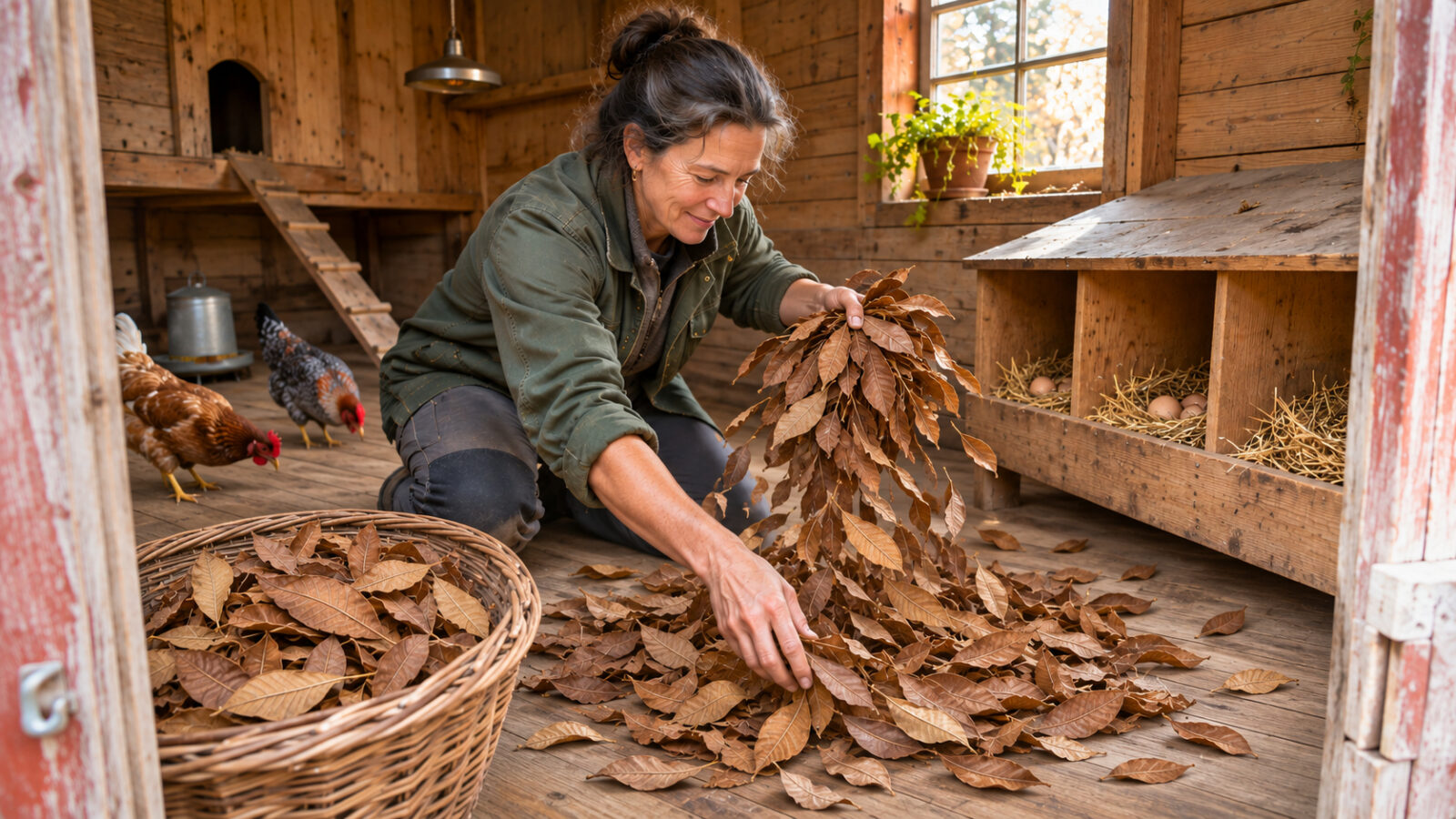
One of the most practical uses for walnut leaves is in the chicken coop. If you keep hens, you can spread them as bedding in a continuous layer about 15 cm thick. Dry leaves absorb moisture well and can serve as an accessible substitute for straw, especially where straw is harder to get or unnecessarily expensive.
Besides absorbency, this bedding has another advantage. Substances in the leaves are unfavourable to some pests and can help reduce their presence in the coop environment. That’s why walnut leaves are useful not only when a problem has already appeared, but also as a preventative measure through autumn and winter.
Dry walnut leaves can be a cheap, readily available and surprisingly effective helper in the chicken coop.
A helper against weeds between beds
The uses don’t end with chickens. Walnut leaves also work very well in a vegetable and productive garden. If you layer them in the paths between beds, they form a protective cover that suppresses weed germination and growth through autumn and winter. In spring, the walkways are noticeably cleaner and the whole area is easier to maintain.
This method is especially suitable where you don’t want to be constantly weeding or hoeing. The leaf layer also protects the soil from turning to mud and helps retain some moisture. As it gradually breaks down, it also improves soil structure in places where you don’t need to grow sensitive plants.
Where the leaves can help and where to be cautious
Not all plants respond to juglone in the same way. Some species are sensitive, and if you mulch unwisely they may grow poorly, weaken, or produce lower yields. Take particular care with tomatoes, potatoes and aubergines. Walnut leaves are not suitable around these crops and, used as mulch, are more likely to do harm than good.
On the other hand, there are shrubs and plants that generally tolerate this kind of use. Around blackcurrants or gooseberries, walnut leaves can function much like ordinary leaf mulch. They help keep moisture in the soil, limit weed growth and, over time, support humus formation. It’s with these more resilient plants that you can make use of the benefits of walnut leaves without much worry.
How to get the most out of them
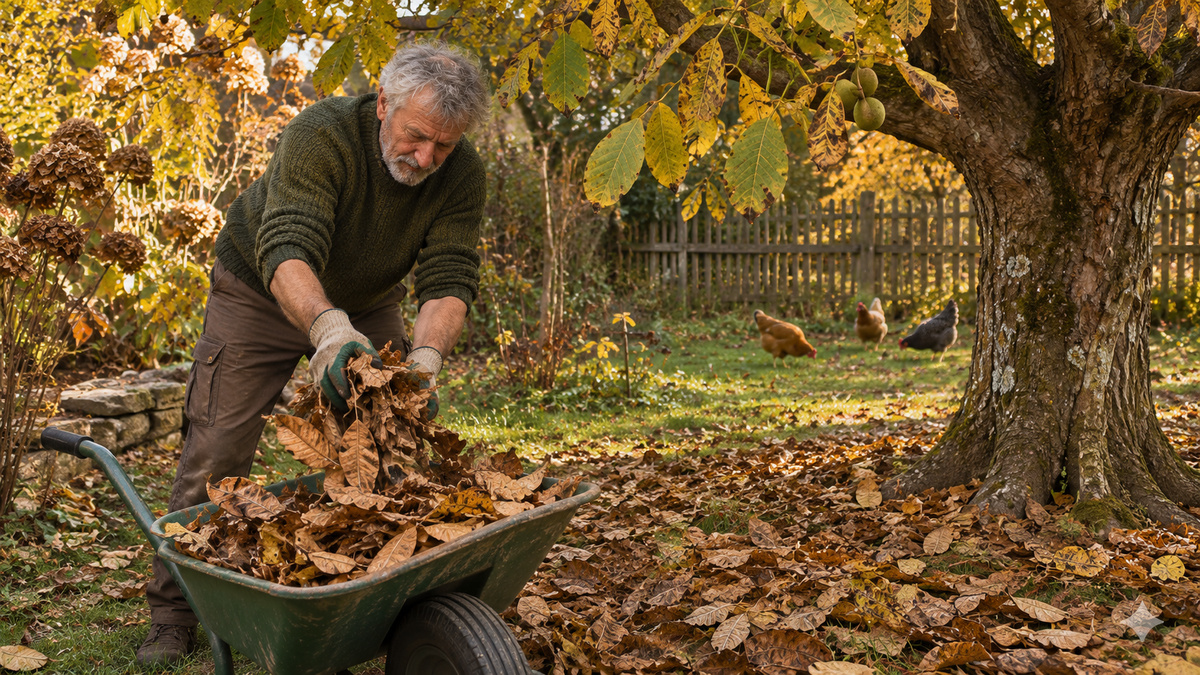
The best approach is to treat walnut leaves with common sense. You don’t need to get rid of them automatically, but it’s also not wise to spread them thoughtlessly all over the garden. Use them where it makes sense, and they can become a valuable resource instead of a nuisance.
In the coop they work as absorbent bedding, in the paths between beds as a natural brake on weeds, and around selected shrubs as useful mulch. Just remember that sensitive crops need a different kind of mulch. Then walnut leaves can become a simple, practical helper with a clear place in the autumn garden.
Source: Přírodní zahrady, Gardeners World, Pestrazahrada.cz

A lover of nature, gardens, and everything that moves, blooms, or grows. He literally grows everything, from herbs to rare species, and he enjoys caring for animals just as much. In his work, he connects modern technology with tried-and-tested grandmotherly methods and is happy when both paths lead to the same goal.
Related articles
Do Not Cut Back Dahlias Before Lifting Them
Let dahlias take their first frost before you lift them, so the tubers can finish ripening. Cutting stems too early can let water into the hollow stalk and quietly damage tubers over winter.
Mushroom foraging doesn’t end in November: four species that keep fruiting in the cold, but one needs extra caution
A sharp drop in temperature doesn’t have to mean the end of mushroom season. With the right locations and a bit of care, you can still find several worthwhile edible species in November.
Pumpkin Purée Is an Autumn Kitchen Treasure You Can Make in an Hour and Use in Sweet and Savoury Dishes
Pumpkin purée is a simple, versatile staple that works in everything from cosy soups and sauces to cakes and seasonal coffees. Make a batch in about an hour and you’ll have an autumn shortcut ready for countless recipes.
Comments (0)
Be the first to comment.