
 English
  Polski
  Deutsch
  Nederlands
  Svenska
  Norsk
Norsk  Dansk
Dansk  Français
  Italiano
  Español
  Português
  Slovenčina
  Suomi
Suomi  Gaeilge
 Why the Tree That Feeds a Family for Generations Is Disappearing from Czech Gardens
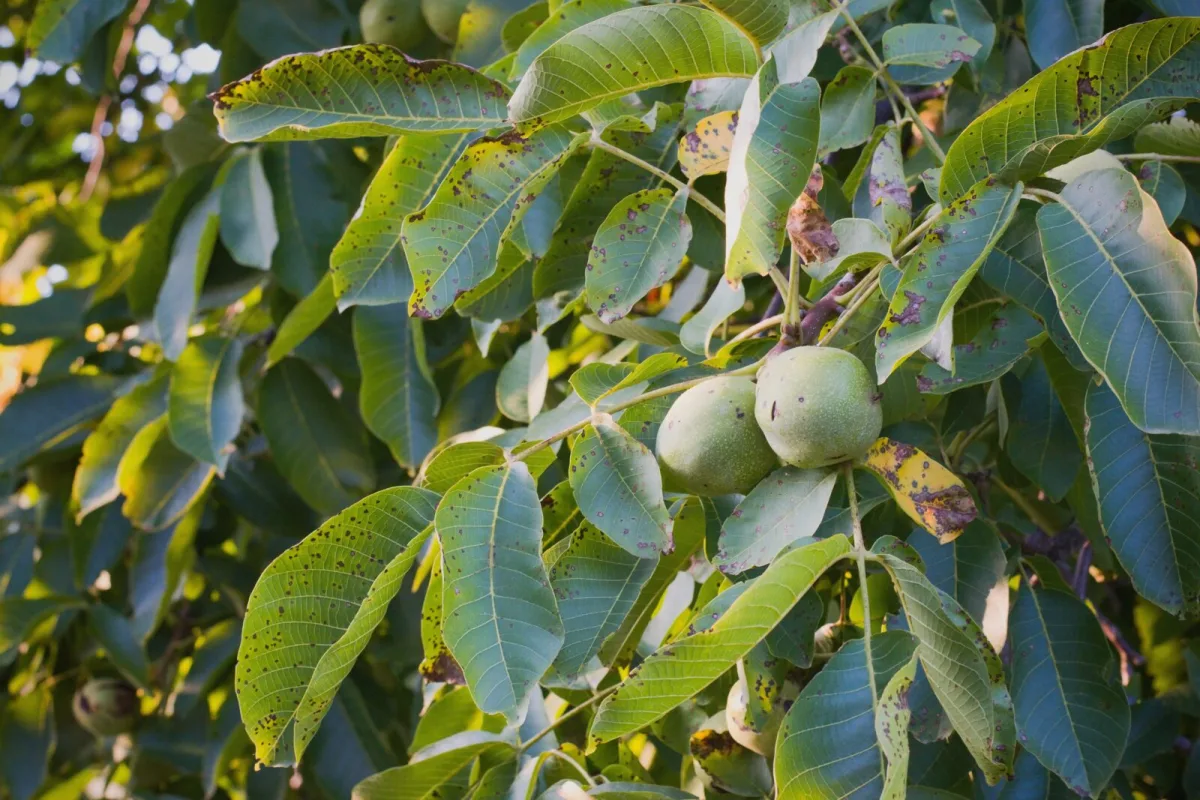
The English walnut is one of those trees that, for centuries, was a familiar feature of larger gardens and farmyards. People prized it above all for its tasty kernels rich in fats, protein and essential minerals. In the past it was a dependable source of nourishing fruit; today it also appeals for its looks, longevity and the many ways it can be used around the home.
Walnut has been present in our region for a very long time, but its deliberate cultivation spread more widely particularly in the Middle Ages. Seed-grown trees can reach truly impressive proportions, which is why they suit spacious gardens best. Alongside them, there are now also selected cultivars with a smaller habit that can be planted where space is more limited.
Why walnuts were always so highly valued
The value of a walnut tree isn’t just in the nuts themselves. The edible kernels are popular in the kitchen, while the leaves and green husks contain dyes that were once used, for example, to colour textiles. Extracts from various parts of the tree are also used in cosmetics. So walnut wasn’t only a fruit tree, but a broadly useful, multi-purpose tree.
It was often planted by barns, farm buildings or near places where manure was stored. In the past people believed it helped to mute unpleasant odours. Today we know that the leaves, bark and green husks contain compounds with antibacterial effects, so this traditional observation had a sound basis.
Where to plant a walnut and when is the best time
If you want the tree to thrive, choose a sunny position with deeper, humus-rich soil. Walnut will cope with stonier ground too, but good drainage is essential. Waterlogged soil doesn’t suit it. Although it’s a hardy tree, in cooler areas a sheltered spot is better, because late spring frosts can damage opening flowers and young shoots.
Young bare-root trees are most often planted in late autumn or early spring. Container-grown plants can be planted through much of the season. With young trees it’s important to pay attention to training the crown so it is strong, balanced and evenly structured.
Pruning belongs in summer
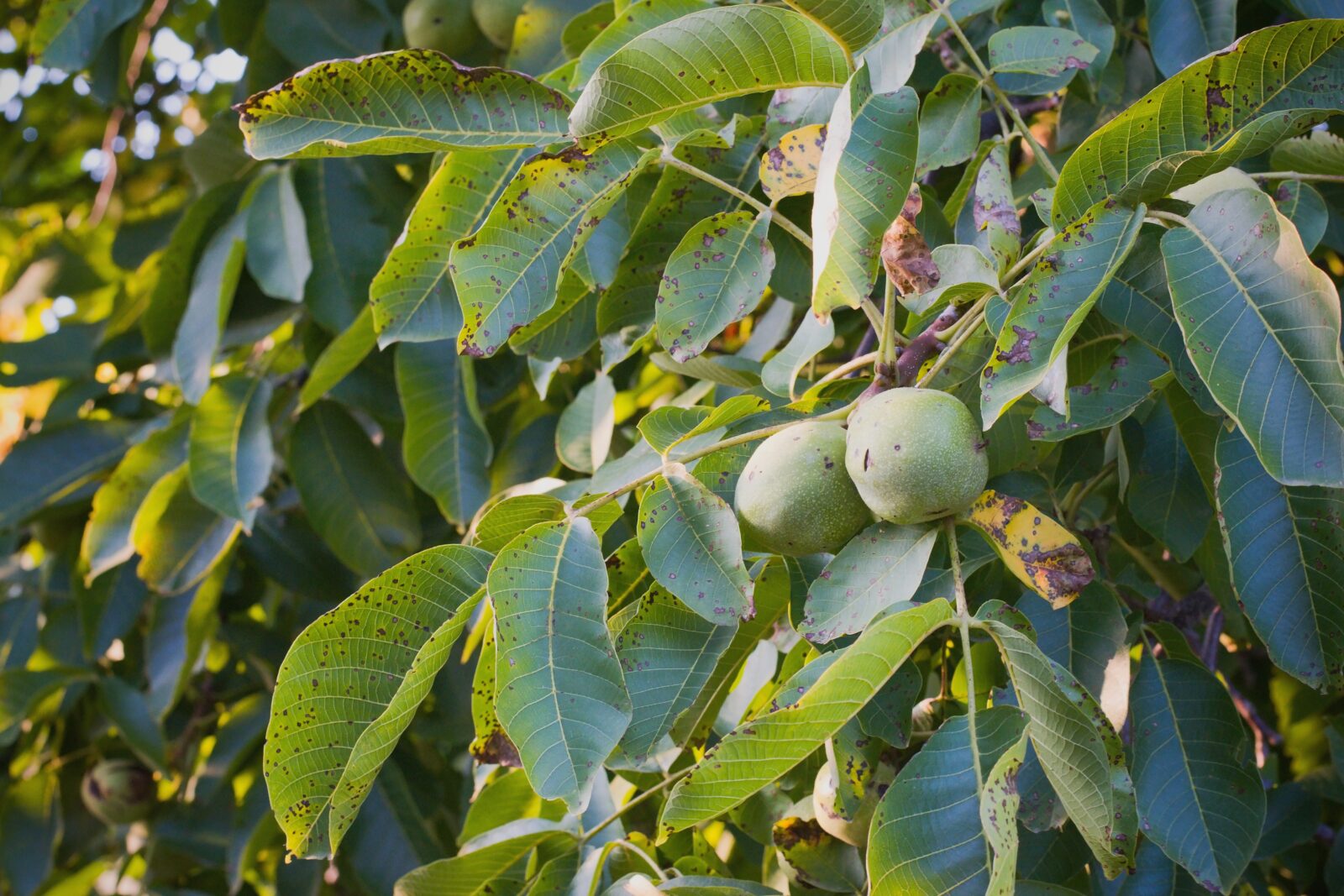
Unlike many other fruit trees, walnut is pruned during active growth, usually from mid-June to August. In this period the tree copes better with intervention and pruning wounds heal more readily. The main focus is removing weak shoots and poorly placed branches that could later lead to the crown splitting.
Particularly risky is so-called pressure branching, where branches form a narrow, V-shaped fork. Exactly in such a point there is a danger that, under a heavy load of snow, wind or a large crop, the crown will tear apart.
Which varieties to choose for a large or small garden
Most commonly grown are varieties with light brown kernels. They differ mainly in shell hardness. So-called paper-shell types crack very easily, but their drawback is shorter storage life. At the other end are varieties with very hard shells that protect the kernel for a long time. A sensible compromise is semi-paper-shell types, which open well and still keep reasonably in storage.
Garden centres also offer attractive varieties with red-tinted kernel skins. These trees tend to be less vigorous and suit medium-sized gardens too. For smaller plots, dwarf or weak-growing cultivars are also interesting. Some grow to only a few metres, and there are even types that can be grown in a large container on a terrace.
When choosing a variety, it’s worth thinking not only about flavour and nut size, but also the tree’s eventual height and the spread of the crown.
Nutritional value and health benefits
Walnuts are an exceptionally valuable food. They contain B vitamins as well as vitamins E, A and C. Among the minerals you’ll find particularly magnesium, potassium, calcium, iron, zinc, selenium and phosphorus. In 100 g of kernels there are roughly 15 g of protein, making them a food with a solid place in the diet.
Regular but moderate consumption supports heart and vascular health, benefits the brain and contributes to good immunity. Antioxidants also play an important role. Still, it’s worth remembering that nuts are energy-dense and, in sensitive individuals, can trigger an allergic reaction.
When to harvest and how to dry the nuts properly
The best harvesting time comes in the second half of September and during October. Ideally, collect the nuts only when they fall from the tree on their own. At this point the green husk is usually cracked or already breaking down. If it still clings tightly, it needs to be removed by hand.
After harvest the nuts must dry thoroughly. It’s best to spread them out in crates in a dry, airy place. Only once they are fully dried can they be stored long term. In the shell, with correct storage, they keep for a very long time, often for several years. Shelled kernels have a shorter shelf life, but in a well-sealed container or in the freezer they will also retain quality for quite a while.
A wide range of uses in the kitchen
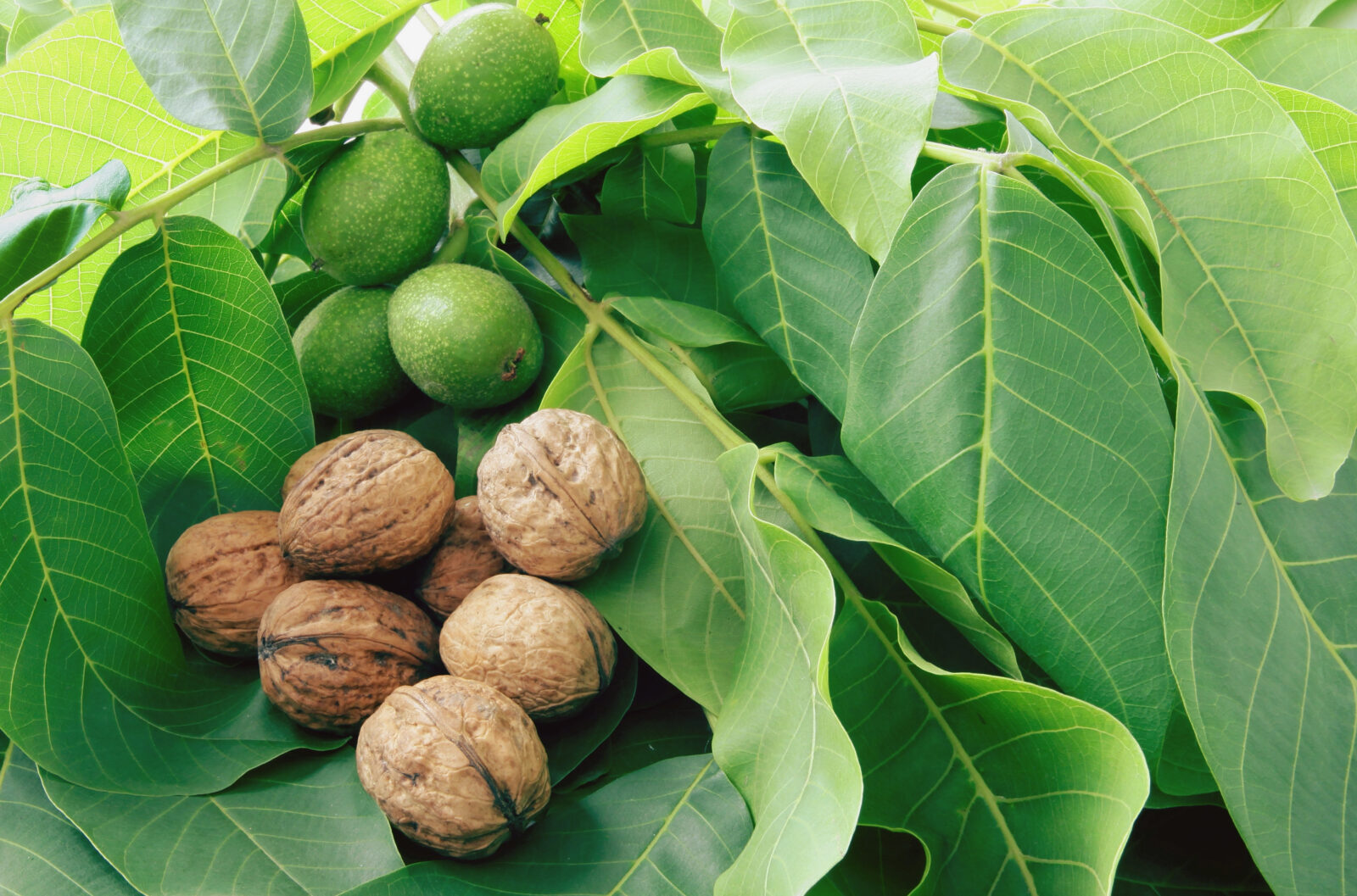
Walnuts are among the most versatile ingredients. They work in both cold and hot dishes. They’re excellent in vegetable and fruit salads, suit spreads, pair well with cheeses and add depth to pasta dishes. In hot food their flavour stands out even more, whether in soups, baked vegetables, meat dishes or all kinds of fillings.
Traditionally they’re used in cakes, strudels, gingerbread and other bakes. In recent years they’ve become a popular part of breakfast mixes and homemade granola, where they can be raw or lightly caramelised. Less mature nuts also have their place; these are picked in June and used to make liqueurs, spirits or sweet preserves.
A tree that combines beauty and usefulness
The English walnut is a tree with an exceptionally rich tradition. It provides shade, valuable nuts, ornamental appeal and a range of practical uses. With the right choice of site and variety it can thrive for decades. Whether you’re looking for a majestic tree for a large garden or a smaller variety for a more modest space, walnut remains one of the most valuable trees you can plant.
Source: The Spruce, Záhrada, RHS, Pestrazahrada.cz

A lover of nature, gardens, and everything that moves, blooms, or grows. He literally grows everything, from herbs to rare species, and he enjoys caring for animals just as much. In his work, he connects modern technology with tried-and-tested grandmotherly methods and is happy when both paths lead to the same goal.
Related articles

Fighting moles tempts you into a quick fix that can put you on the wrong side of the law
Fresh molehills can ruin a lawn, but the common mole is a protected species and lethal control can be illegal. Learn how to tell a mole from a vole and which lawful, effective methods actually encourage it to move on.

How to Get Rid of Mice and Rats in the House, Loft and Garden Effectively
Mice and rats don’t leave quietly—scratching sounds, droppings and gnaw marks are clear warnings. A lasting solution comes down to three steps: block entry points, remove food sources, then use traps or professional control.
Two Mistakes When Harvesting Onions Can Cut Your Supply by Months
With good growing and the right handling, onions can turn into a near year-round pantry staple. These simple harvest and curing steps determine whether they keep for weeks or for months.
Comments (0)
Be the first to comment.