
 English
  Polski
  Deutsch
  Nederlands
  Svenska
  Norsk
Norsk  Dansk
Dansk  Français
  Italiano
  Español
  Português
  Slovenčina
  Suomi
Suomi  Gaeilge
 First spots on tomatoes may signal late blight and threaten the entire crop
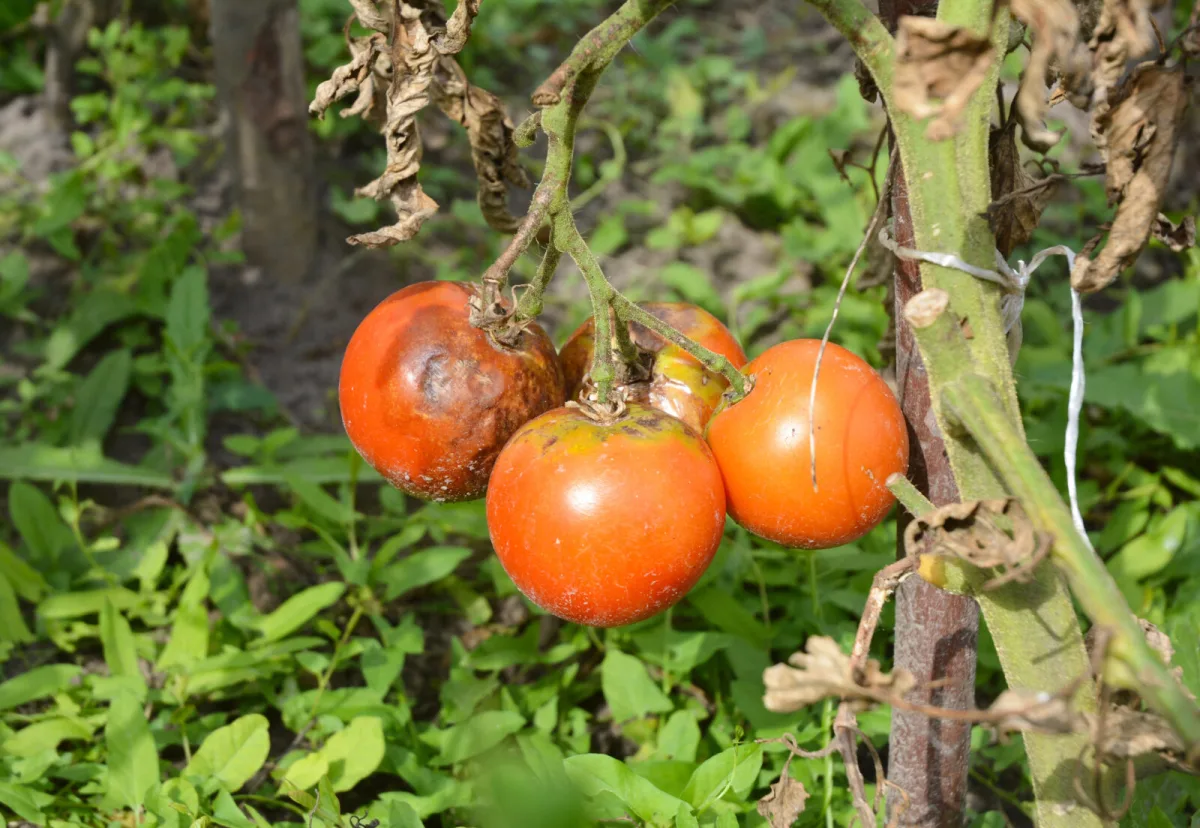
Late blight is one of the most serious diseases of both potatoes and tomatoes. It is caused by the pathogen Phytophthora infestans, which, in favourable weather, spreads literally at lightning speed and can ruin a large part of the crop in a short time. That doesn’t mean everything is lost at the first signs. If you react early and limit the conditions that favour the disease, you can greatly reduce the damage.
How the disease shows up on potatoes and why it is dangerous
The attack doesn’t affect only leaves and stems, but also the tubers—and that is the biggest risk. Infected tubers deteriorate quickly and often end in wet rot, either in the soil or later in storage. Another problem is that the infection can spread from seed potatoes. The pathogen can survive in infected tubers left in the ground as well as in stored potatoes. After planting, it can then easily move to the above-ground parts of the plant.
On the foliage, yellow-green spots appear first, often on the edges and tips of leaves, typically starting low down on the plant. The spots gradually darken to black, and in damp conditions a grey-white growth is often visible on the underside of the leaves. With heavy infection, the haulm dies back. On tubers, shallow grey-brown sunken patches may appear, and when cut open you can see a rusty-brown discolouration of the flesh around the edge just under the skin.
Where the infection comes from and what weather suits it
The most common entry point is infected seed potatoes, even if they show no obvious symptoms at first glance. Another source is plant debris in the soil. Rapid development is promoted by high humidity, frequent rain and mild temperatures roughly between 12 and 23 °C. Spores are carried by wind and water, often in tiny droplets, so the disease can spread over considerable distances. The risk is not ruled out even by warmer days above 26 °C if dry and damp conditions alternate.
On potatoes, the first symptoms may appear as early as May or in the first half of summer, especially in early varieties. Tomatoes are often hit afterwards, particularly if they are grown near potato beds.
Four practical steps to limit blight on tomatoes
The right site helps enormously. Tomatoes need full sun and good airflow so they dry quickly after morning dew, fog or cool nights. Avoid places that stay shaded for a long time in the morning by trees or buildings.
Crop rotation also matters. Don’t plant tomatoes in the same place repeatedly, and don’t put them where potatoes grew last season. Forgotten tubers can remain in the soil and become a source of infection.
Keep the crop open and airy. Don’t skimp on spacing, tie plants to supports and remove side shoots regularly so leaves dry faster after rain and moisture doesn’t linger inside the canopy.
Water so it doesn’t end up on the leaves. Root-zone watering is best. If you have to water from above, do it in the morning on a day expected to be sunny so the plants can dry out completely as quickly as possible.
What late blight looks like on tomatoes
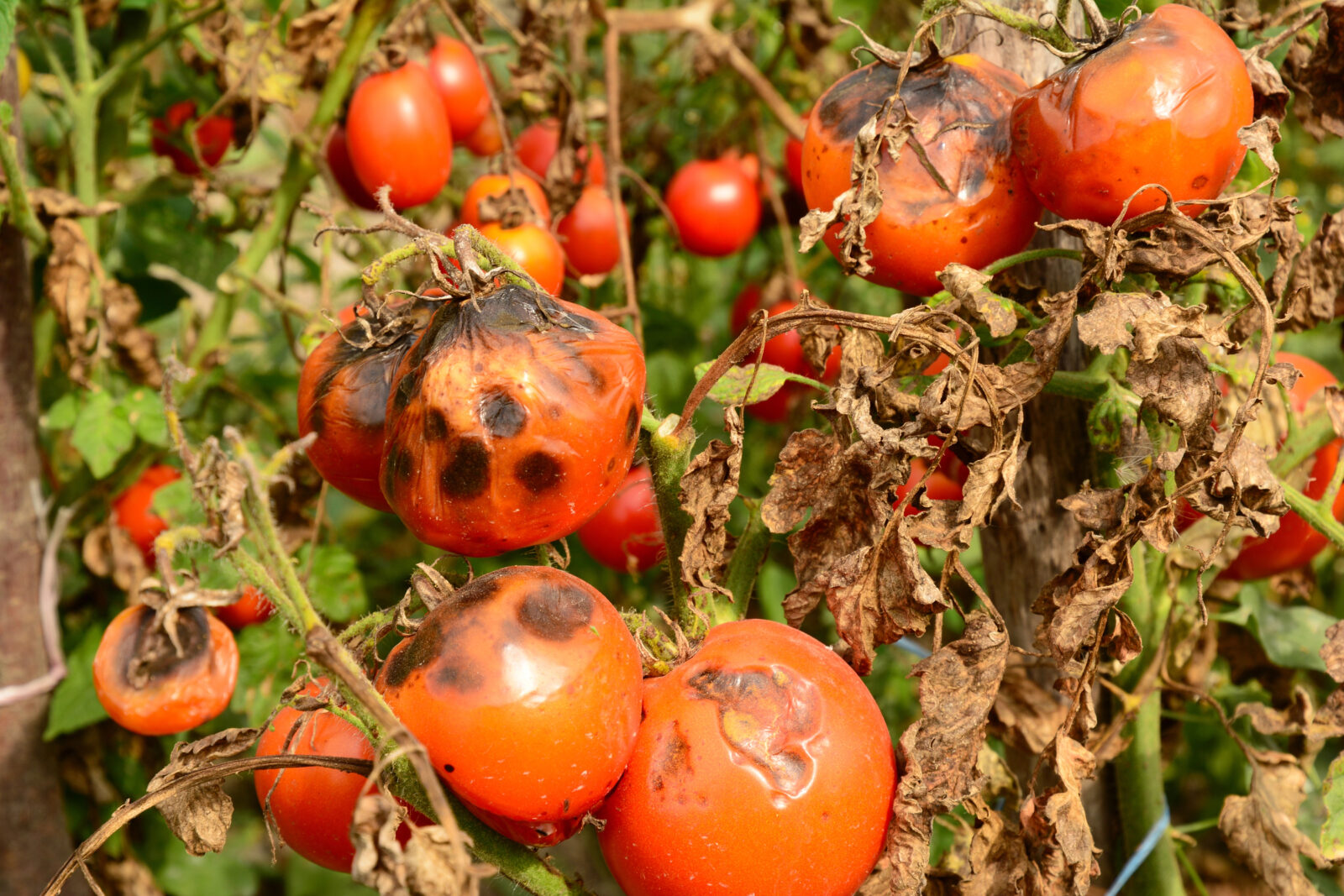
On tomatoes, the disease can damage leaves, stems and fruit. It often starts as grey-green, water-soaked spots that quickly enlarge. In damp conditions, a whitish growth appears on the underside of the leaves. Leaves then wilt, dry out, or in prolonged wet weather may even rot.
On stems, sharply defined brown lesions form. Fruit is often attacked near the calyx, where grey-green to brown patches develop and the surface may look wrinkled. The flesh beneath the affected area hardens, fruit fails to ripen, and with severe infection the plant loses its leaf area for photosynthesis—so it stops growing and stops setting a quality crop.
Prevention is the most effective defence
The basis of protection is preventing problems before they really take off. With potatoes, it’s crucial to use healthy, ideally certified seed potatoes and follow crop rotation. With tomatoes, it’s sensible not to place them where potatoes grew the previous year. Good growing practice also helps: adequate spacing, a sunny, airy spot without permanent shade, and watering directed at the roots.
With potatoes, higher earthing up also makes sense, as it makes it harder for infection to reach the tubers. As soon as the first symptoms appear, it pays to carefully remove and dispose of infected leaves so they don’t remain on the bed as another source of spores.
Chemical control and principles of proper use
Sprays are usually considered during periods of higher infection pressure, often from mid-June to early August. It’s best to follow local blight warnings and current weather, because success depends mainly on correct timing. At lower risk, contact fungicides may be enough; under strong pressure, systemic products are used.
It is not advisable to use one active ingredient or product repeatedly for a long time. Alternating products reduces the risk of the pathogen developing resistance.
Treatments are usually repeated after 7 to 14 days depending on weather and disease development. For susceptible varieties, protection is started earlier, often once the canopy closes; for less susceptible ones, for example at the start of flowering. Sometimes it is recommended to begin chemical protection on tomatoes only when the first symptoms appear on potatoes nearby, to avoid spraying unnecessarily when there is no real risk.
Source: Gardenia, Zahrádkár, Almanac, Pestrazahrada.cz

A lover of nature, gardens, and everything that moves, blooms, or grows. He literally grows everything, from herbs to rare species, and he enjoys caring for animals just as much. In his work, he connects modern technology with tried-and-tested grandmotherly methods and is happy when both paths lead to the same goal.
Related articles
The More Often You Harvest, the Longer Plants Keep Cropping
With fruiting vegetables, frequent picking keeps plants flowering and producing for longer. A few crops, such as aubergines, are tastiest when harvested slightly earlier rather than fully mature.
Wasps Aren’t Just a Barbecue Menace They Can Ruin Your Garden Woodwork Too
Weathering isn’t always the main culprit behind damaged outdoor timber. Wasps can scrape fibres from boards and beams surprisingly fast, leaving grooves that soak up water and accelerate decay.
Why hydrangeas wilt in summer even when watered and how to save them fast
Hydrangeas can look limp in hot weather even if you’ve been watering faithfully. The key is to check what’s happening in the root zone, then adjust watering, shade and mulching so the plant can actually use the moisture available.
Comments (0)
Be the first to comment.