
 English
 Polski
 Deutsch
 Nederlands
 Svenska
 Norsk
 Dansk
 Français
 Italiano
 Español
 Português
 Slovenčina
 Suomi
 Gaeilge
A Pineapple Top Will Root in Two Weeks, but Success Depends on the Step Most People Skip
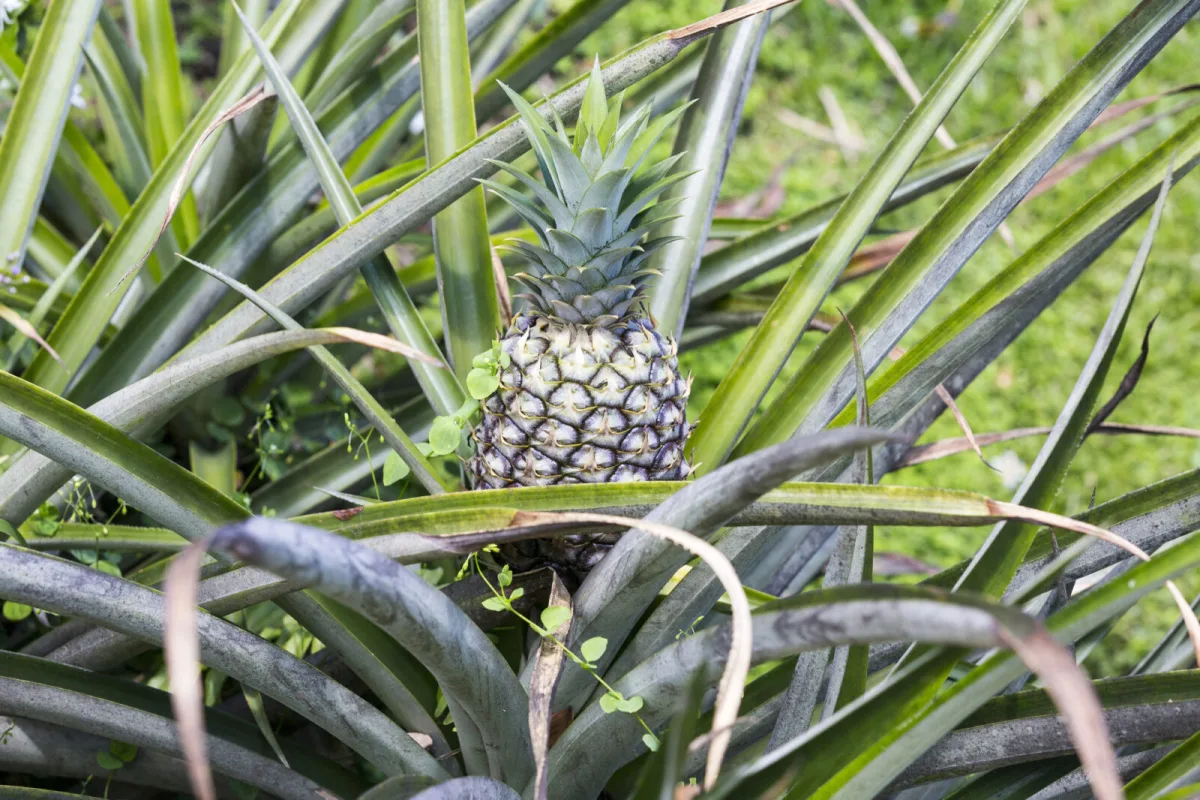
When you slice a pineapple, it rarely occurs to anyone that the leafy top doesn’t have to end up in the bin. This part of the fruit can be used to grow a new pineapple plant, which, with good care, will eventually produce its own fruit. In warm climates, pineapple grows easily, but you can also try growing it where it’s cooler. The key is to give the plant plenty of light and warmth, and not to overwater.
What to prepare to get started
Start with a healthy pineapple with an undamaged crown. The leaves should be firm, green and free of any signs of rot. You’ll also need a glass container for water, then later a few pots in different sizes, a free-draining potting mix, a small trowel and fertiliser. At the next stage, a very ripe apple can also help encourage flowering.
How to separate the crown correctly
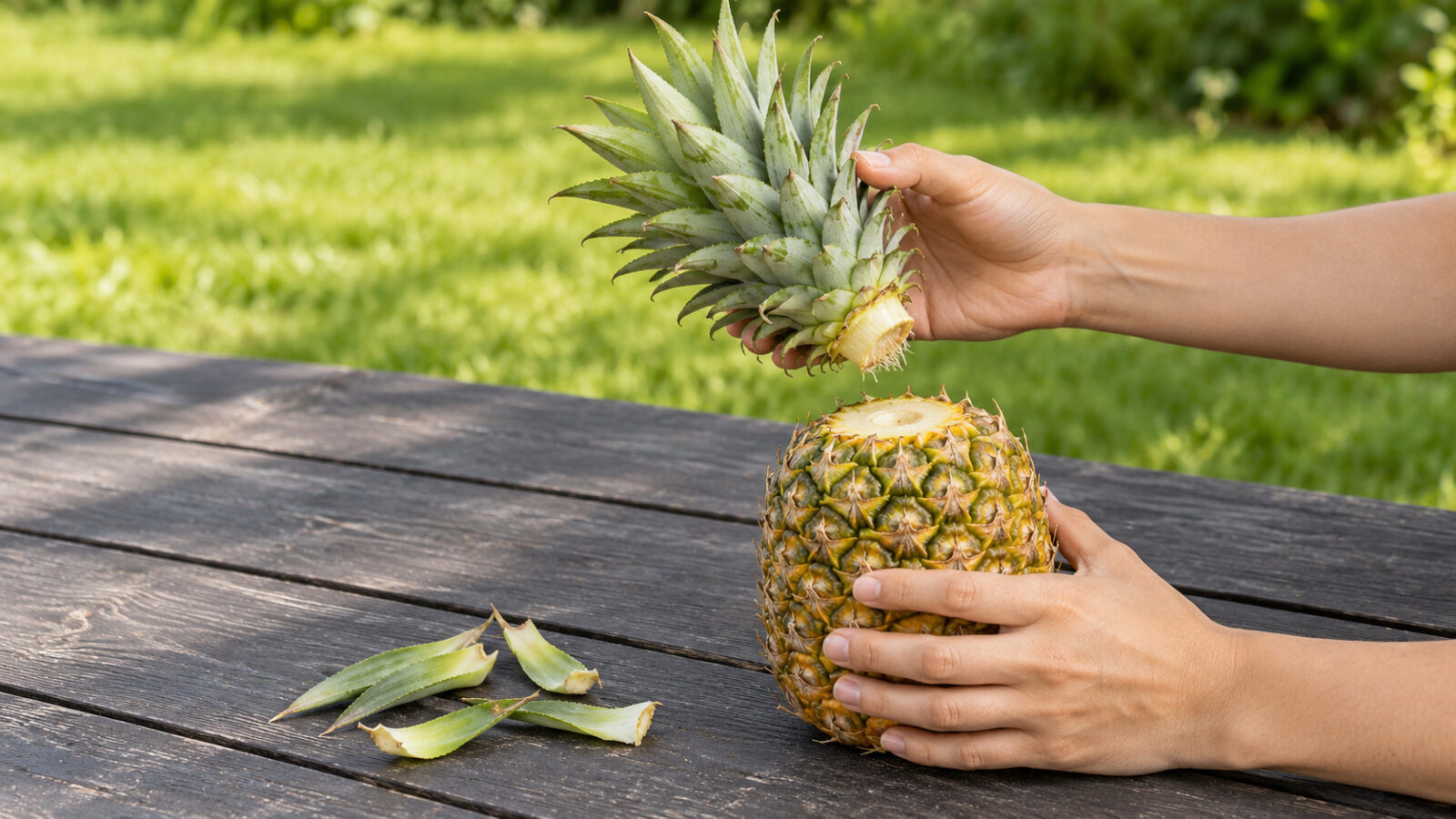
It’s better not to cut the top off with a knife, but to gently twist it off. Sometimes you need to use a bit of force, but the result should be a firm, cone-shaped base from which roots will later emerge. After removing it, peel off a few of the lowest leaves to expose a section of stem.
Then it’s a good idea to let the crown rest for a few days in a shaded spot. This step helps excess moisture evaporate and reduces the risk of mould or rot after planting or while rooting in water.
Rooting in water makes it easier to monitor
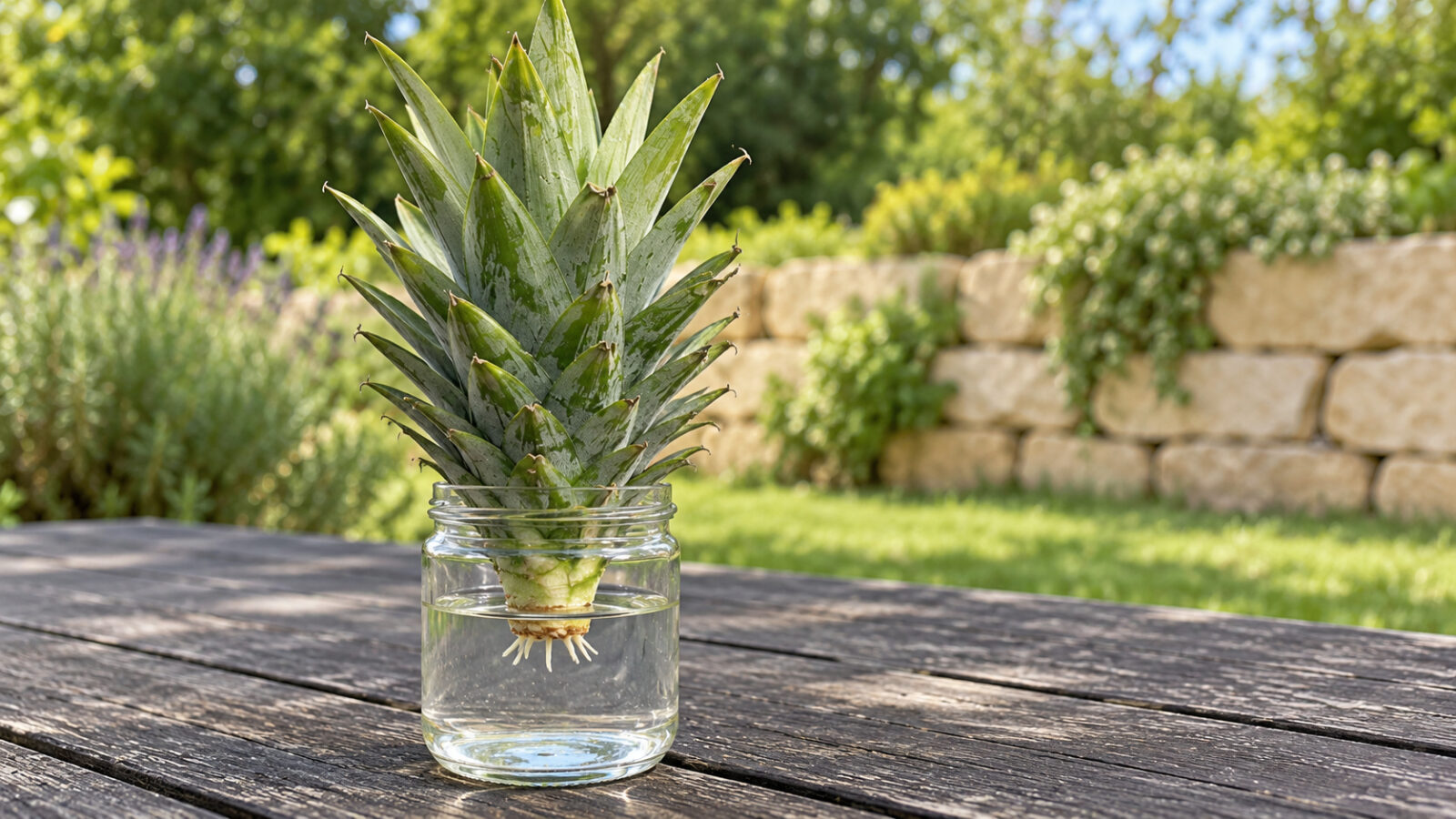
You can plant pineapple straight into potting mix, but rooting it in a glass of water is usually easier to keep an eye on. You’ll quickly see whether it’s actually making roots or starting to spoil. Fill the container so only the lower yellowish cone is submerged, not the green leaves.
Place the glass somewhere bright, but not too hot and out of harsh direct sun. The crown doesn’t have roots yet, so it loses water quickly. A slightly cooler, more shaded spot often suits it better at this stage. After about one to two weeks, you should see the first roots.
Potting on and the right soil
Once the roots have grown to a usable length, it’s time to pot it up. Pineapple likes a light, airy, slightly sandy mix. A cactus or citrus potting mix works very well because it doesn’t hold excess water.
The pot itself is just as important as the mix. It must have working drainage holes so water can’t sit around the roots. Waterlogging is one of the most common reasons for failure, because pineapple roots don’t tolerate staying wet for long.
Everyday care is straightforward
Growing pineapple isn’t one of the most demanding gardening tasks. Water roughly once every one to two weeks, but only when the potting mix has dried out again. It’s better to water lightly than to water too often. The plant will also benefit from occasional feeding through the year, for example twice a year.
As the plant gains strength, it will need a bigger container. If the pot is no longer large enough, move it into a roomier one. In warm regions it can also grow outdoors in the ground, but in cooler conditions it’s safer to grow it in a pot you can bring indoors when temperatures drop. As soon as frost threatens, pineapple should be inside.
When the flower and first fruit appear
Pineapple doesn’t fruit straight away. It usually needs to grow to a decent size and produce more than 30 leaves, which often takes around two years. After that it may flower naturally, but there’s also a way to gently encourage the plant to set a flower.
A very ripe apple can help. It releases ethylene, a gas known to promote flowering and ripening. If you want to try this method, place a few pieces of overripe apple or the core into the centre of the plant for a few days. Remove them after a week and watch the plant’s centre. An unusual flower may soon appear, and from it a stalk will begin to grow, carrying the future fruit.
How to tell the right time to harvest
Store-bought pineapples are often harvested earlier so they can withstand transport, but that usually comes at the expense of flavour. It’s best to leave a home-grown pineapple on the plant as long as possible, until it turns a rich yellow and develops a strong fragrance. That’s when the taste is fullest and sweetest.
Use garden pruners to harvest, carefully snipping the fruit from the stalk. If you then chill it briefly in the fridge, it will be nicely refreshing. A sliced home-grown pineapple is a reward for patience and proof that even an ordinary shop-bought crown can become an interesting and useful tropical plant.
The most important factors for success are a healthy crown, enough warmth, free-draining soil and restrained watering. It’s this combination of simple basics that decides whether a pineapple crown becomes a strong, fruiting plant.
Source: Instructable, Gardening Know How, Pestrazahrada.cz

A lover of nature, gardens, and everything that moves, blooms, or grows. He literally grows everything, from herbs to rare species, and he enjoys caring for animals just as much. In his work, he connects modern technology with tried-and-tested grandmotherly methods and is happy when both paths lead to the same goal.
Related articles
Don’t Prune Hydrangeas in October
Tidying the garden in autumn is tempting, but October pruning can cost your hydrangeas next year’s flowers. Only two light interventions make sense this time of year; everything else is best left until the right season.
Overwintering Geraniums in a Box Ensures Stronger Growth and More Abundant Spring Bloom
Many people throw balcony geraniums away after the season, even though they can overwinter very well. Stored correctly in a box in cool, dark, dry conditions, they’ll come back stronger and flower generously in spring.
This perennial flowers when others are finishing, thrives in shade and is still little known in the Czech Republic
Liriope is a tough, evergreen perennial with grassy foliage that comes into its own at the end of summer, when many other plants are fading. It thrives in partial shade to shade, needs little care, and adds structure to borders year-round.
Comments (0)
Be the first to comment.