
 English
  Polski
  Deutsch
  Nederlands
  Svenska
  Norsk
Norsk  Dansk
Dansk  Français
  Italiano
  Español
  Português
  Slovenčina
  Suomi
Suomi  Gaeilge
 Why Ants Herd Aphids Like Livestock and What It Means for Your Garden
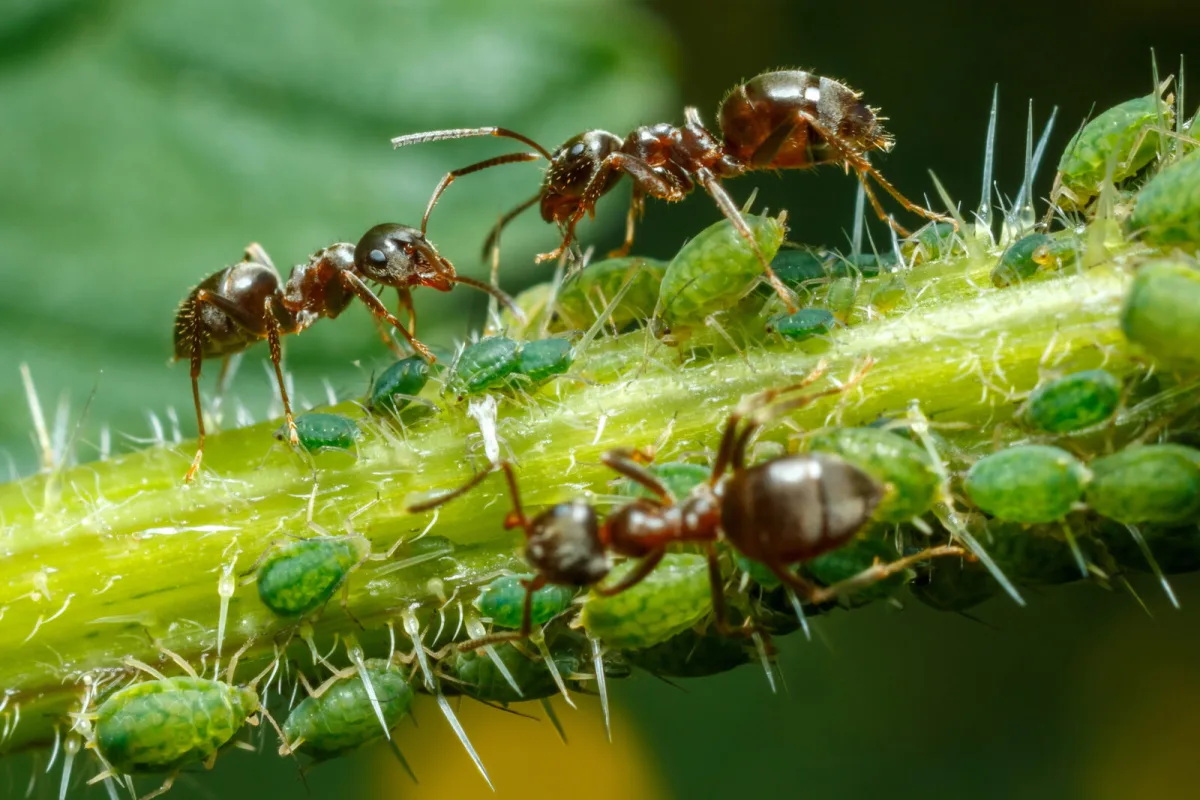
The relationship between ants and aphids is one of the best-known examples of cooperation between two different organisms, and you can observe it even on ordinary garden plants. While it fascinates biologists, for growers it is often a source of worry, because where aphids thrive, damage to young shoots and leaves quickly becomes visible.
The reason these two worlds meet so often is simple. There are thousands of aphid species and an enormous number of ant species as well. Even though Europe’s species diversity is lower than in other parts of the world, there are still enough combinations in the landscape for aphids and ants to repeatedly run into each other on plants—often in many places at once.
Honeydew as a sweet reward
Aphids feed by sucking plant sap from stems and leaves. This sap contains a lot of sugars that aphids can’t fully use. The surplus builds up in their bodies, so they excrete it as tiny sweet droplets known as honeydew. For aphids, excretion also has a practical purpose, because it helps them get rid of excess sugars and reduces the risk of mould developing on their bodies and nearby.
Honeydew isn’t used only by ants, but also by other insects such as wasps or bees. Over time, however, ants worked out that this sweet resource doesn’t appear on leaves by itself, but comes directly from aphids. Instead of hunting aphids as prey, they began to protect them and keep them alive as a valuable living store of food.
How ants become livestock keepers
This isn’t a universal rule for all aphids. Only some species use this kind of partnership, but in gardens we still see it often. Ants create a route between the nest and the plant using scent trails, and they regularly travel this notional highway to the aphids.
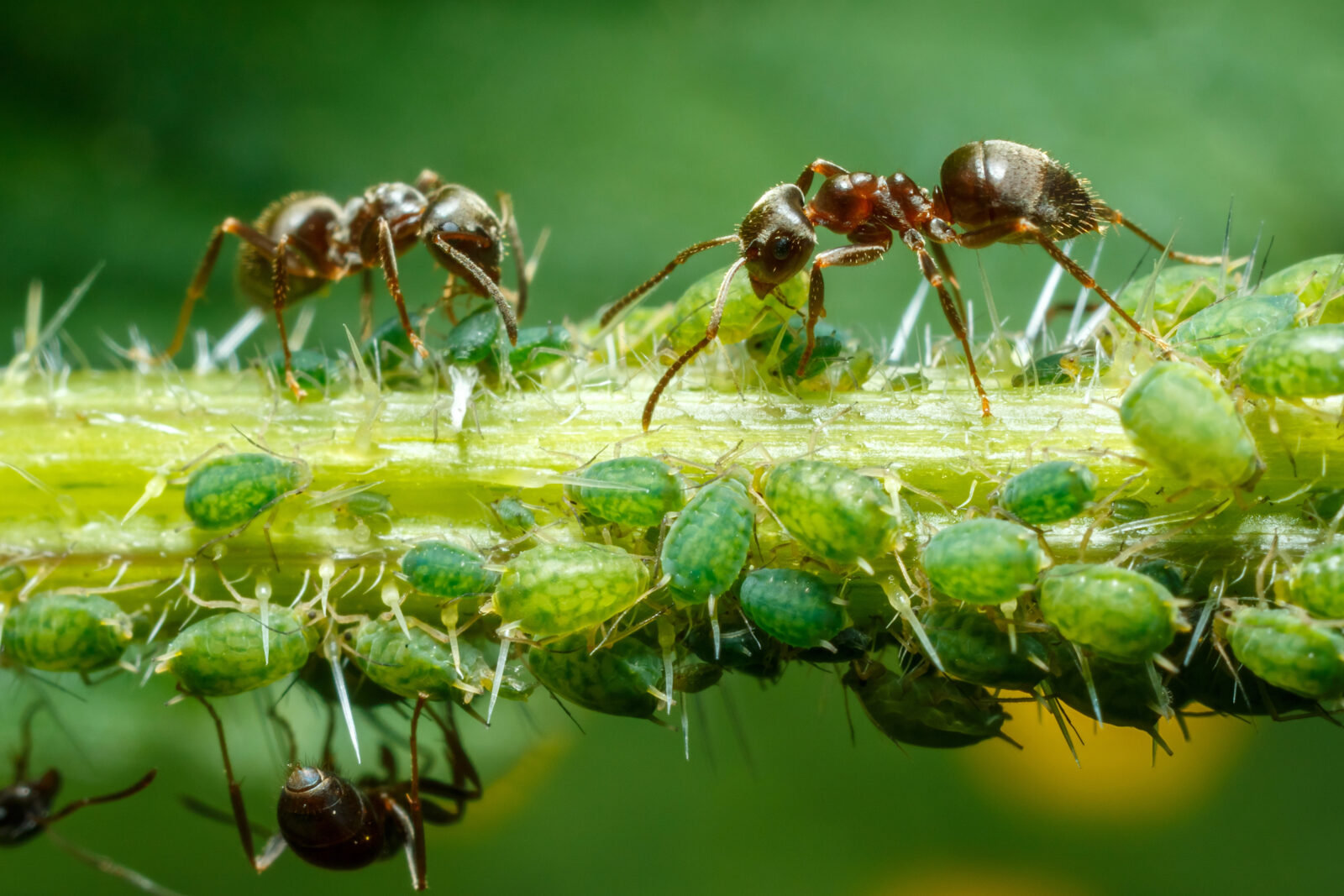
Once there, they wait for a drop of honeydew and often gently stimulate the aphids with their antennae, which speeds up the production of the sweet liquid. The ants then move from one aphid to the next, and the colony really does resemble a herd that’s being constantly tended. When an ant has fed, it carries the honeydew back to the nest in its social stomach, where it serves as food for the larvae and the queen.
Winter strategies and moving them to the best spots
Some ant species go even further, providing long-term care. Before winter, they search for aphid eggs on plants and carry them into safer chambers inside the nest. This protects them from cold and from predators. In spring, aphids get back onto plants either on their own, or ants actively help by moving them onto suitable host plants.
Ants also relocate aphids within a single plant so they sit on the youngest, juiciest growth. That’s where tissues are tender, the sap is more nutritious and easier to digest—boosting aphid success and increasing the amount of honeydew ants can harvest from that spot.
Defending colonies and clashing with beneficial predators
Aphid colonies can be surprisingly well defended thanks to ants. If there are enough ants, they can even drive off larger predators that are very dangerous to aphids, such as ladybirds, lacewing larvae, or hoverflies. That makes aphids a much tougher opponent for gardeners, because natural control is weakened.
Large spring colonies are common mainly because leaves are fresh and there tend to be fewer predators early in the season. As the year goes on, predator pressure usually increases, and in more diverse, wildlife-friendly gardens, aphid populations often drop on their own. A light infestation, too, often doesn’t cause plants any dramatic harm. The real problem arises when ecological balance is disrupted and aphids can multiply unchecked.
What aphids have to do with honeydew honey
While large aphid colonies are mostly a nuisance in the garden, in forests they can be an interesting opportunity for beekeepers. In tree canopies, aphids live that produce honeydew in large quantities and are often tended by woodland ants. In good years there can be so much honeydew that bee colonies collect it too.
Honeydew then becomes honeydew honey, prized for its darker colour and distinctive flavour. Its production can be unreliable and limited, however, because climate change and the declining health of forest stands often do not suit populations of these aphids.
How to handle it in the garden without unnecessary chemicals
It helps to encourage aphids’ natural enemies. It’s useful to plant flowers with shallow, accessible blooms that attract hoverflies. Their larvae are among the most effective aphid predators and can consume hundreds of individuals as they develop.
In the short term, deliberately moving ladybirds onto infested plants can also work, ideally where the environment is more enclosed, such as in a greenhouse or on a balcony. Over the longer term, it pays to provide ladybirds with places to overwinter so they return to the garden. Shelters can include insect hotels, wood piles, or various garden features that create crevices and dry corners. Similar refuges also benefit lacewings, whose larvae also hunt aphids intensively.
Destroying ant nests near infested plants can be counterproductive, especially if harsh chemical methods are used. It’s often more effective to try to break the scent trail between the nest and the aphid colony, because aphids without ants are far more vulnerable. In the short term, light applications of natural aromatic oils on the trunk or main stem can help—such as lavender-scented products—but they need repeating during the season.
On woody plants you can also use sticky bands, but keep them as thin as possible and use them thoughtfully. Thick layers of adhesive don’t just trap ants; they also catch many beneficial insects, and in extreme cases they can even endanger larger animals.
Source: Záhrada, The Spruce, RHS, Pestrazahrada.cz

A lover of nature, gardens, and everything that moves, blooms, or grows. He literally grows everything, from herbs to rare species, and he enjoys caring for animals just as much. In his work, he connects modern technology with tried-and-tested grandmotherly methods and is happy when both paths lead to the same goal.
Related articles
Why the Tree That Feeds a Family for Generations Is Disappearing from Czech Gardens
The English walnut used to be a staple of larger gardens and farmyards, valued for its nutritious nuts and many practical uses. With the right site and variety, it remains one of the most rewarding long-lived trees you can plant.
How to Get Rid of Mice and Rats in the House, Loft and Garden Effectively
Mice and rats don’t leave quietly—scratching sounds, droppings and gnaw marks are clear warnings. A lasting solution comes down to three steps: block entry points, remove food sources, then use traps or professional control.
Two Mistakes When Harvesting Onions Can Cut Your Supply by Months
With good growing and the right handling, onions can turn into a near year-round pantry staple. These simple harvest and curing steps determine whether they keep for weeks or for months.
Comments (0)
Be the first to comment.