
 English
  Polski
  Deutsch
  Nederlands
  Svenska
  Norsk
Norsk  Dansk
Dansk  Français
  Italiano
  Español
  Português
  Slovenčina
  Suomi
Suomi  Gaeilge
 The most common potato diseases in the garden and how to protect your crop
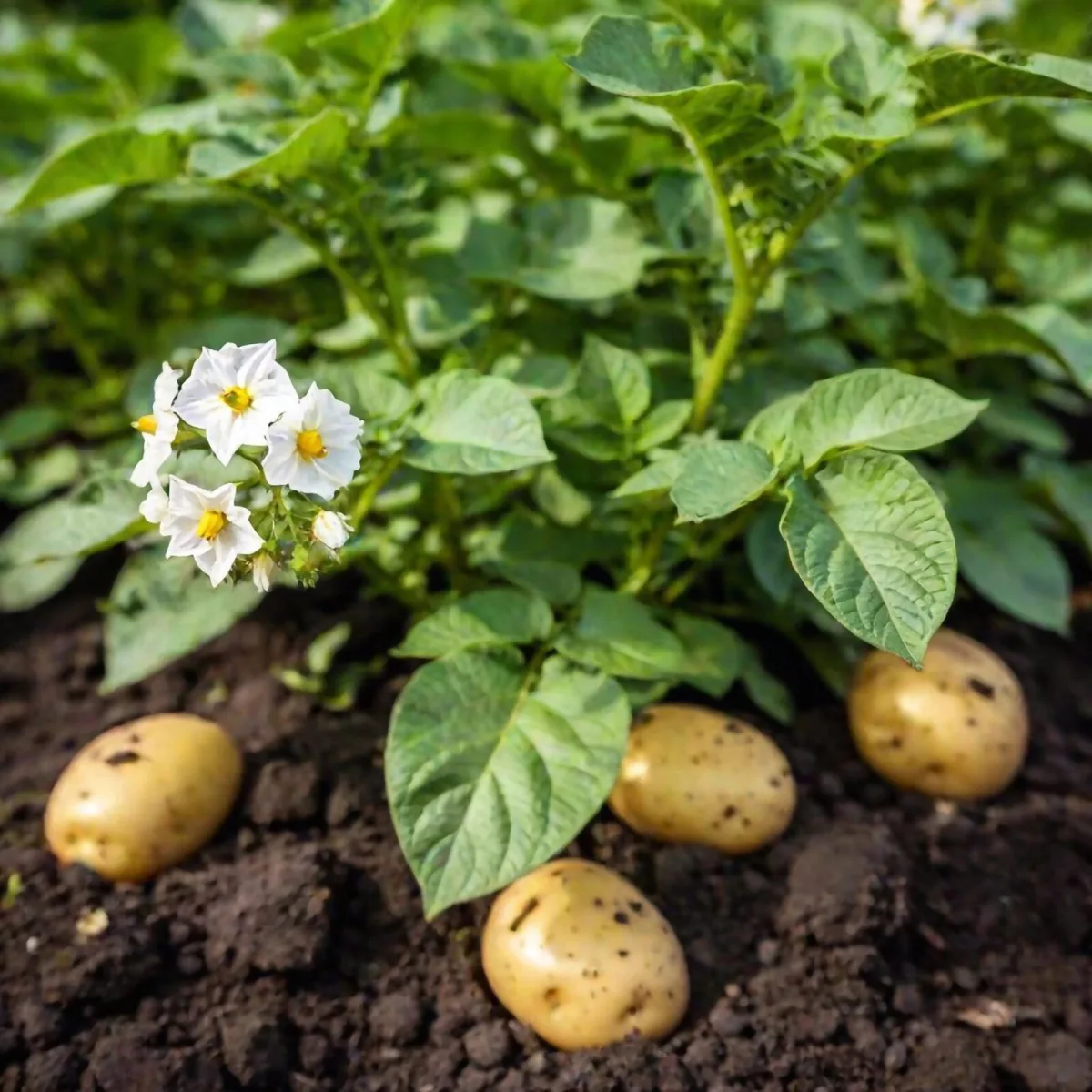
Potatoes are among the most widely grown crops in Czech gardens because they usually don’t require complicated care and can still deliver a decent harvest even for less experienced growers. Even so, they’re often affected by diseases and pests that can drastically reduce yields, shorten storage life, or spoil tubers both in appearance and flavour. The biggest difference is made by acting quickly. Once early symptoms are overlooked, the problem can easily spread to other plants and sometimes even carry over into storage. The key to success is timely diagnosis, good prevention, and sensible interventions throughout the season.
Late blight as the biggest threat of the season
Late blight shows up mainly in warm, damp weather and is one of the most dangerous potato diseases. Irregular brown patches typically form on the leaves, and a paler growth can often be seen on the underside. If the infection takes hold, the haulm gradually dies back and the disease can reach the tubers too, which then rot.
It helps to use certified seed potatoes and choose varieties with better resistance, such as Adéla or Karelia. Crop rotation is also important; potatoes shouldn’t return to the same spot for at least 3 to 4 years. During high-risk periods, fungicide sprays are used; commonly mentioned options include Ridomil Gold, Champion 50 WG or Acrobat MZ. Heavily infected parts should be removed and disposed of away from the compost heap so the infection doesn’t continue to spread.
Common scab spoils tubers on the surface
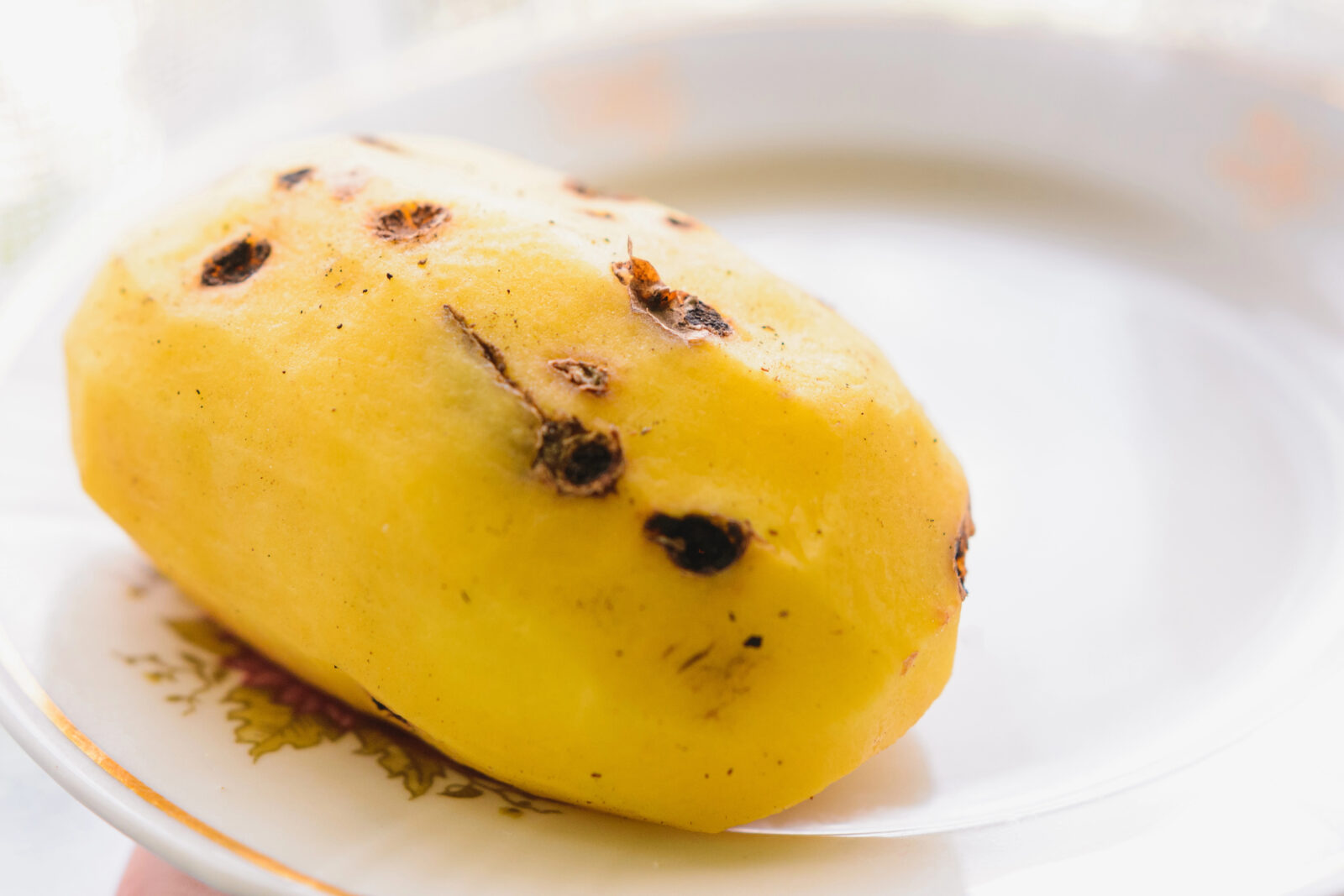
Common scab mainly affects the tubers. Rough, corky patches form on the surface, sometimes with cracking, while the inside of the tuber is often perfectly fine. For growers it’s frustrating mainly because of the appearance and more awkward kitchen prep, even though it doesn’t always mean a total loss of the crop.
A good strategy is to choose less sensitive varieties, such as Rosara or Red Anna. Scab thrives in soils with a higher pH, so it’s recommended to keep soil reaction roughly around 5.2 to 5.5. Fresh manure can also make the problem worse, so it’s better replaced with well-rotted organic matter. Crop rotation helps, as does planting into soil that isn’t overly dry or too sandy.
Blackening of tubers and soft rot in storage
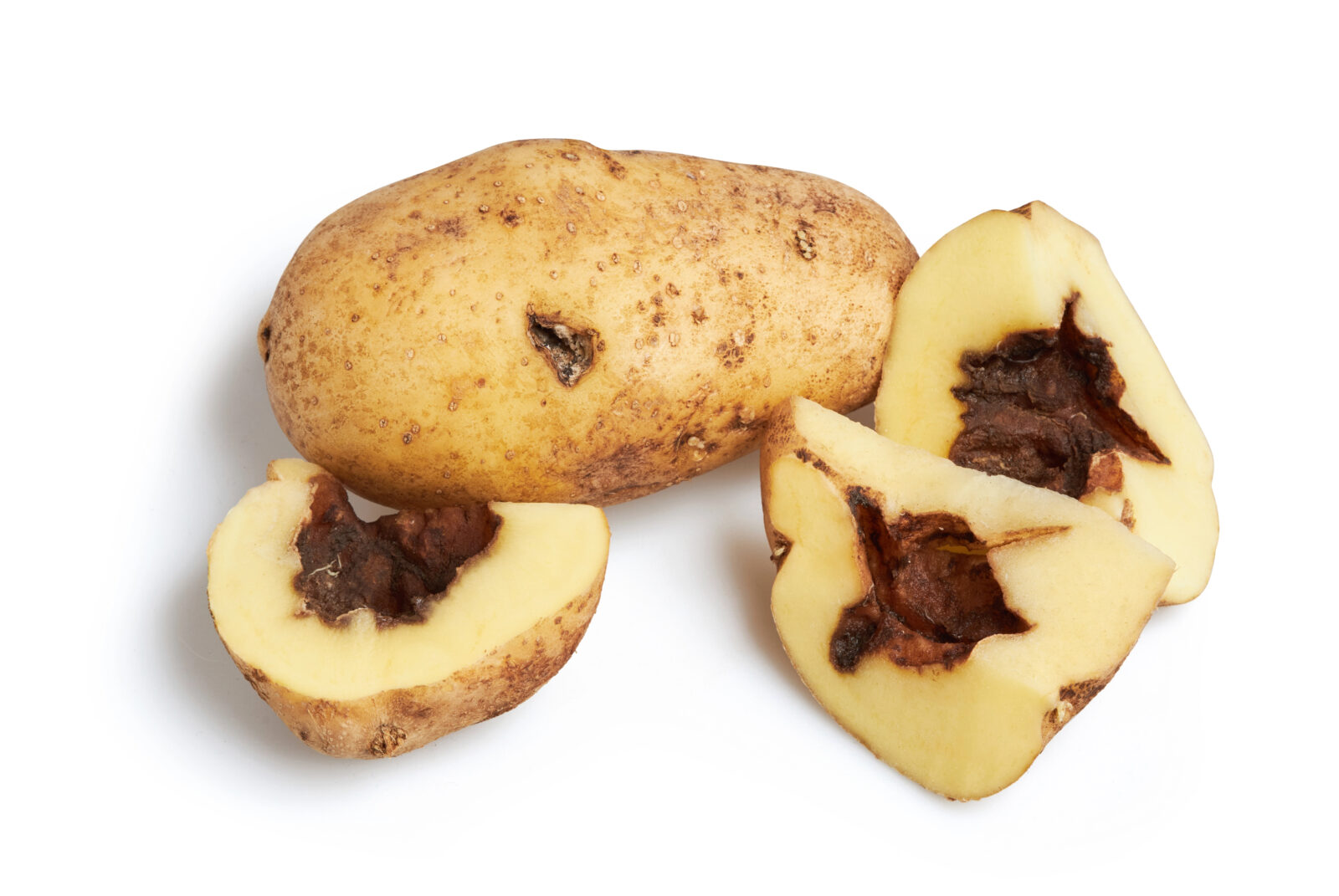
Blackening of tubers is linked to bacterial rots and often shows up only after harvest. Tubers turn soft and dark, and a strongly unpleasant smell is typical. The cause is usually a combination of infection and poor handling, such as bruising and wounds that quickly worsen during storage.
The basics are to minimise mechanical damage during harvest and grading. It’s important to store potatoes dry, cool and well ventilated, ideally at around 4 to 6 °C. Affected tubers must be removed and should never be used as seed, because the problem would be carried into the next season.
Viral diseases reduce yield and haulm vigour
Viral diseases, such as Potato virus Y or Potato virus A, show up in the crop as stunting, leaf curl, yellowing, or a mottled mosaic pattern. Plants are weaker and set fewer tubers, which is reflected especially in overall yield. Viruses are often spread by vectors, typically aphids, and also through poorly chosen seed potatoes.
The best protection is planting healthy, certified seed potatoes and checking the crop regularly. As soon as suspicious plants appear, it’s best to remove them so they don’t become a source of infection for surrounding plants. To reduce spread, aphid-control sprays are used, such as Mospilan or Karate Zeon, especially when vector pressure is high.
Potato cyst nematodes and the problem of stunted growth
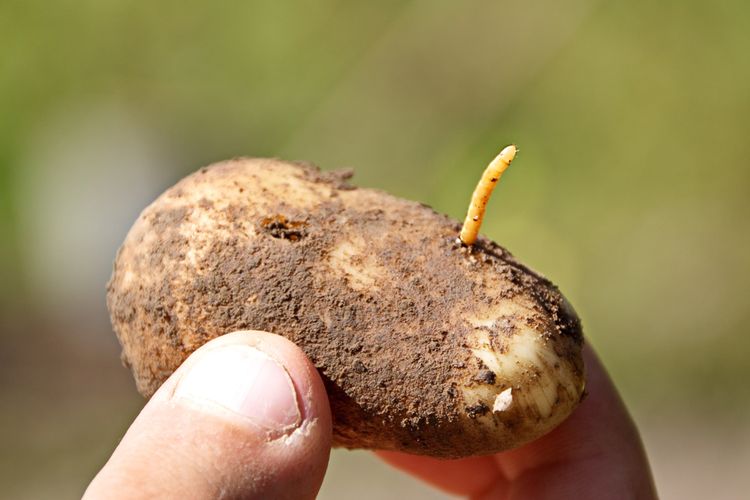
Potato cyst nematodes attack the roots and disrupt nutrient uptake. Typical symptoms include yellowing, wilting, weak growth and very poor tuber formation even with otherwise good care. Because it’s a soil-borne problem, it can persist in a site for a long time.
A proven solution is crop rotation, with potatoes returning to the same spot no sooner than after four years. Choosing resistant varieties makes a big difference, for example Dali, Marabel or Jelly. Where infestations are heavier, growers sometimes turn to soil bioproducts that work on a biological principle and help reduce pest pressure, such as products marketed to support biological balance in the soil.
How to boost potatoes’ long-term resilience in the bed
Prevention pays off the most. Healthy seed potatoes, sensible crop rotation, balanced feeding and quick removal of infected parts can limit most problems before they spread. Soil quality also plays a major role, because that’s where the whole plant’s vitality begins.
Tip: A combination of compost, wood ash and herbal teas, for example from horsetail or nettle, can support the crop’s natural resistance and improve plant condition through the season.
Final advice for a healthy, abundant harvest
Potatoes are a reliable, versatile crop, but they can be threatened by fungal diseases, bacteria, viruses and soil pests. Anyone who monitors the crop, follows crop rotation and responds to the first symptoms has a strong chance of preventing problems or at least greatly reducing them. Regular checks of the haulm, careful harvesting and proper storage are the final steps that decide whether the work in the bed turns into a healthy crop that keeps well through winter.
Source: Potatoes SA, British Potato, Gardening Know How, Pestrazahrada.cz

A lover of nature, gardens, and everything that moves, blooms, or grows. He literally grows everything, from herbs to rare species, and he enjoys caring for animals just as much. In his work, he connects modern technology with tried-and-tested grandmotherly methods and is happy when both paths lead to the same goal.
Related articles
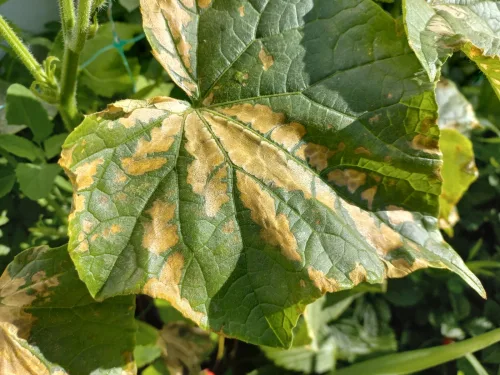
Yellowing cucumber leaves have a clear cause and with the right response plants recover quickly
Cucumber leaves turn pale and yellow when the plant is under stress—most often from watering mistakes, nutrient imbalance, or sudden temperature swings. Spot the pattern early and you can restore growth and protect your harvest fast.
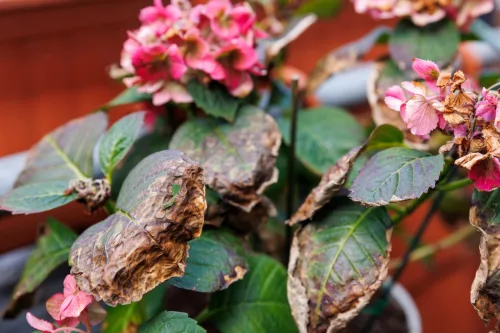
How to Get Browning Hydrangeas Back on Track Without Chemicals
Brown leaf edges or spots on hydrangeas usually point to a simple mismatch in light, watering, or airflow rather than a lost cause. Learn how to read the symptoms and restore your shrub quickly with gentle, practical fixes.
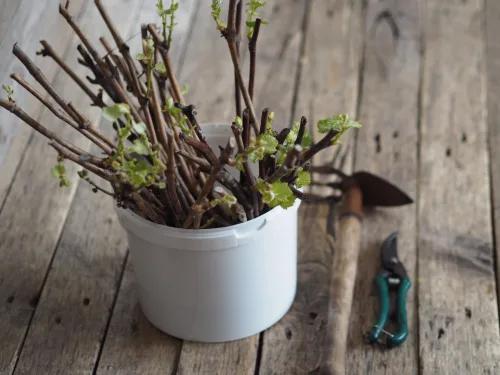
Turn Ground Cinnamon Into a Secret Weapon for Stronger, Tougher Plants
Ground cinnamon isn’t just for baking—it can help protect houseplants and garden plants from mould and fungal issues, support cuttings, and even act as quick first aid for minor wounds. Used lightly, it’s an affordable, gentle, natural add-on to good growing practice.
Comments (0)
Be the first to comment.