
 English
  Polski
  Deutsch
  Nederlands
  Svenska
  Norsk
Norsk  Dansk
Dansk  Français
  Italiano
  Español
  Português
  Slovenčina
  Suomi
Suomi  Gaeilge
 How a Ladybird Lives Through Its Life Cycle and Why to Encourage It in the Garden
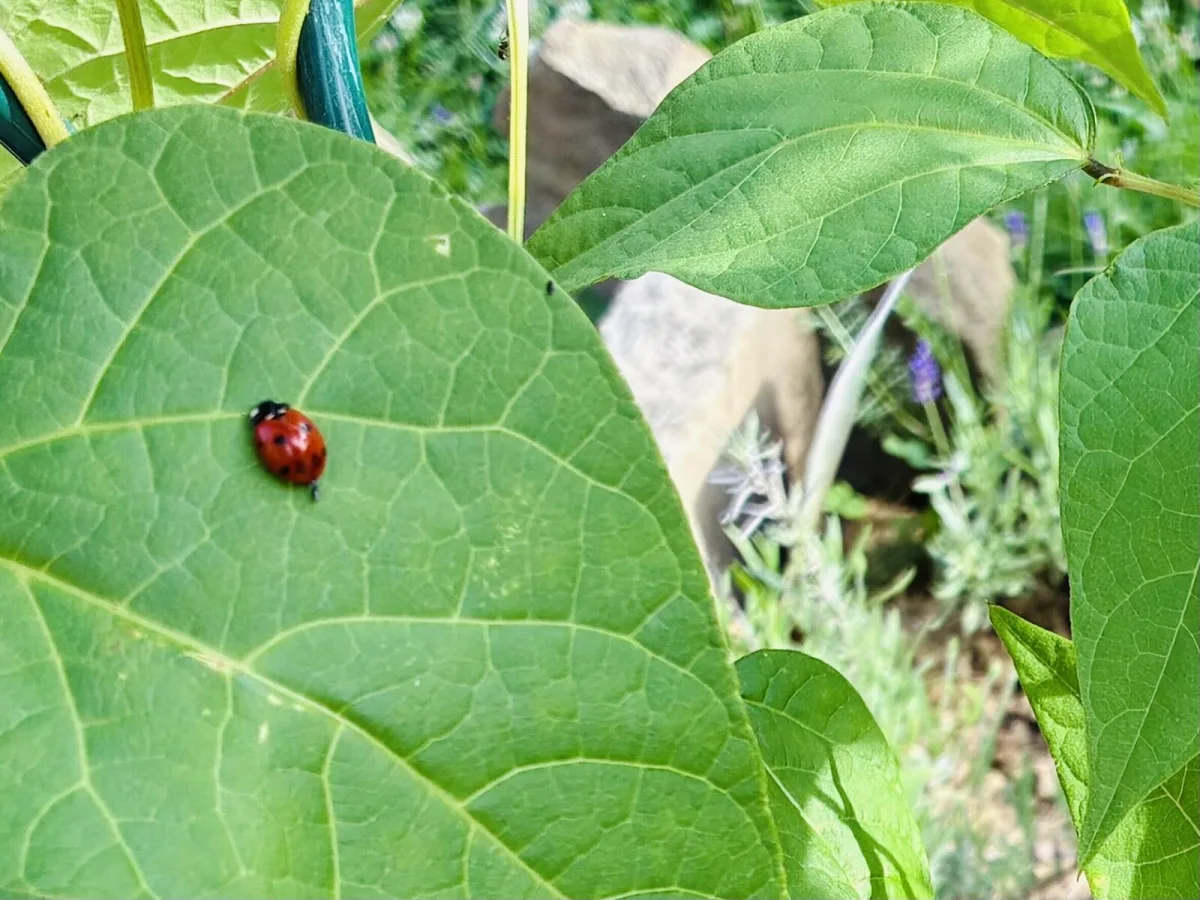
Ladybirds are among the most popular beneficial insects in the garden, yet most people imagine only the adult beetle with red wing cases and black spots. That’s understandable, because the younger stages look completely different from the adults. That’s exactly why it helps to recognise ladybirds throughout their whole development, so a gardener doesn’t accidentally mistake a helper for a pest. This is especially important with the larvae, which are often even more efficient at hunting pests than the adults and can consume huge numbers of aphids before they pupate.
A ladybird isn’t a true bug, it’s a beetle
In everyday speech, ladybirds are often called “ladybugs”, while the more precise term is ladybird (or seven-spot ladybird), and entomologists refer to them as ladybird beetles. One thing matters here: ladybirds are not true bugs. True bugs belong to a different order, and their young—so-called nymphs—resemble the adults from the start. Ladybirds, on the other hand, are beetles that go through complete metamorphosis. That means there is a dramatic transformation between the larva and the adult via a pupal stage, and the final adult is called the imago.
Colours and patterns aren’t just red with spots
We tend to associate a typical ladybird with a red colour and black spots, but in reality many colour combinations exist. Ladybirds can be yellow, orange, grey, black, and some species even show unusually dark or bluish tones. Instead of spots, there may be stripes, and the number of markings can vary widely too. A particularly variable species is the Asian lady beetle, whose colour and pattern can differ so much that it’s sometimes nicknamed the harlequin ladybird—meaning brightly and variably coloured.
Non-native species in the garden and why larvae are hard to tell apart
In some areas, species have spread that were deliberately used for biological pest control because they reduce aphid numbers well. Alongside their benefits, however, they bring a downside: they can outcompete native ladybird species because they’re more competitive. The complication is that the larvae of several commonly seen species can look very similar, so trying to distinguish non-native from native species in the early stages is, in practice, almost impossible for the average gardener.
Not every ladybird is a predator
We link ladybirds with hunting aphids, scale insects or spider mites, but it isn’t universally true. The same family also includes species that feed on plants and behave as garden pests. A classic example is a ladybird associated with cucurbit crops, which damages shoots, leaves and fruits of pumpkins, courgettes, melons or cucumbers. Another well-known pest is a species that attacks beans and other legumes. The good news is that the larvae of these plant-feeding species tend to be conspicuously coloured—for example, a yellow base with prominent dark spines—so you usually won’t confuse them with the typical predatory ladybird larvae.
The egg as the start of a whole generation
The life cycle begins when eggs are laid. Predatory ladybirds usually lay eggs in clusters, often on the underside of a leaf, close to a food source—for instance right beside an aphid colony. A single batch may contain just a few eggs, but larger clusters are common too. The eggs are most often yellow to orange, oval in shape, and are laid upright, so on a leaf they look like tiny “grains” standing next to each other. Depending on temperature and conditions, they can hatch in a span of a few days to roughly a week and a bit.
The larva is the unsung hero in the fight against aphids
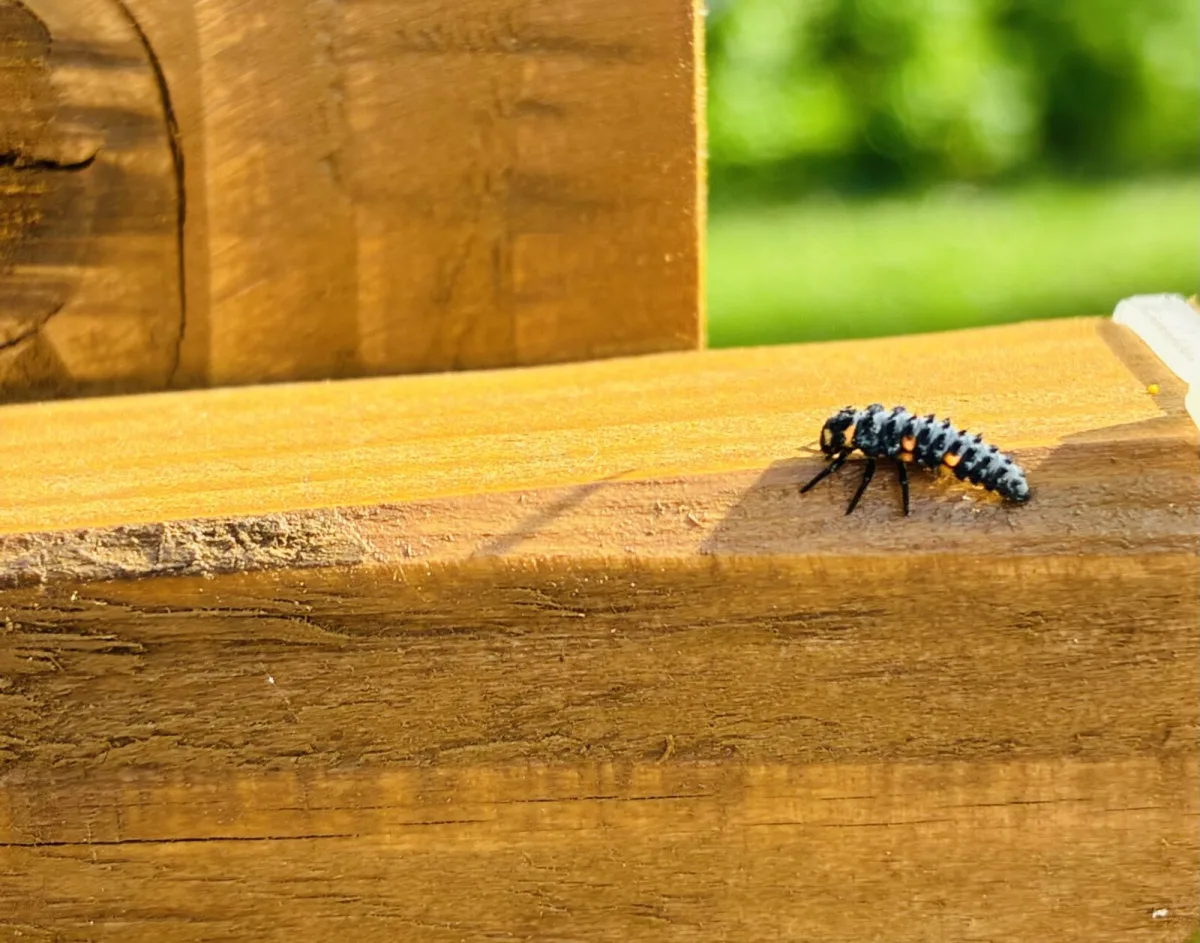
After hatching, the larva takes over—often surprising people in both appearance and behaviour. Predatory larvae can resemble a small dark lizard or a miniature black alligator; they may have orange spots or stripes on the body and move on six legs. At first they are very small and easy to miss, but with enough food they grow quickly. During development they go through several moults, gradually changing in size and proportions. With a steady supply of prey—such as aphids, scale insects or mites—they can reach the pupation stage within a few weeks. At this point they can do an enormous amount of work in the garden, because they are exceptionally voracious.
The pupa as a period of major transformation
When the larva is ready to pupate, it stops roaming over the plant and attaches itself to a leaf or another surface. This is followed by shedding the final larval skin and the start of the transformation into an adult. The pupa often looks completely different from the larva, and its colouring may change gradually. This is the stage when metamorphosis itself takes place, during which internal organs and the outer body shape are remodelled. How long the pupal stage lasts depends on conditions, but it often runs roughly one to two weeks.
The adult that learns to fly and develops its final colour
When an adult beetle emerges from the pupa, it takes a little while to fully settle into its new form. For the first time in its life it unfolds its wings and becomes capable of flight, allowing it to quickly seek out new food sources and places to reproduce. A freshly emerged adult may initially be paler, its outer shell is soft, and the colour may not yet match the final look. Before long, however, the wing cases harden and the typical colouring of the species stabilises. Adult ladybirds can live fairly long—sometimes for several months—and some of them ride out unfavourable periods in sheltered hiding places protected from the weather.
How to help ladybirds in the garden and why not to kill them
If you spot ladybird larvae or pupae on your plants, it’s usually a sign that natural pest control is underway in the garden. Instead of interventions that could wipe out beneficial insects, it pays to watch what’s happening and give the predators time. Ladybirds are most effective where there’s prey and where the environment is diverse, so restrained use of chemicals and support for natural shelter makes a real difference. Once you can recognise the eggs, larvae, pupae and adults, you’ll be much more confident about when you’re looking at a pest on the leaves—and when you’re looking at a valuable ally.
Source: Joe Gardener, Wikipidia , Pestrazahrada.cz
Related articles
How to Safely Tell Czech and Chinese Garlic Apart in the Shop by Taste, Appearance and Quality
Czech and Chinese garlic can look similar at first glance, but they differ noticeably in flavour, aroma, bulb structure and keeping quality. Learn the quick visual and kitchen tests that help you choose the better bulb with confidence.

Three Mistakes When Packing Cabbage into a Crock That Can Turn Your Winter Stores into Waste
Traditional crock-fermented sauerkraut keeps for months and stays wonderfully crisp—if you avoid a few common missteps. Here are the three mistakes that most often lead to soft, grey, foul-smelling cabbage and how to prevent them.
One Rat in the Garden Can Quickly Turn Into a Colony How to Prevent It Without Chemicals
A rat on your property is a warning sign that your garden is offering food and shelter. With a few practical, chemical-free changes, you can make the area far less attractive and stop a bigger infestation taking hold.
Comments (0)
Be the first to comment.