
 English
  Polski
  Deutsch
  Nederlands
  Svenska
  Norsk
Norsk  Dansk
Dansk  Français
  Italiano
  Español
  Português
  Slovenčina
  Suomi
Suomi  Gaeilge
 Hoverflies are neither wasps nor true flies yet almost everyone knows them and they’re useful
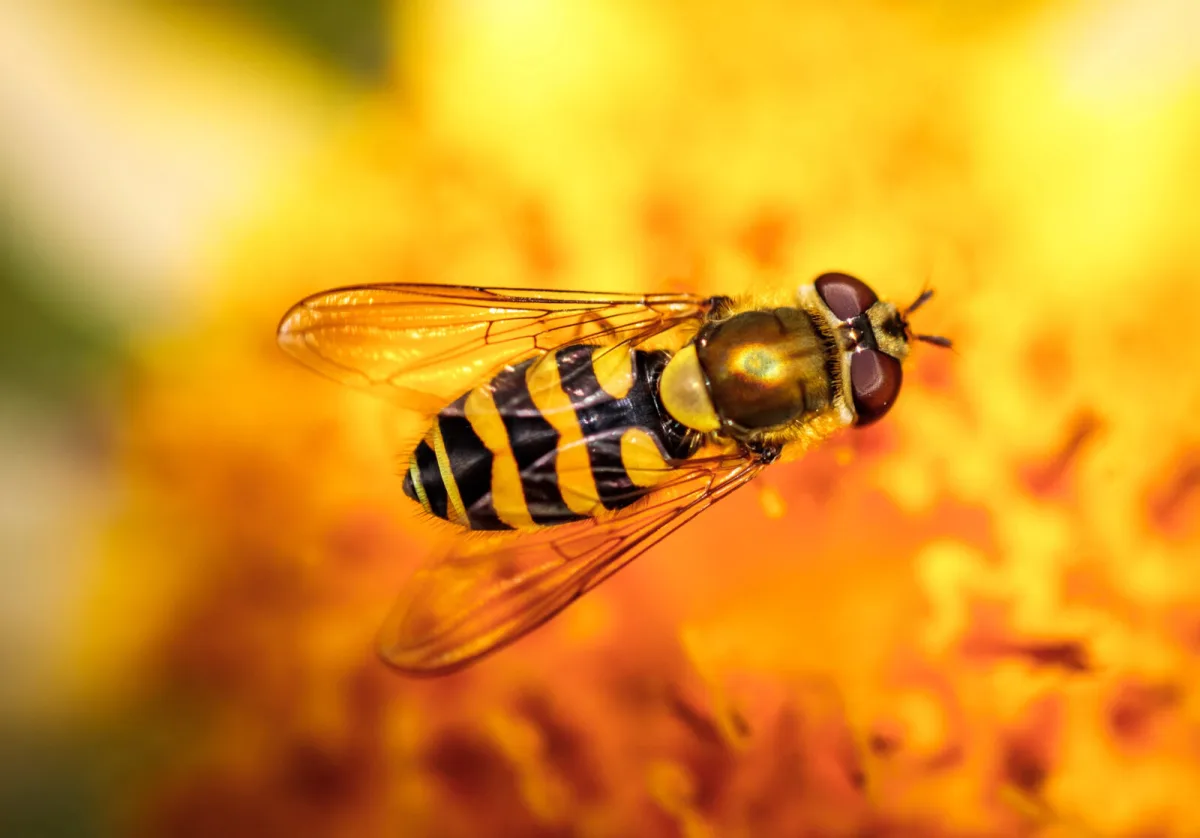
Hoverflies, also known as flower flies, are two-winged insects related to true flies. In gardens, people often welcome them, even though many mistake them for wasps at first glance. For gardeners they matter because they help keep pests in check naturally, without chemicals and without expense. It would be a shame to kill them simply because we don’t recognise them.
Typical species have striking yellow-and-black markings and are about one centimetre long. Those bold colours are the reason they’re confused with wasps, but they’re also a clever defence that improves a hoverfly’s chances of survival in the wild.
Why people mistake them for wasps and how to tell them apart safely
Hoverflies use mimicry, an evolutionary strategy in which a harmless species resembles another species that is more dangerous to predators. It works brilliantly on birds, which usually avoid insects that might sting. Hoverflies, however, have no sting, so they pose no threat to people.
You can also tell the difference by body structure. A wasp has four wings, while a hoverfly has only two. In practice, though, the easiest way is often to watch how they move in the air.
Hoverflies can stop in mid-air and hold position, which is why they’re called hoverflies in English.
They sometimes hover right in front of a gardener’s face, as if checking what you’re doing. It isn’t an attack. Adults feed mainly on nectar and pollen, so they’re essentially peaceful visitors to flowers.
The real hunters are the larvae and aphids know it well
While an adult hoverfly collects pollen and nectar, the larvae are predatory and rank among the most effective natural enemies of aphids, thrips and other small insects on plants. The female lays eggs on suitable plants, often right where pests are present. After hatching, the larvae seek out prey, seize it with their mouthparts and suck out the liquid contents.
A single larva can consume more than 800 aphids during its development. Development takes about three weeks, and as the larva grows, so does its appetite. In the final stage it may catch up to around 80 aphids a day. When several larvae go to work in a colony on roses, they usually reduce the infestation markedly in a short time.
Aphids are sometimes protected by ants, which literally tend them. Hoverflies are prepared for that too. The larvae can secrete substances that partly mask their presence from ants, or reduce their aggressiveness. Once the larvae are fully fed, they crawl down into the soil, where they pupate and complete their transformation into a winged adult.
Several generations a year and precise timing to match their prey
In our conditions, the most common hoverfly species typically produce four to six generations a year. Thanks to this, they can respond quickly to sudden aphid outbreaks and protect plants for much of the season. In some situations, hoverfly larvae can make up a significant share of all aphid predators on plants.
Worldwide, more than six thousand hoverfly species have been described; here, hundreds occur, and many different species can show up in a single garden. Each can specialise in slightly different prey. Research also suggests that hoverflies can respond to chemical signals from aphid-infested plants, as if the plant were calling for help.
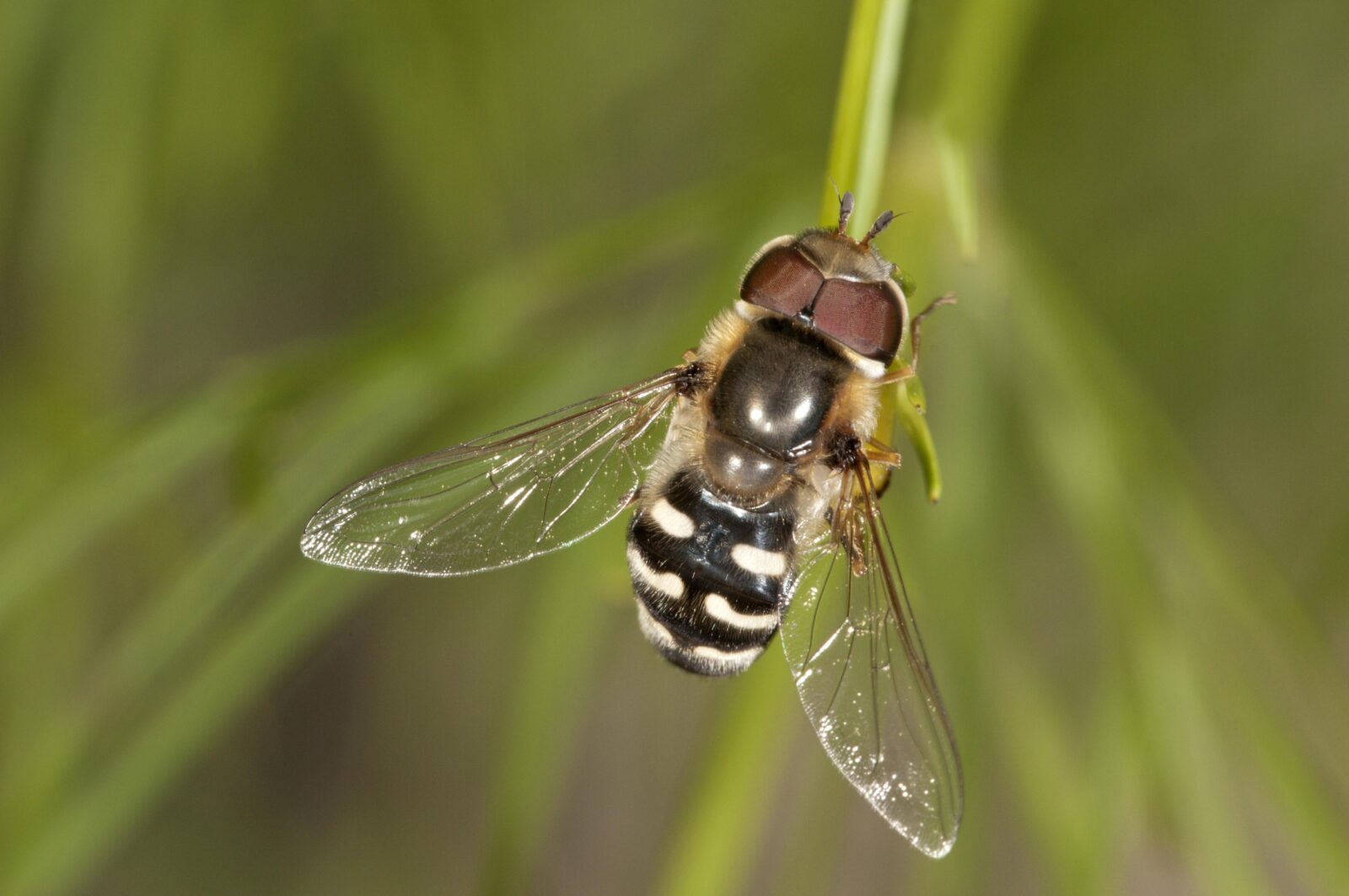
Long-distance pollination and aerial skills that will surprise you
When pollinators are mentioned, people most often talk about bees, but hoverflies also have a firm place in gardens. Their advantage is that they can move through the landscape very effectively. Some species migrate south during the cooler part of the year and return when it warms up. During these movements they visit plants as they come into bloom, carrying pollen over greater distances.
In many species it’s thought that over a lifetime they can fly hundreds to more than a thousand kilometres. They use air currents at heights of roughly 150 to 1,000 metres above the ground, and measurements have shown they can fly very skilfully at around three metres per second.
How to attract hoverflies to your garden and why a sterile lawn doesn’t suit them
Hoverflies like flowering, meadow-like growth. If a garden is made up only of a short-mown, perfectly manicured lawn, it’s almost uninhabitable for them and they’ll often simply pass it by. Where there are no flowers and shelter, they usually don’t breed, and the gardener loses their benefits.
Plants with nectar- and pollen-rich flowers work well. Umbellifers such as dill, fennel, carrot and coriander are often recommended. Dandelions, yarrow, asters and, in autumn, ornamental goldenrod can also be strong magnets. Phacelia, buckwheat and sweet alyssum are useful too, as are everyday herbs like mint, thyme, marjoram and parsley.
Adults often settle on various objects, and overall, because both adults and larvae are part of the life cycle, they’re sensitive to pesticides. That’s why it pays to use chemicals as little as possible, especially if you want to garden in a wildlife-friendly way. As warm days arrive, it’s a good idea to choose areas you’ll leave unmown for longer, ideally where the most plants naturally come into flower. The benefits of these predators usually show up as a more stable garden and better harvests with less pest pressure.
Source: Pestrazahrada.cz

A lover of nature, gardens, and everything that moves, blooms, or grows. He literally grows everything, from herbs to rare species, and he enjoys caring for animals just as much. In his work, he connects modern technology with tried-and-tested grandmotherly methods and is happy when both paths lead to the same goal.
Related articles
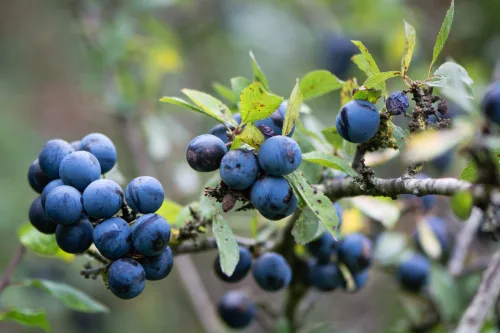
The Most Overlooked Shrub in the Czech Landscape Sloe Feeds Bees Shelters Birds and Bears Fruit Few People Know
Blackthorn (sloe) is an unassuming, thorny shrub that supports wildlife early in the season and yields dark, frosted fruits in autumn. Once touched by frost, its astringent sloes become a valued ingredient for preserves, drinks, and traditional remedies.
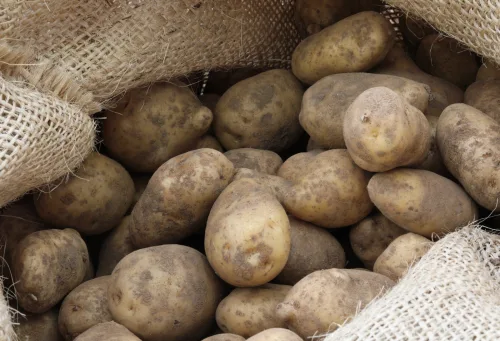
How to Choose a Sack for Storing Potatoes So They Don’t End Up in the Compost in a Few Weeks
The right storage sack helps protect potatoes from light and excess moisture, two common reasons they spoil. Learn when to choose a jute sack or a paper sack and how to keep your crop sound for months.
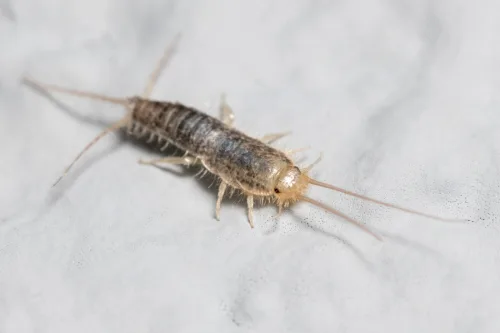
Silverfish Appear at Night and Vanish into Cracks Get Rid of Them with One Change Not a Spray
Silverfish thrive in dark, damp corners and often show up only at night. Long-term control comes from drying the space and removing hiding places, not just spraying chemicals.
Comments (0)
Be the first to comment.