
 English
  Polski
  Deutsch
  Nederlands
  Svenska
  Norsk
Norsk  Dansk
Dansk  Français
  Italiano
  Español
  Português
  Slovenčina
  Suomi
Suomi  Gaeilge
 Want Begonias Covered in Flowers, Watering, Light and Feeding Make the Difference
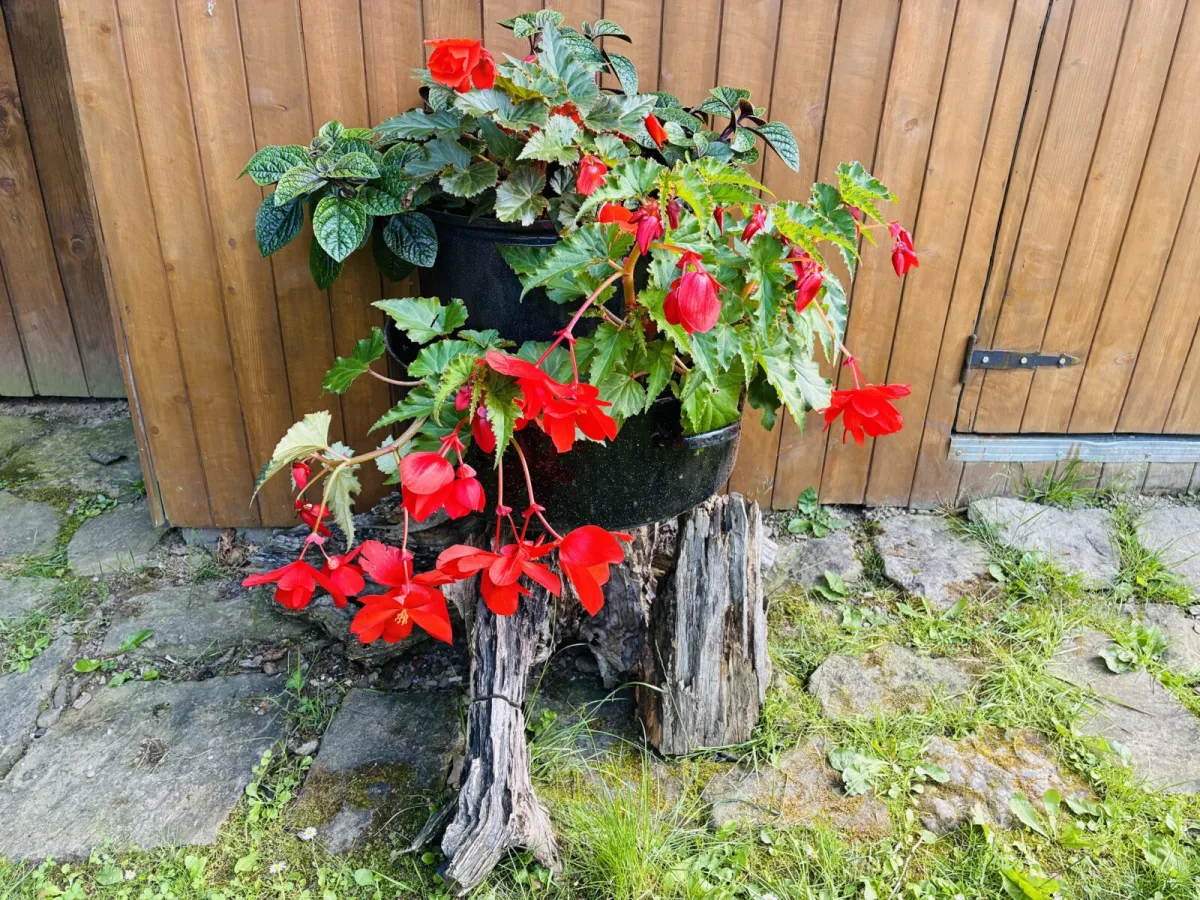
Begonias are among the most popular plants for summer displays because they can flower continuously from the start of summer right up to the first frosts. They’re used in pots, window boxes, hanging baskets and seasonal bedding schemes. A big advantage is that many species and cultivars also do well in partial shade, where the choice of flowering plants is more limited. With the right care, begonias can add colour and body for virtually the whole summer.
Basic groups of garden begonias
For outdoor growing, you’ll most often come across two groups. Tuberous begonias are ideal for containers and hanging baskets because they produce showy blooms and flower for a long time. The second group is fibrous-rooted begonias, often called semperflorens, used mainly for summer bedding and edging. Each group has slightly different needs, so it pays to know exactly what you’re growing.
Tuberous begonias in pots and hanging baskets
Tuberous types, often derived from Begonia × tuberhybrida, are valued for rich colours and striking flowers. A single plant produces both male and female flowers, with the most flamboyant blooms usually being the male ones. For hanging containers, forms related to Begonia boliviensis are also popular, such as the Million Kisses type, which flowers freely and has an elegant trailing or semi-trailing habit.
Starting tubers indoors in spring
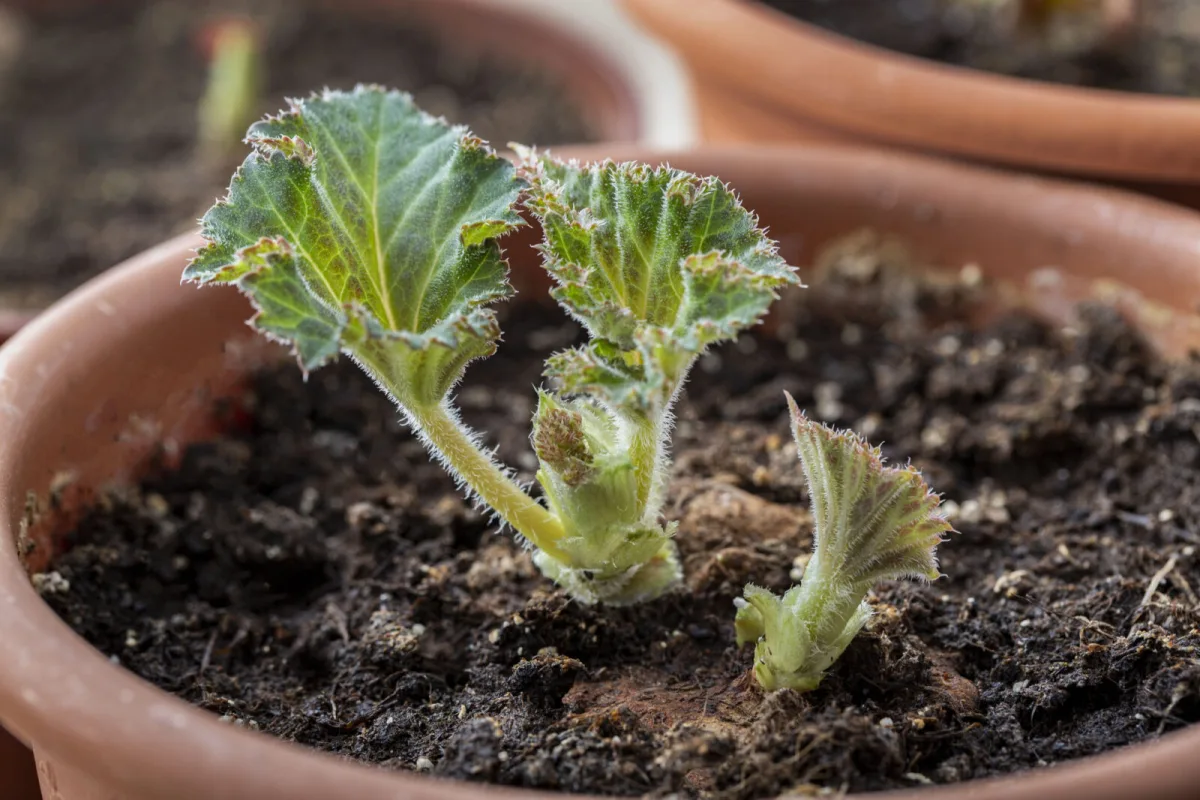
Begin waking the tubers in March to April. A temperature around 18 °C is ideal. Use a shallow tray with an airy, slightly sandy compost that’s evenly moist but not waterlogged. Place the tubers hollow side up, about 2 cm apart, and cover only lightly so they sit about 2.5 cm below the surface. Once leaves appear and growth gets going, pot each one up into individual pots roughly 10 to 12.5 cm across.
Planting out after frosts and summer care
Move plants outdoors only after hardening off and once the risk of frost has passed. Begonias cope with sun and partial shade, but in containers they often do best where they aren’t exposed to scorching afternoon sun. In beds, they appreciate fertile soil. Keep watering regular, especially in dry spells, while trying not to wet the foliage unnecessarily, as damp leaves can encourage disease. About four to six weeks after the last repotting, start weekly feeding with a higher-potash fertiliser, typically similar to tomato feed, and continue until around September.
Overwintering tuberous begonias
Tuberous begonias need lifting before the first frosts. As the leaves naturally start to yellow, gradually reduce watering. Once the plant has died back, let the tubers dry, then store them in barely moist sand or compost in a frost-free place, ideally around 7 °C. Check them occasionally and moisten very lightly so the tubers don’t shrivel too much. With some trailing types the tuber can be small after the first season, so many growers treat them as seasonal plants and buy new ones each year.
A more cold-tolerant tuberous begonia for shady spots
In more sheltered corners of the garden, a tougher tuberous begonia is sometimes planted, looking especially exotic towards late summer. Begonia grandis subsp. evansiana is often recommended, as it can cope with temperatures around freezing. Plant the tubers about 5 to 7.5 cm deep in free-draining, moderately fertile soil and in a sunny, sheltered position. In mild areas, tubers may stay in the ground if they’re at the base of a warm south-facing wall and given a protective layer for winter. A safer approach is to start the tubers in cool conditions around 10 °C, one tuber per pot about 10 cm, and plant them out only after frosts. In autumn, as the leaves yellow, dry the tubers and overwinter at a minimum of 2 to 4 °C.
Semperflorens begonias for beds and partial shade
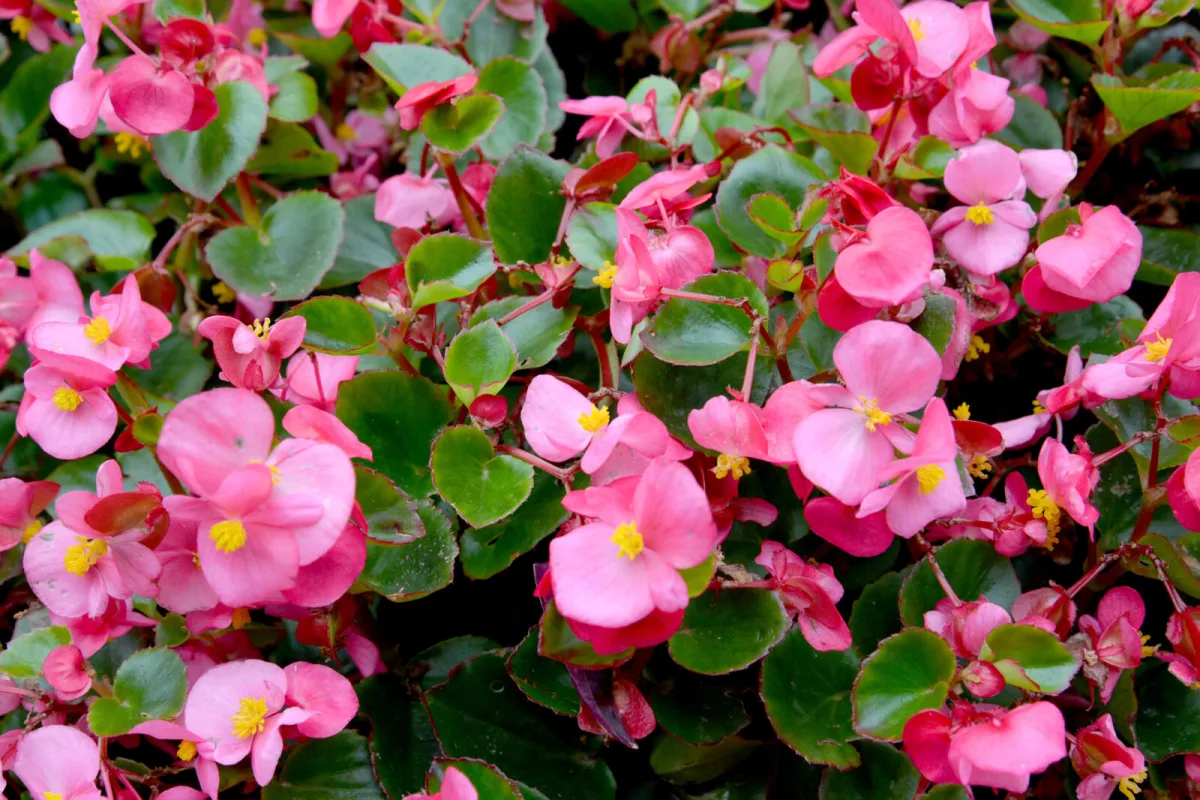
Semperflorens begonias have fibrous roots and are warmth-loving, so they’re most often grown as annuals. The flowers are typically white, pink or red and keep coming all summer until the first frosts. Plants are compact, often with attractive foliage, and they’re among the few reliable bedding plants that still look good in partial shade. You can grow them from seed or buy young plants in spring.
Plant them out only after hardening off and when frosts are over. In containers, feed once a week with a high-potash fertiliser through the summer. Keep watering regular, and when watering try to keep the leaves as dry as possible.
Pruning and staking
For everyday garden growing, there’s no need to fuss over the flowers. However, if you’re growing tuberous begonias for exhibition-quality blooms, the female flowers are sometimes removed so the plant puts more energy into the showier ones. Stems and leaves can be brittle, so taller plants benefit from support with canes, especially in windy positions and in containers.
Propagation by begonia type
Dividing tubers
Tuberous begonias can be propagated by dividing the tuber. First, allow it to sprout normally. Once shoots appear, cut the tuber into sections so each piece has at least one bud. Let the cut surfaces dry for a few hours, then pot up the pieces so the tuber sits roughly level with the surface of the compost. It’s important to know that a piece without a bud and without existing roots won’t grow.
Stem cuttings of tuberous begonias
Another option is taking cuttings in spring, usually in April. Take a shoot about 10 cm long with a heel, meaning a small piece of the tuber attached. Insert the cuttings into a sandy propagation compost and they root well with bottom heat of around 18 to 21 °C.
Seed and cuttings for semperflorens begonias
Sow seed in February or March into seed compost or multipurpose compost and keep at around 21 to 25 °C. The seed is very fine, so don’t cover it deeply; sow on the surface because it needs light to germinate. You can cover with film, or simply dust very lightly with fine sand. Once seedlings have their first true leaf, prick them out into fresh compost and pot on gradually into larger pots. Double-flowered cultivars are often propagated more by cuttings. Stock plants are overwintered in a cooler, bright place, and in April you take cuttings about 7.5 to 10 cm long, rooting them in a sandy compost with bottom heat around 18 to 21 °C.
Cultivars worth trying
For hanging baskets and containers, the Begonia Million Kisses series is a great choice, with a semi-trailing habit and abundant flowers. From this group, Devotion is well known for its slimmer, pointed green leaves with a soft pink edge and velvety red trailing blooms on pink stems, and it usually doesn’t need regular deadheading. For a cascading effect, the Illumination series is also popular, suitable for hanging containers and available in many colours, including strong orange-red tones. For beds, Ambassador Rose is a good choice: a more compact semperflorens begonia with glossy green leaves flushed red and single pink flowers with yellow stamens appearing all summer.
Common problems and how to prevent them
Tubers can rot easily in waterlogged compost, so good drainage is essential, and for pots it helps to raise the container so excess water can drain away. Flower drop can sometimes signal the opposite problem: drought. During winter storage, tuber rot can occur, so check them regularly. Tuberous begonias may suffer from powdery mildew, leaf spots and occasionally root rot. Young seedlings can develop damping off if conditions are too wet and poorly ventilated. Leaves can also dry out or scorch in hot, strong sun, so light shade during the hottest part of the day can be helpful.
Practical tip: The most common mistake with begonias is the combination of cold and wet. If you provide a free-draining compost, regular but moderate watering and a sheltered position, they’ll reward you with long-lasting, truly spectacular flowering.
Source: Rhs, Garden Design , Pestrazahrada.cz
Related articles
Drought tolerant fruit trees for Czech gardens that handle heat and winter frosts
Warmer summers and longer dry spells are changing what can be grown in Czech gardens. With the right variety and a sunny, sheltered spot, olives, pomegranates and figs can cope with heat, drought and even winter cold.
Thuja hedges are on the way out gardeners are choosing a shrub that shrugs off frost and drought and never looks dull
Thuja may be a long-standing classic, but today’s hedges are increasingly built from more varied shrubs that look better through the seasons. One standout choice is ninebark, prized for its toughness, colour and easy care.
Autumn planted grapevines bud earlier the most common mistake happens before they even go in the ground
Planting grapevines in November can give them a head start in spring, as roots can still establish in warm soil. Success depends mainly on proper planting depth and reliable winter protection.
Comments (0)
Be the first to comment.