
 English
  Polski
  Deutsch
  Nederlands
  Svenska
  Norsk
Norsk  Dansk
Dansk  Français
  Italiano
  Español
  Português
  Slovenčina
  Suomi
Suomi  Gaeilge
 Rose Campion Mistake Free Common Missteps and How to Avoid Them
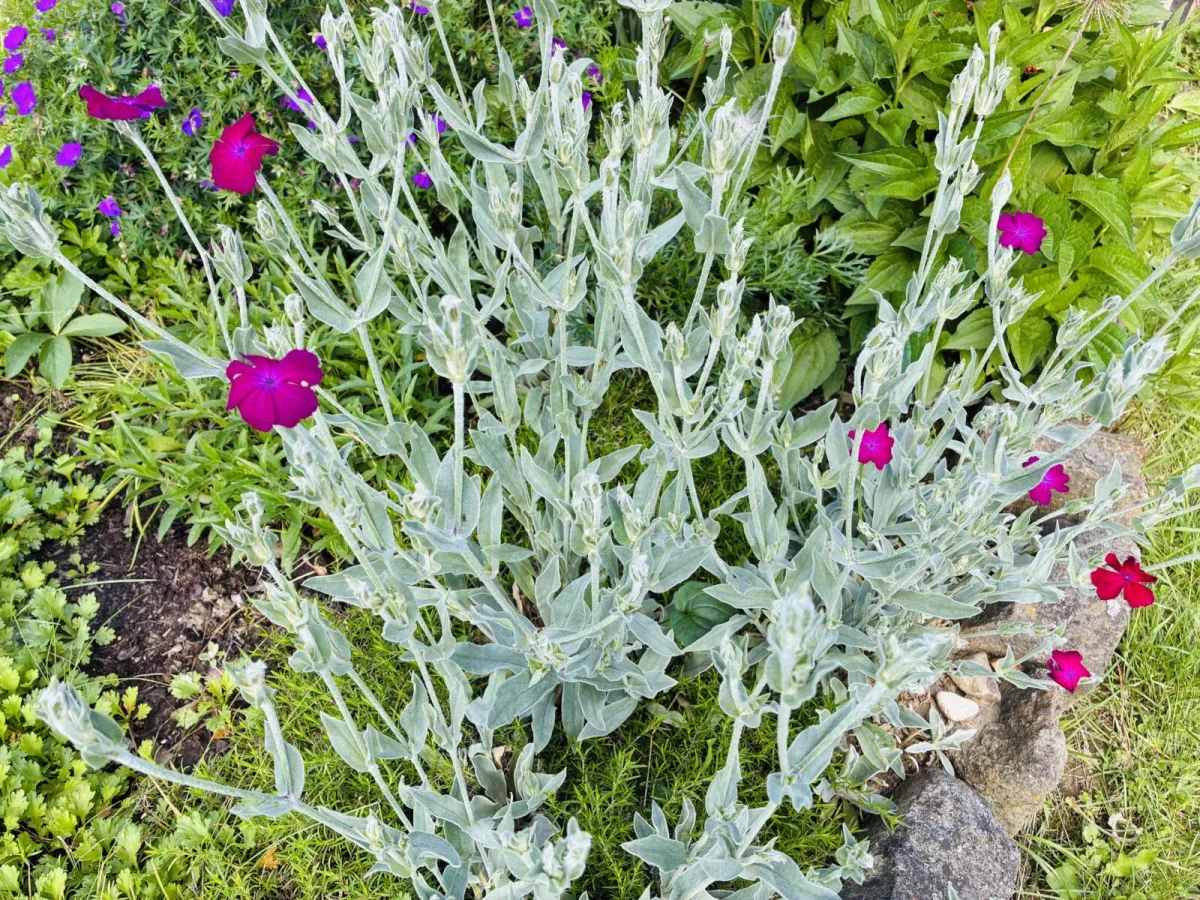
Rose campion, botanically Lychnis coronaria, is a standout plant with softly felted, silvery green leaves and rich pink to magenta flowers. In the garden it can create a strong colour accent, especially from mid to late summer, when the blooms appear in larger flushes. It’s often classed as a short-lived perennial or a biennial, but in practice it behaves very reliably because it readily self-seeds. That self-seeding is both an advantage and a small worry, depending on how tightly you want to control your borders.
The plant is usually around 30 to 45 cm tall. It prefers sun to light partial shade and copes well with less-than-ideal soils as long as they’re not waterlogged. When it’s happy, it forms distinct clumps that look equally good in a romantic cottage style and in more contemporary planting schemes where leaf and flower contrast is key.
Position and light
Rose campion flowers best in full sun, but it also tolerates partial shade. In hot summers, an exposed spot with intense afternoon sun can cause it to dry out more quickly, so an ideal position is often morning sun with a little shade during the hottest part of the day. If self-sown plants pop up in a spot that’s too shady, they may form attractive leaf rosettes, but flowering will be sparse or absent. In that case, it’s worth lifting and moving young plants to a brighter position.
Soil and drainage as the foundation of success
A major advantage of this perennial is its adaptability. It doesn’t need specially enriched soil and will manage perfectly well in an ordinary garden border. The key, however, is drainage. In heavy soil that stays wet for long periods, roots can rot and the plant may gradually decline. If your soil is on the clay side, planting into a slightly raised area or working in a coarser material will help excess water drain away more quickly after rain.
Watering and drought tolerance
Once established, rose campion is one of those plants that copes with dry spells without much trouble. That makes it a good choice for borders you don’t want to water often, or for parts of the garden with poorer soil. In most situations it’s fine with the same watering routine as other perennials in the border. The exception is extreme heat combined with strong sun, when leaves or flowers may wilt or scorch. Then it helps to give a one-off deep watering, ideally to the root zone rather than over the foliage.
Temperature, humidity and overwintering
This plant is fairly hardy and is commonly grown in zones roughly equivalent to USDA 5 to 8. In practice that means it can handle colder winters, but because it’s short-lived it won’t always return in exactly the same form each year. In very frosty winters, some older clumps may be killed, but new plants often appear in spring from seed shed in the border the previous season. It’s more important to watch out for winter and spring waterlogging than for frost itself. Summer humidity in temperate climates is usually not a problem, as long as the roots aren’t sitting in water.
Feeding and supporting growth
Rose campion usually doesn’t need regular feeding. In very poor, exhausted soil, though, a light improvement with compost can help by supplying basic nutrients and supporting plant vigour as well as seed production. That’s especially useful if you want the plant to maintain itself through self-seeding and gradually fill gaps in the border.
Varieties and colour forms for different gardens
Most commonly you’ll see the classic deep magenta form, with very pale, almost silver foliage. There are also cultivars with white flowers, bicoloured types, or double-flowered forms. The white form suits calmer planting schemes, so-called moon gardens, or single-colour borders. Some varieties have a strong central eye, so from a distance they can read as a softer pink. Double forms look especially effective in a romantic border, but can be harder to find and are more often sourced from seed than as ready-grown plants.
Cutting back, deadheading and controlling self-seeding
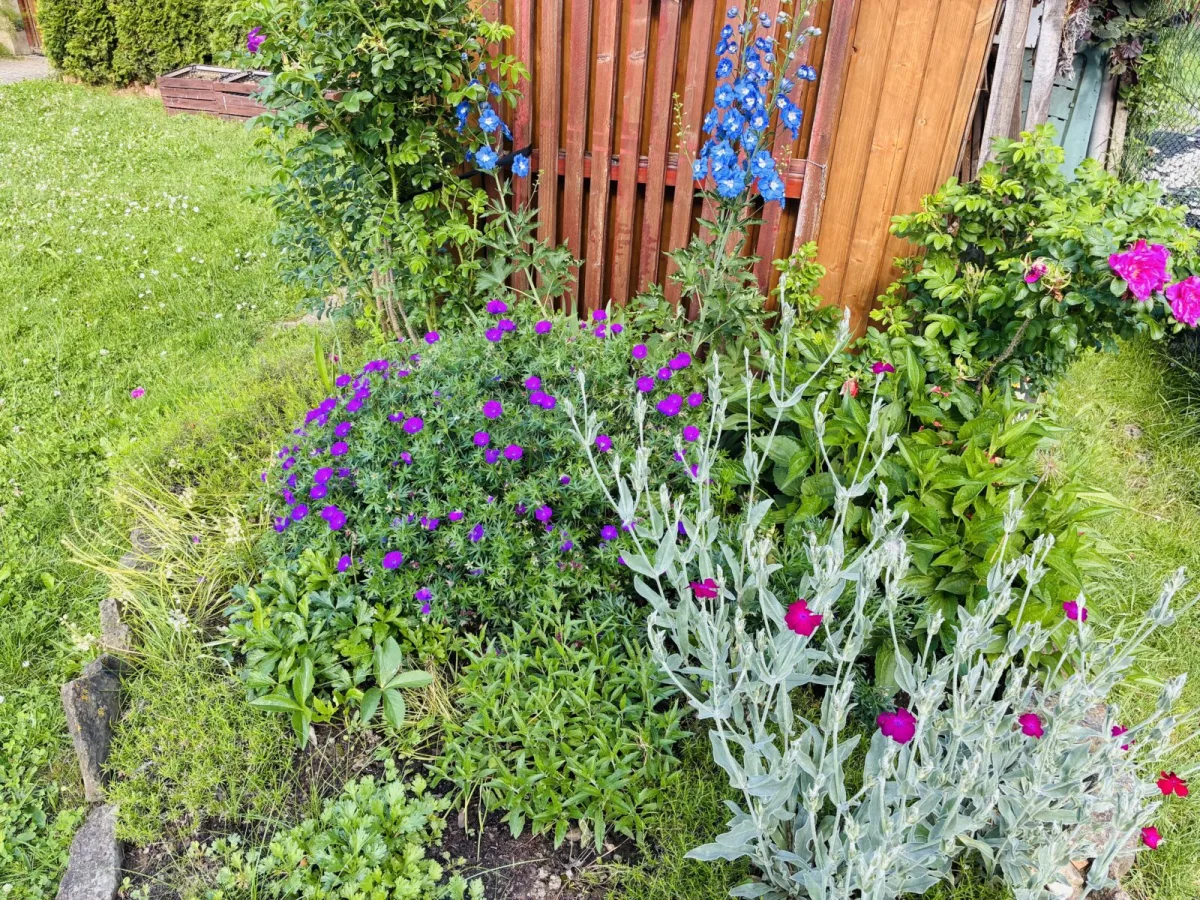
The most important job during the season is removing spent flowers. If you allow seed heads to ripen, the plant will spread easily into surrounding areas and may appear where you don’t want it. If, on the other hand, you want it to maintain itself, simply leave some flowers to set seed. After the main flush of flowering, it’s a good idea to remove dried flower stems to keep the clump looking neater. The leaves also have a lovely texture and can look decorative in a winter garden, so there’s no need for harsh autumn cutting if you don’t mind their natural look.
Propagation and transplanting
Rose campion can be propagated by dividing clumps, but because it often behaves as a biennial, most gardeners rely on seed. The easiest approach is to let it self-seed and then in spring simply select and, if needed, move young seedlings to better places. If you want precise control over where it grows, you can sow seed directly into a prepared border.
How to grow rose campion from seed
You won’t always find plants for sale in garden centres, but seed is commonly available. It’s worth bearing in mind that in the first year the plant usually forms mainly a leaf rosette, with flowers arriving in the second season. For better germination, seed benefits from a period of cold, so autumn sowing outdoors often produces plants in spring with very little extra effort. You can also sow in spring after the last frosts, but it helps to provide conditions similar to cold stratification, or to stratify the seed beforehand.
When sowing, simply press the seed lightly onto the surface of finely loosened, moist soil. The seeds are small, so a heavy watering can easily wash them out or gather them into clumps. Instead of a watering can, use a fine mister to moisten the compost without disturbing the surface. For spring germination, good light is also important, so it’s worth thinking about how sunlight falls on that spot as the season progresses. Seed can also be started indoors, but it needs a cold period before sowing.
Pests and diseases
This is one of those low-trouble plants that is usually not bothered by serious pests or diseases. That makes it suitable for borders where you don’t want to intervene often with chemicals or constant hands-on control. Gardeners also appreciate that wildlife doesn’t find it especially tempting. Deer usually leave it alone, and it’s not a common target for small rodents either. The biggest risk to the plant’s vitality is typically waterlogged soil and a poorly chosen site.
Common questions when growing
Is it an annual or a perennial
Most often it behaves as a biennial or a short-lived perennial. That means individual plants may not last many years, but thanks to self-seeding you can have flowering plants in the garden in practically every season.
Is the plant toxic to dogs
Rose campion is not commonly listed as toxic to people or pets. Even so, the general rule applies: supervise pets that chew ornamental plants, especially sensitive individuals.
Is it suitable for a vase
As a cut flower it lasts for several days, and in summer arrangements it stands out thanks to its strong colour and simple flower shape.
What to combine it with in a border
It looks best in a cooler colour palette, paired with blues, purples and other shades of pink. In naturalistic or cottage-style planting, you can combine it with flowers of a similar character so the colours complement each other and the silvery foliage provides a calmer backdrop for neighbouring plants.
Source: The Spruce, Gardeners World , Pestrazahrada.cz
Related articles
A Pineapple Top Will Root in Two Weeks, but Success Depends on the Step Most People Skip
Don’t throw away the leafy crown when you cut a pineapple. With the right prep, light, warmth and careful watering, you can root it and grow a houseplant that may eventually fruit.
Overwintering Geraniums in a Box Ensures Stronger Growth and More Abundant Spring Bloom
Many people throw balcony geraniums away after the season, even though they can overwinter very well. Stored correctly in a box in cool, dark, dry conditions, they’ll come back stronger and flower generously in spring.
This perennial flowers when others are finishing, thrives in shade and is still little known in the Czech Republic
Liriope is a tough, evergreen perennial with grassy foliage that comes into its own at the end of summer, when many other plants are fading. It thrives in partial shade to shade, needs little care, and adds structure to borders year-round.
Comments (0)
Be the first to comment.