
 English
  Polski
  Deutsch
  Nederlands
  Svenska
  Norsk
Norsk  Dansk
Dansk  Français
  Italiano
  Español
  Português
  Slovenčina
  Suomi
Suomi  Gaeilge
 Interesting Facts About Chicken Eggs from Laying to Hatching Chicks
A young female in her first year is called a pullet, at least until she starts laying. In most breeds, the first egg appears at roughly around 20 weeks of age, although it can vary with genetics and husbandry conditions. Some hens can lay almost daily, others every other day, and some only once or twice a week.
Now and then, an individual bird never settles into regular laying, for example because of physical irregularities. And even good layers can temporarily fall out of their normal routine. Common causes include moulting, short winter days, excessive heat or hard frost, illness, lack of quality nutrition, stress, or too little fresh water. Once the issue passes or is corrected, laying usually returns to normal.
Hens tend to have their highest production for about the first two years, then laying gradually declines, although some good layers keep going longer. It’s also important to know that a hen will lay even without a rooster. A rooster is only needed when you want fertilised eggs intended for hatching.
How an egg forms inside a hen
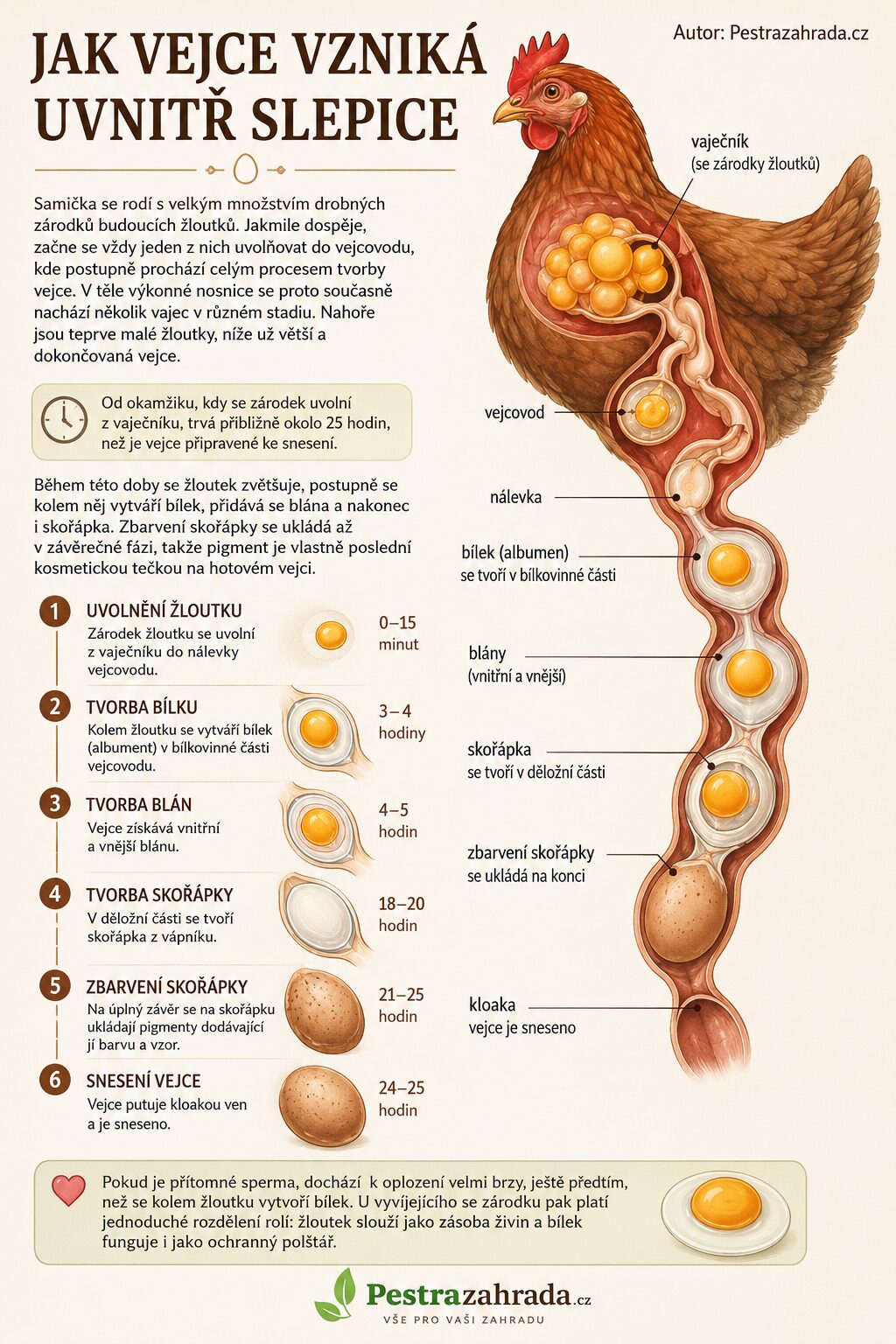
A female is born with a large number of tiny beginnings of future yolks. Once she matures, one of them is released into the oviduct, where it gradually goes through the whole process of egg formation. In a productive layer, several eggs are therefore in the body at the same time, each at a different stage. At the top are small yolks, lower down are larger ones and nearly finished eggs.
From the moment the yolk is released from the ovary, it takes approximately about 25 hours for the egg to be ready to be laid. During this time the yolk grows, the albumen forms around it, then membranes are added, and finally the shell. Shell colour is deposited right at the end, so the pigment is essentially the last cosmetic finishing touch on the completed egg.
If sperm is present, fertilisation happens very early, before the albumen forms around the yolk. For a developing embryo, the division of roles is simple: the yolk serves as a nutrient store, and the albumen also works as a protective cushion.
Why an egg usually isn’t dirty when it’s laid
A hen has a single external opening through which both eggs and droppings pass. That doesn’t mean an egg is automatically soiled during laying. Two separate tracts empty into the shared chamber: the oviduct and the intestine. At the moment the egg moves out, the intestinal part is temporarily closed, so the egg passes without contacting waste.
Laying timing and the influence of light
The typical interval between two eggs is roughly those 25 hours. Even a hen that lays almost every day will usually lay a little later each day. Because hens generally don’t lay in the dark, once her cycle would land around dusk, she’ll often hold the egg over until the next morning.
Calcium as the key raw material for the shell
Shell formation puts a heavy demand on the body’s calcium reserves. In some layers, during intensive production you can notice paling of the comb and wattles and even the colour of the shanks, because minerals are preferentially used for shells. Calcium needs to be topped up through feed, suitable supplements such as crushed oyster shell, or access to mineral-rich ground for hens that range outside.
Unusual eggs and differences between clutches
Pullets at the start of laying often produce eggs that are irregular until their bodies settle into a steady rhythm. By contrast, older hens may occasionally show oddities due to age, illness, or stress. First eggs are often smaller and only later reach the usual size the keeper is used to.
Among the well-known curiosities are tiny eggs that pass through the oviduct too quickly and don’t have time to grow. Sometimes a shell-less egg appears because it was released before the shell had time to form. Such an egg may hold together only thanks to the membranes, or it may be a freely spilled yolk with albumen.
Interesting too are cases where a so-called egg-within-an-egg forms. One shelled egg is wrapped again in the materials of another egg, and the whole thing receives an extra shell. Fairly well known are double-yolk eggs, which tend to be unusually large. Less commonly, you may find an egg without a yolk, made up practically of albumen only.
Now and then you’ll see a wrinkled, bumpy, rough, or oddly shaped shell, or a shade that surprises you. Egg size depends on breed, age, and the hen’s bodyweight. Larger breeds usually lay larger eggs, bantams smaller ones. Older layers often lay larger eggs than young birds.
Shell colour and what it really means
Shell colour is primarily a breed trait. Most commonly you’ll encounter light to medium brown eggs, but there are also breeds with white, dark brown, green, blue, or cream eggs. The key point is that the colour is only on the surface. Inside, eggs from different shell colours are essentially the same.
Even in the very same hen, colour intensity can change—some days she lays a paler shell, other days a darker one. Most eggs have a natural subtle sheen, but some hens lay eggs with a chalkier, matte finish.
Hen behaviour around the nest and eggs
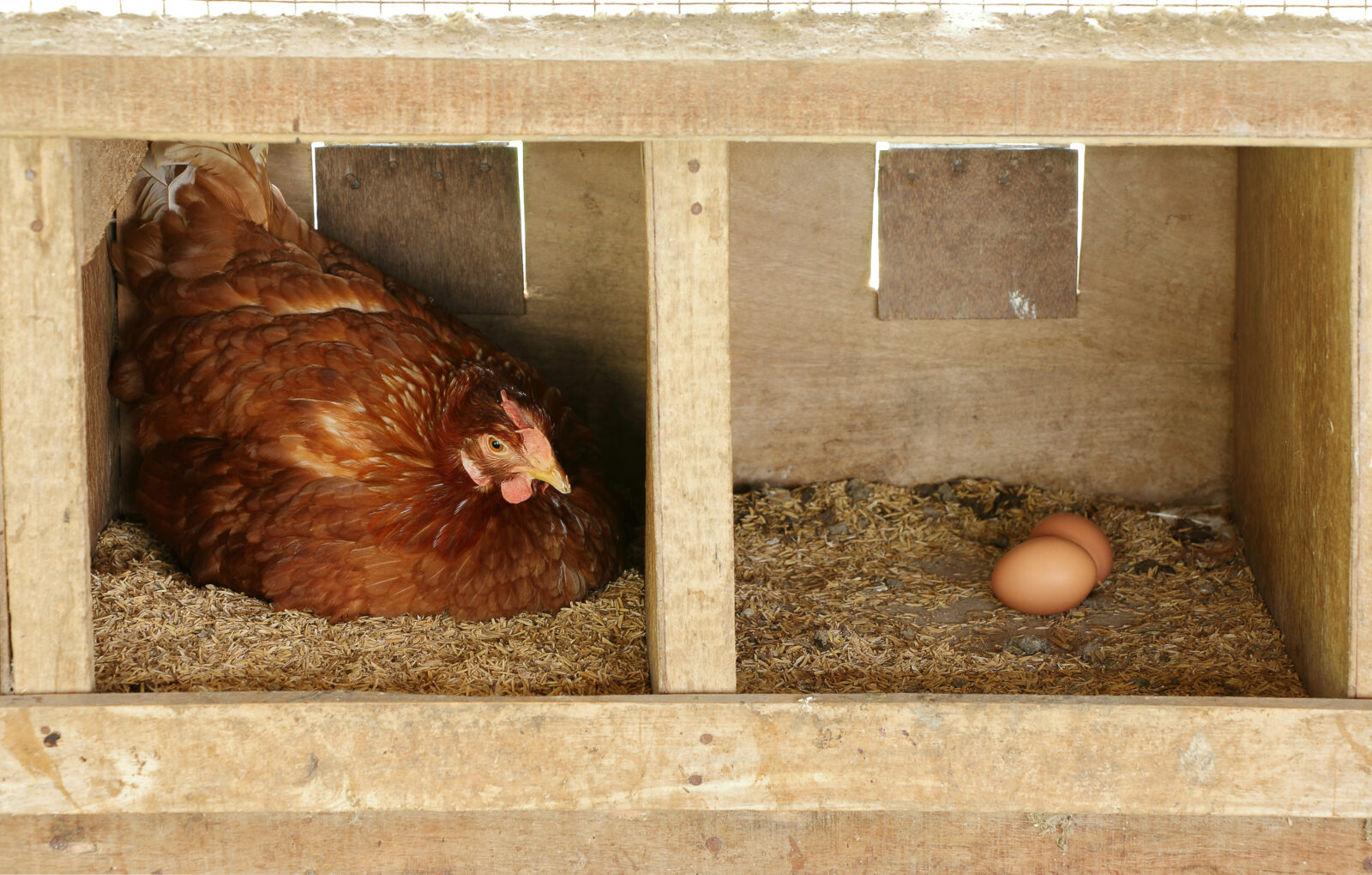
In practice, you usually don’t need one nest box per layer. Hens often lay communally and choose the same nest as the others. Some prefer privacy; others will cram into one box two or three at a time while the next nest sits empty.
Sometimes a hen will sit on eggs already laid and add her own; other times she’ll lay an egg away from the shared spot and leave it on its own. Another common phenomenon is the so-called egg song, when a hen loudly and happily announces before or after laying that the job is done.
Hens learn by watching. If you leave one egg in the designated nest—even a fake one—it can encourage the others to lay there rather than on the floor or outside. Free-ranging hens, though, sometimes deliberately choose an outdoor hideaway, and occasionally one goes missing for a longer time and returns only with chicks in tow.
When a hen breaks or eats eggs
An egg can be accidentally broken in the nest and it usually quickly becomes a food source. If you occasionally find bits of shell or yolk in the box, it doesn’t have to mean there’s a problem. A different situation is when a hen becomes a habitual egg-eater and deliberately breaks them. In that case the bad habit is hard to stop, and it can spread because others learn by imitation.
Cracks and pinholes don’t necessarily point to a culprit, though. An egg can crack when a hen sits down, turns around, or rearranges bedding. Sometimes a hen only pecks at an egg out of boredom or curiosity without intending to eat it.
Eggs can also be fed to hens, raw or cooked. They’re a source of protein, and ground shell provides calcium. Kitchen eggshells can be returned to the flock as a supplement, and it’s sensible to crush them first so they don’t look too much like whole eggs.
The rooster, fertilisation, and what happens after mating
A rooster is unnecessary for laying itself, but essential for fertilised eggs. On top of that he often acts as a flock guard, warns of danger, and actively searches for food. Even with an excellent rooster, not every egg will be fertilised. Some hens don’t interest him, others avoid him cleverly, and sometimes he simply has favourites.
Hens don’t have heat in the sense of being fertile only at a certain time. They can mate and lay fertilised eggs on an ongoing basis. Interestingly, sperm can survive in the oviduct for several weeks, typically about three to four, so a single mating can affect multiple subsequent eggs.
Broodiness, sitting on eggs, and hatching
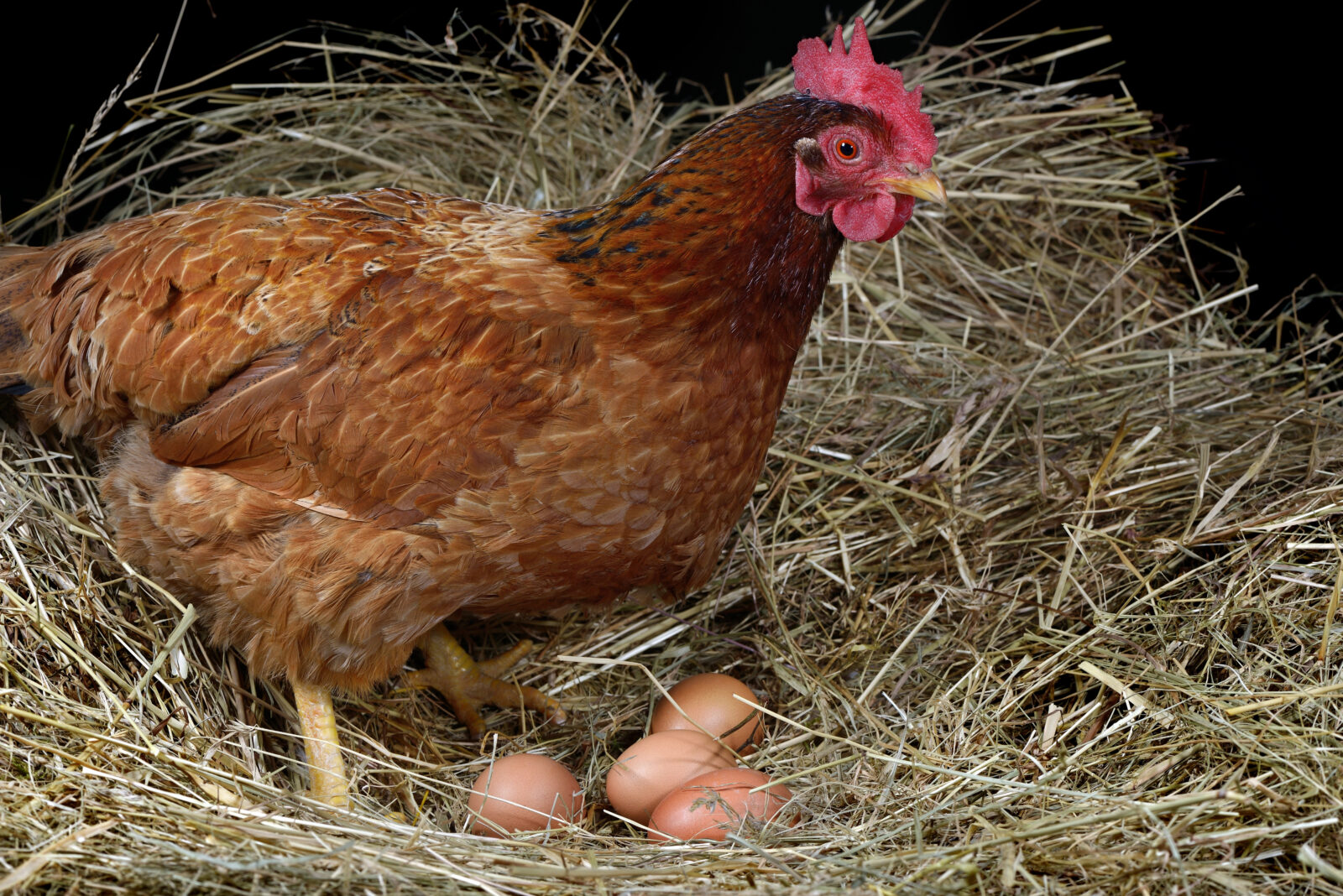
A broody hen can be used as a natural incubator, even for eggs from other hens, including a different breed. Such a hen will often sit on whatever is under her, regardless of whether the eggs are fertilised or who laid them. She may even roll in eggs from others so she has the clutch together.
If you want to keep track of which eggs are which, you can remove any extra eggs that are added later as you go. A simple pencil mark on the chosen eggs also helps so it’s obvious at a glance which ones should stay. A broody usually leaves the nest once a day briefly to eat, drink, and relieve herself, and during a normal short break the eggs generally don’t cool enough to be critical.
Chicks typically hatch around day 21 from the start of sitting or incubation, but a few days either way can still be normal, and some breeds tend to run slightly early or late. Not every fertilised egg develops, as egg quality and temperature fluctuations can play a role. And even a developing embryo may not complete the hatch—it can stop at various stages, even after it has pipped the shell. Double-yolk eggs hatch only rarely because there’s too little space inside.
When a broody pushes an egg out of the nest, she’s often signalling that something isn’t right with that egg or embryo. An experienced hen can cull such eggs on her own.
Eggs in the kitchen and how to tell freshness
A fresh egg tends to have a firm yolk with a layer of thicker albumen around it, while the outer white is more watery. On opposite sides of the yolk you can see two twisted white cords that hold the yolk in place. Their prominence doesn’t mean an embryo is developing; it’s a normal part of the egg’s structure.
There’s also a pale spot on the yolk. In an unfertilised egg it looks like a solid white dot; in a fertilised one it may show a faint ring. Fertilised eggs are perfectly edible, and freshly collected eggs do not contain a developed embryo, because development requires sustained warmth, for example under a broody hen or in an incubator. It’s sometimes said that fertilised eggs are more nutritious, but scientific evidence generally doesn’t support that.
Yolk colour changes with diet. It can range from pale yellow to deep orange. If hens get the same ration all the time, the shade is usually stable, while with grazing and kitchen scraps the colours may vary more often. Red or brown specks may appear in an egg—so-called blood spots or meat spots. They’re not dangerous, and anyone who prefers can simply remove them before cooking.
The shell has a natural protective coating that helps prevent bacteria from penetrating. That’s why it’s best not to wash eggs right after they’re laid, but only just before use. If an egg is dirty with blood, mud, or bedding, it can be carefully wiped and, most importantly, dried well.
If you’re unsure how old an egg is, a simple water test helps. The freshest egg stays on the bottom, an older one begins to lift, and a very old one usually floats. Those are best discarded, or cracked into a separate bowl and kept well away from your nose.
And finally, just an amused note: if there were an easy trick to persuade hens to lay golden eggs, goose keepers would apparently have plenty to envy us.
Source: Dine a Choock, Pestrazahrada.cz

A lover of nature, gardens, and everything that moves, blooms, or grows. He literally grows everything, from herbs to rare species, and he enjoys caring for animals just as much. In his work, he connects modern technology with tried-and-tested grandmotherly methods and is happy when both paths lead to the same goal.
Related articles
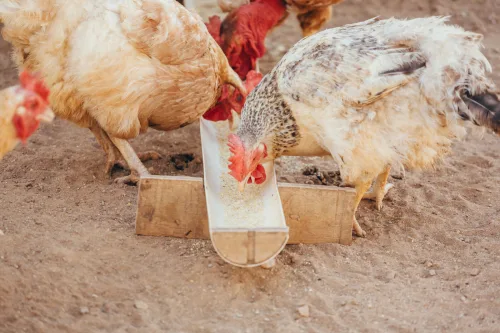
How to Choose a Chicken Feeder That Keeps Feed Dry, Clean and Pest-Free
A good chicken feeder should keep feed dry, reduce waste, and make access difficult for rats and wild birds. The right design and placement can save money and keep your coop cleaner year-round.
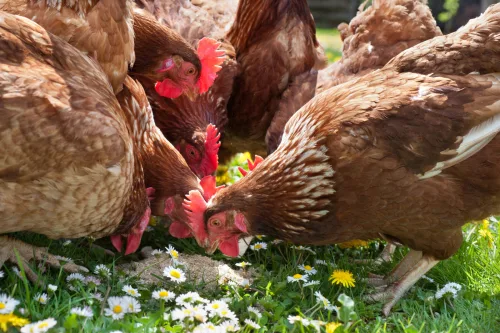
How to Feed Laying Hens So They Stay Healthy, Lay Steady All Year and Produce Strong Shells
A well-balanced diet is the key to healthy hens, strong eggshells and consistent laying. Learn what to feed, what to top up, and what to avoid through the seasons.
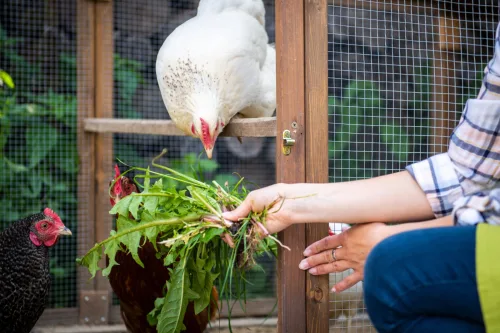
Which vegetables can chickens safely eat every day
Vegetables make a brilliant daily treat for chickens, adding moisture, fibre and valuable vitamins. The key is to use them as a supplement to a balanced complete feed, not a replacement.
Comments (0)
Be the first to comment.