
 English
  Polski
  Deutsch
  Nederlands
  Svenska
  Norsk
Norsk  Dansk
Dansk  Français
  Italiano
  Español
  Português
  Slovenčina
  Suomi
Suomi  Gaeilge
 How to Compost Chicken Coop Bedding Safely and Make Nutrient-Rich Fertiliser for the Garden
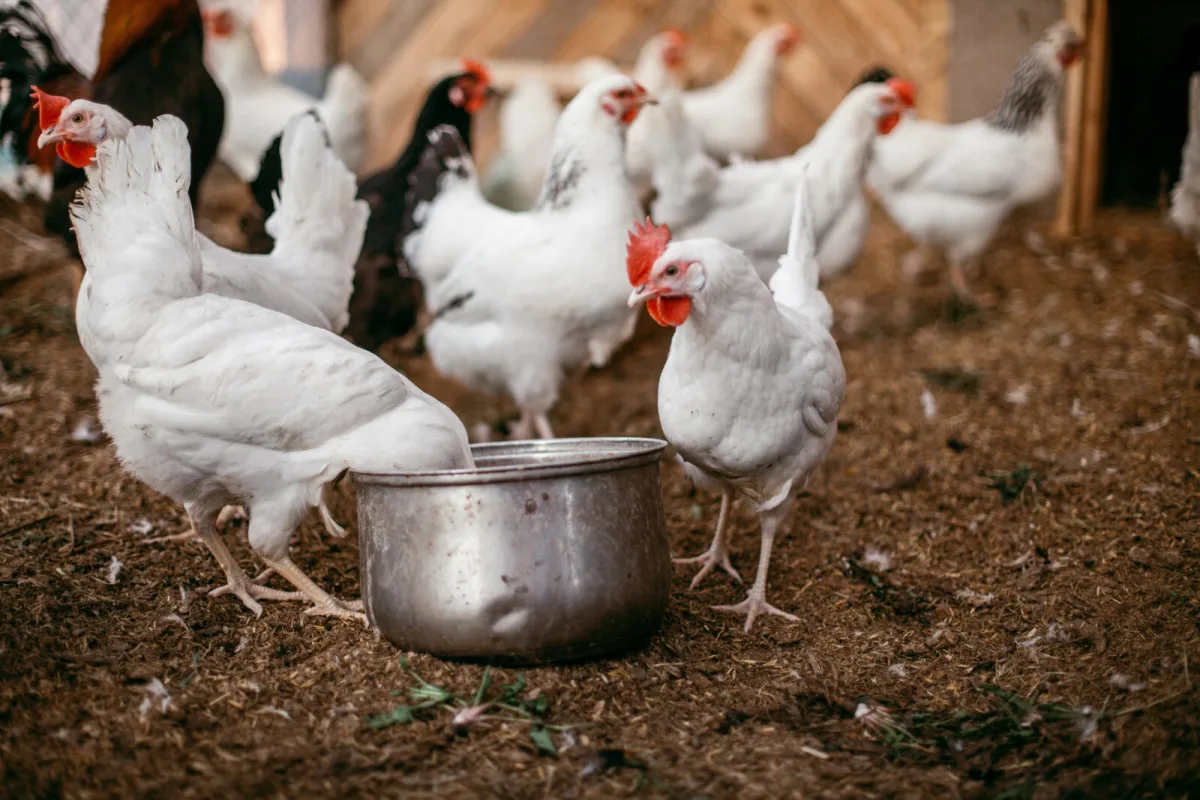
Keeping chickens in the garden brings more than just eggs—it also produces a large amount of bedding and manure. For home growers, this is an exceptionally valuable nutrient source, because it adds substances the soil needs for the growth of vegetables, herbs, flowers, and fruit shrubs. But for it to become a safe, easy-to-use material, it needs to be composted properly.
The aim of composting is to transform an overly “hot” fresh mix into mature compost—often nicknamed black gold by gardeners. In practice, it’s a dark, crumbly material with a smell reminiscent of woodland soil, easy to work into beds and releasing nutrients gradually rather than in a sudden hit.
Why you shouldn’t put fresh chicken manure straight onto beds
Chicken manure and coop bedding are usually far too concentrated for plants in their raw state. Direct application can damage roots, slow growth, and in extreme cases kill plants. Fresh material can also contain unwanted bacteria and pathogens that pose a risk to people—especially when growing and eating leafy greens or root vegetables.
Composting isn’t only a way to make fertiliser—it’s also an important step in reducing the health risks associated with fresh manure.
What composted chicken bedding brings
A fertiliser that releases nutrients steadily
Mature compost made from chicken bedding supplies the soil with a wide spectrum of nutrients. The key ones are nitrogen, phosphorus and potassium. It also contributes a range of trace elements, such as calcium for healthy growth, as well as magnesium, sulphur, manganese, copper, zinc, boron, iron and molybdenum. The advantage of compost is that it doesn’t release nutrients all at once, but gradually—gentler on roots and more stable for plants.
Chicken manure is generally more nutrient-rich than cattle or horse manure. The higher share of essential nutrients means that, when processed correctly, it can provide more usable nutrition to the garden for the same amount of material.
Improving soil as a soil conditioner
Compost doesn’t work only as a nutrient source. It also improves the physical properties of the soil—how it holds water, how quickly it drains, how well it aerates, and its overall structure. Soil rich in organic matter is less prone to erosion, holds nutrients better, and creates a friendlier environment for roots.
The organic component of composted bedding also supports soil microorganisms. These are the helpers that break down organic residues and make nutrients available to plants in forms they can take up more easily.
The principle of hot composting chicken bedding
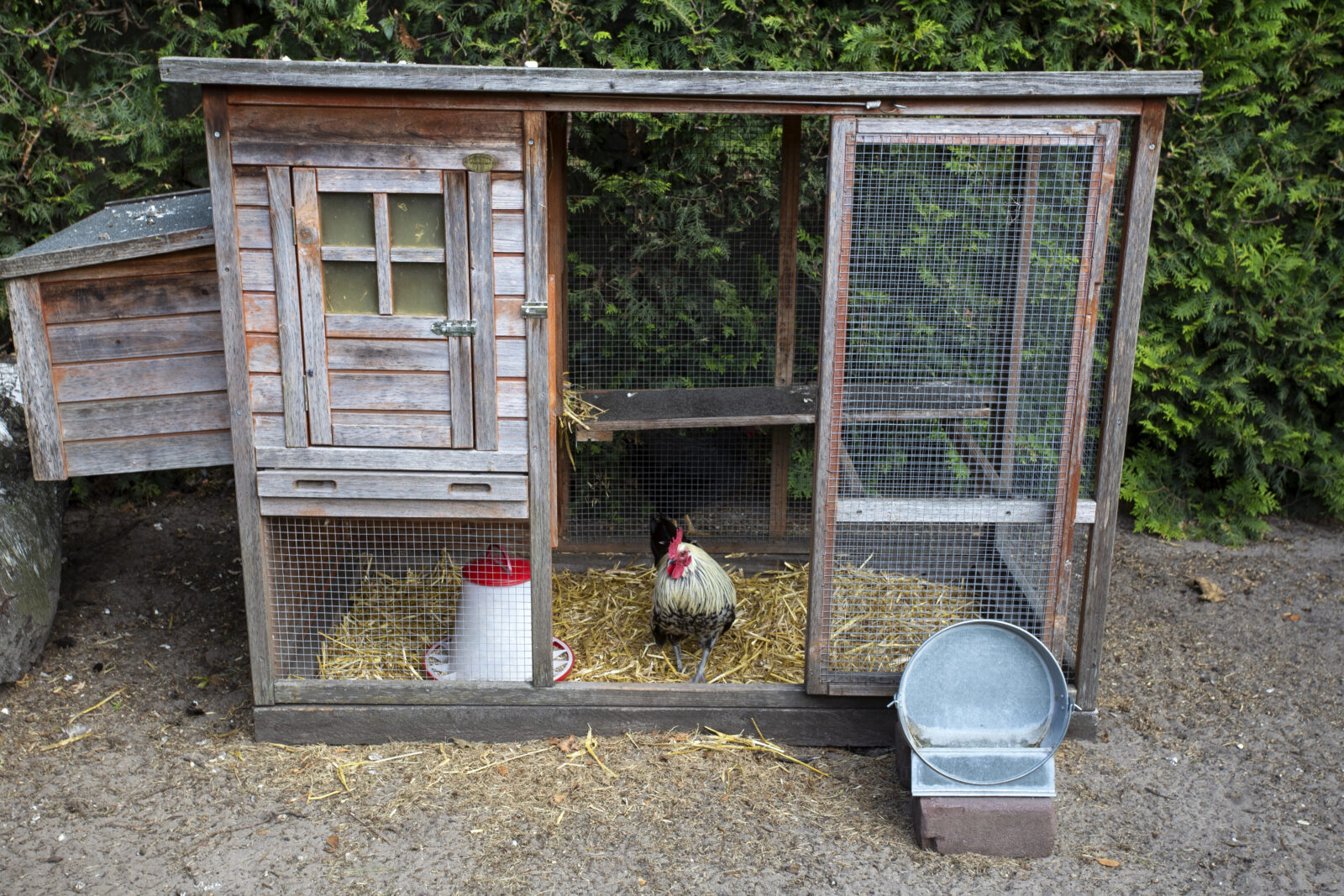
The most commonly recommended approach is so-called hot composting. For it to work, the compost needs the right balance of carbon-rich and nitrogen-rich components, suitable moisture, enough oxygen, and a temperature that allows rapid breakdown while limiting unwanted organisms.
The carbon-rich component is referred to in composting as brown materials. With chickens, this mainly means coop bedding such as wood shavings, sawdust or straw. You can also add dry leaves, pine needles, small twigs, hay, chopped corn stalks or paper.
The nitrogen-rich component is called green materials, and with chicken bedding it is primarily the droppings. It can also be boosted with grass clippings, coffee grounds, tea bags, peelings and scraps of fruit and vegetables, plant trimmings or eggshells.
Step-by-step composting method
Collecting bedding and manure
In the coop, bedding is commonly used to absorb moisture, reduce odour and improve hygiene. When cleaning, you can collect the bedding together with the manure and move it straight into a compost bin or onto a compost heap. This creates a base mix that’s easy to work with.
A practical approach is the so-called deep litter system, where the soiled layer is mixed regularly and fresh bedding is added gradually. The material then starts breaking down partly in the coop and, in cold weather, can generate some warmth. In spring, everything is removed and added to the compost. A more thorough clean-out is often recommended roughly twice a year, depending on the flock size and conditions in the coop.
The right carbon-to-nitrogen balance
A general composting rule assumes mixing roughly one part brown materials to two parts green materials. With chicken bedding, however, there is typically a lot of nitrogen, so the opposite often works better—adding more carbon-rich material. In practice, that can mean two to three parts brown material to one part green, to reduce odour, excess moisture and the overly “burning” strength of the mix.
Building the heap, water and the first heat-up
Ideally, make a compost heap from a single batch of material so it has enough volume to heat up. Then moisten and mix the pile. You can judge the right moisture with a simple handful test. If you squeeze a handful, it should just hold together lightly and crumble when released. A mix that’s too wet compresses into a firm ball, while one that’s too dry falls apart and won’t keep its shape.
With hot composting, you monitor the temperature in the core of the heap. For sanitising, a range of about 55 to 65 °C is recommended, and it should hold for several days. At higher temperatures, beneficial microorganisms can be suppressed and the process may slow down.
Repeated mixing and turning
Once the centre of the heap has heated up and then starts to cool, it’s time to turn it. The point is to move the cooler material from the edges into the centre, and shift the most decomposed, well-heated material from the centre outward. This gradually heats the entire volume, improves aeration and makes decomposition more even.
For a typical home-sized heap, it’s worth repeating this cycle several times. A simple rhythm is turning about once every ten days, depending on the weather, moisture level and how fast the material is breaking down.
Let the compost mature
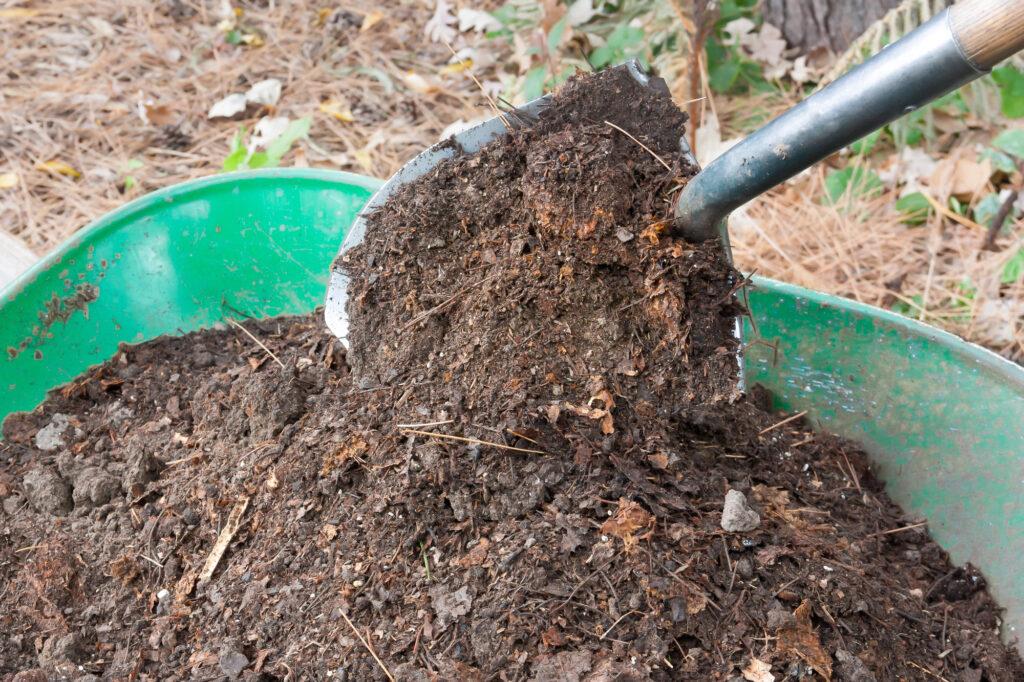
After the active heating phase, it’s best to let the compost mature. You can cover the heap loosely so it doesn’t get waterlogged, while also preventing it from drying out completely. You’ll recognise finished compost because it’s mostly dark, crumbly, without a sharp smell, and it has an earthy scent. The original bedding materials are no longer clearly recognisable.
Using finished compost in beds
Mature compost made from chicken bedding can be used in vegetable beds as well as in the ornamental garden. It can be spread on the soil surface as a natural mulching top-up, or lightly worked into the top layer of soil. The soil will hold moisture better, its structure will improve, and plants will have a steadier nutrient supply through the season.
This kind of compost is also a nice example of a closed-loop garden system: the chickens help you use up leftovers, and you turn waste into a valuable resource for further growing.
Safety recommendations when working with manure
Fresh chicken manure can contain organisms that may contaminate certain crops, especially root vegetables and leafy greens eaten raw. That’s why it’s important not to use uncomposted material directly on vegetable beds.
Do not spread fresh or immature chicken manure on beds intended for edible crops.
When handling manure, it’s sensible to wear gloves and wash your hands thoroughly afterwards. Vegetables should be washed carefully before eating. For home composting, it’s also not recommended to add the droppings of some animals—especially dogs and cats—because they can carry other types of parasites and pathogens; pig manure can be similarly problematic.
Composting as part of a sustainable garden
Composting chicken bedding is a practical way to reduce waste while improving soil fertility. Chickens provide not only eggs, but also the raw material for compost, and the garden pays it back with healthier harvests and stronger plants. If you keep an eye on the right material balance, moisture, airflow and regular turning, you’ll get a stable, safe and long-term beneficial compost that deserves a place in every garden.
Source: Get Strong Animals, Chicken Backyard, Pestrazahrada.cz

A lover of nature, gardens, and everything that moves, blooms, or grows. He literally grows everything, from herbs to rare species, and he enjoys caring for animals just as much. In his work, he connects modern technology with tried-and-tested grandmotherly methods and is happy when both paths lead to the same goal.
Related articles
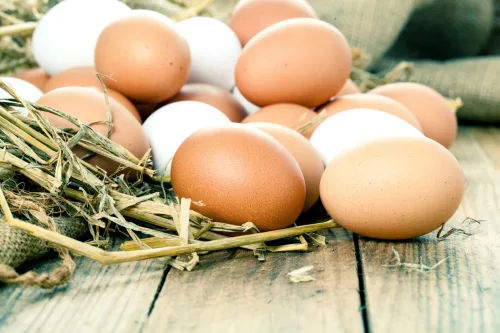
The Most Common Mistake With Home-Laid Eggs That Seems Careful but Actually Harms Them
Fresh eggs from your own or local hens have a natural protective coating that helps keep bacteria out. Washing them too soon can strip that protection and shorten their keeping quality.

An Empty Nest Box in a Tree Reveals a Mistake Even Experienced DIYers Make
Making a bird nest box is an easy project, but small construction and placement mistakes can leave it sitting empty. Get the sizing, ventilation, materials and siting right so birds will actually move in.
Late Feeding Weakens the Whole Colony and Beekeepers Know the Deadline They Must Not Miss
Successful overwintering depends on timely feeding and enough easily digestible stores. If you feed too late, you overburden winter bees and risk a weakened colony or starvation losses.
Comments (0)
Be the first to comment.