
 English
 Polski
 Deutsch
 Nederlands
 Svenska
 Norsk
 Dansk
 Français
 Italiano
 Español
 Português
 Slovenčina
 Suomi
 Gaeilge
An Empty Nest Box in a Tree Reveals a Mistake Even Experienced DIYers Make
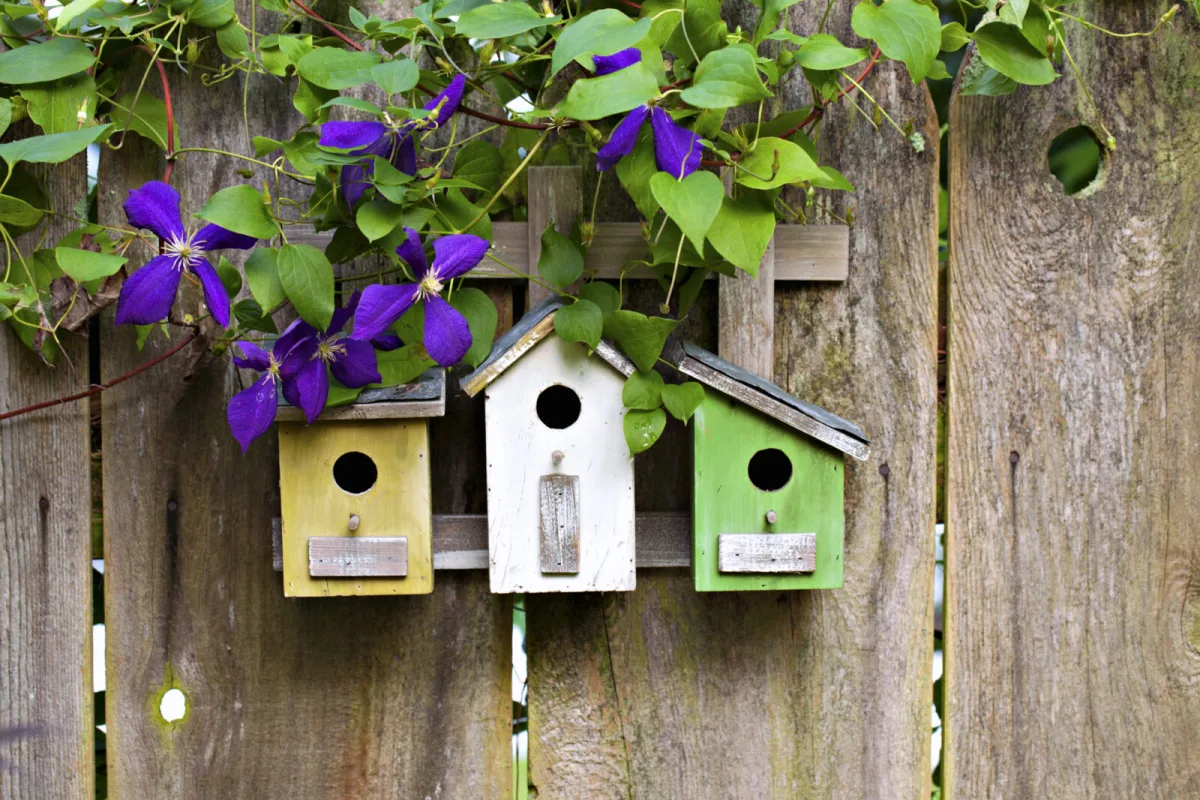
Making a bird nest box is a simple project that combines the joy of hands-on building with practical help for wildlife. A well-designed box offers birds a safe refuge, a place to rest, and protection from bad weather and predators. But to truly do its job, good looks alone aren’t enough. Sound construction, the right dimensions, and proper placement all matter.
When planning, think about which bird species occur in your area. Smaller birds need a smaller entrance hole and a snug interior, while larger species require a roomier design. The box should make birds feel secure, but it also needs to be durable and well ventilated.
What to consider before you start building
Correct placement of the nest box
Where you hang or fix the box affects whether it gets used just as much as the build itself. The best spot is a quiet location sheltered from strong wind, driving rain, and prolonged direct sun. The box should be positioned high enough that cats and other predators can’t reach it easily.
Choosing the right material
Wood is used most often because it’s natural, durable, and provides good insulation. It’s also important to avoid toxic paints, stains, or chemically treated materials that could harm birds. If you want to keep things eco-friendly, part of the box can be made from recycled materials, but they still need to be safe and sturdy.
Size and ventilation
A nest box shouldn’t be too cramped or unnecessarily large. It’s best to tailor the dimensions to the species you want to attract. Small ventilation holes are also essential to maintain a healthy environment inside. Without airflow, moisture can linger, reducing both the box’s usefulness and its lifespan.
What you’ll need for the build
For a classic wooden nest box, a few basic tools are usually enough. You’ll need boards for the walls, base and roof, plus nails or screws to join the parts. A saw and drill are also handy, allowing you to cut accurate pieces and drill the entrance hole. For extra comfort, you can add a little natural material inside, such as fine wood shavings or natural fibres.
If you prefer a budget-friendly, eco-conscious option, you can also use older household items. A sturdy plastic bottle, an old box, or another recyclable material can work. In that case, though, you must make sure the finished box is strong enough and weather resistant.
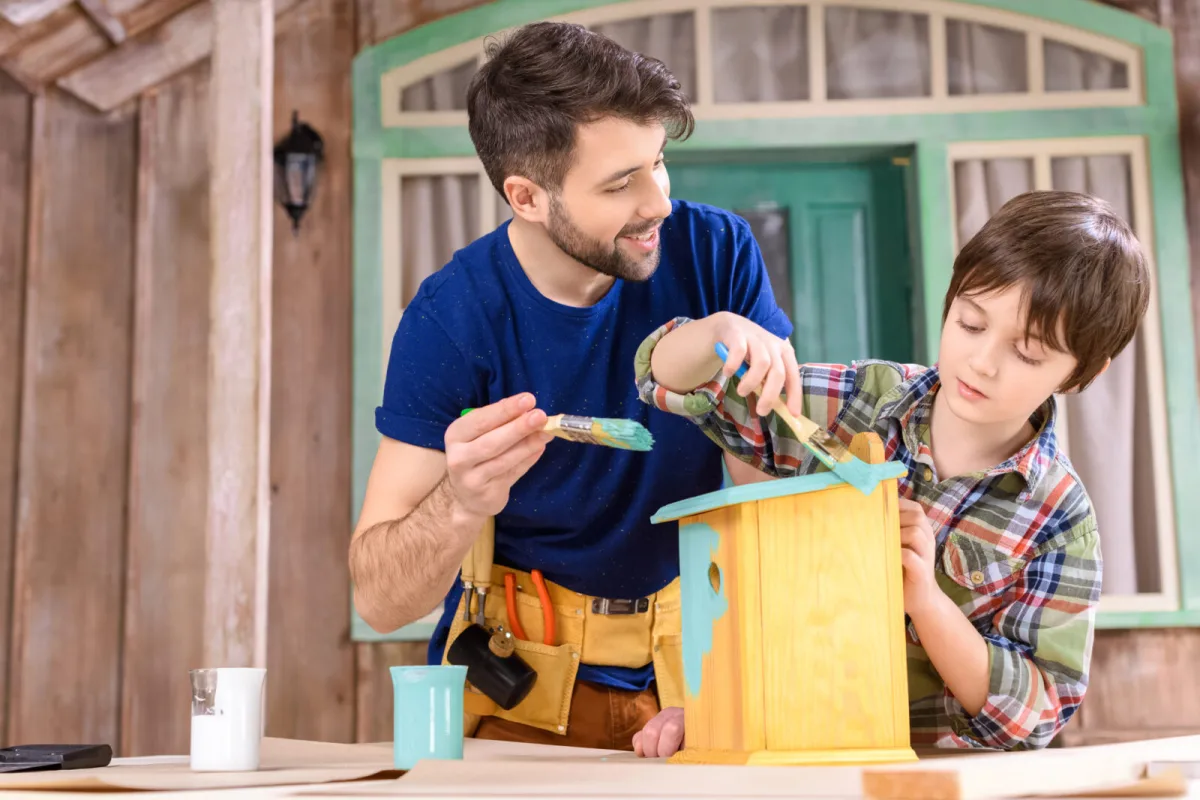
How to build a wooden bird nest box
Preparing the individual parts
Start by cutting the required parts from your boards. Typically this means the base, two side panels, a back panel, a front panel and the roof. Accuracy matters, because well-fitting joints improve stability and help prevent rainwater from seeping inside.
Making the entrance hole
Drill an entrance hole in the front panel sized for the birds the box is intended for. For smaller species, a diameter of roughly 3 to 5 cm is often suitable. The entrance size strongly influences which birds will accept the box and whether larger, unwanted visitors can get in.
Assembling the structure
Join the parts using screws or nails. The roof should be slightly sloped so rain can run off and won’t sit on the surface. While assembling, it’s worth thinking ahead about cleaning later on, for example by making one section easy to open.
Finishing and installation
If you want to decorate the box, use only bird-safe paints. Far more important than decoration is fastening it securely to a tree, wall or other suitable support. The box must be firmly fixed and shouldn’t swing or shift noticeably in the wind.
A nest box from recycled materials
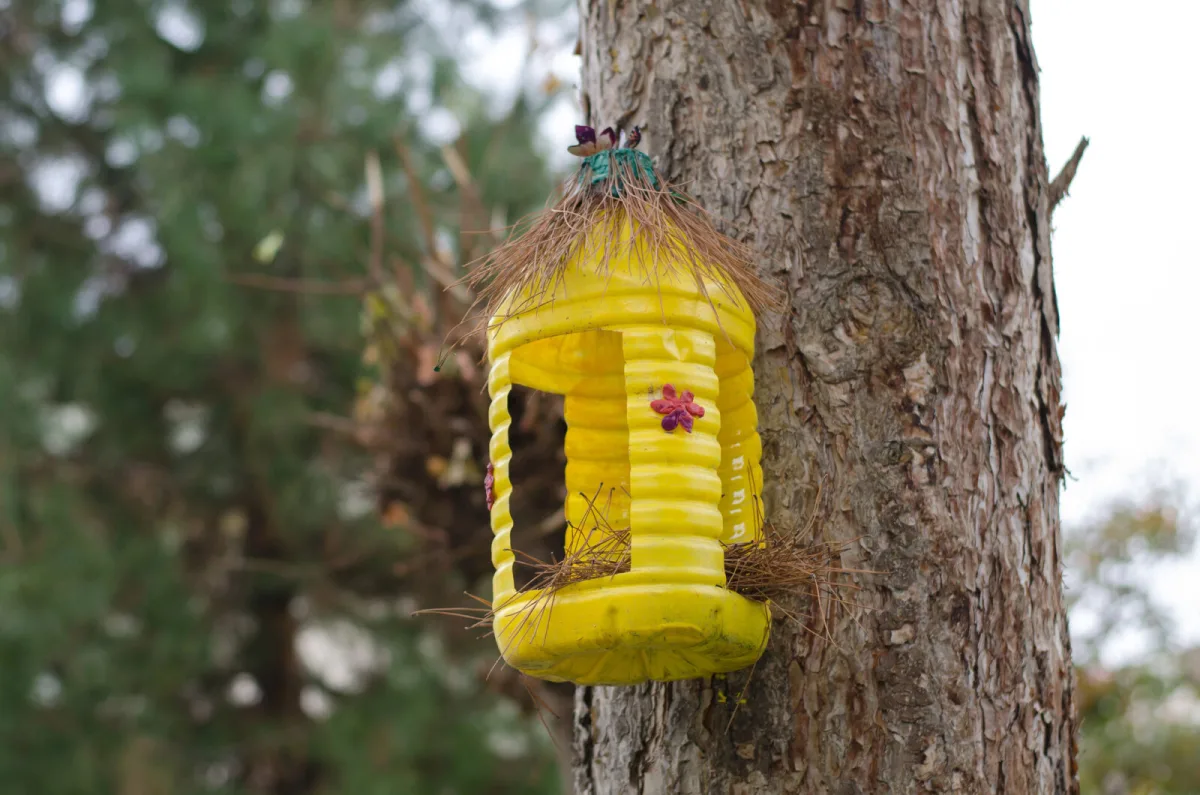
An alternative to wood is building with items that would otherwise become waste. A practical example is a sturdy plastic bottle. Cut an entrance hole in the side, line the inside with natural material, and hang it using strong string or cord. The outside can be finished so it looks more natural and blends better into the garden.
This approach is especially good for creative projects and as a demonstration that even simple materials can help wildlife. Even so, you need to watch that the material isn’t sharp, doesn’t overheat, and can withstand wind and rain.
Maintenance and regular cleaning
To keep a nest box safe and usable over the long term, it needs regular care. At the end of the season, it’s best to remove old nesting material, droppings, and any other built-up debris. Before you start cleaning, always check that the box isn’t currently in use.
Hot water is enough for washing it out. Chemical products and standard household cleaners aren’t recommended, as they can leave harmful residues inside. After cleaning, let the box dry thoroughly before putting it back in place.
Checking for damage
Wooden boxes can crack over time, and joints may loosen. Small splits can be repaired with a suitable wood filler, and loose screws can simply be tightened. If the structure is badly damaged, it’s usually safer to make a new box than to risk it failing during nesting.
Protection from pests and predators
Protection from unwanted visitors also plays a major role. The box should be placed where cats, martens, and other animals can’t reach it easily. Keeping the area clean also helps reduce insect problems. If needed, ventilation holes can be covered with a fine mesh to prevent some pests from getting in.
How to support birds and the whole garden
A nest box is more than a small accessory among the trees. It’s real support for the local ecosystem and it brings people closer to nature. If you make it from natural or reused materials and look after it regularly, it can serve for many years. Birds then get used to a safe spot and may return season after season.
Before the new season, it’s a good idea to check that the box is still in a suitable place, isn’t exposed to harsh sun, and that the entrance hole matches the species you want to encourage. If you leave a new box outdoors for a while before its final placement, it will weather in and blend into the surroundings more naturally. A carefully built and well-maintained box then helps not only birds, but also contributes to a more vibrant, healthier garden.
Source: Cem Botanik, Extension.UNH, Pestrazahrada.cz
Related articles
The Most Common Mistake With Home-Laid Eggs That Seems Careful but Actually Harms Them
Fresh eggs from your own or local hens have a natural protective coating that helps keep bacteria out. Washing them too soon can strip that protection and shorten their keeping quality.
Late Feeding Weakens the Whole Colony and Beekeepers Know the Deadline They Must Not Miss
Successful overwintering depends on timely feeding and enough easily digestible stores. If you feed too late, you overburden winter bees and risk a weakened colony or starvation losses.
Egg Laying Drops in Autumn and Keepers Return to a Generations-Old Trick
As the days shorten and temperatures dip, many hens naturally slow down on egg production. A simple, traditional add-in of garlic with a tiny pinch of black pepper can help support the flock’s overall condition as autumn sets in.
Comments (0)
Be the first to comment.