
 English
  Polski
  Deutsch
  Nederlands
  Svenska
  Norsk
Norsk  Dansk
Dansk  Français
  Italiano
  Español
  Português
  Slovenčina
  Suomi
Suomi  Gaeilge
 Protect Apricots from Frost Summer Pruning Delays Bloom and Can Save the Crop
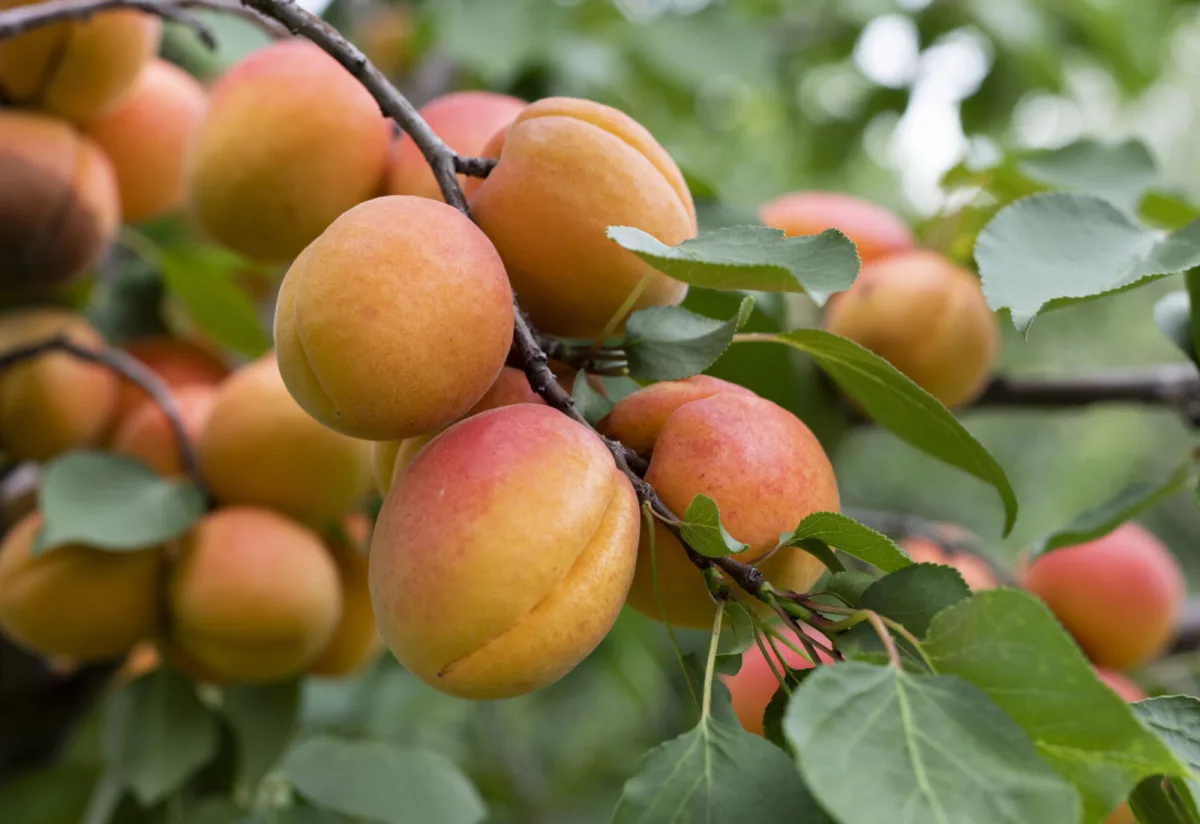
Apricots are among the trees that grow very quickly after planting. The crown thickens easily, the inner parts receive less light, and older branches gradually tend to become bare. The result is fewer fruiting spurs, weaker flower set, and sometimes an irregular crop. At the same time, apricots are sensitive to weather swings, especially late spring frosts that can scorch most of the blossoms in a single night.
That is exactly why a technique known as Šitt’s pruning is used in practice. It is not a miracle frost insurance policy, but a smart way to shift part of the flowering slightly later while also encouraging the formation of high-quality fruiting wood.
The main benefit of Šitt’s pruning is a longer flowering period
The method works by shortening selected young shoots so the tree produces secondary summer shoots. Flower buds then form on these, and they usually open about five to six days later than buds on the original shoots. In years when winter returns in spring, this difference can be decisive, because even a few extra days can be enough for the most vulnerable flowering stage to avoid the exact frost window.
Protection from frost is never guaranteed every year, because the weather is always different. But as a trial it makes sense, and it can help especially with later varieties.
Another advantage is that only young wood is cut, so you do not create large wounds in older parts of the tree. With apricots this matters not only for healing, but also for overall vigour.
When to do Šitt’s pruning for a real effect
Most commonly, the recommended window is just before the second flush of growth, meaning late May to early June. In warmer areas, or in seasons when growth starts early, you can begin from mid-May. On young, very vigorous trees the cut is sometimes shifted into the first half of June.
More important than the calendar is the condition of the shoots. Suitable new growth is roughly 20 to 30 cm long, still green, but already starting to mature and turn woody at the base. At this stage, the tree typically responds to shortening by producing strong follow-up shoots.
How to proceed step by step without unnecessary mistakes
Select stronger one-year shoots on the tree, ideally where you need to open up the crown and also encourage new fruiting growth. Shorten these shoots by about half, or even up to two thirds of their length. This stimulates the tree to break into new, secondary shoots, which often grow at a more favourable angle and integrate better into the crown.
It is on these secondary shoots that a large number of flower buds are then formed. In the next season, or sometimes already during the summer, you choose the best new shoots and remove the rest, so the tree does not thicken unnecessarily and its energy goes into high-quality fruiting wood.
Summer pruning is gentler on apricots than late-winter cuts
With apricots, growers often warn about the risk of gummosis, which can appear after poorly timed pruning, especially if you cut too early into cold weather at the end of winter. Šitt’s pruning is done during active growth, when the tree generally regenerates better. That is also why this summer approach is considered a safer and more practical option for apricots.
Not only apricots the method also works elsewhere
Although Šitt’s pruning is most often associated with apricots, it can be used on other stone fruit as well. It can give good results on peaches and nectarines, and also on plums including greengages, as well as on sour cherries and sweet cherries. It is always true, however, that the tree’s response depends on the variety, condition, nutrition, and the season’s weather, so it is sensible to try the method first on part of the crown and compare the results over the following years.
Source: RHS, Priority Trees, Zahrádkár, Pestrazahrada.cz

A lover of nature, gardens, and everything that moves, blooms, or grows. He literally grows everything, from herbs to rare species, and he enjoys caring for animals just as much. In his work, he connects modern technology with tried-and-tested grandmotherly methods and is happy when both paths lead to the same goal.
Related articles

How to Keep Your Pool Sparkling Clean Without Unnecessary Effort or Stress
Keeping pool water crystal clear doesn’t have to be hard work. With a simple daily-and-weekly routine, you’ll prevent cloudiness, algae and breakdowns before they start.
A Simple Trick for a Bigger Pepper Harvest and Faster Ripening
Regular watering and feeding aren’t always enough for a heavy pepper crop. Pinching out the growing tips redirects the plant’s energy into branching, flowering, and ripening fruit faster.

Fireflies are disappearing from the landscape, learn how to create a safe garden home
Warm summer nights are even more magical when fireflies start flashing at dusk—but their numbers are falling. With a few simple changes to mowing, planting, lighting and chemical use, your garden can become a safe refuge again.
Comments (0)
Be the first to comment.