
 English
  Polski
  Deutsch
  Nederlands
  Svenska
  Norsk
Norsk  Dansk
Dansk  Français
  Italiano
  Español
  Português
  Slovenčina
  Suomi
Suomi  Gaeilge
 The mystery of barren courgettes solved the key issue starts in the flowers
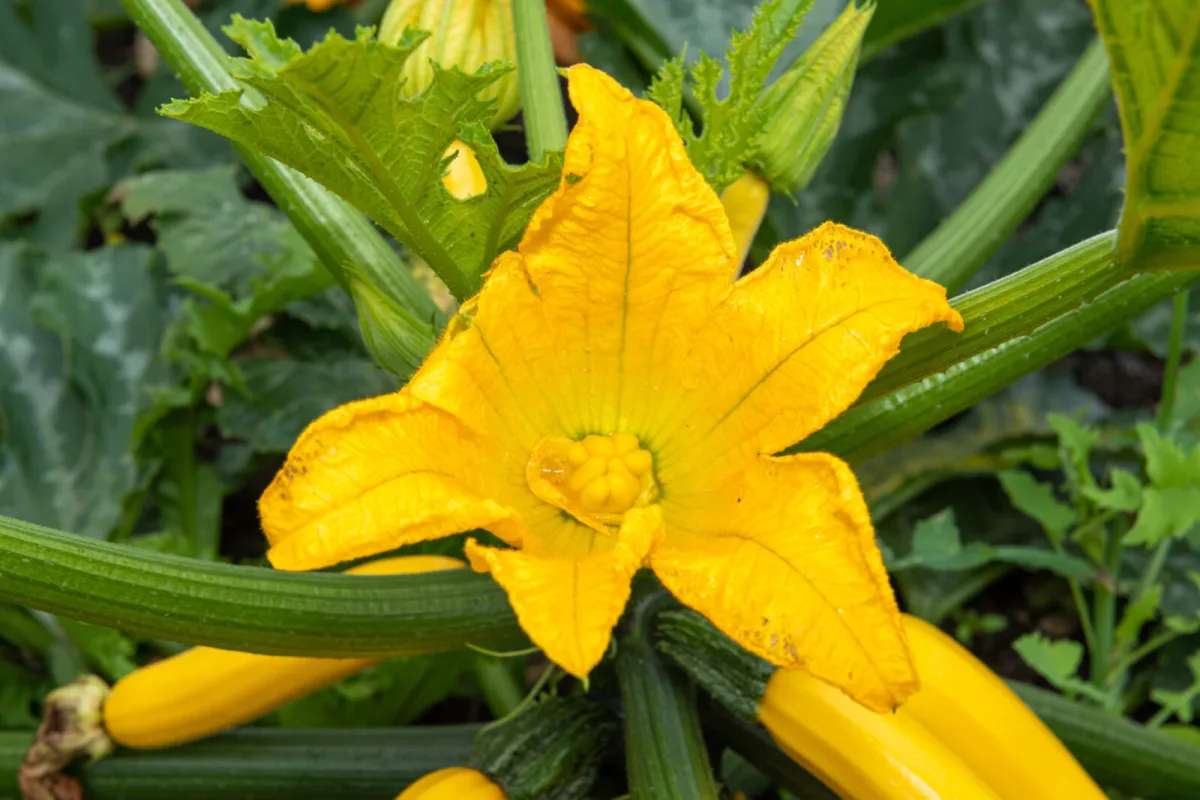
Courgettes can be full of surprises. One year they produce so many fruits you can hardly keep up with picking; the next, they make plenty of leaves but there’s no crop in sight. The explanation often starts with the flowers. Courgette is a monoecious plant, meaning it produces both male and female flowers on the same plant, but each individual flower is either male or female.
You can recognise a male flower by its slender stalk and the pollen-bearing stamens inside. A female flower has a noticeable swelling at the base that looks like a tiny courgette, with a central stigma in the middle. At first glance the flowers can be confusing, but after a few days of watching you’ll tell them apart easily.
How many flowers are male and how many are female
The ratio of male to female flowers changes through the season. It’s influenced by weather, feeding and the plant’s growth stage. It’s common for male flowers to dominate early on, and you may have to wait for the first female ones. In practice there are often more male flowers overall, which is helpful for pollination—provided there are pollinators about.
Which flowers to pick for cooking
If you want to stuff or fry courgette flowers, it makes sense to harvest mainly male flowers. You usually won’t disrupt pollination as long as you leave some on the plant. A safe rule of thumb is that for each female flower, roughly three male flowers should remain so pollen is available at the right time.
Pollination is done by insects—wind isn’t enough
Courgettes aren’t wind-pollinated; they rely on insects. Most often bees and bumblebees, sometimes other pollinators too. When it’s cool, rainy, or the weather stays poor for a longer spell and there are fewer insects flying, the flowers may not get pollinated. The result is typical: the tiny fruit behind the flower starts to yellow and then rots.
In that situation, hand pollination helps. Simply pick a male flower, remove the petals, and gently transfer the pollen onto the centre of a female flower. Timing matters—ideally do it in the morning when the flowers are open and the pollen is at its most usable.
Why courgettes sometimes don’t crop even with good care
Courgettes are considered easy-going, but they react to weather swings more sensitively than you might expect. Cold slows growth and flowers may drop. On the other hand, extreme heat can cause stress in which the plant also sheds flowers or sets fruit poorly.
Diseases can play a role too, often viral, as well as sap-sucking pests. A weakened plant may flower, but either won’t hold the fruits or can’t feed them properly.
When small fruits rot at the tip, it isn’t always just poor pollination
People often interpret tip rot on young courgettes as proof of poor pollination. But it isn’t always the only reason. Excess moisture and generally unfavourable weather can also trigger the problem. Typically it’s a pattern of temperature swings, dry spells followed by waterlogging, or prolonged rain.
Rot can also take hold when the plant is overloaded with too many developing fruits and can’t feed them all. Some of the small fruits then gradually yellow and die off.
Is one plant enough, or is it better to grow more?
One courgette plant in a bed—or even in a large pot—can fruit perfectly well, because it carries both flower types. The condition is that pollination happens, meaning insects need to be present, or you step in with hand pollination. More plants usually increase the chance that pollinators will visit the site more often and at the right time.
Growing several varieties side by side for pollination is generally not necessary. Unlike some fruit crops, courgettes don’t typically require a different variety as a condition for a harvest.
Removing damaged leaves helps, but don’t overdo it
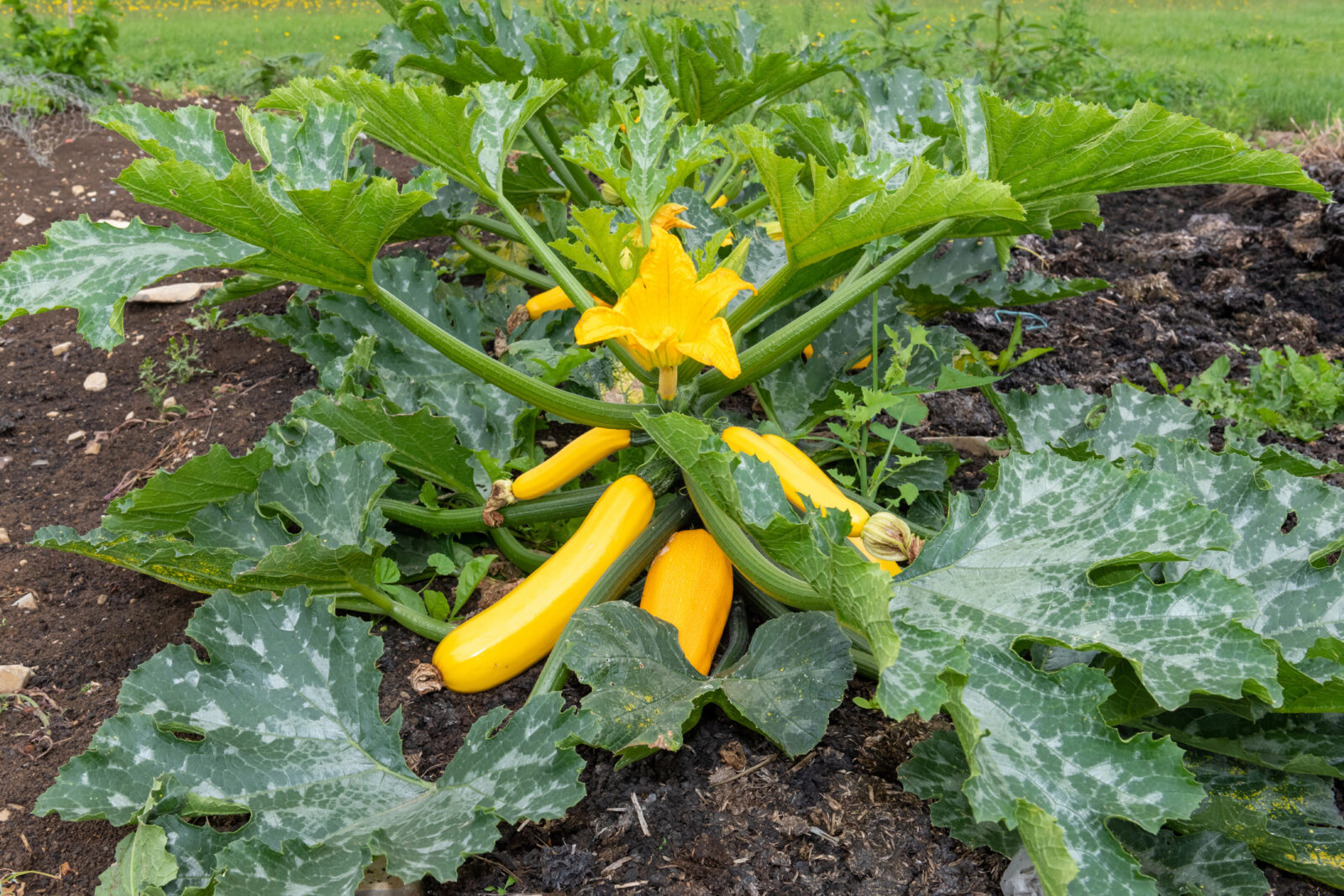
Leaves can look unsightly due to diseases such as powdery mildew or leaf spots, mechanical damage, or a shortage of certain nutrients. These leaves can be removed gradually, and also when there are too many leaves and they get in the way of developing fruits.
However, you need to proceed with care. Leaves are the plant’s energy source for growth and fruiting, so cutting too hard can weaken it. Use clean tools so infections aren’t spread further.
Propping up fruits helps against rot, but comes with risks
Fruit sitting on wet soil is a common trigger for problems, so it’s a good idea to prop them up. Straw keeps courgettes cleaner and also works as a mulch—reducing weeds and helping the soil hold moisture. In prolonged damp, though, straw can rot itself and actually increase the risk. What’s more, a humid environment suits slugs.
A more practical option can be a weed-control fabric or another non-absorbent base that lifts the fruit away from wet soil without holding water.
How to ease the plant and stop rot
The foundation is regular harvesting of young fruits. This takes the load off the plant and reduces the chance that part of the set will start to die back due to a lack of nutrients. In wet weather or after heavy watering, it’s useful to remove stuck flower remnants from the fruit tips as a preventative measure, because they hold water and can be where rot begins.
Any courgettes that are yellowing or already affected should be cut off and removed immediately so the problem doesn’t spread. If you also improve how the fruits are supported and, during bad weather, add hand pollination when needed, yields tend to be far more reliable even in changeable years.
Source: Záhrada, RHS, The Spruce, Pestrazahrada.cz

A lover of nature, gardens, and everything that moves, blooms, or grows. He literally grows everything, from herbs to rare species, and he enjoys caring for animals just as much. In his work, he connects modern technology with tried-and-tested grandmotherly methods and is happy when both paths lead to the same goal.
Related articles
After harvesting blueberries do these steps and you will pick twice as much next year
Once the last berries are picked, your blueberry bush is already setting the stage for next season. A little pruning, the right feeding, steady moisture and fresh mulch can mean far more flowers and fruit next year.
August decides whether cucumbers keep cropping or stay strong into October
Cucumbers often start to tire late in the season, with weaker nutrient uptake and more pressure from pests and disease. A simple root drench made with diluted vinegar is one option some gardeners use in August to help keep plants productive for longer.
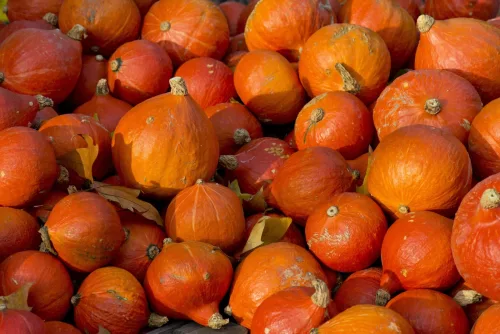
Pinch Out the Pumpkin Tip and the Plant Will Put Its Energy into Ripening the Fruit
Hokkaido squash is a reliable winter squash with a rich, nutty flavour and straightforward cultivation. Learn when to sow and plant it, how to pinch it for better ripening, and how to harvest and store it for months.
Comments (0)
Be the first to comment.