
 English
  Polski
  Deutsch
  Nederlands
  Svenska
  Norsk
Norsk  Dansk
Dansk  Français
  Italiano
  Español
  Português
  Slovenčina
  Suomi
Suomi  Gaeilge
 How to Grow Onions Successfully in the Garden and in Pots at Home
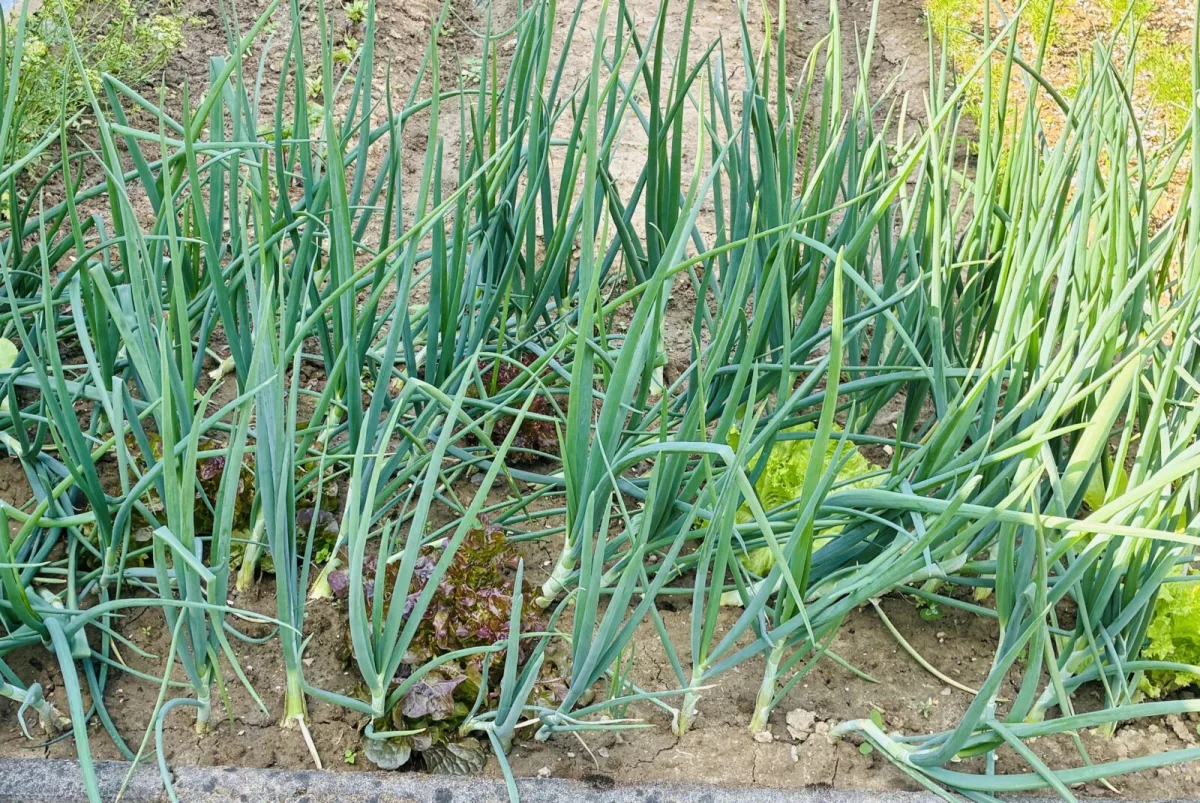
Bulb onion belongs to the Allium genus, and people have grown it for thousands of years. The reason is simple: it doesn’t take up much space, it keeps for many months after harvest, and thanks to its sulphur compounds it usually stands up to a range of pests. Whether you like onions sweet or sharp, yellow or red, the basics are much the same. For big, firm bulbs, full sun, rich soil and regular watering are key.
A major advantage is how useful onions are in companion planting. They’re often planted alongside crops that commonly struggle with pests, such as brassicas, spinach or lettuces. You can grow onions in open beds, raised beds and containers too, ideally in pots with good drainage and a depth of at least about 25 cm.
When to plant onions and how to choose the right method
Sets, seeds and transplants
The quickest route to harvest is usually with onion sets. Plant them in early spring as soon as the soil can be worked and the worst frosts have passed. In practice, that’s often around two to four weeks before the last spring frost.
If you want to grow onions from seed, you can start them indoors about eight to ten weeks before the last frost. Seedlings need hardening off, then transplant outside once there’s no real risk of a sharp cold snap, typically in April in many areas. Another option is direct sowing outdoors, which can be uneven, so it’s often sown a little more thickly and thinned later.
There’s also a late sowing for the next season, when you sow a few weeks before frosts arrive. The seed waits through the cold and germinates in spring as soon as temperatures rise.
Site and soil determine bulb size
Onions need all-day light and shouldn’t be shaded by taller vegetables. The more energy they get from the sun, the more reliably they form a large bulb. Soil should be loose and free-draining, ideally neutral to slightly acidic. Before sowing or planting, it pays to work in well-rotted compost or aged manure, because onions are relatively hungry plants.
How to plant onions step by step
Starting from seed indoors
Sow seeds in a shallow tray filled with seed compost, to a depth of about 0.5 to 1 cm. After a gentle watering, they need warmth and plenty of light. Once seedlings emerge, remove the weakest so the remaining plants have room. Before transplanting outdoors, hardening off is essential, meaning gradually getting them used to outside conditions.
Sowing outdoors and thinning
In the bed, weed first and mix in compost. Place the seed at roughly the same depth as when starting indoors, and leave enough space between rows for later hoeing and watering. Once seedlings are a few centimetres tall, remove the weakest and leave about 8 to 10 cm between plants so they can develop good bulbs.
Planting sets
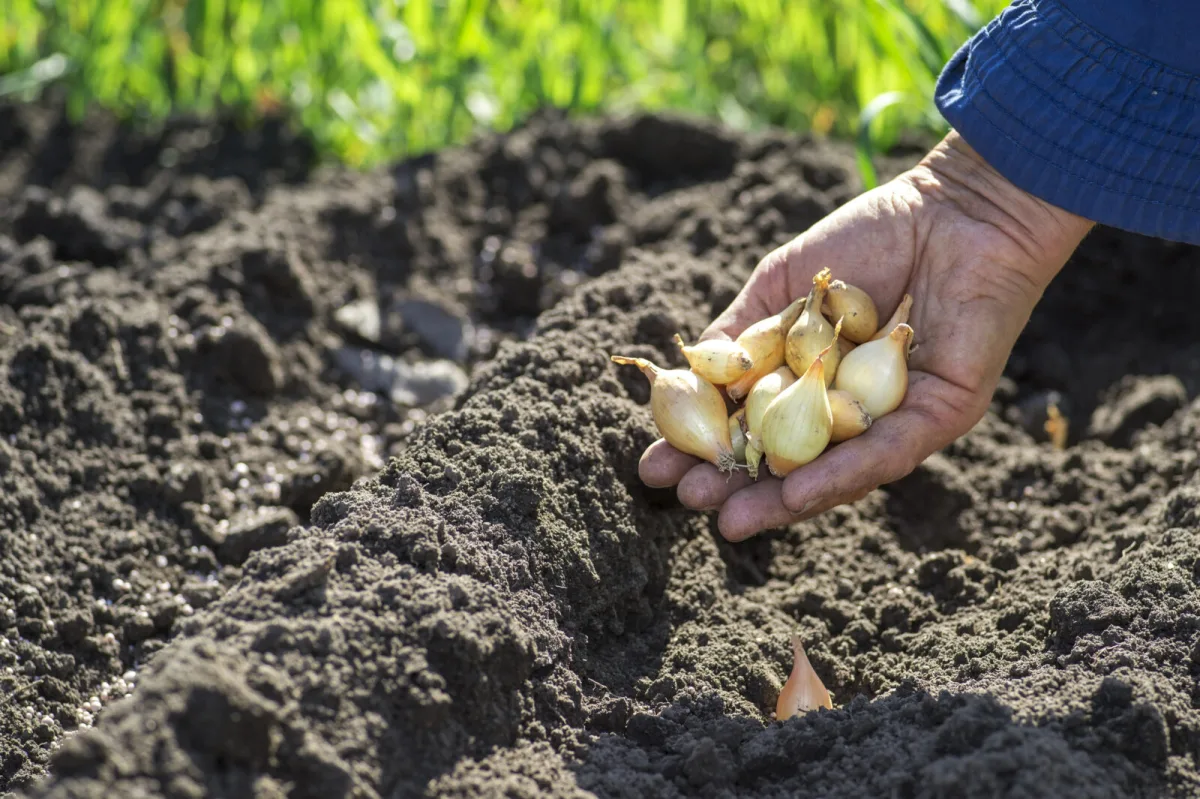
Plant sets with the pointed end up, about 3 to 5 cm deep, keeping spacing similar to thinned seedlings. A layer of straw between rows helps suppress weeds. Later on, avoid heaping extra soil over the plants, as this can slow bulb formation.
Care during growth: water, nutrients and a clean bed
Watering and onion flavour
During the growing season, plan on onions needing about 2.5 cm of water per week. In hot weather, watering is usually increased so plants don’t bolt prematurely. Well-mulched beds hold moisture longer, so you can water less often. It’s also a common practical observation that more consistent watering tends to produce a milder-tasting onion.
Feeding for big bulbs
Onions are among the crops that ask for nutrients steadily. Compost worked in before planting provides the base, but through the season it’s worth feeding with a balanced organic fertiliser according to the label. It’s best to stop feeding once the onion clearly starts to bulb and part of the bulb begins to push up above the soil surface.
No pruning needed, prevention matters more
Onions aren’t typically cut back. Far more useful is keeping weeds in check, maintaining mulch, and routinely checking for pests or signs of rot. A clean, airy bed and soil that isn’t waterlogged are often your best protection.
Varieties by day length and growing in different conditions
Onions are grouped as short-day, long-day and day-neutral types depending on how many hours of daylight they need to trigger bulbing. Choosing the right type is crucial, otherwise onions may bulb poorly or only produce small bulbs.
Short-day types begin bulbing at roughly 10 to 12 hours of light and suit warmer regions, where they’re planted early so they have time to size up. Day-neutral types respond at about 12 to 14 hours. Long-day varieties need around 14 to 16 hours of light and are usually better for cooler, more northerly locations.
In areas with mild winters, you can also try autumn planting with overwintering for hardier varieties, but protection is needed, such as a thicker mulch layer or covering against frost.
Harvest: the right moment and gentle lifting
Spring plantings are usually harvested from mid to late summer. The signal is when the tops start to yellow and flop over. At that point, you can gently bend any remaining upright leaves down to the ground to even out ripening.
Harvest in dry weather if possible, because wet onions are harder to cure and more likely to rot in storage. Carefully loosen the soil around the bulb with a spade or fork, avoid damage, and pull onions by the tops so they don’t get bruised.
Once an onion starts to send up a flower stalk, it’s best to harvest it as soon as possible. Flowering means the bulb won’t increase much more, and those onions don’t store as well.
Curing and storage so they last as long as possible
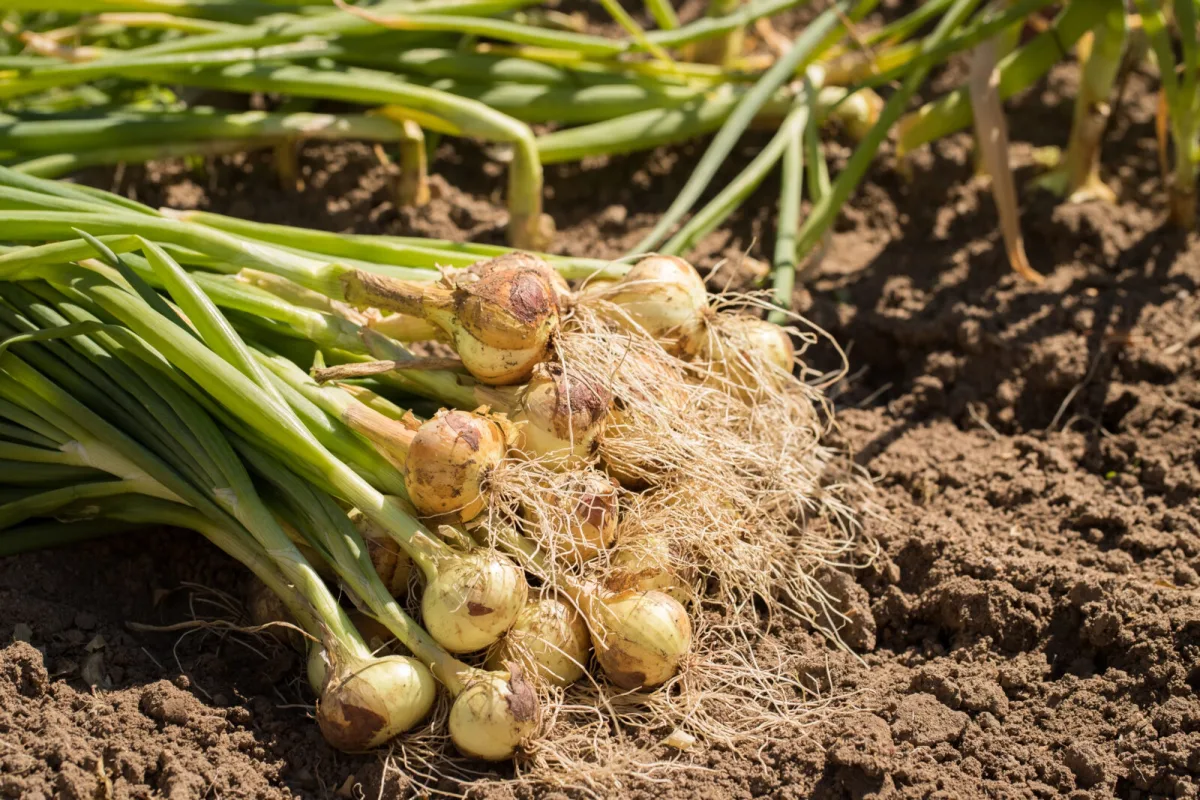
After harvesting, trim the roots and cut the tops back to a short stub. You can leave the tops on if you plan to braid the onions. Then let them cure for a few days in a dry place, ideally somewhere airy and out of the rain, such as under cover or in a garage.
Once cured, store onions in a cool, dry, well-ventilated place. You can hang them in a mesh bag, lay them in a crate in a shallow layer, or braid them. Too much humidity is the main issue, which is why a refrigerator is usually not ideal for long-term storage.
If you want a milder flavour, sliced onion can be briefly treated beforehand, for example scalded with hot water and then rinsed in cold, or soaked for a short time to soften its sharpness.
Pests, diseases and the most common growing problems
Onions have a reputation for being resilient, but problems can still occur. Poor bulbing is often the result of planting too densely, a lack of nutrients, or choosing the wrong variety for your day length. Yellowing leaves can point to watering or feeding issues, though it’s also natural as harvest approaches.
Pests are less common than on many other vegetables, but thrips can cause damage by sucking on the leaves. Preventive protection with horticultural fleece helps, and if infestation occurs, you can use gentle soap-based sprays suitable for edible crops. In wet conditions, larvae of leaf-mining flies or onion fly can also appear; clearing the bed after the season and protecting young plantings are important.
Among diseases, white rot and other fungal infections are particularly troublesome, encouraged by waterlogged soil and overcrowded growth. Crop rotation, removing leftover foliage at the end of the season, and buying sets or seed from reputable sources all help.
Varieties worth trying
Among long-day varieties you’ll find types valued for big yellow bulbs and a milder flavour. Short-day varieties are often sold as sets and tend to be early. Day-neutral types can perform well in in-between conditions, and some stand out for good keeping quality or interesting flesh colour that shifts to softer tones when cooked.
The best approach is usually to choose varieties recommended by local garden centres or regional seed companies, as they’re typically adapted to your climate and day length.
Interesting facts and traditional uses of onions
In ancient times, onions were seen as a symbol of life, and in the past they were credited with many healing effects, from homemade cough syrups to poultices for minor injuries.
Historical sources mention onions as a valued crop in ancient cultures. In folk tradition they were used in cooking and home care, for example combined with honey to make simple syrups. And while today we prefer evidence-based methods, one thing remains: a well-grown onion is the backbone of countless dishes, and a home harvest can be a pleasure for both quality and storage life.
Source: Almanac, Rhs , Pestrazahrada.cz
Related articles
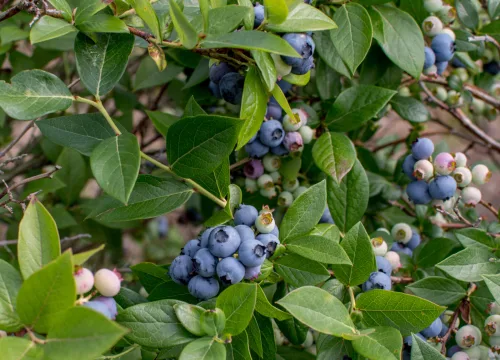
After harvesting blueberries do these steps and you will pick twice as much next year
Once the last berries are picked, your blueberry bush is already setting the stage for next season. A little pruning, the right feeding, steady moisture and fresh mulch can mean far more flowers and fruit next year.
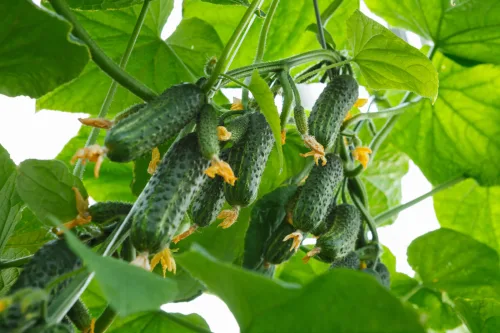
August decides whether cucumbers keep cropping or stay strong into October
Cucumbers often start to tire late in the season, with weaker nutrient uptake and more pressure from pests and disease. A simple root drench made with diluted vinegar is one option some gardeners use in August to help keep plants productive for longer.
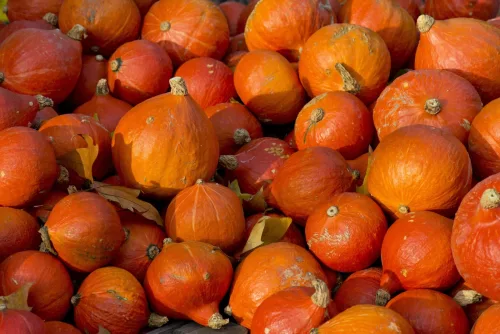
Pinch Out the Pumpkin Tip and the Plant Will Put Its Energy into Ripening the Fruit
Hokkaido squash is a reliable winter squash with a rich, nutty flavour and straightforward cultivation. Learn when to sow and plant it, how to pinch it for better ripening, and how to harvest and store it for months.
Comments (0)
Be the first to comment.