
 English
  Polski
  Deutsch
  Nederlands
  Svenska
  Norsk
Norsk  Dansk
Dansk  Français
  Italiano
  Español
  Português
  Slovenčina
  Suomi
Suomi  Gaeilge
 How to Grow Red Hot Pokers Successfully for Flowers All Summer and Into Autumn
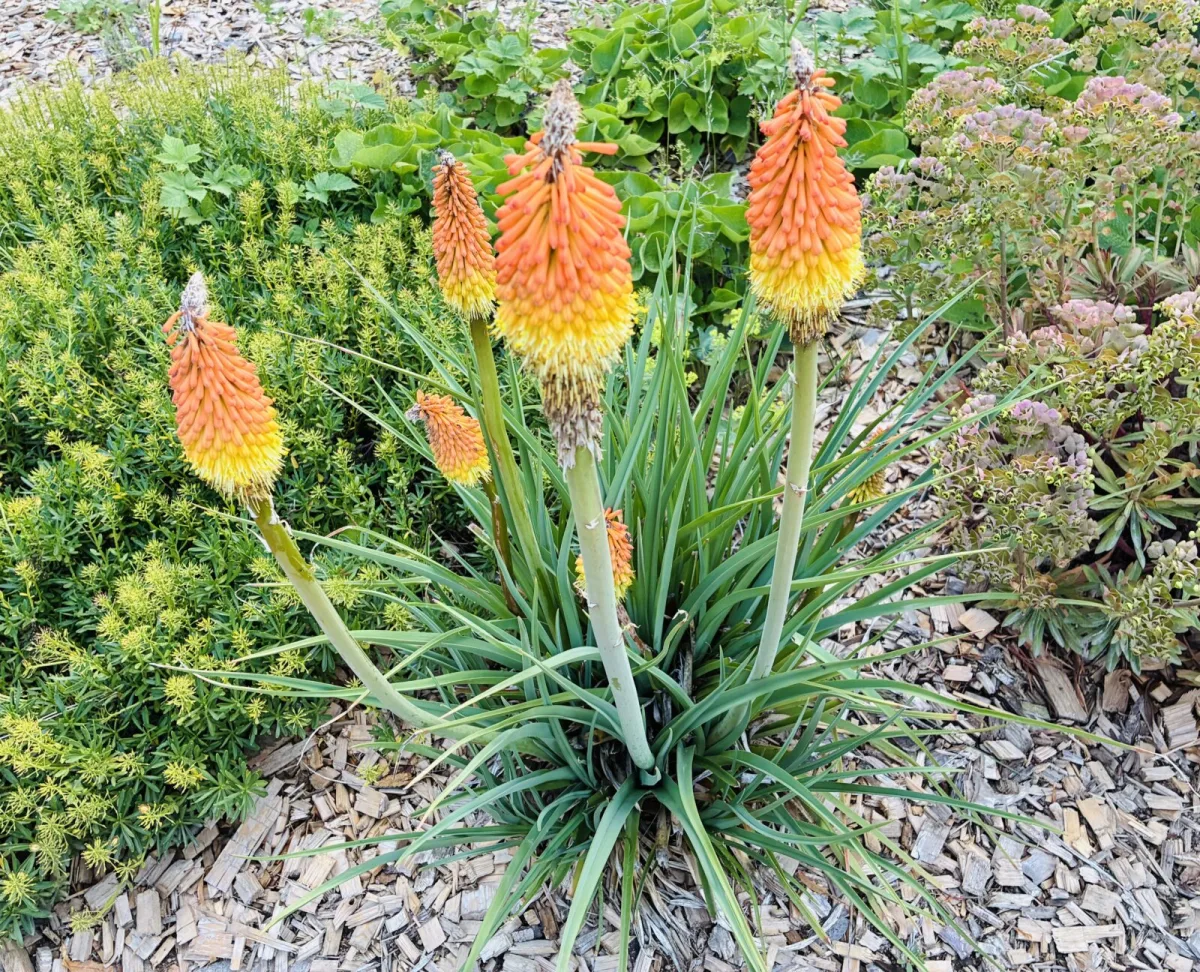
Red hot pokers, known botanically as Kniphofia and often nicknamed “torch lilies”, are perennials that can instantly give a border an exotic feel. In summer and early autumn, upright flower stems rise above clumps of narrow, strap-like leaves, topped with dense, cylindrical flower spikes. The colour range is most often in warm tones from yellow through orange to red, and some cultivars also offer softer creamy or greenish shades.
Most red hot pokers are deciduous, meaning they die back for winter and re-shoot from the base in spring. A smaller number of species are evergreen and hold their leaves through the colder months, which is useful for year-round structure in planting schemes. The flowers are rich in nectar, making them valuable to pollinators, especially bees and butterflies, and they fit beautifully into wildlife-friendly gardens.
Choosing the right type and position
When choosing, two things matter most: plenty of light and free-draining soil. Red hot pokers flower best in full sun, where the stems ripen properly and the plant keeps a compact, tidy habit. Some varieties will tolerate light partial shade, but in deeper shade flowering usually weakens and, in wetter spots, the risk of winter losses increases.
Size is just as important. The range runs from low-growing types under 50 cm to statuesque specimens over 2 m. Dwarf cultivars suit smaller gardens and containers, while larger forms are ideal for big borders where they create a strong vertical accent. A bonus is that the flower stems are generally sturdy and most plants cope well even in breezier sites, including open and coastal gardens.
With some species it’s worth checking hardiness. Although they look tropical, most red hot pokers cope well with winter provided they are not sitting wet. More tender types appreciate a sheltered spot near a wall and drier winter conditions.
When and how to plant red hot pokers
Spring is the best time to plant, when the soil is beginning to warm and the risk of prolonged winter wet has already dropped. This gives the plant a full season to root in, so it goes into winter stronger. Plant into soil that drains well. If your ground is heavy and waterlogged, it’s worth improving it with coarse material, or grow red hot pokers in a raised bed or a container instead.
Planting container-grown plants
Plant container-grown plants at the same depth they were growing in the pot. Water thoroughly after planting so the soil settles around the roots, but make sure the site doesn’t stay muddy for long periods.
Plants sold as so-called bulbs
Sometimes red hot pokers are sold as bulbs, but in reality this is a shortened side shoot with trimmed roots. You’ll see a top bud or a short shoot. This should sit just above soil level so it doesn’t start to rot. It can also be practical to pot them up first; over the season they form a stronger plant that you can then transplant into the border.
Growing in containers as a solution for wet soils
Smaller varieties grow very well in pots, which is especially helpful where the garden soil is too wet in winter. Choose a pot roughly 20 to 23 cm in diameter and use a quality peat-free compost, ideally with some loam-based component. To improve drainage, mix in about one third horticultural grit or fine gravel. Place the pot in the warmest, sunniest spot you can, because moisture and temperature fluctuate more quickly in containers than in the ground.
Watering, feeding and routine care through the year
In the first year after planting, give red hot pokers an occasional deep watering so the soil doesn’t dry out right down. Once established, they’re surprisingly resilient and only need watering during prolonged drought. Before watering, check that the soil is dry to roughly 15 cm deep, because overwatering is a more common problem than dryness. Constant waterlogging can lead to root rot and weaken the plant going into winter.
Red hot pokers are not usually heavy feeders. In normal garden soil, they often manage without regular feeding. In poor or sandy soils, however, a general-purpose fertiliser in spring will help support leaf growth and flower stem production. Plants in containers are best fed every spring, as nutrients are quickly depleted from potting compost.
Removing spent flower stems
As soon as a flower spike has finished, it’s best to cut the entire stem right down at the base. The plant looks tidier and doesn’t waste energy on seed production. If you want to collect seed for sowing, leave a few stems to ripen.
Overwintering and protection from wet
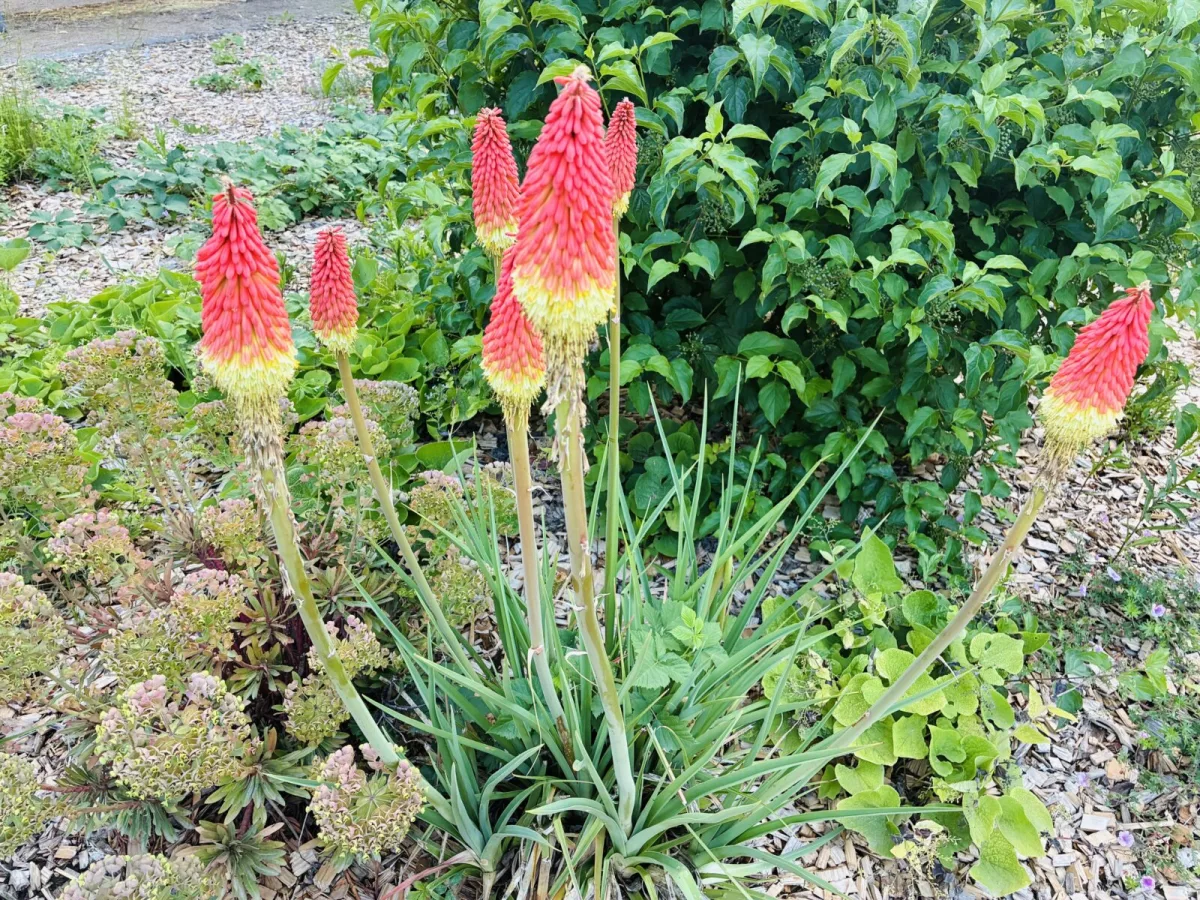
The most common cause of failure is winter wet combined with cold. In free-draining soil, most red hot pokers get through winter without much help. In heavy, persistently damp ground, the risk of the roots rotting and the crown dying increases.
More sensitive species and cultivars are best protected for winter by covering the centre of the plant with dry material such as straw, or with a light horticultural fleece that keeps the plant drier and offers frost protection. Move pot-grown plants to a sheltered spot by a wall or into an unheated greenhouse. It’s also worth insulating the pot, as roots are more vulnerable to freezing through the container sides than they are in the ground.
Cutting back leaves and spring tidy-up
With deciduous red hot pokers, the leaves dry off in autumn. Leave them in place through winter, as they protect the crown from direct cold and wet. The right time to remove them is in spring, usually late March or April, once the worst weather swings have passed. Cut dead leaves as close to the base as possible, but take care not to damage new shoots emerging.
In milder areas, some leaves may stay partly green. Even then, it’s worth removing old foliage in spring so the plant can re-grow more quickly. For evergreen species, simply pull away or trim only damaged and dead leaves. Waterproof gloves are useful, as the leaf bases can be damp after winter and may be slippery.
Rejuvenating older clumps and propagation
Older clumps thicken over time, the centre can become exhausted, and flowering may decline. That’s why it’s a good idea every few years to lift the plant and divide it into smaller pieces. Spring is the best time. Division may temporarily reduce flowering in that season, but in the long run it results in more vigorous plants and heavier flowering.
Red hot pokers spread by rhizomes and often form side offsets that can be cut away even without lifting the whole clump. Before replanting divisions, it helps to improve the soil with well-rotted compost or thoroughly decomposed manure so they root in faster.
Sowing from seed
Growing from seed is slower, but it can be interesting because red hot pokers cross readily and seedlings may produce different colours from the parent plants. Ripe seed is collected in autumn and can be stored cool until spring. In spring, sow into trays at around 15 °C. Expect to wait about three years for the first flowers, as young plants need time to build a strong clump.
Most common problems and how to prevent them
Red hot pokers are generally robust, but issues can still occur. Slugs and snails sometimes chew young flower stems, so it’s worth checking around the base where they like to hide. Aphids may cluster on young developing flower spikes and, when heavy, can cause distortion.
For long-term health, the most serious problems are root rots, which show up as wilting and dull leaves that pull out easily. Prevention is planting into well-drained soil and watering sensibly. If root rot has already occurred in a spot, it’s best not to replant red hot pokers there, as the pathogen may persist in the soil.
Source: RHS, Garden Design, Garden Express, Pestrazahrada.cz
Related articles
Drought tolerant fruit trees for Czech gardens that handle heat and winter frosts
Warmer summers and longer dry spells are changing what can be grown in Czech gardens. With the right variety and a sunny, sheltered spot, olives, pomegranates and figs can cope with heat, drought and even winter cold.
Thuja hedges are on the way out gardeners are choosing a shrub that shrugs off frost and drought and never looks dull
Thuja may be a long-standing classic, but today’s hedges are increasingly built from more varied shrubs that look better through the seasons. One standout choice is ninebark, prized for its toughness, colour and easy care.
Autumn planted grapevines bud earlier the most common mistake happens before they even go in the ground
Planting grapevines in November can give them a head start in spring, as roots can still establish in warm soil. Success depends mainly on proper planting depth and reliable winter protection.
Comments (0)
Be the first to comment.