
 English
  Polski
  Deutsch
  Nederlands
  Svenska
  Norsk
Norsk  Dansk
Dansk  Français
  Italiano
  Español
  Português
  Slovenčina
  Suomi
Suomi  Gaeilge
 Warning for Pepper Growers Curled Leaves Need Fast Help
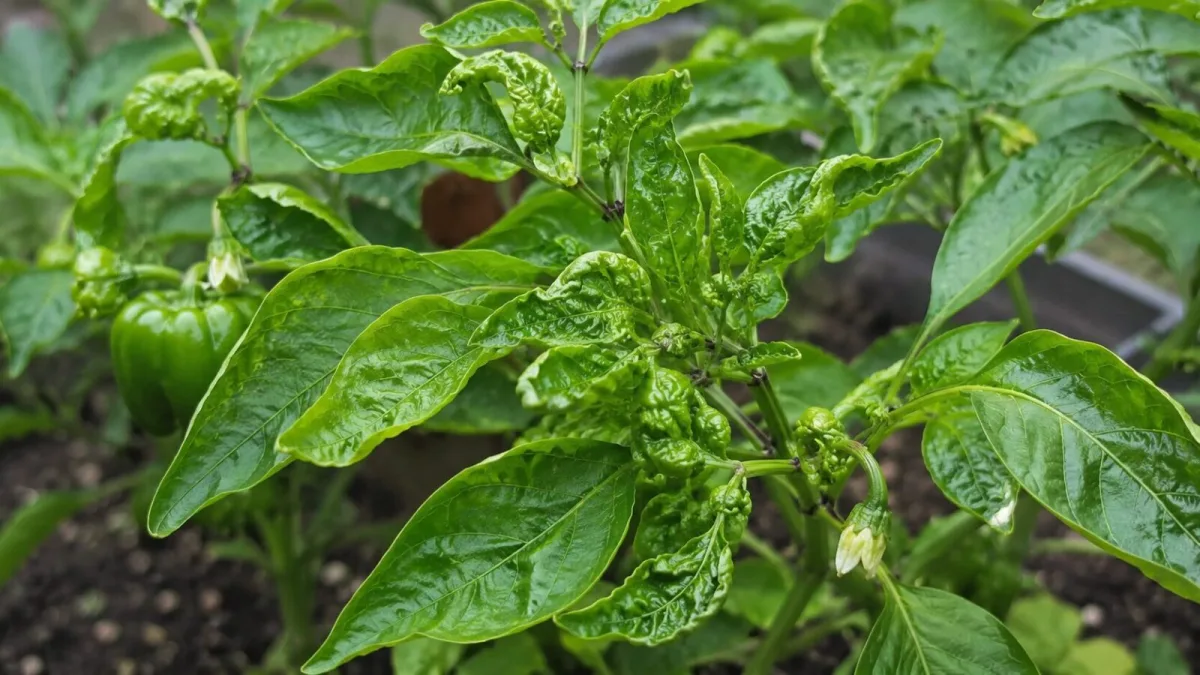
When otherwise healthy pepper seedlings start producing crumpled, wrinkled-looking leaves at the tips, it’s not a minor issue to ignore. The youngest leaves are the most sensitive, and once they start to look like paper that’s been scrunched up, the plant is often signalling a problem that will worsen quickly. The good news is that in most cases you don’t need harsh chemicals. You simply need to identify the cause in time and make a simple intervention so the pepper plant regains strength and can continue growing and setting fruit.
The most common cause is sap-sucking pests on the underside of leaves
Leaf crumpling in peppers is very often caused by sap-sucking pests. These include mainly aphids, thrips and spider mites. They are tiny, hide on the underside of leaves, and feed by sucking plant juices. This disrupts the development of young tissues, and as the leaf grows it becomes distorted, twists and crumples. With thrips and spider mites, it’s also common to find them right on the shoot tips, because the new, soft leaves are the most attractive to them.
How to identify aphids thrips and spider mites
Aphids are usually the easiest to spot with the naked eye. When you turn the leaf over, you may find small green individuals gathered in colonies. Besides crumpling, they can also cause gradual yellowing of leaves and overall weakening of the plant.
Thrips are harder to notice. They often look like very thin pale threads or tiny dashes on the underside of the leaf. In the early stage you’ll see pale larvae, and a typical symptom is silvery, yellowish streaking and lightened tissue. They thrive especially in warmth and dry air, so in a greenhouse or during hot days they can cause damage particularly quickly.
Spider mites are also tiny and multiply rapidly. The tricky part is that you often won’t notice them until fine webbing appears around leaves and stems. By then the infestation may already be well underway and you’ll need to be more thorough.
If you can’t find pests calcium may be missing
If you inspect the plant carefully and find nothing suspicious on the stems or on either the underside or upper side of the leaves, consider a nutrient problem. In peppers, crumpling of new leaves can appear with a calcium deficiency. Browning of the tips or edges of the youngest leaves often follows. In that situation, topping up calcium works best as a foliar feed, because the plant absorbs it faster through the leaves than through watering, especially if the problem is acute.
Gentle help without chemicals when the infestation is small
As soon as you discover that pests are only just beginning to settle in, you have a big advantage. With light infestations, you can proceed mechanically and gently. Carefully wiping pests off the leaves with a damp cotton pad or a soft cloth helps. It’s important to repeat the check the next day too, because some individuals may be hidden or new larvae may hatch in the meantime.
Nettle ferment as a supportive spray
A nettle ferment works well as a homemade and effective support. For a standard spray with a smaller presence, dilute it with water at a 1:12 ratio. Pests typically dislike its smell and composition, while it can give the plant a bit of a boost.
If the infestation is more severe, you can choose a stronger version. Mix 1 part ferment with 10 parts water and add 1 teaspoon of natural soap, which helps the spray stick to the leaves better. It’s a good idea to repeat the treatment after about three days, because pests hatch gradually and a one-off application often isn’t enough.
A quick check decides the future harvest
Crumpled leaves on peppers are a signal that you need to act right away. First, inspect the plant thoroughly, especially the undersides of leaves and the shoot tips. Once you identify pests, an early response often means you can manage with mechanical removal and a gentle spray. And if you don’t find pests, focus on nutrition, especially possible calcium supplementation. A timely response is often the difference between a seedling that bounces back quickly and a plant that struggles long-term and yields less.
Source: Pepper Scale, Plukkers, Pestrazahrada.cz

A lover of nature, gardens, and everything that moves, blooms, or grows. He literally grows everything, from herbs to rare species, and he enjoys caring for animals just as much. In his work, he connects modern technology with tried-and-tested grandmotherly methods and is happy when both paths lead to the same goal.
Related articles
Winter is crucial for raised beds and most people skip the pest prevention step
Your raised beds don’t go dormant just because winter arrives. A few quick, well-timed tasks now will protect the soil, discourage pests, and set you up for a smoother, more productive spring.
When to Mow the Lawn for the Last Time Before Winter
There’s no universal date for the season’s final mow—your lawn and the weather will tell you. Time it just ahead of hard frost and leave the grass slightly higher to help it overwinter healthier and bounce back faster in spring.
Oleander Still Needs Water in Winter and a Common Mistake Can Cost It Its Roots
Oleander is tough in summer heat, but winter cold can quickly damage roots and shoots if it isn’t prepared properly. Timely protection, sensible watering, and the right overwintering spot make all the difference.
Comments (0)
Be the first to comment.