
 English
  Polski
  Deutsch
  Nederlands
  Svenska
  Norsk
Norsk  Dansk
Dansk  Français
  Italiano
  Español
  Português
  Slovenčina
  Suomi
Suomi  Gaeilge
 Exotic akebia in a Czech garden surprises with fragrant flowers and edible fruit
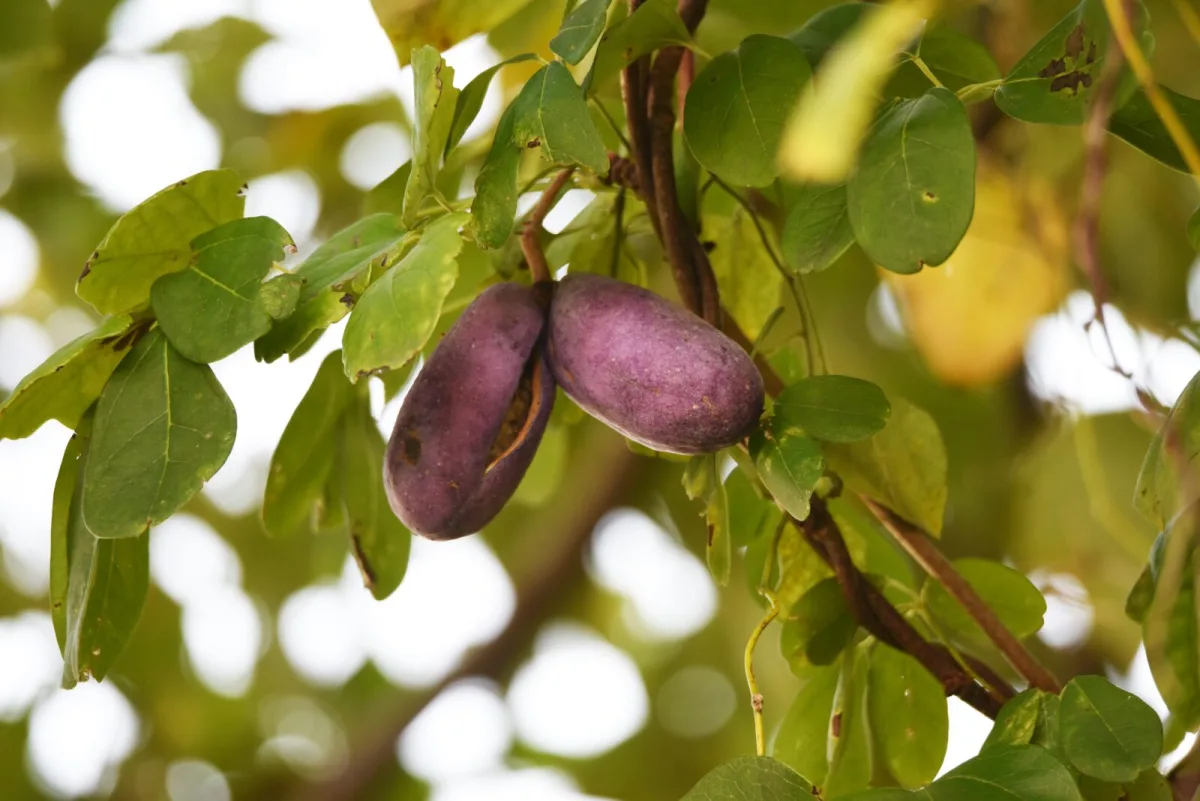
Five-leaf akebia (Akebia quinata) is an unusual climbing plant native to Japan and China that is gradually finding its way into Czech gardens too. At first glance, it catches the eye with delicate, palmate leaves made up of five leaflets on longer stalks. Even more attention, however, is drawn by its deep purple flowers of an unusual shape and later by elongated fruits that can resemble small cucumbers. In garden centres you may also come across the names “chocolate vine” or “chocolate banana” – a nod to the sweet, spicy fragrance of the flowers and the flavour of the fruit pulp.
Is akebia suitable for Czech conditions
The good news is that akebia isn’t just a greenhouse curiosity. With sensible placement it can cope with frosts down to around -20 °C. Still, it’s worth bearing in mind that young plants are more sensitive: for the first winters, it’s better to plant them in a sheltered spot and cover the root crown and the lower part of the shoots with evergreen boughs or mulch. In colder areas, a position by a house wall works well, as it stores warmth during the day and also softens drying winds.
Where to plant it and what soil it needs
Akebia grows well in ordinary garden soil as long as it isn’t waterlogged for long periods. It does best in free-draining soil with plenty of humus, but it isn’t overly demanding. As for light, you can choose sun or partial shade. In sun it usually sets flowers and fruit better; in partial shade it can look fresher through hot summers. After planting, regular watering helps until it’s established; later it tolerates short dry spells, although moisture makes a difference during flowering and fruit set.
Support, growth and use in garden design
As a vine, akebia needs a clear support. You can train it on wire mesh, a pergola, a fence or wooden battens, which the shoots readily twine around. Some gardeners let it climb into a tree canopy, where it creates a striking green veil. If you don’t have vertical space, it can also be used as a groundcover that will eventually hide unattractive spots and stabilise a slope. Do keep in mind, though, that in good conditions it grows quite briskly, so it’s wise to give it defined space so it doesn’t overrun areas you want to keep clear.
Flowering, fragrance and the secret of the fruit
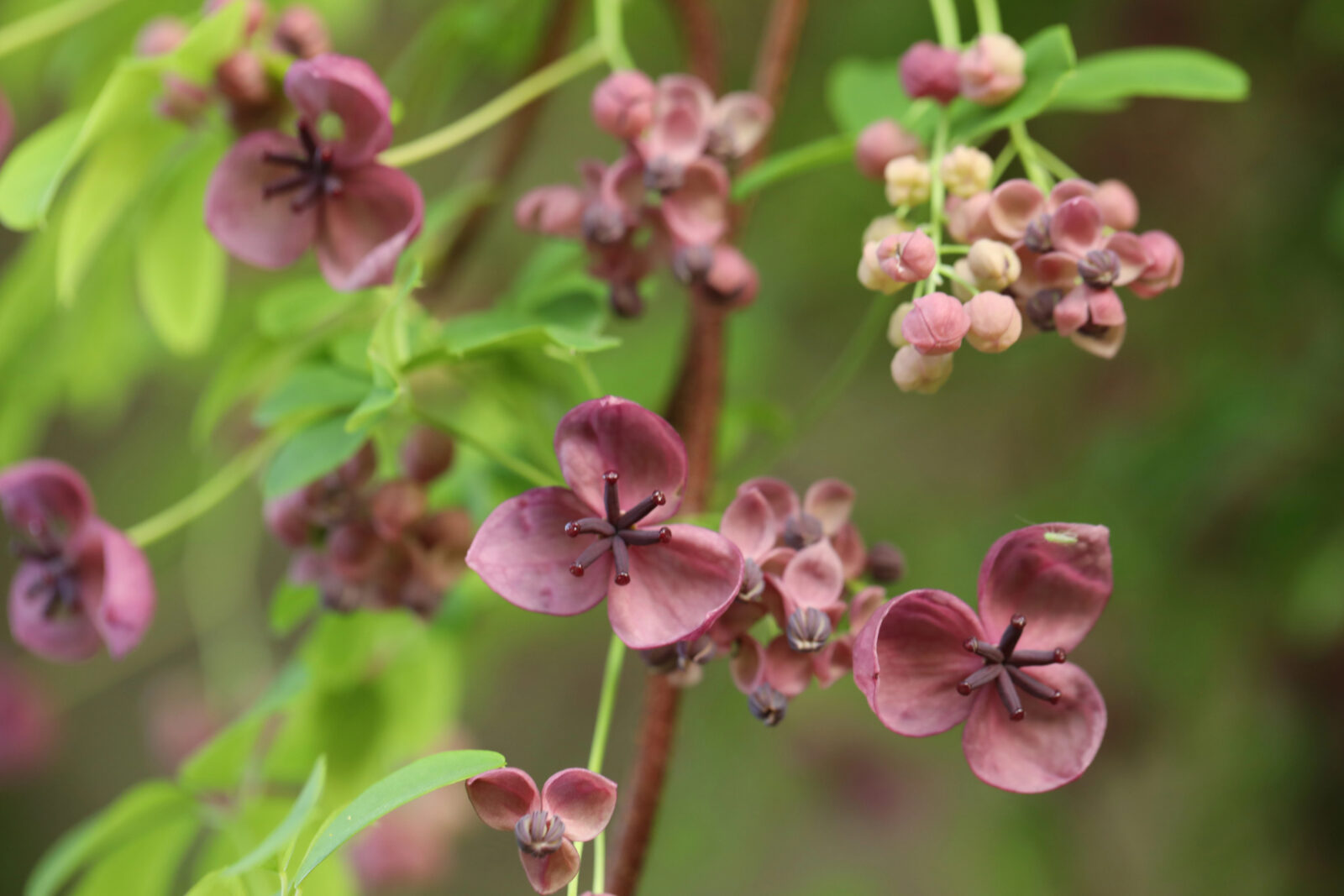
The flowers appear in May, roughly alongside the emerging leaves, and are borne in clusters. That’s when akebia looks most “exotic”: the flowers are small but richly coloured and often pleasantly scented. If you’re hoping for fruit, it’s useful to know that successful set usually requires cross-pollination between plants (in other words, having at least two genetically different plants). In our conditions, hand pollination is sometimes recommended too, especially in a cooler spring when pollinator activity is lower.
When they ripen and how to tell they’re ready
The fruit most often ripens in September to October. A ripe fruit splits lengthwise, revealing white, jelly-like pulp with lots of black, glossy seeds. The flavour is gently sweet and aromatic, and while it isn’t “classic” garden fruit for our region, that very difference is a big part of akebia’s appeal. Expect the first fruit mainly on older plants: it typically starts bearing at about around the fifth year.
Care through the year: feeding yes, pruning only with restraint
During the growing season, akebia benefits from feeding, ideally only until the end of August so the growth can ripen properly before winter. It doesn’t strictly require pruning, but occasional shortening of overly long or poorly placed shoots helps maintain shape and lets light into the centre of the plant. If you prune, do so after flowering or at the end of winter, always with an eye on where you want to direct the plant.
Edible parts and inspiration from Asia
Akebia has practical uses in Asia as well. The fruit is eaten fresh; the rind (pericarp) is cooked in some places; young shoots are added to dishes; and the leaves are used to make tea. In traditional settings it is also associated with folk medicine, and the flexible stems can be used much like other vines.
Akebia is a good choice for gardeners who want an easy-going vine with an exotic look, fragrant flowers and the chance of edible fruit even in a Czech climate.
Who akebia is ideal for and what to watch out for
It’s well suited to owners of pergolas, fences and trellises who want to create a green screen quickly and also have something a little different in the garden. If you live in a frost pocket or a windy site, give it shelter and winter protection for the first few years. And if you want to harvest fruit, it pays to plant more than one plant and to remember that success is influenced by the course of spring weather. Your reward will be a vine that looks decorative from foliage to flowers and on to the autumn “cucumber-like” fruit, without demanding any complicated gardening tricks.
Source: Zahrádkár, The Spruce, RHS, Pestrazahrada.cz

A lover of nature, gardens, and everything that moves, blooms, or grows. He literally grows everything, from herbs to rare species, and he enjoys caring for animals just as much. In his work, he connects modern technology with tried-and-tested grandmotherly methods and is happy when both paths lead to the same goal.
Related articles
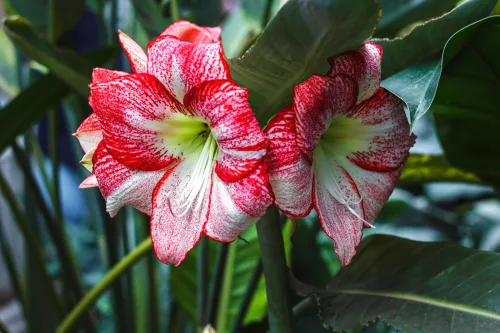
The Christmas Amaryllis That Can Bloom for Years but Most People Throw It Away After Flowering
Hippeastrum is a spectacular winter-blooming bulb that, with the right care, will flower again year after year. Learn how to plant it correctly, look after it after flowering, and bring it into dormancy so it reliably reblooms.
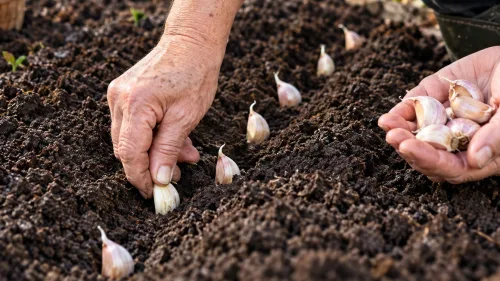
How to Grow Winter Garlic for a Much Bigger Harvest
Autumn planting is the key to strong, healthy winter garlic, but the details make all the difference. With the right timing, bed choice, seed-clove treatment and a simple bicarbonate trick, you can noticeably boost yield.
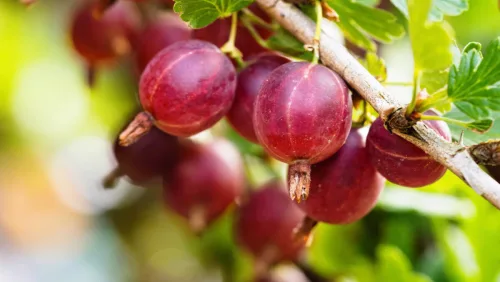
A tree or shrub planted properly in autumn can outpace spring stock and improve fruiting
Many fruit trees and soft-fruit shrubs establish better when planted in autumn, because roots keep growing while the top is dormant. Done well, this head start means stronger spring growth, less watering, and a healthier first year.
Comments (0)
Be the first to comment.