
 English
  Polski
  Deutsch
  Nederlands
  Svenska
  Norsk
Norsk  Dansk
Dansk  Français
  Italiano
  Español
  Português
  Slovenčina
  Suomi
Suomi  Gaeilge
 Black bottoms on tomatoes are not blight and spraying won’t help
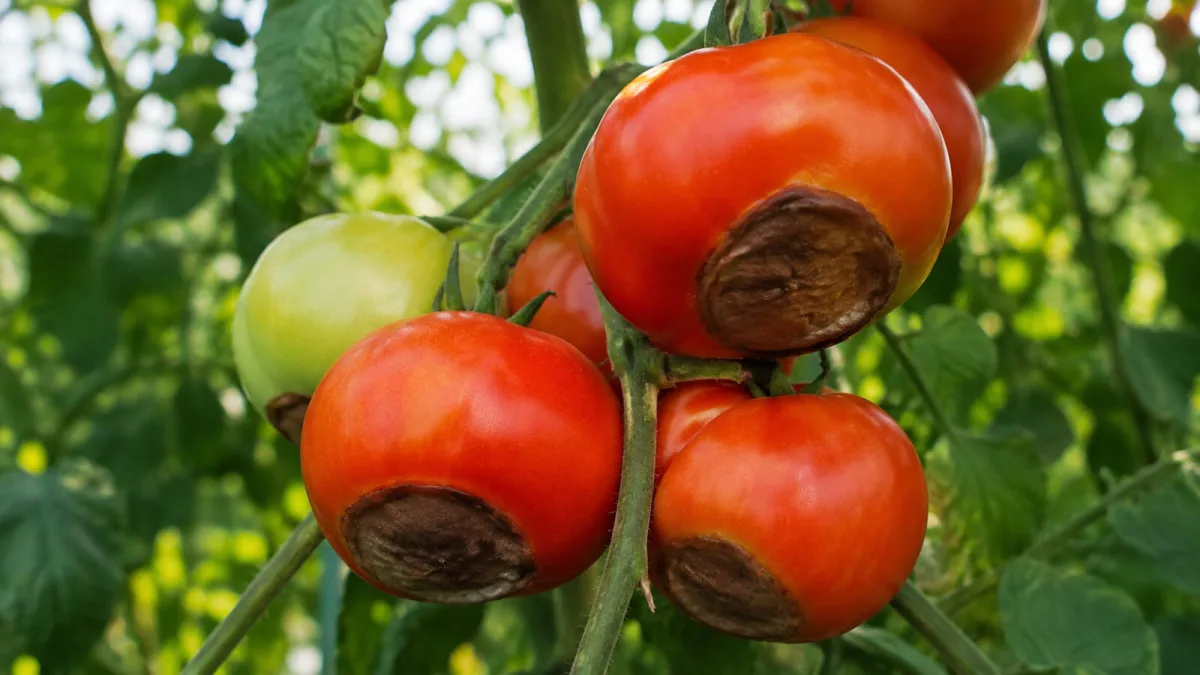
After a spell of tropical heat, cooler temperatures, showers and changeable weather often follow. Instead of enjoying fruit setting and ripening, when you check your beds or greenhouse you may spot something unpleasant: on the bottom of the tomatoes a dark patch appears, gradually turning black and leathery; the fruit often flattens at that spot and looks as if it has been hit by a disease. The first instinct is usually a blight spray, but that is the classic mistake. This is not a fungal disease, so a fungicide won’t help; it only puts extra stress on the plant and you spend money for no result.
What’s really happening, or blossom end rot
This problem is a physiological disorder known as blossom end rot. It develops when the fruit lacks calcium in its tissues. Calcium is crucial for strong cell walls. If too little reaches the developing fruit, cells at the far end of the fruit gradually die off and the area darkens until it turns black.
What matters is that calcium can be present in the soil in perfectly adequate amounts. The issue often isn’t that the soil is short of calcium, but that at that moment it can’t get into the fruit.
Why the patches showed up after the cool-down
It often seems illogical: the worst heat has passed, yet the trouble shows up now. That’s because symptoms appear on the fruit with a delay, usually 3 to 5 days after the moment the plant stopped supplying calcium properly. So what you see today is the result of stress from previous days.
Calcium moves through the plant mainly with the flow of water. As soon as water uptake or root function is disrupted, the supply of calcium to the fruits, which are especially sensitive, slows or stops as well.
Two common triggers after a hot spell
The first issue occurs when the soil in pots, raised beds or an overheated greenhouse warms above roughly 30 °C. Fine root hairs then work poorly or temporarily stop functioning, so the plant can’t take up calcium efficiently even if there’s plenty of it in the soil.
The second issue often comes right after the heat: a dry growing medium is suddenly drenched with water, or a downpour saturates it. Roots get shocked by the rapid switch from dry to waterlogged. This swing disrupts water flow in the plant and further limits calcium transport to the fruit.
How to save the rest of the crop without unnecessary chemicals
Fruits that already have black, leathery patches cannot be cured. What does make sense is quick corrective action so newly set fruits aren’t affected. The key is to relieve the plant and restore stable water uptake and calcium supply as soon as possible.
Remove damaged fruit to free up the plant’s energy
Pick off tomatoes with blackened bottoms as soon as you can. The plant will keep wasting energy on them, but their quality won’t improve. Because this isn’t an infectious disease, you can even put them on the compost if that’s what you normally do.
Apply calcium as a foliar feed; it’s the fastest route
After stress, recovery of uptake through the roots can take days to weeks. If you want to protect small, still-developing fruits, a foliar feed with calcium helps. Calcium nitrate is commonly used, or specialised chelated products. Spray in the morning or evening, when the sun isn’t harsh and the plant absorbs better. Through the leaves, calcium is taken up within a few hours, giving young fruits a chance to get past the problem.
Keep moisture even and add mulch
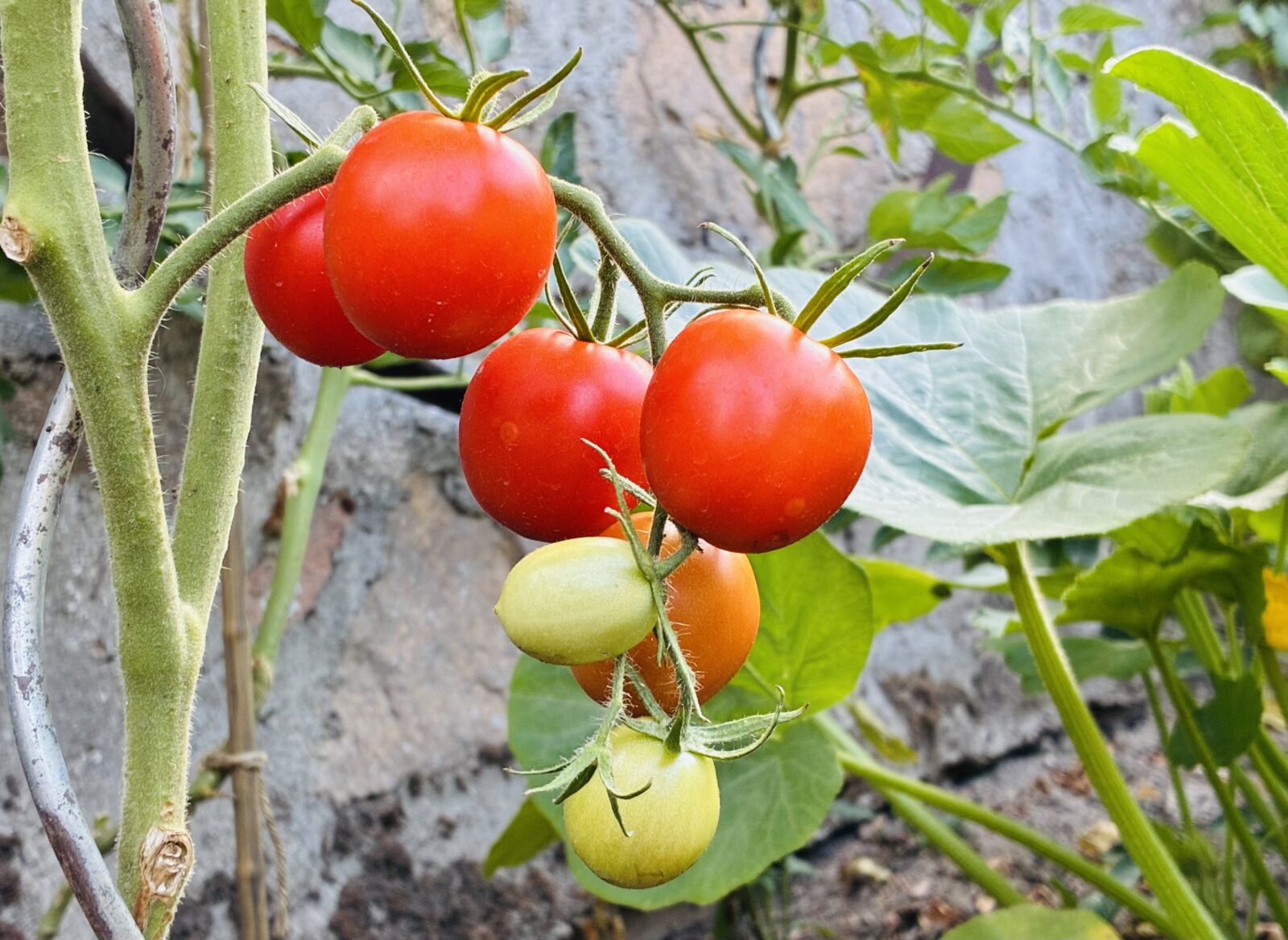
In changeable weather, tomatoes don’t need to stand in water constantly, but they can’t tolerate big swings. Water more often in smaller amounts so the soil stays gently and consistently moist. A mulch around the plants helps a great deal too, for example straw or well-wilted grass clippings. Mulch slows evaporation, protects the soil from overheating and cushions shocks during further weather changes.
Temporarily ease off nitrogen and potassium; they can crowd out calcium
If you’re feeding at this stage with mixes high in nitrogen or potassium, you may unknowingly set yourself up for more blackening. Nitrogen pushes lush new leaf growth, which preferentially pulls available calcium to itself, leaving the fruits sidelined. For a while, back off these fertilisers and focus on steady watering and targeted calcium supplementation.
What to take away for the coming days
Blackening at the blossom end of tomatoes looks dramatic, but in most cases it isn’t blight. It’s a sign the plant couldn’t cope with heat stress and the subsequent sudden drenching or heavy rain, and the fruits briefly suffered from a calcium shortage. If you remove damaged fruits, even out watering, mulch, and supply calcium via a foliar feed, you can still save a large part of the harvest.
Source: GrowVeg, Urob si sám, Pestrazahrada.cz

A lover of nature, gardens, and everything that moves, blooms, or grows. He literally grows everything, from herbs to rare species, and he enjoys caring for animals just as much. In his work, he connects modern technology with tried-and-tested grandmotherly methods and is happy when both paths lead to the same goal.
Related articles
An Orchid That Only Grows but Won’t Bloom Has Three Common Causes You’ll Never Fix with Fertiliser
If your orchid looks healthy but refuses to bloom for months, the cause is usually not a lack of fertiliser. Light, watering habits, and temperature patterns are far more often to blame.
Winter is crucial for raised beds and most people skip the pest prevention step
Your raised beds don’t go dormant just because winter arrives. A few quick, well-timed tasks now will protect the soil, discourage pests, and set you up for a smoother, more productive spring.
When to Mow the Lawn for the Last Time Before Winter
There’s no universal date for the season’s final mow—your lawn and the weather will tell you. Time it just ahead of hard frost and leave the grass slightly higher to help it overwinter healthier and bounce back faster in spring.
Comments (0)
Be the first to comment.