
 English
 Polski
 Deutsch
 Nederlands
 Svenska
 Norsk
 Dansk
 Français
 Italiano
 Español
 Português
 Slovenčina
 Suomi
 Gaeilge
An Unkillable ZZ Plant Is Dying in Homes Because of a Mistake That Looks Like Care
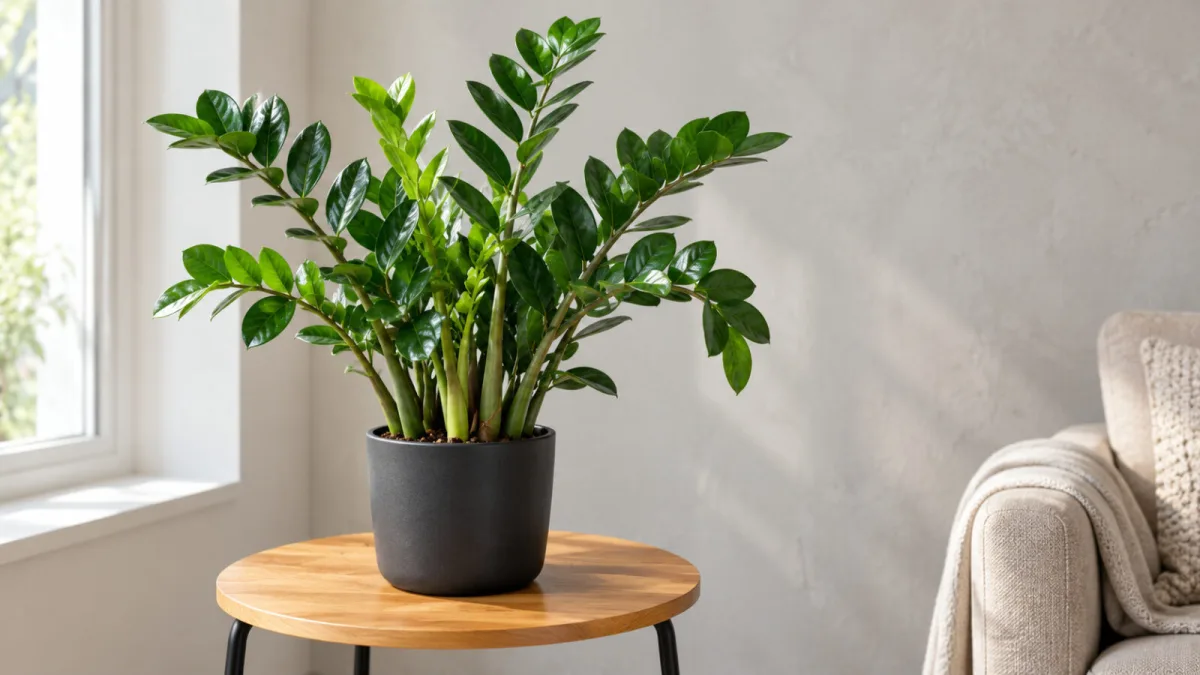
The ZZ plant has become popular mainly because it tolerates less-than-perfect care. It suits people who sometimes forget to water, as well as beginners just getting into houseplants. This plant comes from East Africa, where it adapted to harsher conditions. That’s exactly why it can cope so well in a flat, where many other species struggle.
It’s known for its firm, glossy leaves in a deep green shade. A crucial part of the plant is its underground rhizomes (often called tubers), where it stores water. Thanks to this, it handles drought far better than waterlogging. If you want it to stay healthy long term, it’s better to give it a slightly drier potting mix than to water too often.
Which conditions suit it best
The ZZ plant prefers a bright spot with indirect light. It can grow in partial shade or a darker corner too, but in that environment its growth is usually slower. Direct sun isn’t suitable, as it can damage the leaves and leave scorch marks. It does best at normal room temperature, while cold and draughts don’t agree with it.
The right potting mix matters too. It should be light and free-draining so water doesn’t sit around the roots for long. Adding sand or perlite can help. A pot with a drainage hole should be non-negotiable, because excess water is one of the biggest risks for this plant. Repotting isn’t needed often. It’s best to do it only when the plant is genuinely running out of space in the pot.
Watering and feeding without unnecessary mistakes
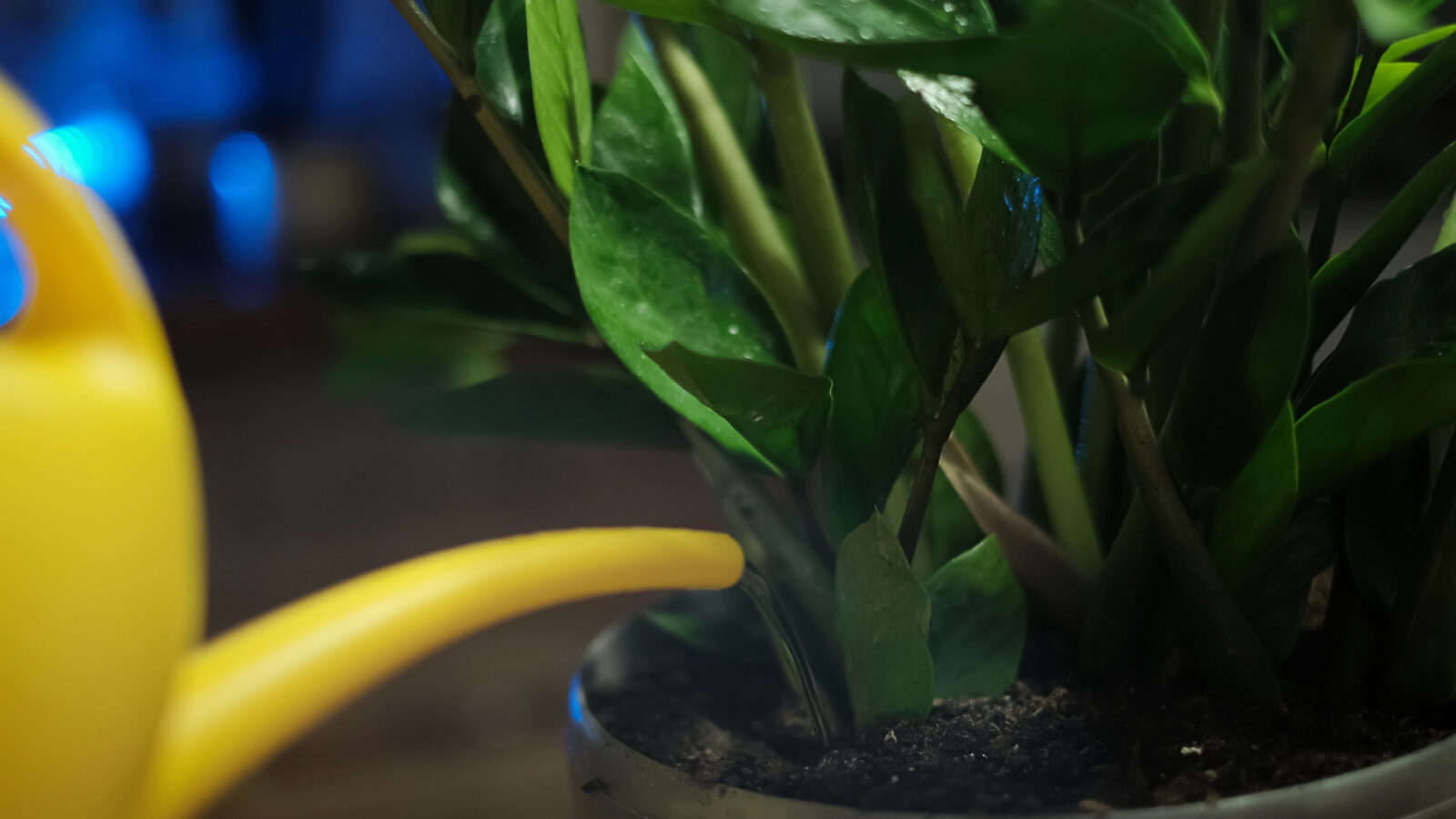
With a ZZ plant, a simple rule applies: less is more. Let the potting mix dry out well between waterings. In winter the interval can be very long, and sometimes watering just once every few weeks is enough. A much more common issue than dryness is overwatering, which can lead to rotting roots and rhizomes.
Feeding is best kept modest as well. During active growth from spring to late summer or early autumn, feeding once a month is usually enough. In winter it’s better to skip fertiliser, because the plant naturally rests and excess nutrients can do more harm than good. You can use a standard fertiliser for leafy houseplants or one made for succulents, but always in sensible amounts.
When a gentle natural boost at home can help
Although a ZZ plant doesn’t require heavy feeding, a mild natural boost can be beneficial. If the plant hasn’t produced new shoots for a long time, is growing slowly, or looks tired, a small top-up of nutrients may help. Among commonly recommended home options are banana peels, which contain potassium and other minerals that support growth above ground as well as root development.
With natural fertilisers, though, caution is important. They may be gentler, but when overused they can also worsen the condition of the potting mix. Coffee grounds, for instance, can make the compost too acidic. It’s always better to use smaller amounts and watch how the plant responds.
Banana peel as a simple homemade fertiliser
One of the most accessible ways to feed plants at home is using banana peel. It can be used in several forms depending on what’s most practical for the grower. For an indoor ZZ plant, a liquid feed or a gently prepared fertiliser is best, so it won’t unnecessarily burden the potting mix.
Banana peel infusion
The simplest option is to make an infusion. Put a fresh peel into a container with a volume of about one litre and pour over warm water. Then leave it to steep for a few days. Once the water turns cloudy and slightly thicker-looking, dilute the solution with clean water and use it for watering. This homemade feed can be used for indoor and outdoor plants.
With a ZZ plant, it’s sensible to apply this kind of feed sparingly, for example in place of one normal watering during the growing season. Using it too often won’t be beneficial, because this plant isn’t a heavy feeder.
Dried peel powder
Another option is making a powder. Cut banana peels into smaller pieces and let them dry. This can be done naturally in the air or faster in the oven using a gentle drying setting. Once fully dried, crush them into a fine powder. You can mix a small amount into water or very carefully work it into the top layer of the potting mix.
This version is more practical for longer storage. Even so, with a ZZ plant it’s best to use only small doses, because its root system prefers stable conditions over dramatic interventions.
What to expect from homemade fertiliser
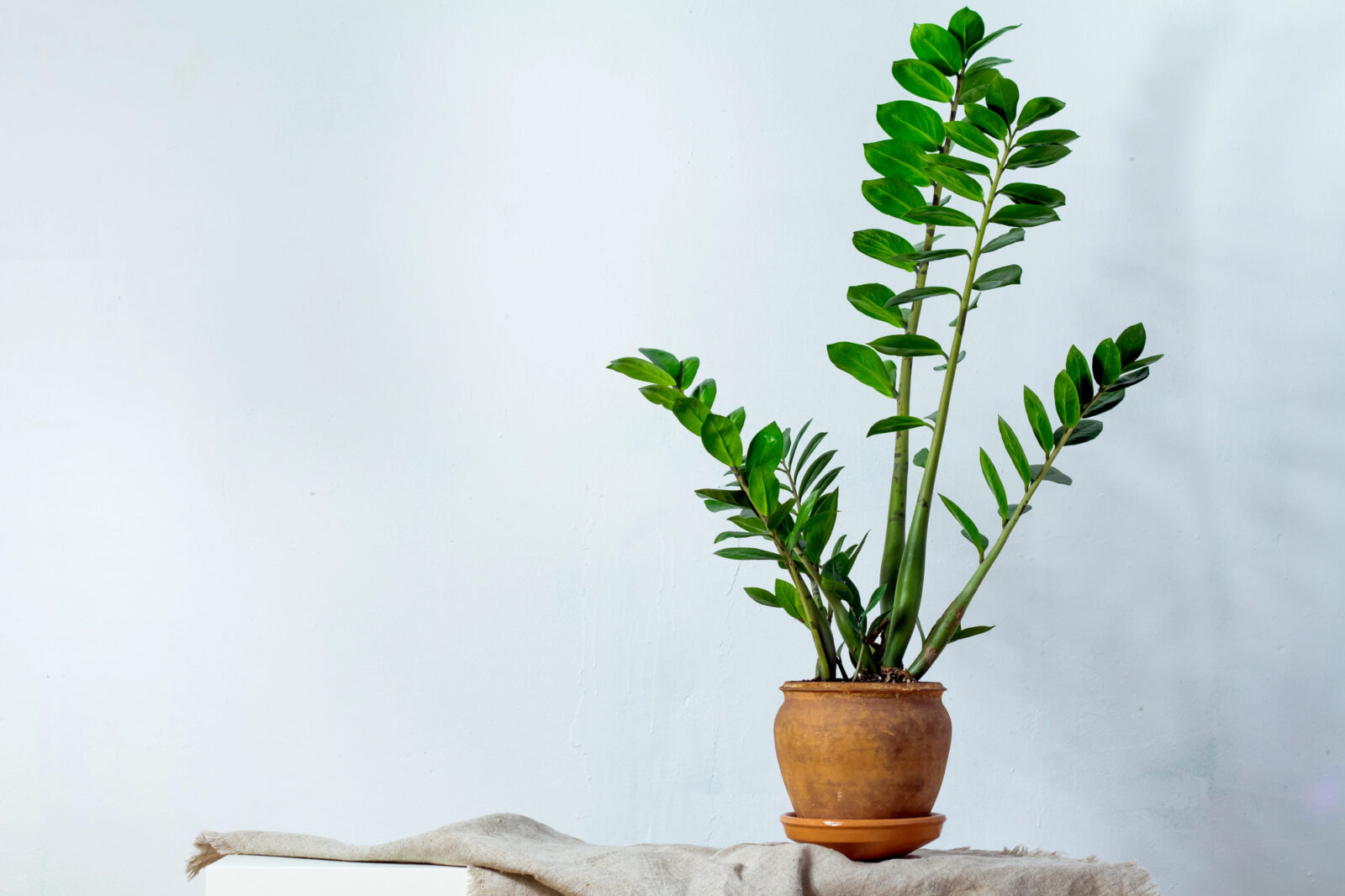
If the plant is healthy, has suitable light, the right pot, and isn’t being overwatered, gentle homemade feeding can support the production of new shoots. But it won’t perform miracles on its own. The biggest influence on growth is still correct watering, a free-draining mix, and plenty of indirect light. Fertiliser is only a supplement, not a substitute for good conditions.
The ZZ plant grows best when it isn’t overwatered, has an airy potting mix, and receives only mild, regular feeding during the growing season.
How to encourage new shoots safely
If you want your ZZ plant to put out new stems, give it a calm routine without extremes. Let the compost dry between waterings, place the plant in a bright spot out of harsh sun, and feed lightly during spring and summer. Homemade banana feed can be a useful extra when used sensibly. With this undemanding yet elegant houseplant, success really lies in restraint.
Source: Sady Ogrody, RHS, Pestrazahrada.cz

A lover of nature, gardens, and everything that moves, blooms, or grows. He literally grows everything, from herbs to rare species, and he enjoys caring for animals just as much. In his work, he connects modern technology with tried-and-tested grandmotherly methods and is happy when both paths lead to the same goal.
Related articles

Time for the final rose prune, do it now and overwinter properly for a June flush of blooms
Roses look their best when they’re properly prepared for winter. A timely autumn prune, health check and sensible frost protection will set plants up for vigorous spring growth and a strong June display.
When autumn liming of soil makes sense and how it helps vegetable beds in the garden
Autumn soil liming can markedly improve soil structure and balance pH for healthier vegetables next season. It’s most worthwhile on heavy or overly acidic soils where nutrient uptake and disease resistance suffer.
Don’t Throw Away Pepper Plants After Harvest They Can Crop Again Next Year
Peppers aren’t just a one-season crop. With a simple overwintering routine, you can keep your plants alive indoors and enjoy earlier, heavier harvests next year.
Comments (0)
Be the first to comment.