
 English
 Polski
 Deutsch
 Nederlands
 Svenska
 Norsk
 Dansk
 Français
 Italiano
 Español
 Português
 Slovenčina
 Suomi
 Gaeilge
In autumn, ginkgo lights up the garden like a spotlight, and five other trees can do the same even in a small plot
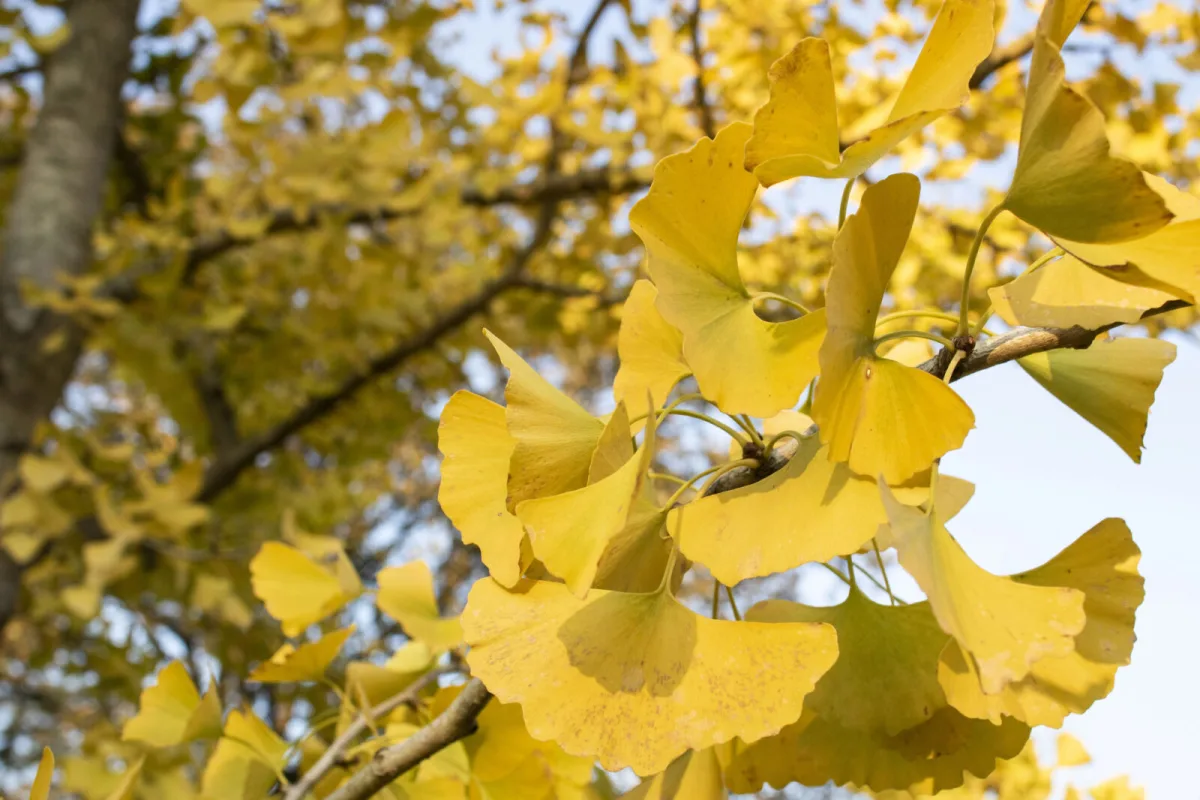
Ginkgo (Ginkgo biloba) is one of the most striking trees for autumn colour. As soon as temperatures drop and days shorten, its fan-shaped leaves turn into a clear, golden glow that’s almost impossible to miss in the garden. When the leaves then fall over a short period, they form an unbroken yellow carpet beneath the crown. It’s precisely this uniform colour that makes ginkgo so highly prized.
Autumn leaf colour develops through the natural breakdown of chlorophyll. As the green fades, yellow and orange pigments come to the fore, while cooler nights also encourage the development of red tones. The best display usually arrives in years when autumn stays relatively dry and warm well into October.
Why ginkgo is popular in urban gardens too
Ginkgo copes well with drought, summer heat and poorer air quality, so it suits not only rural gardens but city settings as well. It prefers sun or light partial shade and soil that doesn’t hold excess water. The drawback is the size of the straight species, which will, over time, grow into a substantial tree. For smaller gardens, narrowly upright cultivars are therefore a better fit. It’s also practical to choose grafted male plants, because female trees produce fruits with an unpleasant smell.
Persian ironwood and sweetgum offer a richer autumn palette
Where ginkgo stands out for the purity of a single colour, Persian ironwood (Parrotia persica) impresses with its variability. Yellow, orange and wine-red shades can appear at the same time within one crown. It’s also not a particularly demanding tree. It grows to a moderate size, handles Central European winters well, and isn’t usually badly affected by disease. It’s interesting beyond autumn too, because older bark flakes off into a decorative mosaic, and small flowers with red stamens appear towards the end of winter.
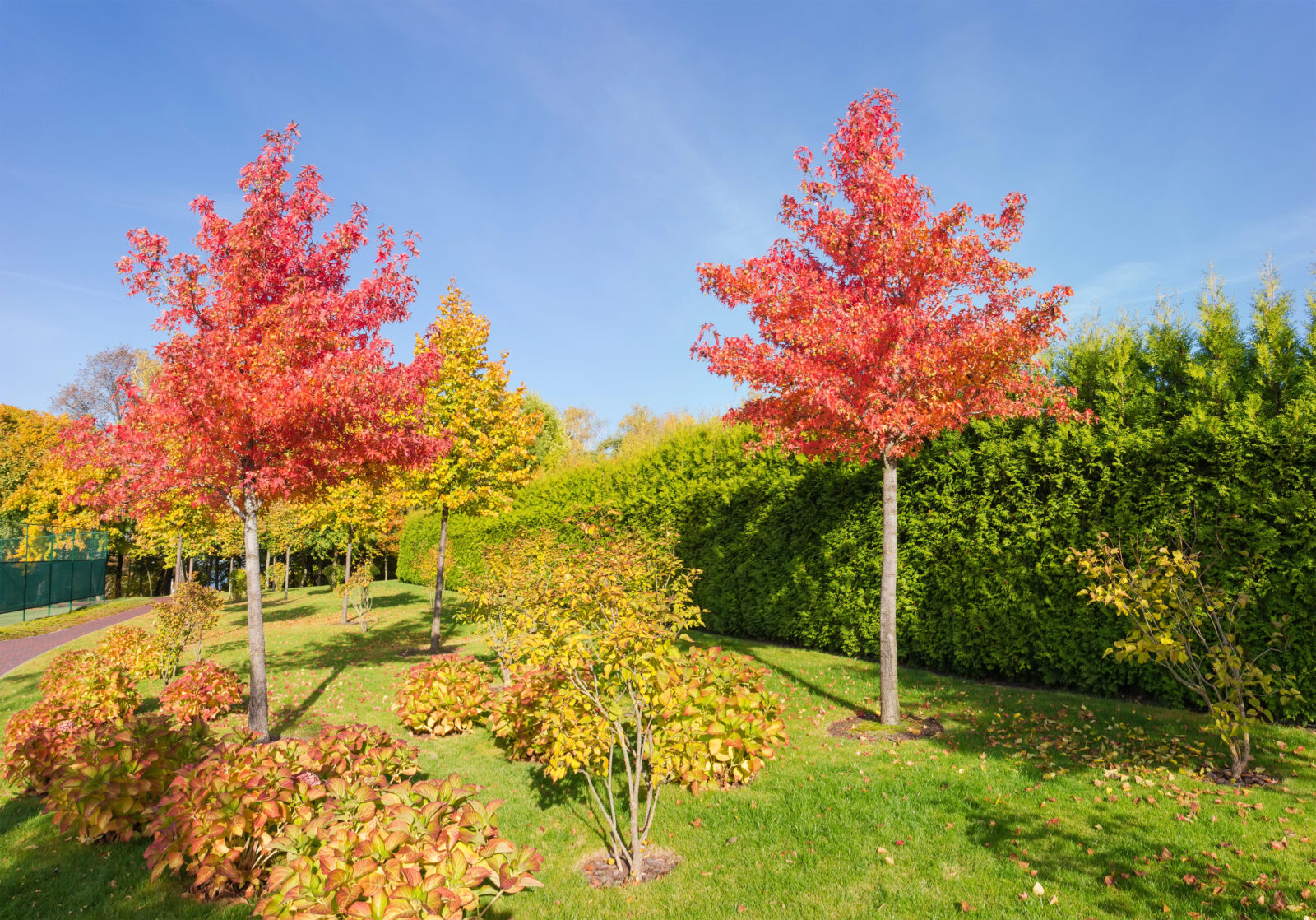
American sweetgum (Liquidambar styraciflua) looks elegant with its glossy, star-shaped leaves. In autumn it cycles through red, purple, yellow and orange, and the colour often lasts longer than on many other trees. Do bear in mind that the straight species grows quite large. It prefers a more moisture-retentive yet free-draining soil and doesn’t do well on chalky or lime-rich ground. For smaller gardens, more compact cultivars make far more sense, as a standard sweetgum will eventually take up too much space.
Japanese maple for small gardens, tulip tree for large plots
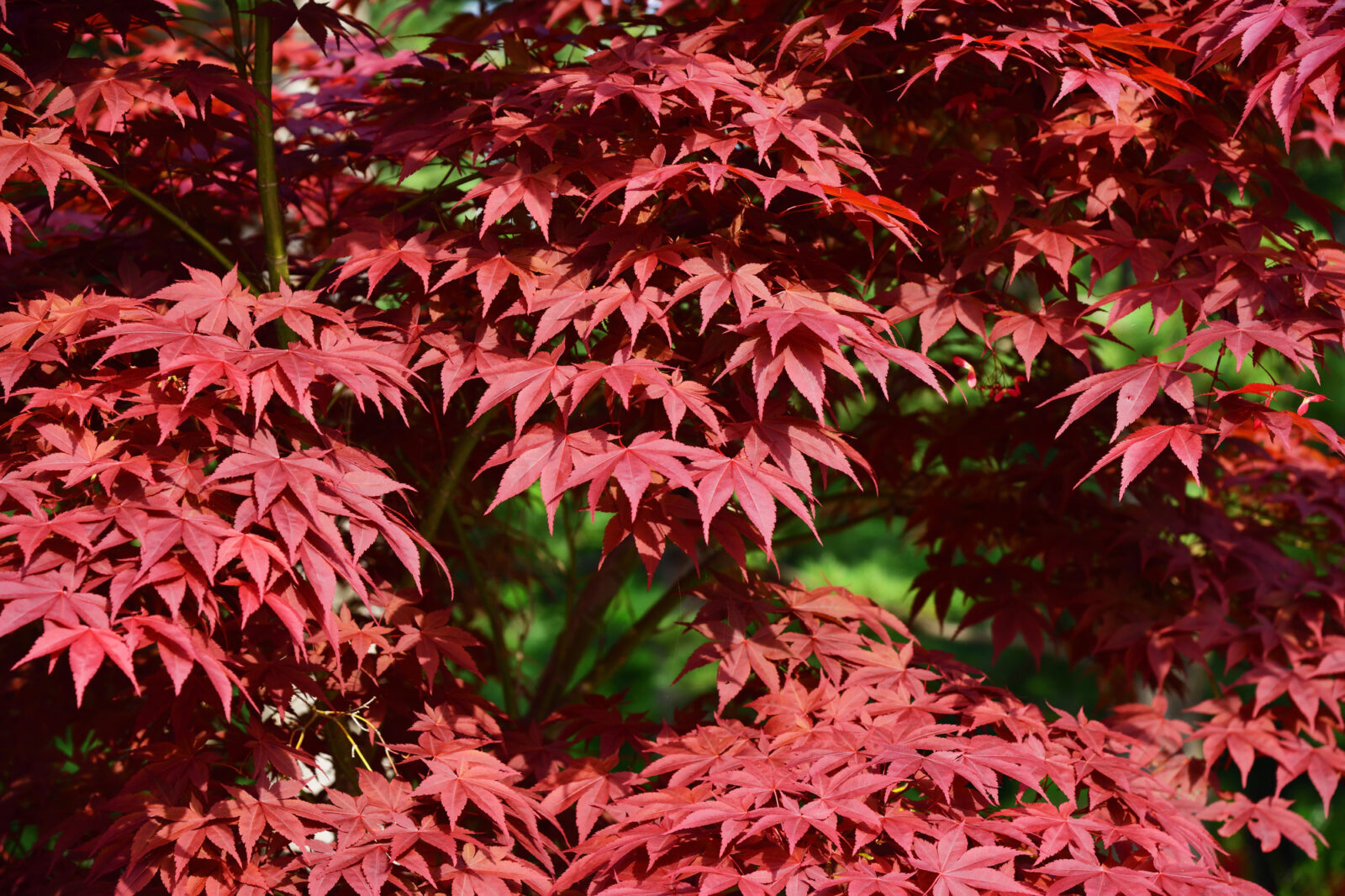
Japanese maples (Acer palmatum and cultivars) are among the most reliable choices where space is tight. Depending on the variety, their leaves turn yellow, bronze, purple and deep red in autumn. They do best in a sheltered position with dappled light, evenly moist soil and without strong winds. In a small garden, courtyard or front garden they can create an exceptionally dramatic effect.
Tulip tree (Liriodendron tulipifera), by contrast, is a tree for truly generous space. Even in summer it stands out with its unusual flowers, and in autumn its crown turns golden. It needs full sun, deeper soil and plenty of moisture. It tolerates drought and compacted ground poorly, so it’s better suited to larger plots, country homes and the edges of bigger gardens.
Smoke bush as a fiery effect in a small space
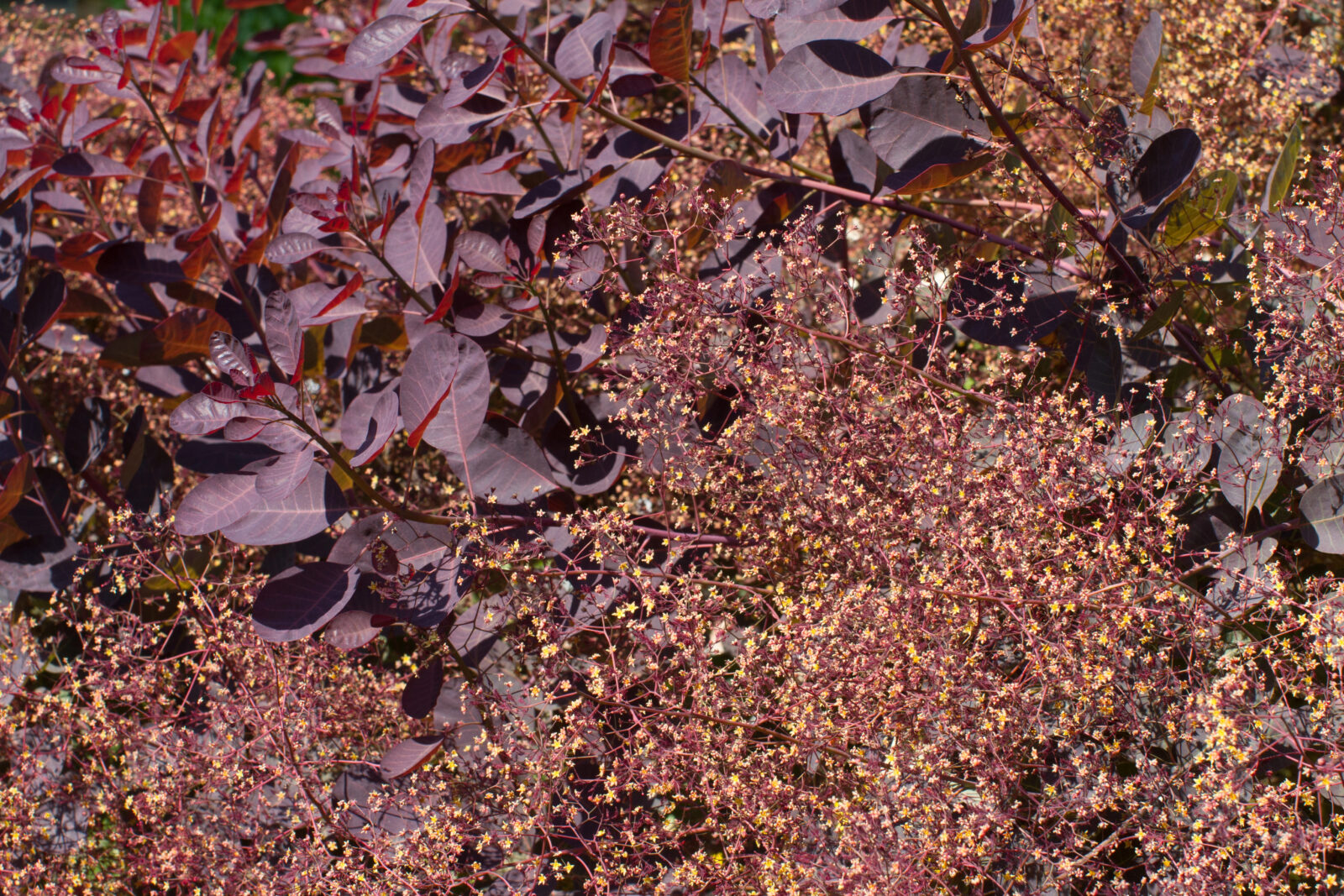
Not everyone has room for a specimen tree. That’s exactly why smoke bush (Cotinus coggygria) is worth considering. It grows as a shrub or small tree, tolerates drier, poorer soils, and colours up in orange and crimson tones in autumn. Even on just a few square metres, it can create a strongly autumnal mood without needing a large plot.
How to choose the right tree and when to plant it
When choosing, the most important factor isn’t just leaf colour, but above all the plant’s eventual size. For small plots, Japanese maples, more compact ironwoods, or narrow ginkgo cultivars are better suited. A medium-sized garden can also accommodate a multi-stem ironwood or a smaller sweetgum. Large plots can handle a standard ginkgo, a tulip tree and a more robust sweetgum.
It pays to visit botanic gardens and arboreta, where you can see these species in mature form. That makes it easier to judge how they’ll look in an ordinary garden in ten or twenty years. The best times for planting are autumn or spring. Container-grown plants can be planted at other times too, as long as they’re kept well watered, but cooler seasons usually help them establish more effectively. The first nice colour can come quite soon, but the truly dramatic effect won’t show until the tree has developed a well-formed crown.
Source: Canopy, The Martha Blog, Gardening Know How, Pestrazahrada.cz

A lover of nature, gardens, and everything that moves, blooms, or grows. He literally grows everything, from herbs to rare species, and he enjoys caring for animals just as much. In his work, he connects modern technology with tried-and-tested grandmotherly methods and is happy when both paths lead to the same goal.
Related articles
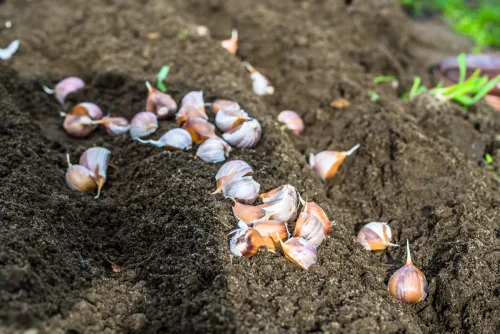
Don’t Plant Garlic in Freshly Dug Soil
For big, firm, strongly flavoured bulbs, garlic needs settled soil, the right planting window, and careful handling of the cloves. A few simple steps from bed prep to drying make the difference between a weak crop and a long-storing harvest.
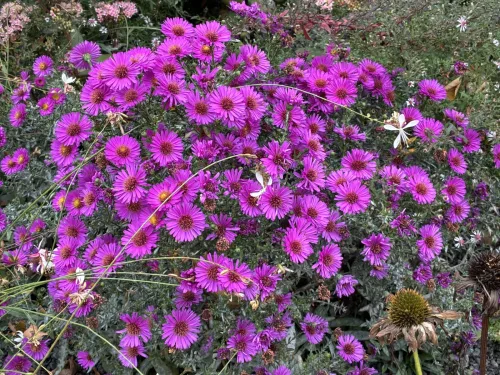
When Other Flowers Fade Asters Are Just Getting Started
Asters step in just as summer colour starts to wane, flooding borders with late-season blooms. They’re also a valuable nectar source for pollinators and later a seed larder for birds.
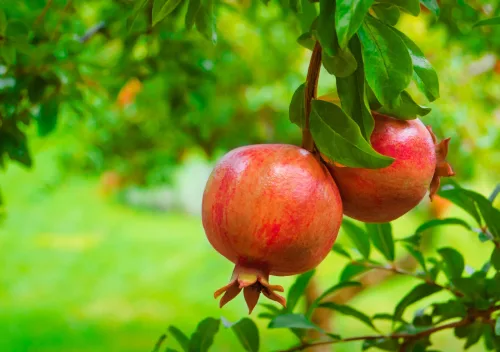
Drought tolerant fruit trees for Czech gardens that handle heat and winter frosts
Warmer summers and longer dry spells are changing what can be grown in Czech gardens. With the right variety and a sunny, sheltered spot, olives, pomegranates and figs can cope with heat, drought and even winter cold.
Comments (0)
Be the first to comment.