
 English
  Polski
  Deutsch
  Nederlands
  Svenska
  Norsk
Norsk  Dansk
Dansk  Français
  Italiano
  Español
  Português
  Slovenčina
  Suomi
Suomi  Gaeilge
 Autumn asters turn the garden into a haven for pollinators
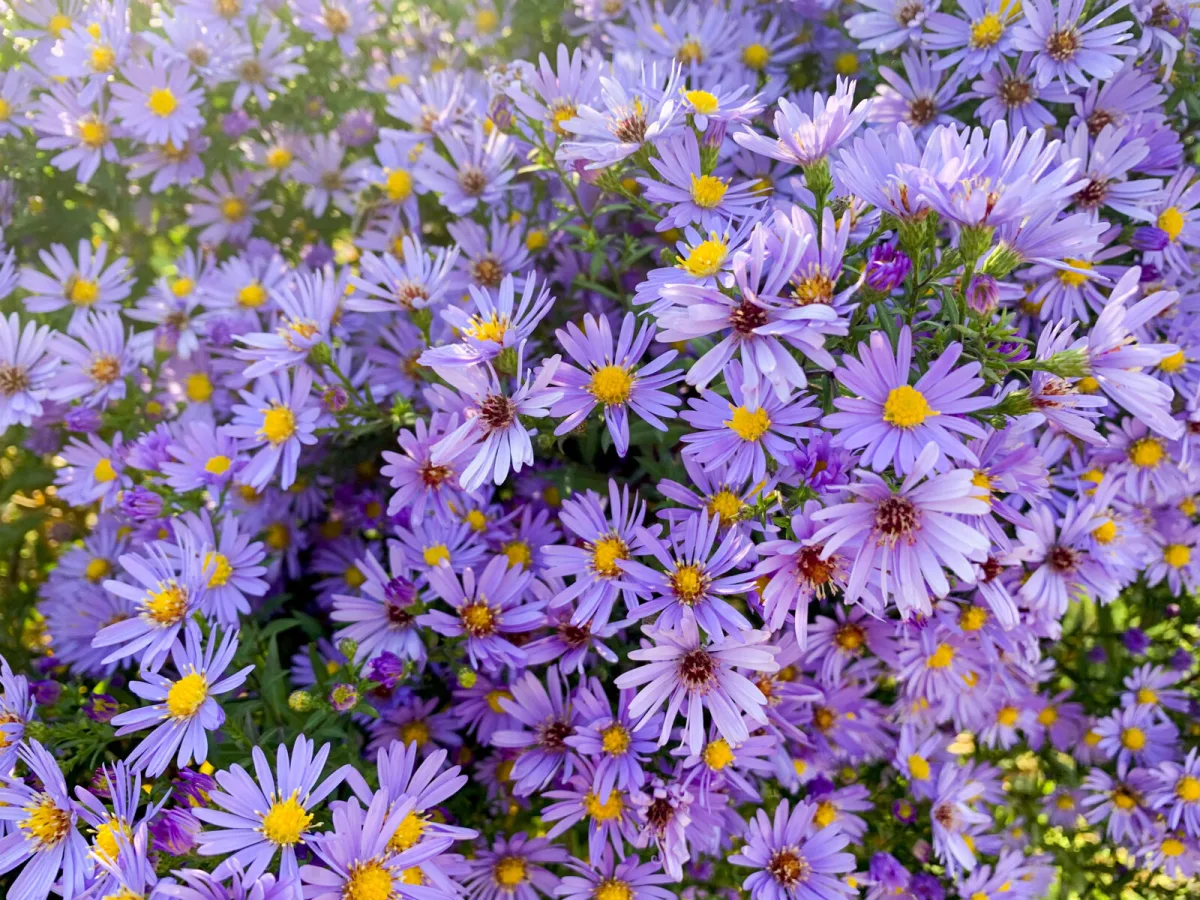
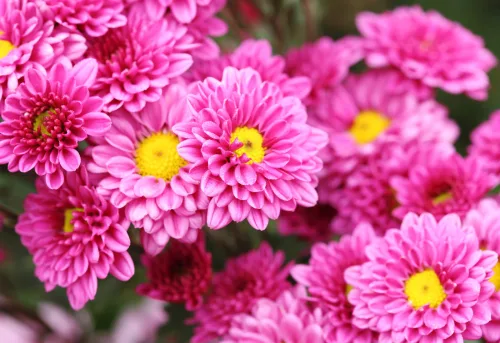
Once most summer flowers have faded and the borders slowly lose their bold colours, it’s time for autumn asters. September and October are when they really come into their own, flooding the garden with masses of purple, pink, blue or white blooms. They’re an excellent choice anywhere you don’t want the garden to feel empty and downbeat as summer ends. Bees, bumblebees and butterflies quickly find them too, because at this time of year there simply aren’t as many plants still in flower as there are in summer. Well-chosen asters can decorate a border and provide food for pollinators right up to the first harder frosts.
A broad group of plants with an important role in nature
The label “autumn asters” covers a whole range of species and cultivars. Many of those commonly grown in gardens originate in North America, and botanists now place them mainly in the genus Symphyotrichum. Compared with some European and Asian asters, they differ not only in appearance but also in flowering time. In many of them, flower buds begin to form as the days shorten, so they don’t fully open until late summer or autumn. Some cultivars will continue flowering right up to the first strong frosts.
That late flowering is one of the main reasons asters are so valuable in autumn. In September and October, the number of garden plants offering enough nectar and pollen gradually drops. Flowering clumps of asters therefore often draw in honeybees, bumblebees, hoverflies and butterflies, and on a sunny autumn day they can be surprisingly busy. For insects, they’re a welcome food source at a time when options are significantly more limited. That’s why autumn asters belong not only in ornamental borders, but also in gardens designed to be pollinator-friendly.
Why autumn asters are crucial for wildlife
Autumn asters are considered so-called keystone plants because they support a wide range of wildlife at different times of year. In spring and during fresh growth, their shoots may be nibbled by rabbits or deer, which effectively acts as natural pinching. In summer, they serve as host plants for the caterpillars of some butterflies. In autumn, they provide abundant nectar and pollen for insects that stay active on warm days.
Their value doesn’t end when the flowers finish. In winter and spring, the seeds become food for wild birds. So by planting asters, you’re not only helping pollinators for one part of the year, but creating a valuable habitat for several groups of animals across the seasons.
Where asters thrive best
Autumn asters like plenty of light, though depending on the species they can also cope with a spot that gets light shade for part of the day. In the garden they generally do best in sunny to lightly shaded borders with soil that isn’t waterlogged long-term. They look especially good in naturalistic planting schemes, where they can mingle freely with ornamental grasses and other late-flowering perennials. Instead of a strictly ordered bed, you get a planting that feels like a flower-filled meadow and stays interesting well into autumn.
In the wild, however, some autumn aster species are finding fewer suitable places to grow. The problem can be the scrubby overgrowth of open habitats, the spread of non-native plants, or changes in how the landscape is managed. In a home garden, it therefore makes more sense to focus primarily on their practical benefits. Asters extend the flowering season of borders while also offering food for insects at a time of year when many other perennials have already finished. If you plant them alongside grasses, stonecrops or other autumn flowers, you can create a border that remains attractive right to the end of the gardening season.
Which plants to choose for the garden
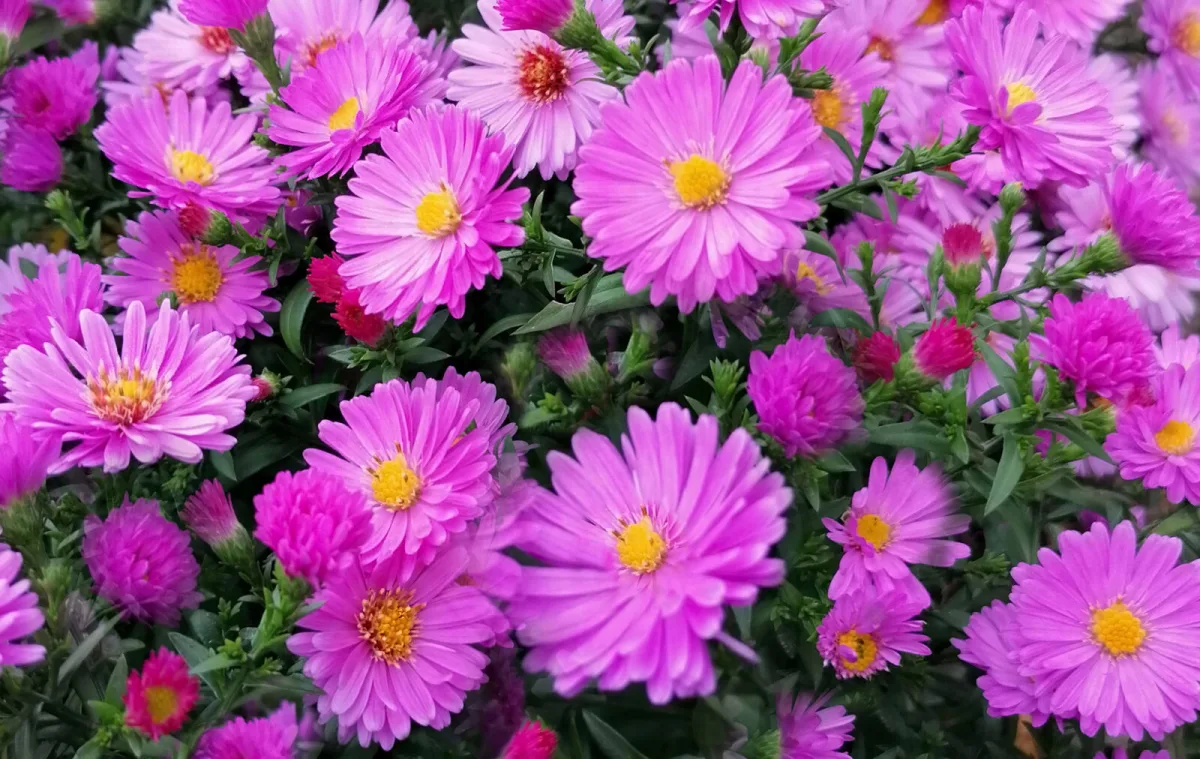
Autumn asters can be grown from seed or from ready-raised plants. Garden centres often also offer named cultivars, selected from the original species and then propagated vegetatively so they keep the same characteristics. They aren’t necessarily hybrids, but rather carefully chosen forms suited to garden use.
Some stand out for a more compact habit, others for heavier flowering or greater resilience. Aromatic types are interesting too, with leaves that have a strong scent reminiscent of pine needles. These tend to be less attractive to browsing animals. Your choice of species should match the space you have, because some asters grow upright and tall, while others spread more in width.
Sowing and propagation without unnecessary fuss
You can also raise autumn asters from seed, but bear in mind that for some species germination is helped by a period of cold. A simple solution is winter sowing, where the seeds naturally experience low outdoor temperatures. Another option is so-called stratification in the fridge. Seeds are placed in slightly moist sand or another suitable medium, kept cool for several weeks, and then sown in spring. Stratification requirements can vary between species, though, so it’s worth following the guidance on the seed packet as well.
An even easier route to new plants is often propagating established asters. In spring you can lift older clumps, carefully divide them into several pieces, and replant each section into a prepared spot. This also rejuvenates the plant, which after a few years may start to thin in the centre and flower less freely. Some asters can also be propagated from softwood cuttings taken in spring, which root quite readily in a suitable compost. The advantage of vegetative propagation is that new plants retain the characteristics of the original cultivar and, given good conditions, can bulk up nicely within the first season.
How to encourage dense growth and abundant flowering
If you want autumn asters to be bushier, better branched and packed with more flowers, you can shorten or pinch out the tips of young shoots at the beginning of summer. This encourages the plant to branch and, instead of a few long stems, it forms a more compact clump with more flowering shoots. Don’t leave pinching too late, though. Ideally, finish by around the end of June, because a later cut can push flowering back.
With tall, vigorous asters, it’s also worth thinking about support. This mainly applies to taller New England asters, whose long stems can flop outwards after heavy rain or wind. Discreet circular supports or a few canes placed around the clump before the plants reach full height can help. Lower, naturally more spreading asters, by contrast, don’t need tying in at all costs. Their looser growth can look especially attractive in a naturalistic border.
Autumn asters are more than just a decoration at the end of the season. They are plants that keep the garden alive at a time when most other species are already retreating.
Protecting young plants and winter care
Although asters are often described as fairly resistant to browsing, their young shoots can still be damaged by rabbits or deer. Newly planted specimens are therefore worth protecting temporarily, for example with a simple wire guard. Once they’ve established and strengthened, they’re usually tougher and cope better with minor damage.
In a naturalistic planting, regular cutting back isn’t necessary. In the garden, however, it’s a good idea to leave the dry stems in place over winter. They help protect the root zone and also provide shelter for small creatures and ground-feeding birds. As soon as new growth appears in spring, you can remove the dead stems and, in more woody types, shorten some of the old growth. Smaller species that die back completely over winter can be cut down low to the ground.
Why asters deserve a place in any everyday garden
Autumn asters combine beauty, usefulness and easy care. They brighten the garden at a time when most flowers are losing momentum, while also offering a valuable food source for many kinds of insects and birds. If you’re looking for a plant that supports biodiversity without being demanding to grow, asters are an exceptionally good choice.
All they need is a suitable spot, occasional shaping, and a little protection when young. Your reward will be a livelier garden full of movement even as autumn draws towards its close.
Source: Grow Veg, The Spruce, Martha Stewart, Pestrazahrada.cz
Related articles
Homegrown Physalis Tastes Better Than Store Bought But Green Fruit Can Be Toxic
Cape gooseberry (Physalis peruviana) rewards you with aromatic, sweet-tart fruit when grown in a sunny, sheltered spot. Learn how to raise plants from seed, care for them, and why unripe green fruit should never be eaten.
Never prune a walnut tree in spring
English walnut is a magnificent, long-lived tree, but timing matters—spring pruning can cause heavy sap bleeding and slow healing. Learn the right site, spacing, feeding, harvesting, and pruning window for a healthy crop.
Autumn perennials bloom when everything else is winding down and keep the garden glowing until frost
When summer crops and bedding flowers are fading, the garden doesn’t have to look tired. Choose the right autumn-blooming perennials and you can enjoy rich colour right up to the first frosts.
Comments (0)
Be the first to comment.