
 English
 Polski
 Deutsch
 Nederlands
 Svenska
 Norsk
 Dansk
 Français
 Italiano
 Español
 Português
 Slovenčina
 Suomi
 Gaeilge
When to Plant a Butterfly Bush for Heavy Bloom and Better Winter Survival
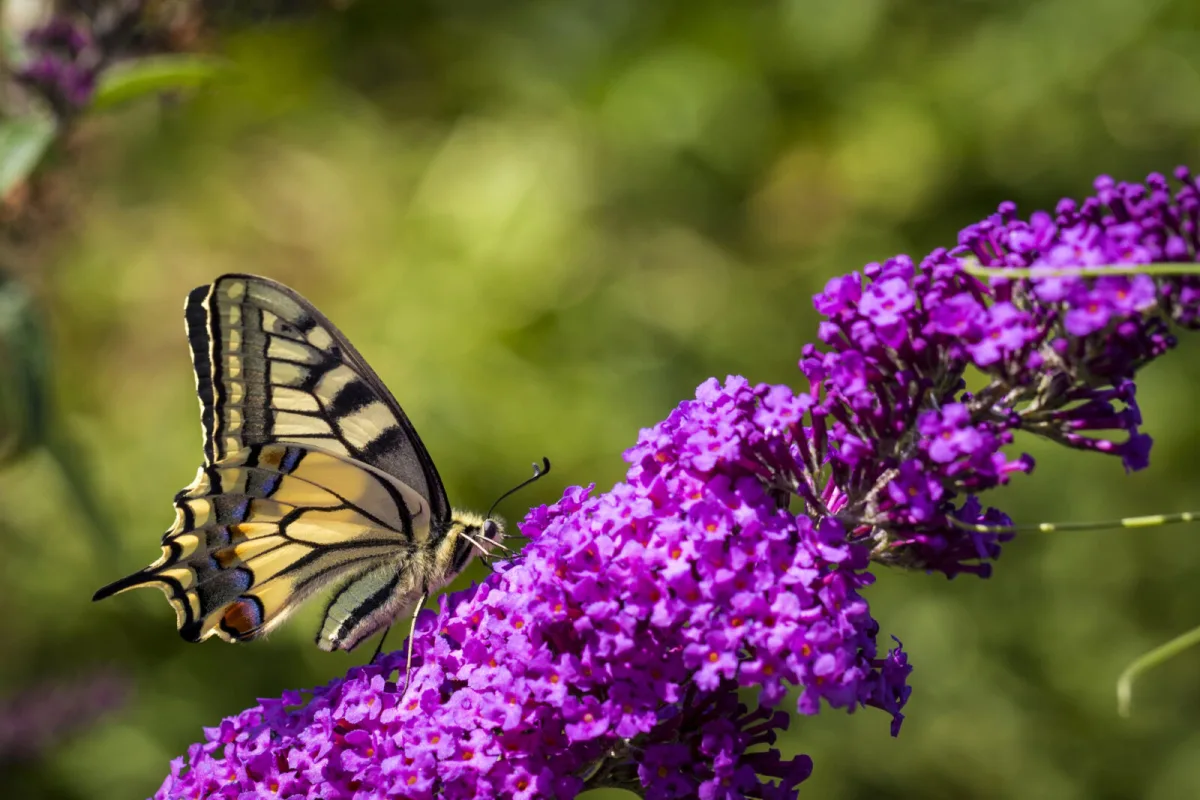
Buddleja davidii, often called the butterfly bush, is a striking ornamental shrub with a long flowering season. If it’s to thrive, choosing the right planting time matters. The most reliable option is spring, usually from April to May. The soil is gradually warming then, and the young shrub has plenty of time to root in before winter arrives.
That’s especially important because newly planted shrubs are more sensitive to hard frosts. In cooler regions, spring planting is therefore safer than autumn planting. In warmer areas you can plant as early as April; elsewhere it’s better to wait until May, once the risk of sharper late ground frosts has passed.
Autumn planting is also possible
You can plant buddleja in autumn too, but it’s a riskier window. September is usually best, when the ground is still warm and roots have a chance to establish before colder weather sets in. In areas with milder winters this can work well, but in harsher locations it requires more caution.
The biggest problem tends to be the combination of frost, wind and waterlogged soil. A shrub planted too late in autumn may not root sufficiently before winter. If you only buy the plant in October or November and the weather turns quickly, it’s often wiser to hold it until spring in a cool but sheltered place.
Differences by region and weather
In practice, the right timing isn’t determined by the calendar alone. It also depends on your region, how spring develops, and soil conditions. In western and south-western areas it’s often possible to start earlier, while in the north-east or foothill regions it’s safer to plant later. What matters is that the soil isn’t frozen or churned into mud, and that there isn’t a prolonged cold snap on the way.
A possible date isn’t always the best date. With buddleja, it’s better to plant when the young shrub has as much time as possible to strengthen before winter.
The best spot for buddleja
This shrub loves sun, warmth and shelter from strong winds. It flowers best where it gets light for most of the day. In a sunny position it produces more flower spikes and tends to grow more compactly. It suits a patio area, a sunny border, or a fence line, provided it has enough space.
In shade, flowering is weaker and the shoots stretch more. It’s also important not to plant buddleja where water sits for a long time after rain. Excess moisture, especially in winter, can damage the roots and the lower part of the shrub.
Soil and preparation before planting
Buddleja isn’t overly demanding about nutrients; good drainage is far more important. It does best in ordinary garden soil that doesn’t hold excess water. Once established, it can cope with short dry spells, but young plants need regular watering.
If your soil is heavy and clay-based, it’s worth improving a wider area around the planting site with compost and loosening it. It’s not enough to amend only the planting hole, because water can collect there. On wet ground, planting on a slightly raised area can also help.
The correct way to plant in the ground
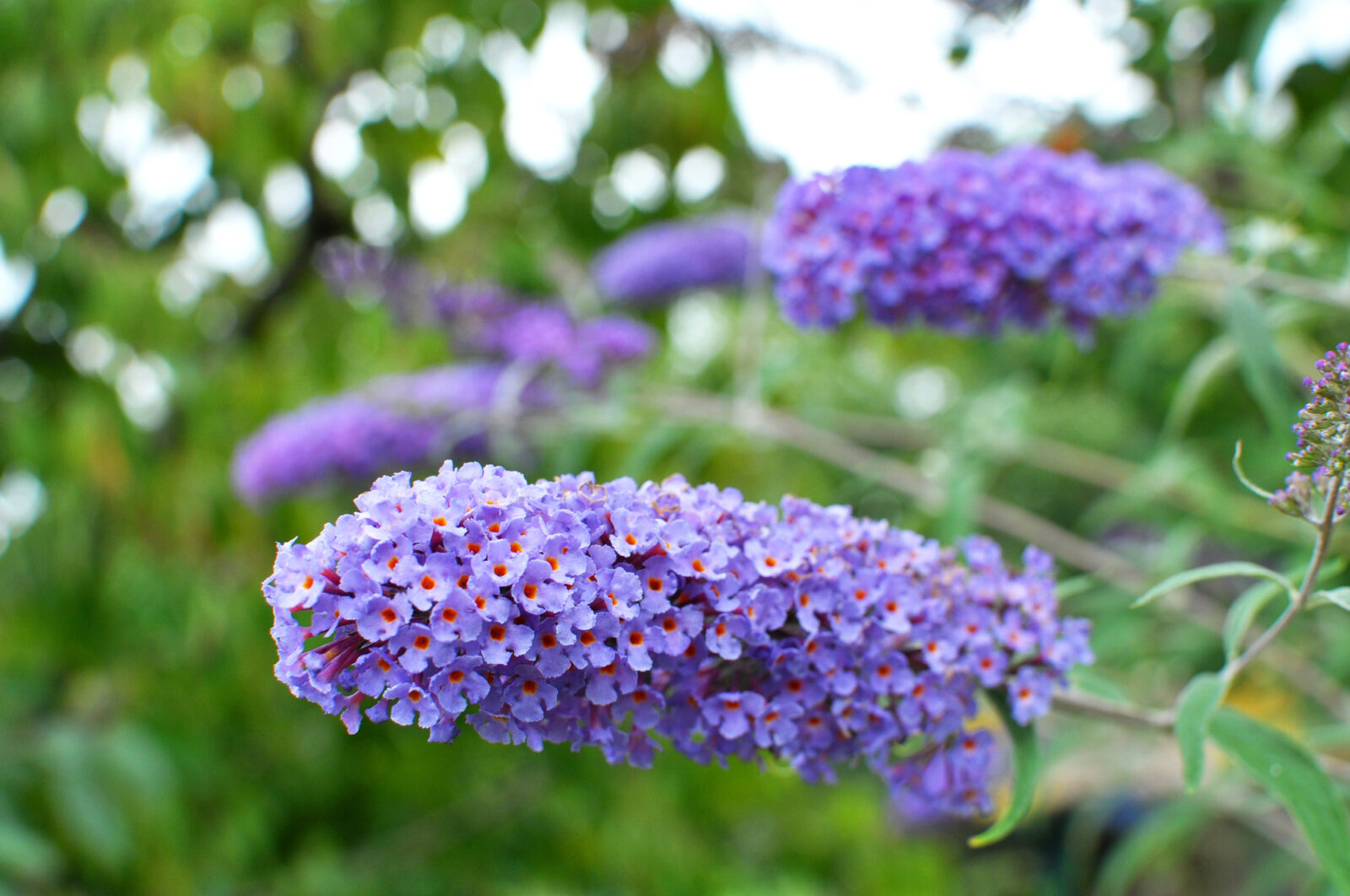
Container-grown plants are fairly easy to transplant. The hole should be about twice as wide as the root ball. Before planting, it helps to water the shrub in its pot so the compost is evenly moist. After lifting it out, you can gently tease the roots if they’re circling around the outside of the root ball.
Plant buddleja at the same depth it was growing in the pot. Once backfilled, firm the soil gently and water thoroughly. The surrounding area can be covered with a thin layer of mulch, but it’s best to leave a small gap clear right next to the stems.
How much space the shrub needs
Most common varieties grow quite wide, so it’s best to leave roughly 1 to 1.5 metres between shrubs. Vigorous cultivars may need more. Smaller or dwarf forms, of course, require less spacing. When buying, check the mature size of the variety so it won’t later get in the way of a path or crowd nearby plantings.
Aftercare and winter protection
The first few weeks after planting are key to how quickly the shrub settles in. The soil should be lightly moist but not waterlogged. In hot weather you’ll need to check watering more often; in cool, wet periods, be more cautious. There’s no need to rush feeding, especially if you incorporated compost into the soil.
Young buddlejas benefit from protection before their first winter with a layer of bark, leaves or compost around the base. The above-ground growth can be nipped by frost, but that doesn’t necessarily mean the whole plant is lost. Buddleja often reshoots from the base in spring and starts growing relatively late.
Pruning and the first flowers
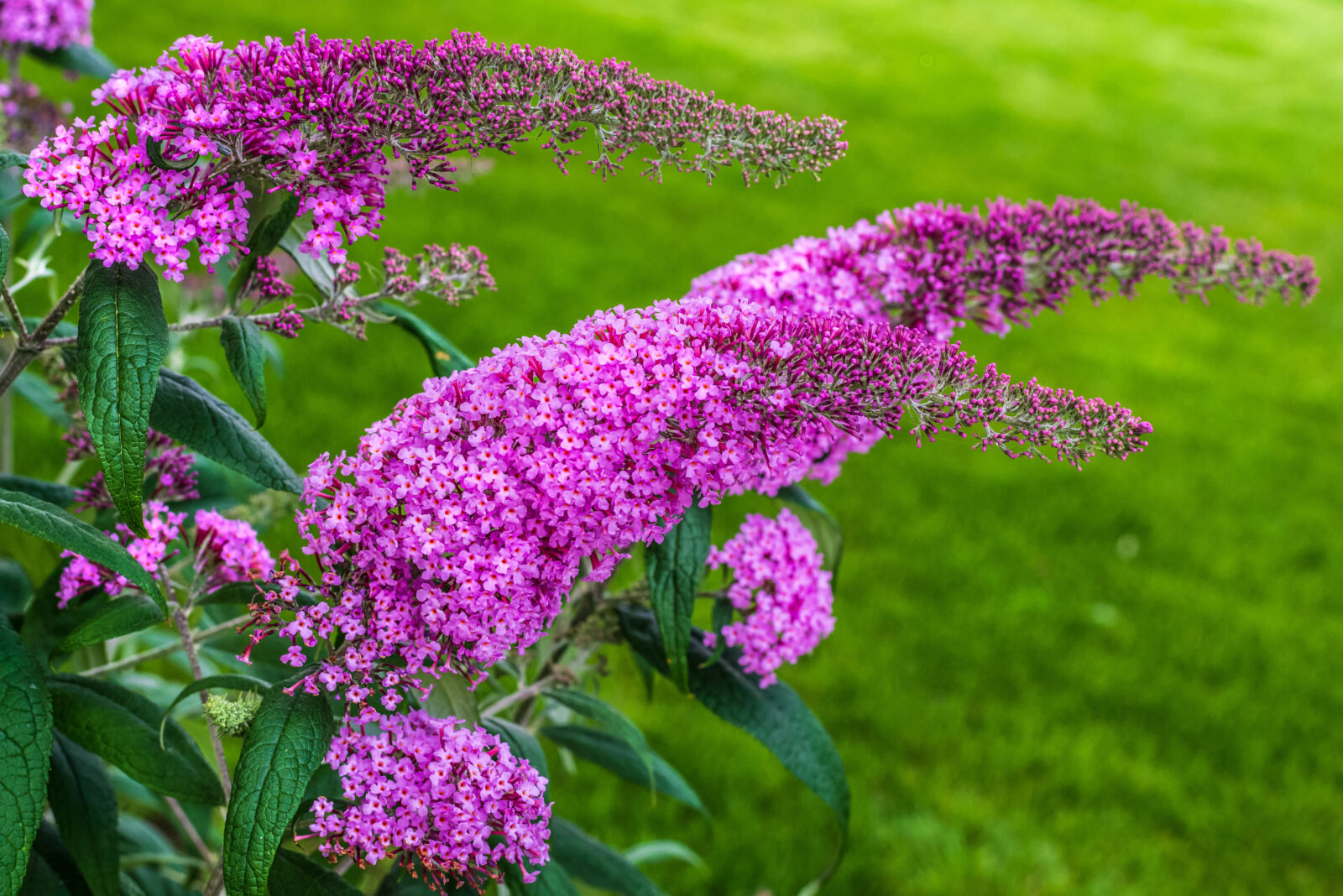
Buddleja flowers on this year’s growth, so spring pruning is important. It’s usually done in March or April, once the harshest frosts have passed. On well-established shrubs, last year’s shoots can be cut back hard. Young plants don’t need to be cut back as severely; it depends on their vigour and the number of branches.
If planted in spring and given good conditions, the plant may flower in its first season. The main flowering period is usually from July to September, sometimes longer. In the first year, though, building roots is more important than producing lots of blooms. Removing spent flower spikes helps keep the shrub looking tidy and can encourage further flowering.
Suitable for a smaller garden too
For smaller spaces, choose compact or dwarf varieties. Classic forms can become surprisingly wide after a few years. Buddleja can also be grown in a large container on a patio, but you need to allow for the compost drying out faster and for a higher risk of the roots freezing in winter.
The best results come from spring planting in a sunny, warm, well-drained spot. That gives buddleja the best chance of heavy flowering and more reliable overwintering.
Source: Fash Growing Trees, Pěstík, Seattle Japanese Garden, Pestrazahrada.cz

A lover of nature, gardens, and everything that moves, blooms, or grows. He literally grows everything, from herbs to rare species, and he enjoys caring for animals just as much. In his work, he connects modern technology with tried-and-tested grandmotherly methods and is happy when both paths lead to the same goal.
Related articles
Plant Garlic Now Cool Soil Protects It From Rot Depth and One Small Mistake Matter
November may be quieter in the garden, but it’s prime time to prep beds and plant garlic. Cooler soil helps reduce rot, and correct planting depth plus good technique make all the difference.
When to Plant a Cherry Tree in Your Garden for Strong Roots and Heavy Crops
Cherry trees establish best when planted during dormancy, either in autumn after leaf fall or in early spring before bud break. The right timing depends as much on soil and weather conditions as it does on the type and quality of the young tree.
In Mid-November You Can Still Safely Plant Trees, Fruit Bushes and Roses
Mid-November can still be a good time for planting, provided the soil isn’t frozen and can be worked. With sensible aftercare and frost protection, woody plants, fruit trees and bushes, and even roses can settle in well before winter.
Comments (0)
Be the first to comment.