
 English
 Polski
 Deutsch
 Nederlands
 Svenska
 Norsk
 Dansk
 Français
 Italiano
 Español
 Português
 Slovenčina
 Suomi
 Gaeilge
Poinsettias Hate These Three Things Avoid Them and Your Plant Will Still Look Great After New Year
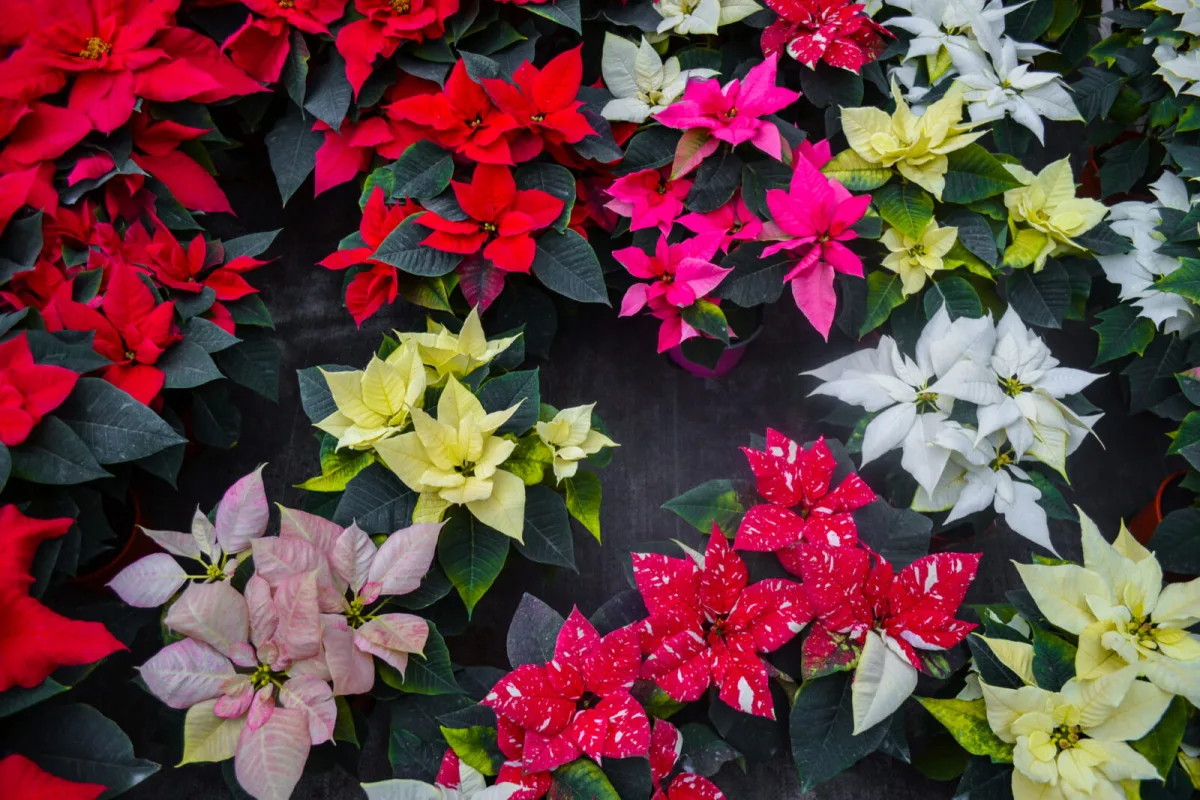
The poinsettia, or Euphorbia pulcherrima, is one of the most popular winter houseplants. It stands out for its rich green foliage and vividly coloured bracts, most often red, though there are also pink, cream and deep burgundy cultivars. Thanks to this festive look, it has become a classic part of Christmas décor. Even so, many people throw it away after the holidays because it starts to decline. The reason is often not a short lifespan, but unsuitable conditions.
This plant comes from Mexico, which is why it cannot tolerate cold, draughts, or sudden temperature swings. But if you give it the right spot, careful watering and a bit of attention, it can stay beautiful not only through Advent but for the rest of the year. It can even be encouraged to colour up and bloom again for next Christmas.
What to watch for when buying
Success starts in the shop. Choose only a strong, fresh-looking plant with no drooping or falling leaves. Wilting foliage is often a sign it has been exposed to temperatures that are too low. This is a very common issue with poinsettias, because even a brief chill can lead to rapid decline later.
Avoid plants positioned near entrance doors, in a draught, or outside in a cold area. The plant also needs good protection on the way home. Ideally, have it wrapped or cover it with a protective sleeve so the leaves don’t come into contact with frost. Leaving it in the car for long periods is also not recommended, as the temperature inside drops quickly.
Where to place a poinsettia at home
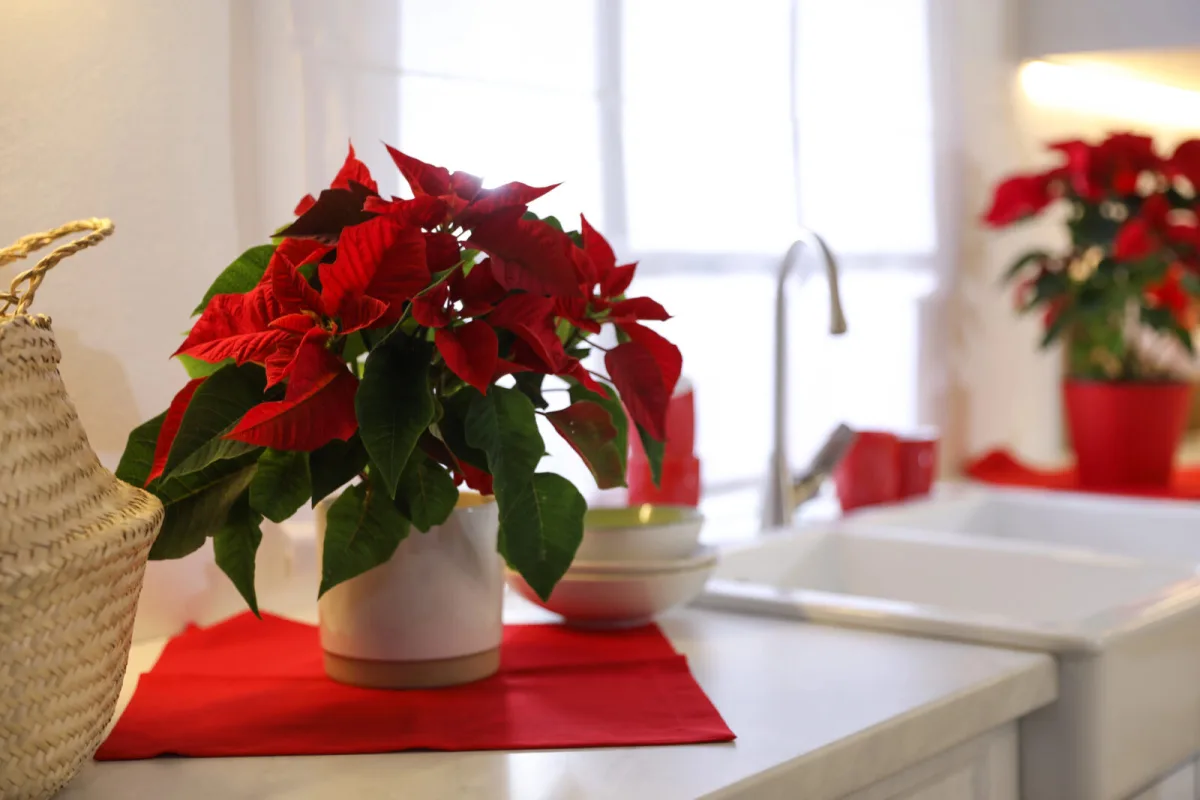
It does best in a bright spot with filtered light. Direct sun doesn’t suit it, nor does draughts from doors, windows or a fireplace. A stable temperature of roughly 13–15 °C is ideal. It can cope with a little more for short periods, but it’s important to avoid fluctuations and cold nights on a windowsill.
Poinsettias appreciate a calm position without dry air movement. If the air in the room is too dry, leaves can deteriorate, so light misting can help. With higher humidity, the colourful bracts keep their good appearance for longer.
Watering and everyday care
Water sparingly. Only add water once the surface of the compost has dried slightly. Overwatering can be just as damaging as letting it dry out completely. The plant must not sit in water, as roots can start to rot and mould may appear.
It’s worth lightly misting the leaves every few days. It also helps to wipe them occasionally to remove dust. Clean leaves not only look better, they also absorb light more efficiently, keeping the plant in better condition. After Christmas, you can begin regular feeding, ideally with a liquid fertiliser higher in potassium. A tomato feed works well, for example.
Compost, repotting and spring pruning
There’s no need to repot during winter. It will usually be fine in the pot and compost it was sold in. But if you want to keep it for the next season, it’s worth giving it fresh compost in spring. Choose a well-draining, peat-free compost, ideally with a loam-based mix.
In April, you can cut the plant back to about 10 cm. This encourages fresh growth and helps prepare it for the next season. In May, you can then repot it into a slightly larger pot. After repotting, keep it in a bright spot out of direct sun, and the temperature should not exceed about 18 °C.
How to get it to colour up again for next Christmas
Getting it to flower again and produce coloured bracts isn’t entirely straightforward, but it is possible. Poinsettias respond to shortening days. If you want it to colour up just before Christmas, from November you need to artificially mimic short days. Each day it should spend around 12 hours in complete darkness.
That means placing it, for example, in a dark cupboard or in a space with absolutely no artificial light. Even brief light exposure can disrupt the whole process. At the same time, keep the temperature around 18 °C. Once it starts setting buds and bracts, daily light misting will help it stay attractive for as long as possible.
Propagation and safe handling
Poinsettias can be propagated in spring, most often in May, using softwood cuttings. However, care is needed. Like other spurges, it contains milky sap that can irritate the skin. It’s best to wear gloves and wash your hands well after handling.
Most common growing problems
The most common issue is wilting and leaf drop. In most cases, it’s a response to cold or draughts. The plant should never be exposed to temperatures below 13 °C, even briefly. If it was stored poorly in the shop, the problem may only show up at home, and fixing it can be difficult.
Another frequent problem is grey mould on the leaves. This is usually linked to overwatering. The solution is to water only once the surface of the compost has dried, and aim for moderate moisture rather than constantly wet soil. Misting the leaves, by contrast, is beneficial because it helps raise humidity around the plant.
How long a poinsettia can live
Many people treat it as a temporary seasonal decoration, but with good care it can live surprisingly long. In ideal conditions, it can last for many years. Most commonly, however, it dies within a few weeks of purchase, due to cold, draughts or incorrect watering. If you avoid these mistakes and give the plant regular care throughout the year, you can enjoy its festive beauty again and again.
The most important rule is simple a poinsettia needs warmth without draughts, a bright position without harsh sun, and only modest watering. If you meet these conditions, it doesn’t have to end up in the bin after the holidays.
Source: Gardeners World, RHS , Pestrazahrada.cz

A nurse by profession, she is passionate about healthy living, nature, and everything that benefits both people and the world around them. In her free time, she enjoys gardening, cooking, sewing, and caring for her family. In her articles, she loves combining professional expertise with practical experience from the garden and everyday life.
Related articles
Eucalyptus can be quite demanding, the right pruning and care are the key to healthy growth
Eucalyptus can make a striking specimen, screen or neatly maintained shrub, but it only thrives when pruned at the right time and in the right way. Learn when to cut, how to shape it, and how to care for it afterwards so it stays strong and long-lived.
How to Get a Christmas Cactus to Bloom Right on Time for the Holidays
A Christmas cactus will only flower on schedule if it gets the right cues well in advance. Cool temperatures, long uninterrupted darkness, and plenty of bright light through the year make all the difference.
Three simple steps to help rhododendrons and azaleas survive winter and flower at their best in spring
A few well-timed autumn jobs make a real difference to rhododendrons and azaleas. Protect the shallow roots, tidy the plant lightly, and keep watering so shrubs head into winter strong and ready to bloom.
Comments (0)
Be the first to comment.