
 English
 Polski
 Deutsch
 Nederlands
 Svenska
 Norsk
 Dansk
 Français
 Italiano
 Español
 Português
 Slovenčina
 Suomi
 Gaeilge
Rhubarb planted in November shrugs off the cold and is almost indestructible patience after planting is the key
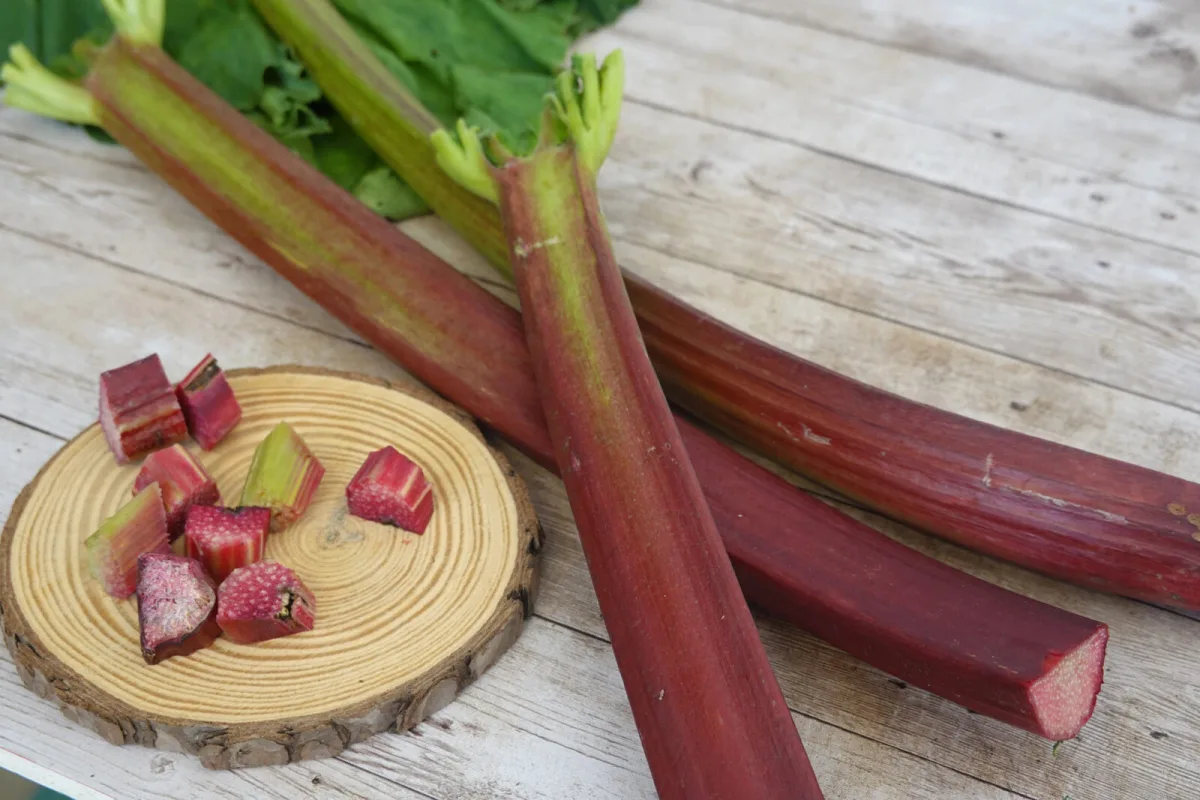
Rhubarb is one of the most resilient perennial vegetables, able to stay in the same spot for many years and produce regular harvests without demanding much care. It copes well with cooler sites and thrives where other vegetables might struggle. Its bold, slightly red-tinged stalks and large green leaves form a substantial clump that can spread to around 1.5 m wide or more, so it’s important to give the plant plenty of space.
In autumn, the top growth dies back and the plant rests over winter. In spring it sends up fresh shoots again. It’s harvested mainly in spring and early summer. If you want paler, more tender stalks earlier, you can cover the crown in winter with an upturned container to force growth in the dark. The flavour varies by variety and by the age of the stalks you pick, with some tasting sweeter and others distinctly more sharp.
Patience after planting pays off
With rhubarb, it’s important not to rush harvesting. In the first year after planting, you shouldn’t take any stalks, so the plant can root in properly and build strength. In the second year, harvest only a small amount. From the third season onwards, you can harvest normally, but don’t remove more than about a third of the stalks at one time. This keeps the plant vigorous and able to produce more leaves.
Although rhubarb is often used in cakes and desserts much like fruit, botanically it is a vegetable. Alongside classic pies and crumble-style puddings, it also works well in savoury sauces or chutney.
How to choose the right variety and planting material
Rhubarb varieties differ in stalk colour, size and flavour. Some have deep red stems, others are more pink, or greenish with a red blush. There are also differences in sweetness, vigour and harvest timing. Compact types are better for containers, while for forcing it’s best to choose an early variety.
You can grow rhubarb from seed, but more often people buy plants or bare roots sold as crowns. Seed is cheaper, but plants are slower to mature and may not come true to the parent. Crowns or potted plants give faster, more reliable results. It’s always worth buying from reputable suppliers so the plants are healthy and free of viral diseases.
Another good option is to get a piece from a fellow gardener. Older clumps are usually divided after about five years, producing new plants suitable for planting on.
Site and soil preparation
Rhubarb does best in an open, sunny position with fertile soil that holds moisture but doesn’t stay waterlogged. It will also tolerate light shade. In heavy clay or poorly drained ground, it’s better grown in a raised bed or a large container. Although it is fully hardy, it’s not ideal to plant it where late spring frosts regularly settle, as young shoots can be damaged.
Before planting, clear the area of weeds and work plenty of well-rotted organic matter into the soil, such as compost. This foundation supports long-term growth and future harvests. If you prefer a no-dig approach, you can mulch the soil surface with organic material and plant directly into that layer.
Sowing and planting
Growing from seed is the cheapest route, but it takes more time. Sow seeds in late winter indoors into a peat-free seed compost, to a depth of about 2.5 cm. Young plants are then planted out into their final position in late spring or in autumn. Seeds can also be sown outdoors in spring into a prepared bed, then thinned and transplanted later.
Potted plants can be planted almost all year, though spring or autumn is usually best. Bare roots are planted while dormant, typically from November to March. The planting hole should be only slightly wider than the root system. The top of the crown, or the point where the leaves emerge, must sit just above the soil surface. Leave a spacing of roughly 75 to 90 cm between plants.

Growing in a container
If your garden soil is often waterlogged in winter or you don’t have enough space in a bed, rhubarb can be grown very successfully in a large container. It should be at least 50 cm deep and wide, with plenty of drainage holes. Use a fertile, free-draining compost. In a pot, you’ll need to water more regularly through spring and summer, as the compost dries out faster than soil in the ground.
Care through the year
Once established, rhubarb doesn’t need much work. In spring, add a layer of mulch made from well-rotted compost, which helps retain moisture, suppress weeds and replenish nutrients. However, don’t pile mulch directly over the crown, as that can encourage rotting.
Young plants need regular watering throughout their first season, especially in dry spells. Older, well-established clumps only need watering during prolonged heat and drought. Container-grown rhubarb needs water more often, but the compost must not remain permanently saturated. If growth is weak and the soil isn’t very fertile, you can apply an organic feed higher in nitrogen during spring or summer.
Forcing for an earlier, more tender harvest
If you want an early crop of paler, more delicate stalks, you can cover the plant in mid-winter with a tall pot or a purpose-made forcing cover. In darkness, the plant produces tender, sweeter stems, usually ready in four to eight weeks. Only force strong, healthy plants, ideally early varieties. After harvesting, remove the cover and let the plant continue growing normally. Don’t force the same clump in consecutive years, as it will become exhausted.
Flower stalks, dividing clumps and overwintering
If the plant sends up flower stalks, it’s best to remove them as soon as possible at the base. Flowering needlessly diverts energy, weakens growth and reduces future harvests. It’s more common in older, undivided clumps, in seed-grown plants, or when conditions are unsuitable.
After about five years, it’s a good idea to divide large clumps. This is done while the plant is dormant, from mid-autumn to early spring. Each division should have a piece of thick rhizome and at least one growth bud. The most vigorous pieces are usually from the outside of the clump, while weak or rotting sections are best discarded.
Rhubarb doesn’t need winter protection. In fact, cold is important for kick-starting spring growth. In autumn, let the leaves die back naturally and then remove them. The leaves are not edible, but they can go on the compost heap without concern.
Harvesting and possible problems
Most varieties are harvested from April or May. It’s best to finish the main harvest around late June to early July so the plant doesn’t weaken. Choose younger stalks about 30 cm long. The best way to harvest is to grasp the stalk at the base, gently twist and pull it away from the crown. It’s better not to cut, as stubs can rot. Remove the leaf after harvesting and put it on the compost.
Rhubarb is usually healthy and long-lived, but a few issues can crop up. Slugs and snails sometimes damage young shoots, especially during forcing. Late frosts can spoil new stems. In overly wet soil there’s a risk of rotting, so good drainage is essential. You may also see split stalks with sticky sap, often linked to uneven growth during swings between drought, cold and then rapid warming or wet conditions.
People often worry about oxalic acid in rhubarb, but the leaves contain the most, and they aren’t eaten anyway. The levels in the stalks are not high enough to be a hazard in normal use.
Source: RHS, Almanac , Pestrazahrada.cz

A nurse by profession, she is passionate about healthy living, nature, and everything that benefits both people and the world around them. In her free time, she enjoys gardening, cooking, sewing, and caring for her family. In her articles, she loves combining professional expertise with practical experience from the garden and everyday life.
Related articles
What to Plant Along a Fence Instead of Thuja
Thuja may be the default choice for screening, but it’s far from the only evergreen option. These three shrubs and trees create year-round privacy with a fresher, more distinctive look.
Want a Fairy-Tale Garden in Spring Do This Simple Step Before Winter
Autumn planting is the easiest way to guarantee a colourful spring garden. Plant bulbs at the right time, pair them with the right companions, and enjoy weeks of reliable bloom with minimal effort.
The Prettiest Fall Window Boxes Don’t Rely on Just One Flower
Fall window boxes and outdoor containers don’t have to be built around chrysanthemums alone. Mix foliage plants, seasonal bloomers, trailing accents, and a few small decorations for a fuller look that lasts for weeks.
Comments (0)
Be the first to comment.