
 English
 Polski
 Deutsch
 Nederlands
 Svenska
 Norsk
 Dansk
 Français
 Italiano
 Español
 Português
 Slovenčina
 Suomi
 Gaeilge
How to store potatoes so they don’t turn green or sprout
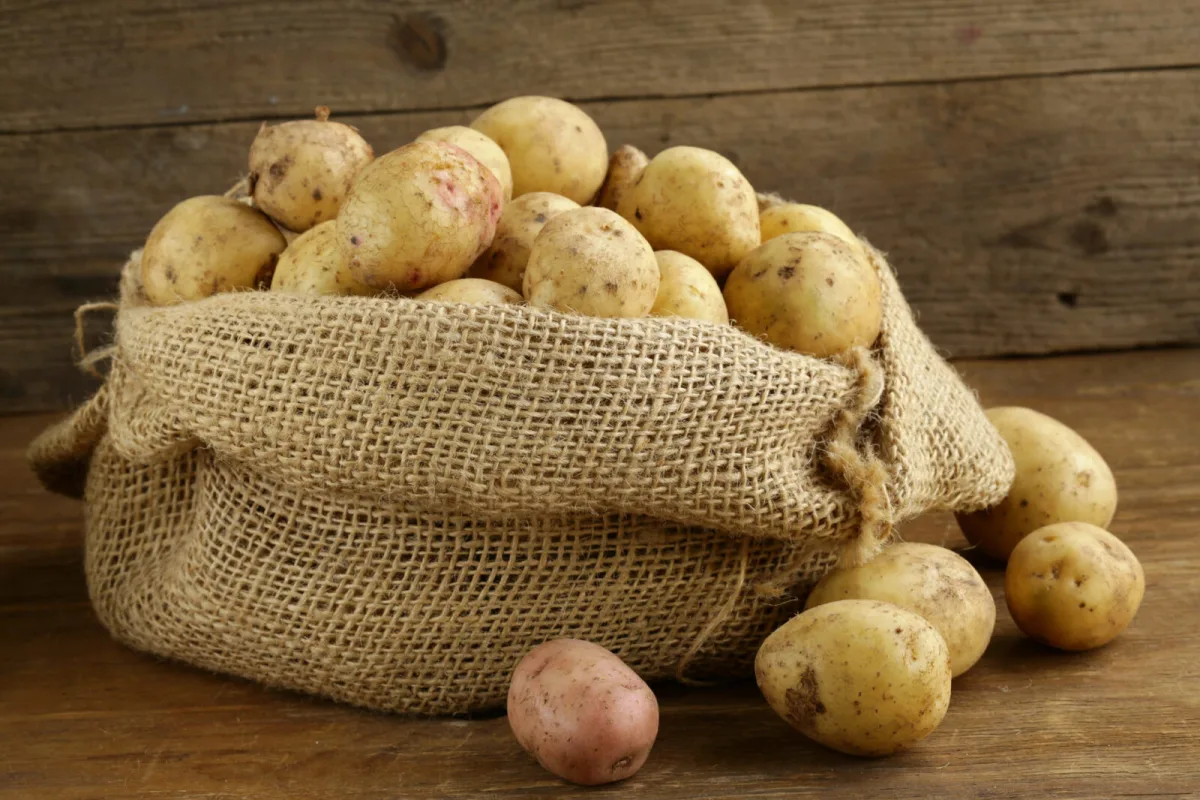
Potatoes are among the most popular crops in the home garden, but storing them is often trickier than it first appears. Growing a decent crop isn’t the hardest part. The bigger challenge is keeping the tubers in good condition for a long time, especially over winter or into the next season. Typical household conditions simply don’t suit potatoes very well. Living rooms are usually too warm, while the fridge is too cold. On top of that, potatoes naturally stay dormant for only a few months.
That’s why you need to give nature a bit of help when storing them and create conditions that slow both sprouting and quality loss as much as possible. If you lift your potatoes in summer, you also have to work out how to keep them through the warmer months, when ideal cool spaces are harder to come by.
Burying them in the ground as a solution for summer
In areas where potatoes mature as early as July, harvesting frees up space for other crops, such as autumn brassicas. If you want the potatoes to last into the later months, a simple method right in the garden can work well. Freshly lifted tubers can be placed straight after harvest into broad, shallow trenches and covered with a layer of loose soil about 15 cm deep.
Potatoes covered this way stay in cooler, slightly damp soil, which protects them from summer heat. You can lay several layers of newspaper over the mounded soil so rainwater runs off more easily and the spot doesn’t become waterlogged. The tubers will wait there until the soil cools again in autumn. After that, you can handle them much like newly harvested potatoes.
Why it matters to let potatoes cure
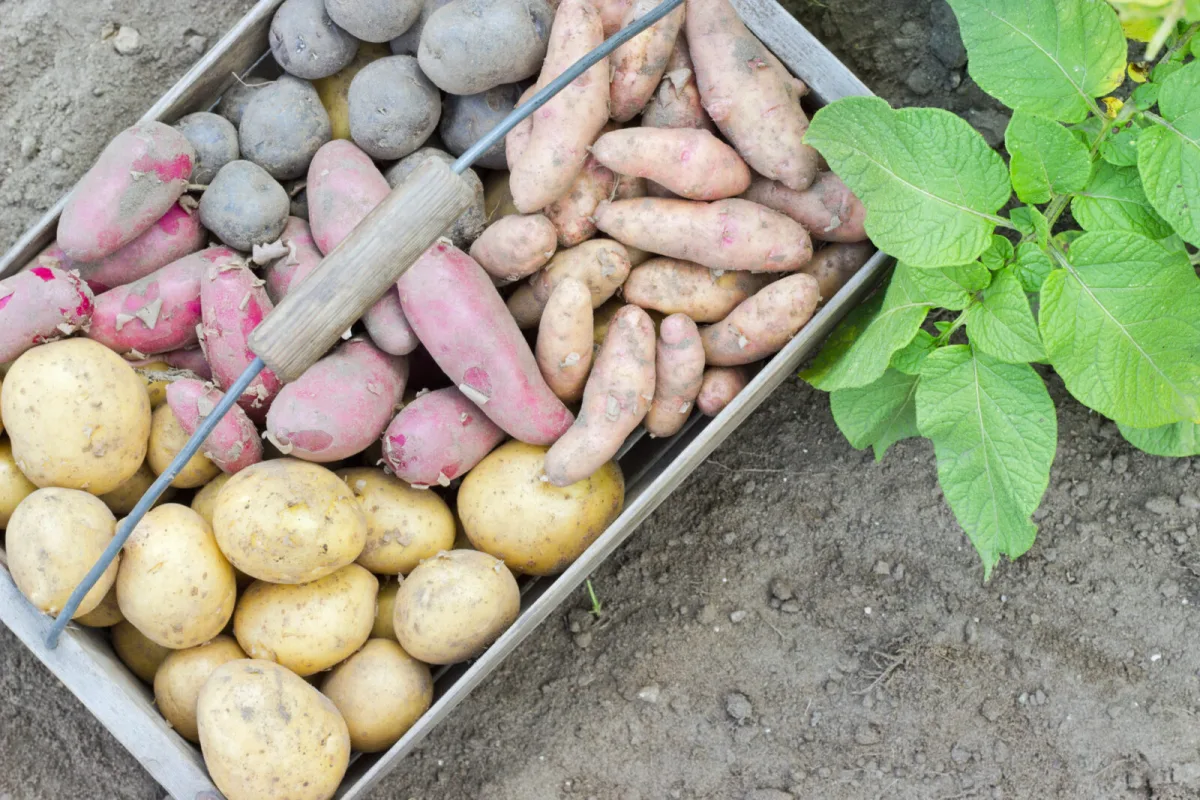
An important step between harvesting and long-term storage is what’s known as curing, or skin set. Different varieties behave differently. Red potatoes and small fingerling types often have thin, delicate skins. By contrast, large floury varieties with brown skins are usually covered by a tougher protective layer. In between are all-purpose varieties which, with proper handling, can develop a very firm skin suitable for longer storage.
The thickness of the skin has a big impact on how long potatoes will keep in good condition. All tubers gradually lose moisture in storage, but those with tougher skins stay firm longer and are less prone to damage. That’s why it makes sense to separate your crop at harvest by type and give each group an appropriately long curing period. In most cases, 7–10 days is enough, though some thick-skinned varieties can take a little longer.
What to do after lifting
Before curing, it’s a good idea to give potatoes a light rinse under cold running water to remove excess soil. There’s no need to scrub them thoroughly. Soil left in the eyes and small dimples won’t do any harm, and intensive cleaning is best left until just before cooking.
Once dry, spread the potatoes out in a cool, dark room and cover them with cloths or towels so no light reaches them. During this time the skin dries, small wounds heal, and a new protective layer forms where the surface was scuffed during harvest. Thin-skinned varieties complete this process more quickly, while more robust types may need a few extra days.
Sorting by variety helps reduce losses
Not all potatoes store equally well. Some gourmet varieties, especially small fingerling potatoes, won’t last long even with careful handling. It’s sensible to set these aside for earlier use during autumn. After the skins have cured, the rest can be split again by type and stored in smaller cardboard boxes or crates.
Smaller containers are easier to manage, and any rot is less likely to spread through the entire supply. It’s worth checking the tubers regularly and removing any damaged ones in time. The better the harvest is sorted, the easier it is to pick out varieties intended for quick use and keep separate those meant to last as long as possible.
The best storage conditions
Potatoes definitely don’t belong on a kitchen worktop or in a decorative bowl in the light. Light causes the skins to turn green, and warmth speeds up the end of their natural dormancy, so the tubers start sprouting too soon. The fridge isn’t suitable either. Temperatures that are too low trigger changes in the tubers and encourage sugar formation, which can make potatoes darken when boiled or fried.
Best results come from unheated spaces where the temperature sits at around 13 °C. These conditions are often found in a cellar, a cool pantry, or an unheated garage. Here, potatoes stay dormant the longest and keep their flavour and texture well.
Cellars, caves, and other cool refuges
In large professional stores, the temperature is kept slightly lower, around 8 °C. Long-term, stable cool conditions suit potatoes very well, which is also supported by traditional storage in caves or earth chambers. Places with steady temperature and darkness have long been ideal for keeping the harvest.
The more the conditions resemble a naturally cool, dark, and mildly humid space, the better the chance that potatoes will keep for many months without sprouting or drying out.
Not everyone can build a traditional earth cellar, but even in a normal house you can often find a corner that at least partly matches these conditions. It might be a basement, a cooler room, or another spot away from heat and light. Making use of such spaces is often the most practical option for home growers.
Patience and the right conditions are the key to success
Good potato storage doesn’t start in the cellar, but at harvest and immediately afterwards. Gentle handling, sorting by variety, a short curing period, and the right temperature determine whether the tubers stay firm and tasty long after lifting. If you pay attention to these steps, you can enjoy home-grown potatoes for much of the year without unnecessary losses.
Source: Grow Veg, Good Food , Pestrazahrada.cz

A nurse by profession, she is passionate about healthy living, nature, and everything that benefits both people and the world around them. In her free time, she enjoys gardening, cooking, sewing, and caring for her family. In her articles, she loves combining professional expertise with practical experience from the garden and everyday life.
Related articles

The Most Unusual Garden Visitor Isn’t Always the Biggest One
A garden can become a surprising meeting place between people and wildlife. Sometimes the most unusual visitor is a quiet, elusive animal you may not notice for years.
You Can’t Do Everything on Your Own Garden Four Situations Where Simple Neglect Becomes a Costly Mistake
A garden may feel like a private world, but it still comes with legal responsibilities. Neglected weeds, burning green waste, invasive plants, or unmanaged boundary trees can all lead to complaints and hefty fines.
Ten smart companion plants for peppers that naturally boost healthy growth and higher yields
Sweet or hot peppers thrive with the right neighbours. Companion planting can reduce pest pressure, support healthier growth, and often deliver a heavier harvest—without relying on unnecessary chemicals.
Comments (0)
Be the first to comment.