
 English
 Polski
 Deutsch
 Nederlands
 Svenska
 Norsk
 Dansk
 Français
 Italiano
 Español
 Português
 Slovenčina
 Suomi
 Gaeilge
Three Mistakes When Packing Cabbage into a Crock That Can Turn Your Winter Stores into Waste
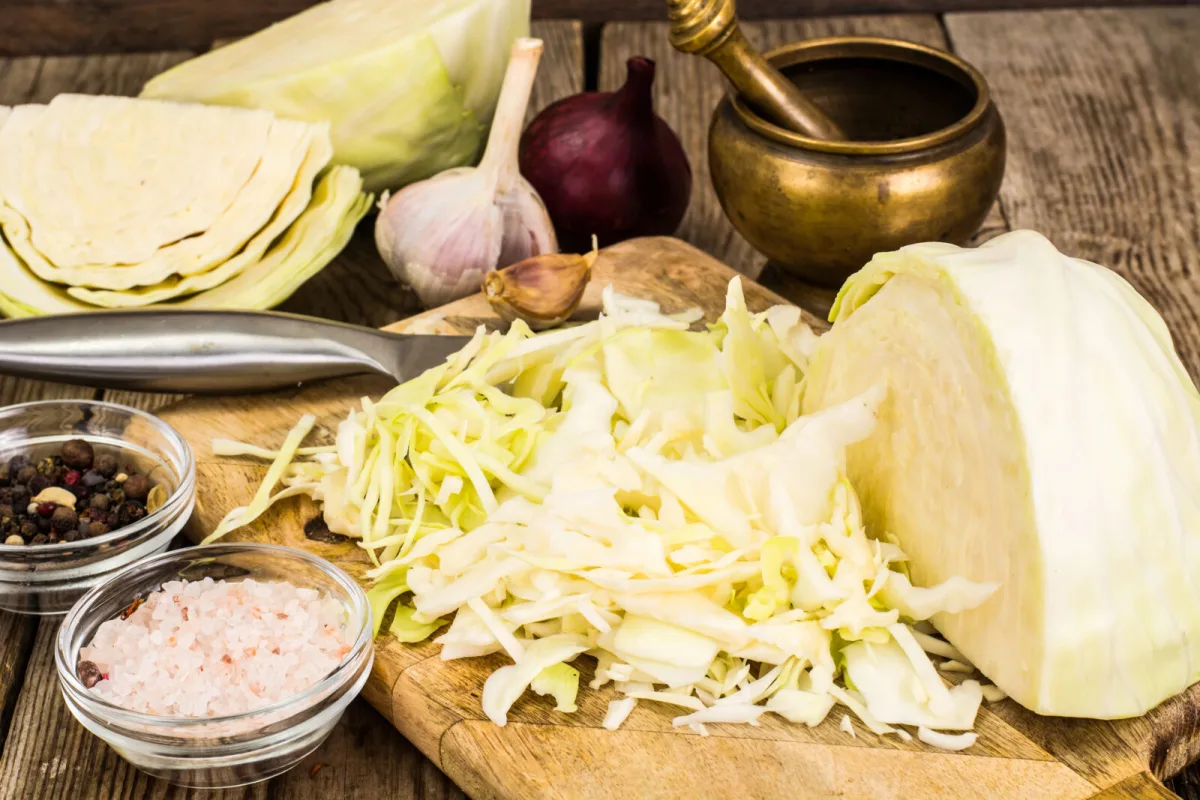
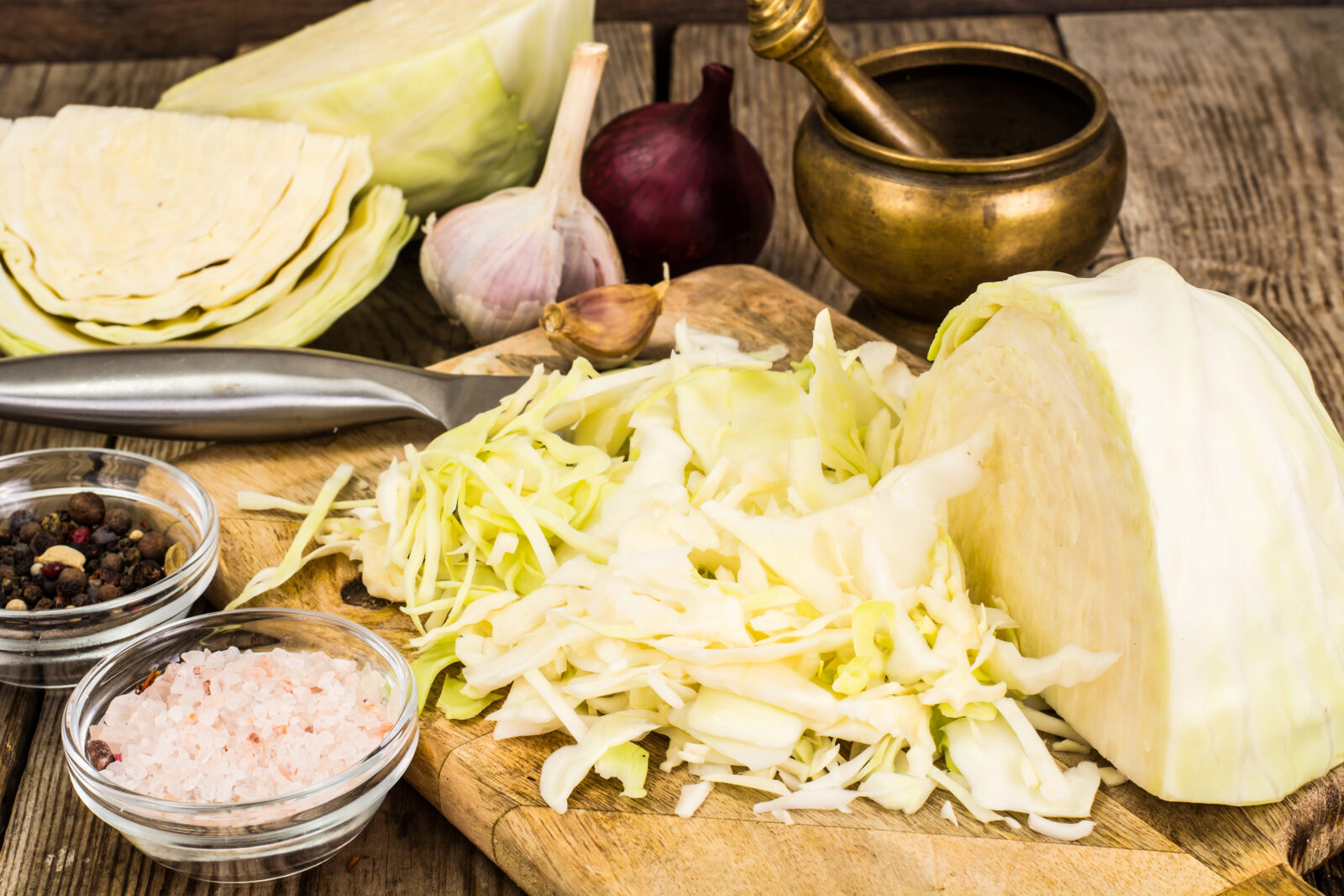
October and November are the months when many households return to the traditional practice of packing cabbage into stoneware crocks. The result is worth it: properly fermented sauerkraut keeps for a long time, stays crisp, and is a valuable source of vitamin C and beneficial bacteria. Even so, it’s common for a fragrant winter staple to turn into a soft, grey, foul-smelling mass instead. Most often, three key mistakes are to blame—and they’re fairly easy to avoid.
The foundation of success is choosing the right cabbage variety
The first problem often starts even before shredding. If you reach for early or summer cabbage, you’re setting yourself up for failure. These heads aren’t suitable for fermentation because they have a more delicate structure and fewer of the compounds that help fermentation proceed properly. The result is often cabbage that turns soft and loses its bite.
For packing, late winter cabbage is a much better choice. It has tougher leaves, tightly formed heads, and a higher level of natural sugars that feed lactic acid bacteria. When buying, choose heavy, firm, undamaged heads. The quality of the raw material largely determines how your cabbage will taste after a few weeks.
Air in the crock and too little brine ruin the whole ferment
The second very common mistake is the presence of air. Cabbage fermentation needs an oxygen-free environment. As soon as air pockets remain between layers or part of the cabbage sticks up above the brine, molds and spoilage microorganisms multiply instead of the desirable bacteria. That’s usually why a film forms on the surface and the crock starts to smell unpleasant.
The right approach is to pack the cabbage into the vessel gradually in smaller layers, pressing each layer down thoroughly. The goal is to force out all air and draw as much juice as possible from the leaves. After packing, the cabbage must remain completely submerged. If the cabbage is drier and there isn’t enough liquid, pour over cooled, boiled salted water.
It’s a good idea to cover the top with whole cabbage leaves or a clean cloth and weigh it down with a boiled stone or a ceramic weight. With a stoneware crock, it’s also important that the channel around the lid is filled with water. This creates a simple water seal that lets excess gas escape but doesn’t let air in.
Salt and temperature need to be spot on
The third major mistake is the wrong salt ratio or an unsuitable temperature during fermentation. Salt isn’t just for flavor here. It helps draw out juice, protects the contents from spoilage, and creates the right conditions for lactic acid bacteria. Too little salt makes the cabbage soften and rot more easily. Too much, on the other hand, can slow fermentation or stop it altogether.
A tried-and-true rule is to add about 20 grams of salt per 1 kilogram of shredded cabbage. Temperature is just as important. The first phase should take place at roughly 15 to 18 °C. At this stage fermentation is most active, and you’ll see bubbling in the water channel. Once the strongest activity subsides, the crock needs to be moved to a cooler place, ideally a cellar or pantry at around 5 to 10 °C. At too high a temperature, the cabbage softens quickly, darkens, and loses its crunch.
Keep an eye on the cabbage throughout winter
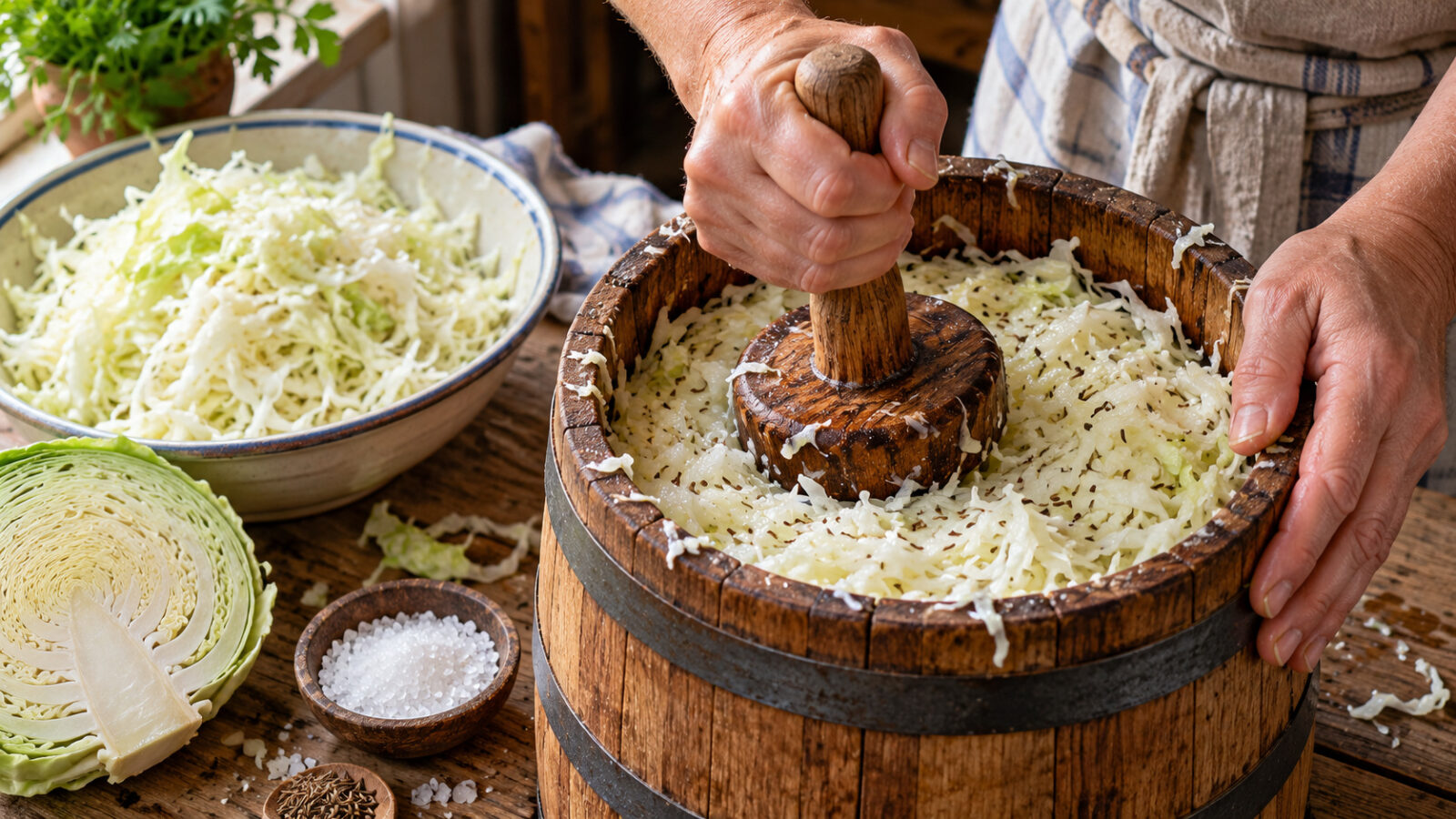
Many people start the crock off well, but make mistakes later during serving or maintenance. The water in the channel gradually evaporates, and if it dries out, air begins to seep in. Even after a longer period, that can spoil the entire batch. That’s why it’s essential to check the water level regularly and top it up.
Cleanliness matters when taking sauerkraut out. It’s always better to use boiled utensils and not reach inside with your hands. After each serving, the remaining cabbage needs to be leveled again, pressed back under the brine, and weighted down. This small bit of care is exactly what determines whether your supply stays in good condition right through spring.
A proven base for honest homemade fermentation
For 10 kilograms of winter cabbage, 200 grams of rock salt and caraway seeds are typically used. You can also add flavor with horseradish, bay leaf, pepper, allspice, or a few firm, slightly tart apples. Horseradish helps keep the cabbage firmer, while apples add a gentle aroma and support fermentation with their natural sugar.
The most important rule is simple: high-quality winter cabbage, the right amount of salt, no access to air, and a suitable temperature.
If you follow these principles, your reward after a few weeks will be fragrant, pale, crisp sauerkraut that will easily last all winter.
Source: Urob si sám, Jídlo.cz, Pestrazahrada.cz

A lover of nature, gardens, and everything that moves, blooms, or grows. He literally grows everything, from herbs to rare species, and he enjoys caring for animals just as much. In his work, he connects modern technology with tried-and-tested grandmotherly methods and is happy when both paths lead to the same goal.
Related articles
How to Safely Tell Czech and Chinese Garlic Apart in the Shop by Taste, Appearance and Quality
Czech and Chinese garlic can look similar at first glance, but they differ noticeably in flavour, aroma, bulb structure and keeping quality. Learn the quick visual and kitchen tests that help you choose the better bulb with confidence.

One Rat in the Garden Can Quickly Turn Into a Colony How to Prevent It Without Chemicals
A rat on your property is a warning sign that your garden is offering food and shelter. With a few practical, chemical-free changes, you can make the area far less attractive and stop a bigger infestation taking hold.

Garden robotics and automation save time but one thing surprises owners after purchase
Robotic mowers, smart irrigation and garden sensors can take over routine tasks and improve day-to-day plant care. The catch is that the real cost and upkeep often become clear only after you’ve bought in.
Comments (0)
Be the first to comment.