
 English
 Polski
 Deutsch
 Nederlands
 Svenska
 Norsk
 Dansk
 Français
 Italiano
 Español
 Português
 Slovenčina
 Suomi
 Gaeilge
This perennial flowers when others are finishing, thrives in shade and is still little known in the Czech Republic
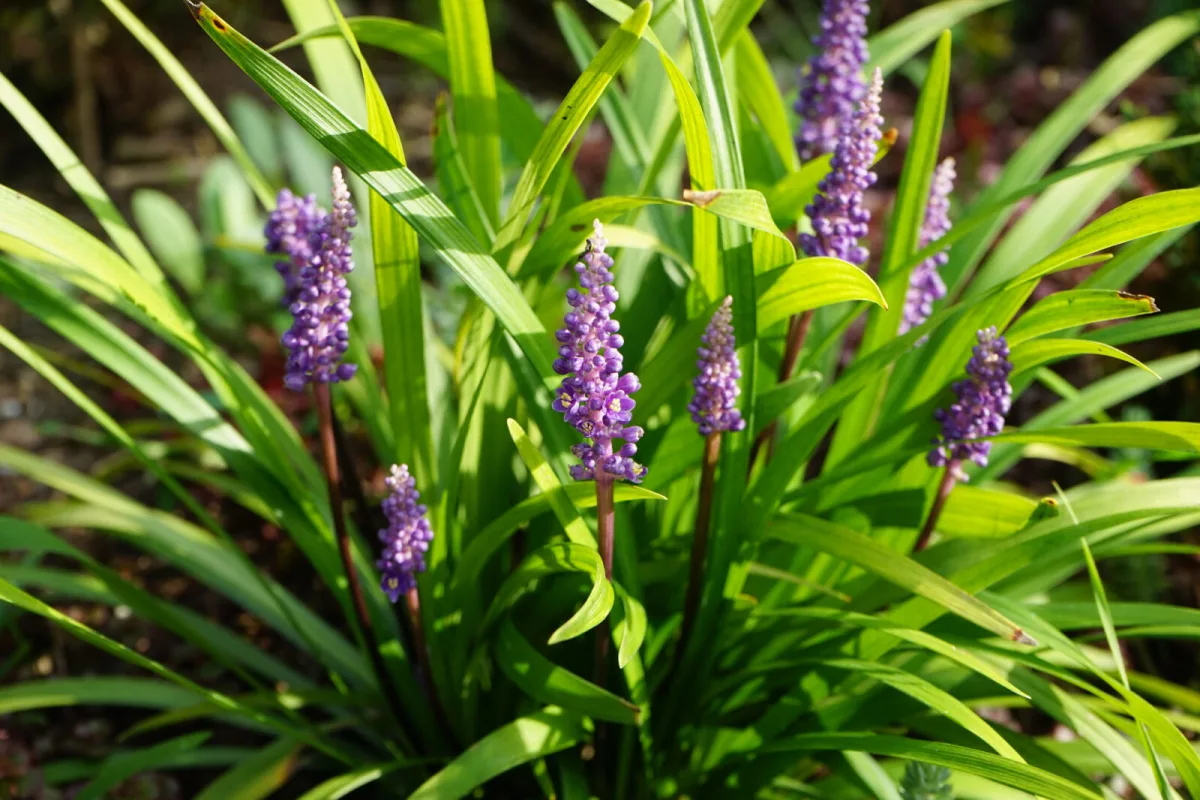
Liriope (lilyturf) is one of those plants that still isn’t widely grown in Czech gardens, yet it deserves far more attention. It’s an Asian perennial reaching around 40 cm tall, and at first glance it resembles an ornamental grass. It forms dense, compact clumps of narrow evergreen leaves, and above all it stands out for its flowers, which appear at a time when most summer plants are already running out of steam.
Late summer and early autumn are when liriope really shows its main charm. Depending on the variety, it produces violet or white flower spikes that look delicate yet are hard to miss. After flowering, the plant is decorated with dark berries, so its ornamental value doesn’t end with the last blooms.
Why choose liriope for the garden
This perennial will appeal not only to lovers of less common plants, but also to gardeners who don’t want to spend too much time maintaining their borders. In the right spot, liriope is very reliable and low-maintenance. Older plants often look even more impressive, although over time they may flower a little less than younger clumps.
A major advantage is its evergreen nature. When most perennials disappear from view in winter, its clumps remain in the border as an important shape and structure element. Thanks to that, the garden doesn’t lose interest outside the main growing season.
Where liriope fits best
Liriope works well in modern-style gardens, small courtyards and atriums. It looks great along paths, on slopes and in containers. It’s also very attractive at the front edge of beds, where it can complement plants grown mainly for their foliage.
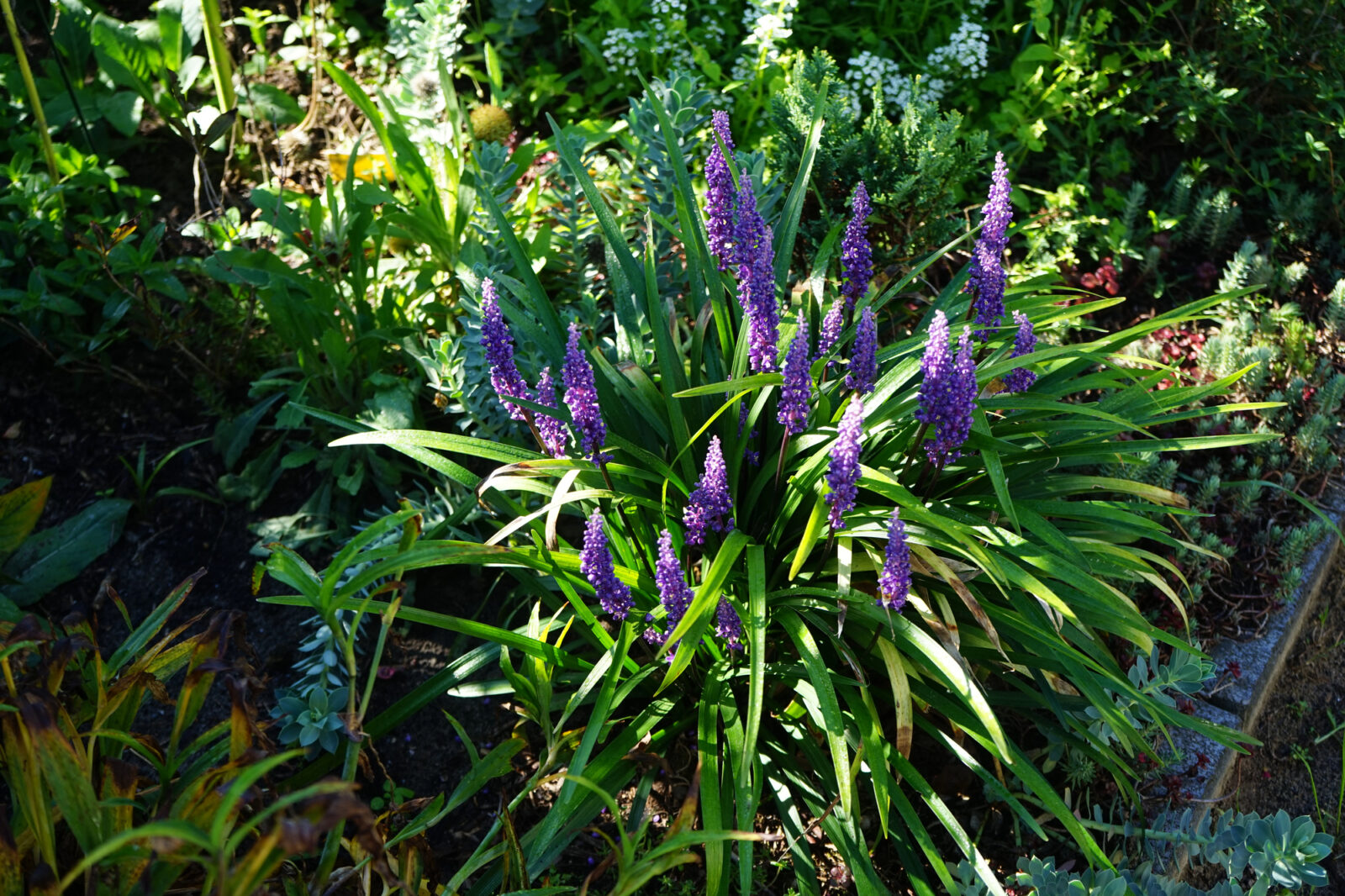
It pairs beautifully with coral bells, hostas or bergenias, for example. It’s also striking planted in larger groups, where it forms a continuous groundcover-like sweep. You can also plant it under taller trees as an underplanting, where it will take advantage of naturally shadier conditions. For a full effect, plant roughly ten to twelve plants per square metre.
What conditions suit it
It grows best in partial shade or shade. It suits ordinary garden soil as long as it drains well. Choosing the right site is what determines how attractive it will be. In spots that are too sunny it often looks less tidy and the leaves can take on a yellowish cast.
Although it prefers slightly moist soil, once established it copes quite well with drier spells too. That’s why it’s a good fit for gardeners who aren’t looking for a plant that demands regular watering. It usually doesn’t need frequent feeding either, which makes it even easier to grow.
Care is simple and doesn’t require unnecessary chemicals
Liriope is valued for its toughness as well. It’s only rarely troubled by diseases or pests, so it generally manages without chemical treatments. Routine care mainly comes down to tidying the clumps in spring. At the start of the season, remove any dry, damaged or unsightly leaves so the plant looks fresh again.
Once every four to five years, it’s worth rejuvenating older, overgrown clumps. The best time is early spring, when you can lift, divide and replant them. This boosts vigour and also gives you new planting material for other parts of the garden.
Winter protection and interesting varieties
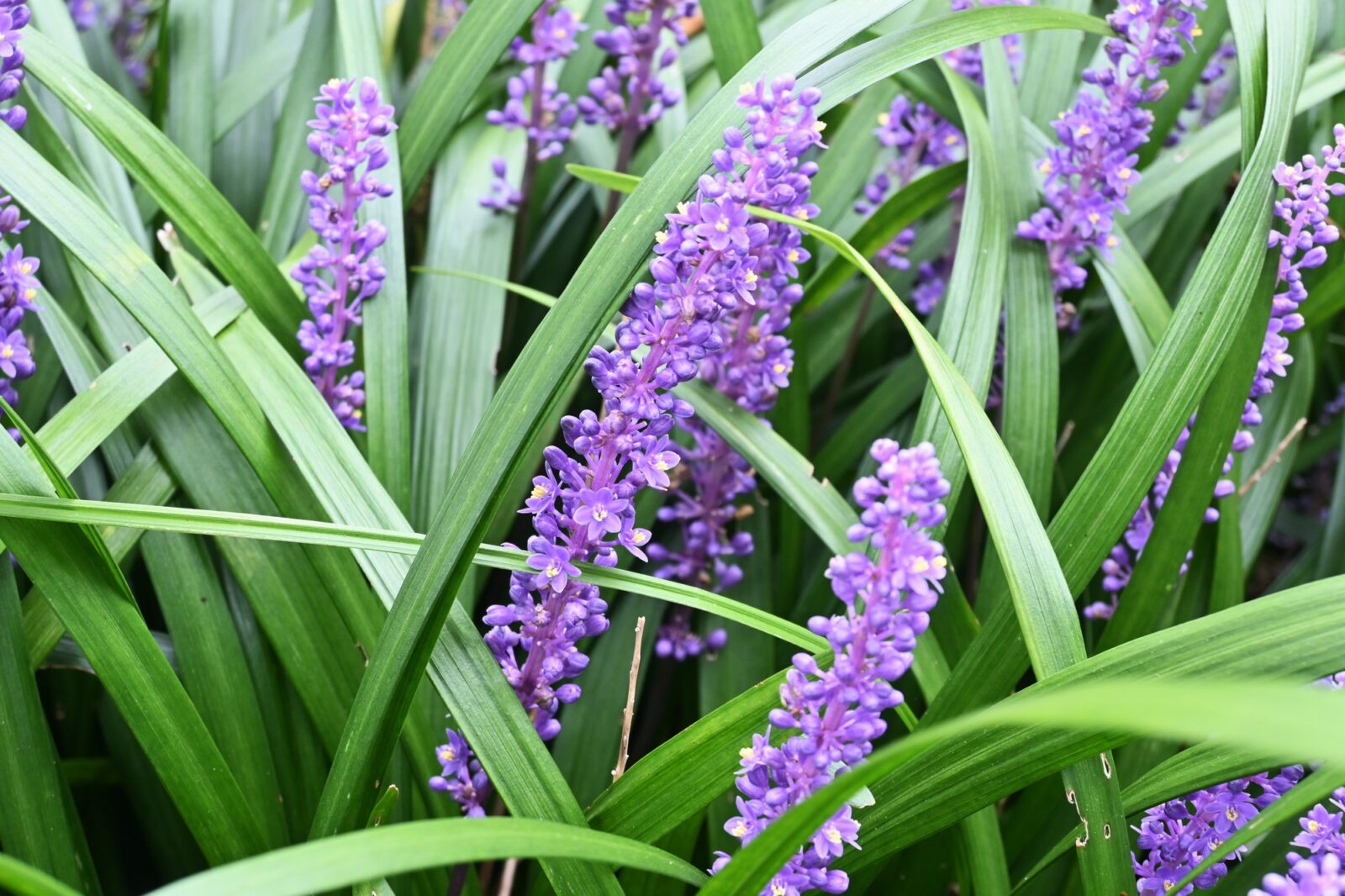
In warmer areas, liriope is usually dependable, but in colder locations or during severe frosts it’s sensible to think about protection. Covering with horticultural fleece or evergreen boughs can help. This is especially important for younger plants, which are more sensitive than well-established older clumps.
Alongside the common green-leaved forms, there are also cultivars with variegated foliage. The well-known Variegata variety catches the eye with white-edged leaves, making it ornamental even when it isn’t in flower. If you’re looking for a plant that will brighten less favourable spots, tolerate modest care, and still offer blooms late in the season, liriope is an excellent choice.
Source: Plant Addicts, The Spruce, Pestrazahrada.cz

A lover of nature, gardens, and everything that moves, blooms, or grows. He literally grows everything, from herbs to rare species, and he enjoys caring for animals just as much. In his work, he connects modern technology with tried-and-tested grandmotherly methods and is happy when both paths lead to the same goal.
Related articles
Don’t Prune Hydrangeas in October
Tidying the garden in autumn is tempting, but October pruning can cost your hydrangeas next year’s flowers. Only two light interventions make sense this time of year; everything else is best left until the right season.
A Pineapple Top Will Root in Two Weeks, but Success Depends on the Step Most People Skip
Don’t throw away the leafy crown when you cut a pineapple. With the right prep, light, warmth and careful watering, you can root it and grow a houseplant that may eventually fruit.
Overwintering Geraniums in a Box Ensures Stronger Growth and More Abundant Spring Bloom
Many people throw balcony geraniums away after the season, even though they can overwinter very well. Stored correctly in a box in cool, dark, dry conditions, they’ll come back stronger and flower generously in spring.
Comments (0)
Be the first to comment.