
 English
  Polski
  Deutsch
  Nederlands
  Svenska
  Norsk
Norsk  Dansk
Dansk  Français
  Italiano
  Español
  Português
  Slovenčina
  Suomi
Suomi  Gaeilge
 How to Feed Laying Hens So They Stay Healthy, Lay Steady All Year and Produce Strong Shells
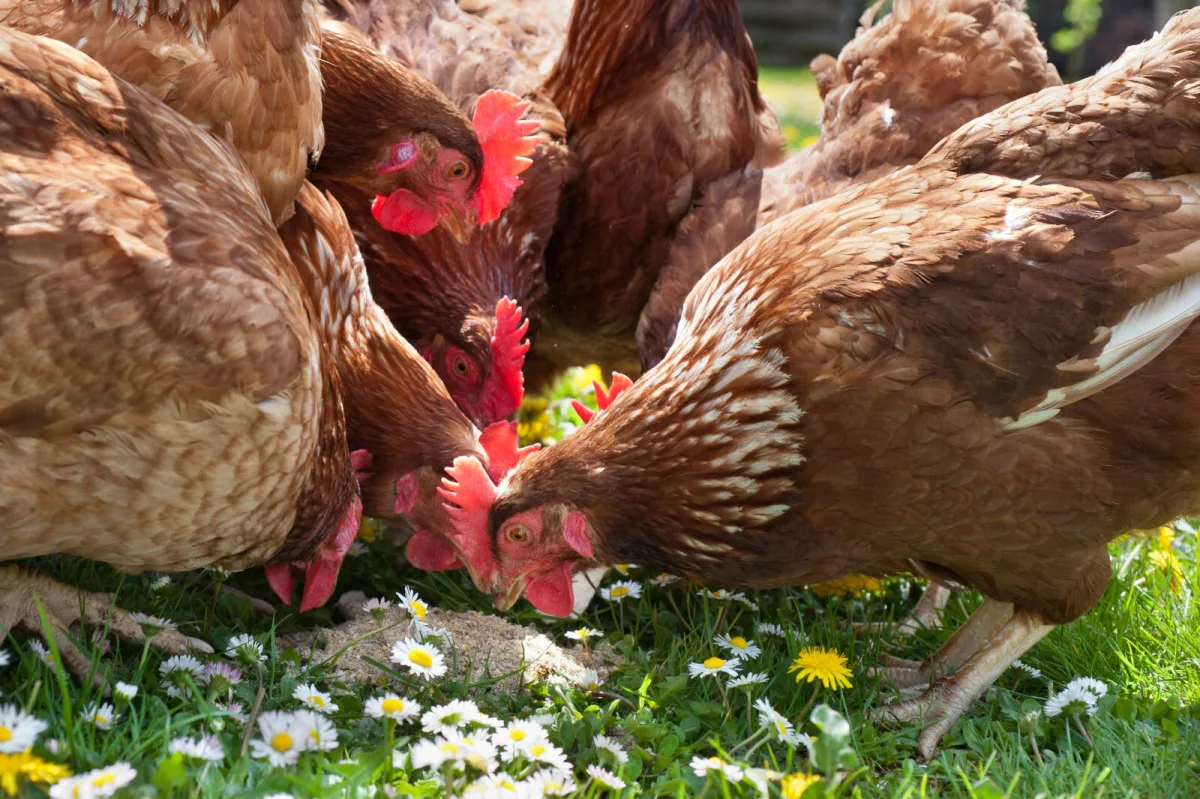
A properly balanced diet is essential when keeping hens. It’s not only about how many eggs your layers produce, but also yolk and shell quality, feather condition, disease resistance, vitality and overall fitness. The idea that it’s enough to toss in a handful of grain and add kitchen scraps often leads to poorer laying, brittle shells and a weakened bird. Hens need a balanced ratio of energy, protein, fibre, vitamins and minerals.
The simplest option is a good-quality complete layers’ feed, formulated to cover normal needs during lay. If you mix your own feed, it pays to be consistent, watch ingredient quality, and add the components that plain grain is missing.
How to adjust feeding through the seasons
A hen’s natural opportunities change over the year. In the warmer months they’ll find part of their diet in the run, typically insects, larvae, seeds and green plant material. That usually means a more varied nutrient intake, and they also move around more. In winter there are fewer natural food sources, so it makes sense to rely more on a complete ration, boost energy, and keep an eye on vitamins and minerals. In cold weather hens also burn more energy to maintain body temperature.
Grain matters, but it isn’t enough on its own
Cereals belong in the diet because they provide energy. The most common are wheat, barley, oats or maize, and a mix is often ideal because each brings slightly different nutrients. The problem arises when grain is the only component. Long-term, one-sided feeding can mean a shortage of certain amino acids, vitamins and minerals, which may show up as a drop in laying, poorer shell quality and a general decline in condition.
Protein as the foundation for eggs and feathers
Producing eggs is demanding work for a layer, and without enough protein you’ll quickly see a decline in performance and quality. Protein is also needed for feather regrowth and for the proper development of young hens. Suitable sources include legumes and oilseed meals, typically sunflower meal or soya meal. A big advantage of free-ranging is that hens can top up the animal-protein part of their diet themselves when they pick up earthworms, insects, larvae or small snails. Besides nutrients, it also gives them natural activity that supports good condition.
Green feed supports immunity and yolk colour
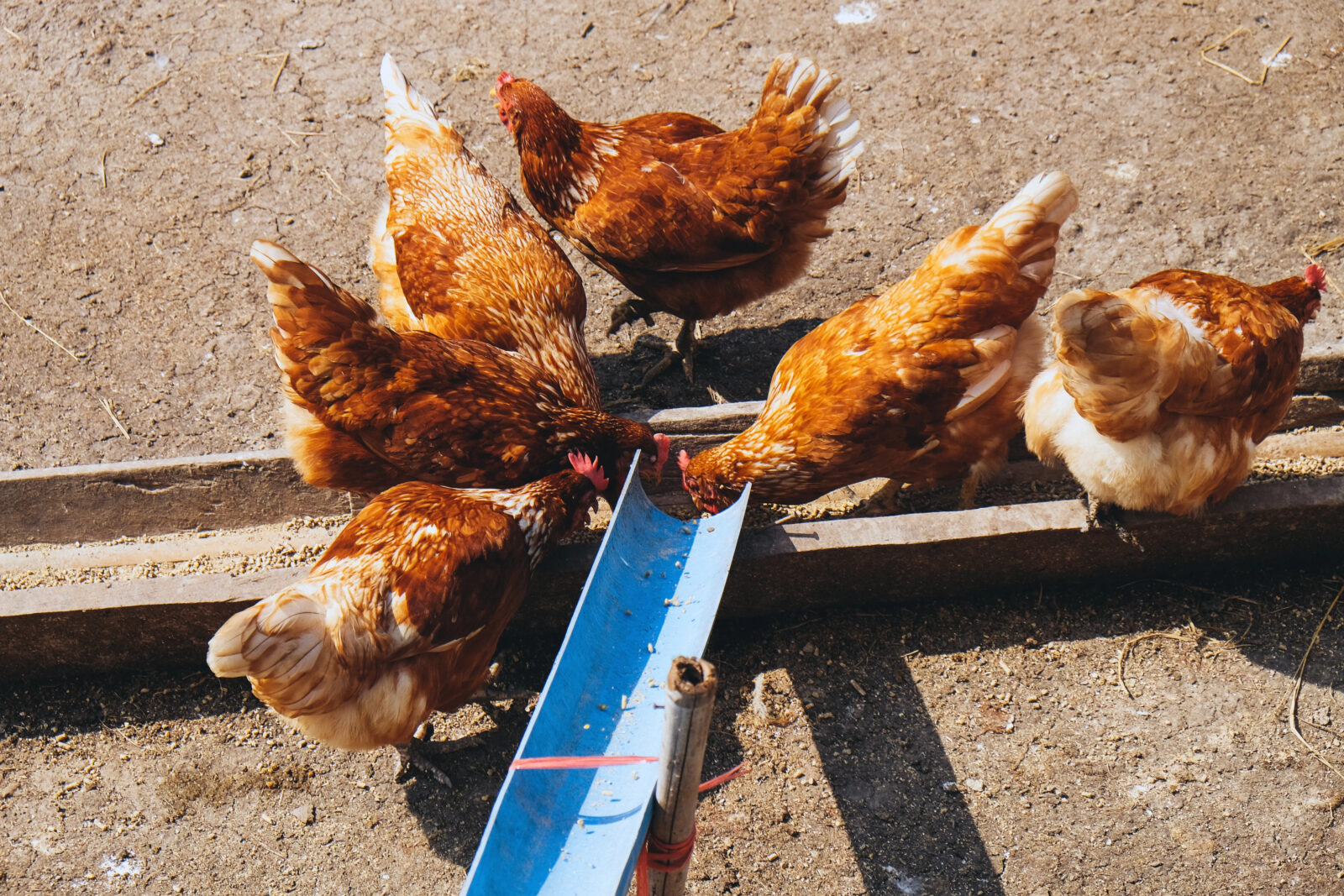
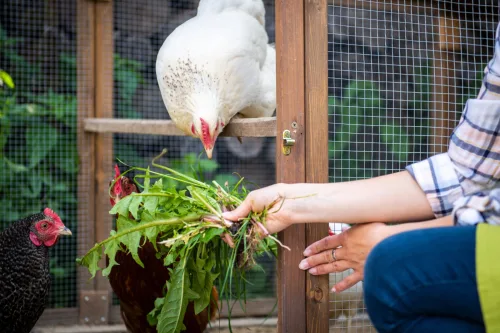
Fresh greens are a welcome variety for hens. Grass, clover, dandelion leaves, nettles or garden herbs provide vitamins, minerals and natural antioxidants. In many flocks, regular greens also show up in the appearance of the eggs, with yolks tending to be more richly coloured.
When fresh greens are scarce, part of the intake can be replaced with good-quality hay made from fine grasses or dried nettles. The key is that any extras are clean, free of mould and without a musty smell.
Fruit and vegetables are best as extras, not the main feed
Different kinds of fruit and vegetables can be offered as treats, adding fibre, water and some vitamins. Hens usually take well to apples, pears, courgettes, pumpkin, cucumbers or carrots. In hot weather they especially appreciate juicy pieces because they help with hydration. At the same time, these extras shouldn’t displace a complete feed, which provides the main share of nutrients needed for laying.
Minerals determine shell strength
When forming eggs, a layer uses a large amount of calcium. If she doesn’t get it in feed or from a separate source, the body starts pulling it from the bones. The result can be thin shells, misshapen eggs and long-term health problems. That’s why it’s a good idea for hens to have a calcium source available at all times, such as crushed oyster shell, limestone grit or dedicated mineral supplements.
For proper digestion, small stones or poultry grit are also useful, helping the gizzard mechanically process feed. Without it, hens may make poorer use of their ration even if it’s otherwise good quality.
Water is just as important for laying as feed
Without constant access to clean water, even the best feed won’t do its job. On warm days layers can drink significantly more than in winter, and shortages often show quickly, typically as a drop in laying and reduced vitality. Drinkers should be washed regularly and the water changed daily. In summer it helps to place the drinker in shade; in winter, you need to make sure the water doesn’t freeze.
What to avoid so your hens don’t suffer
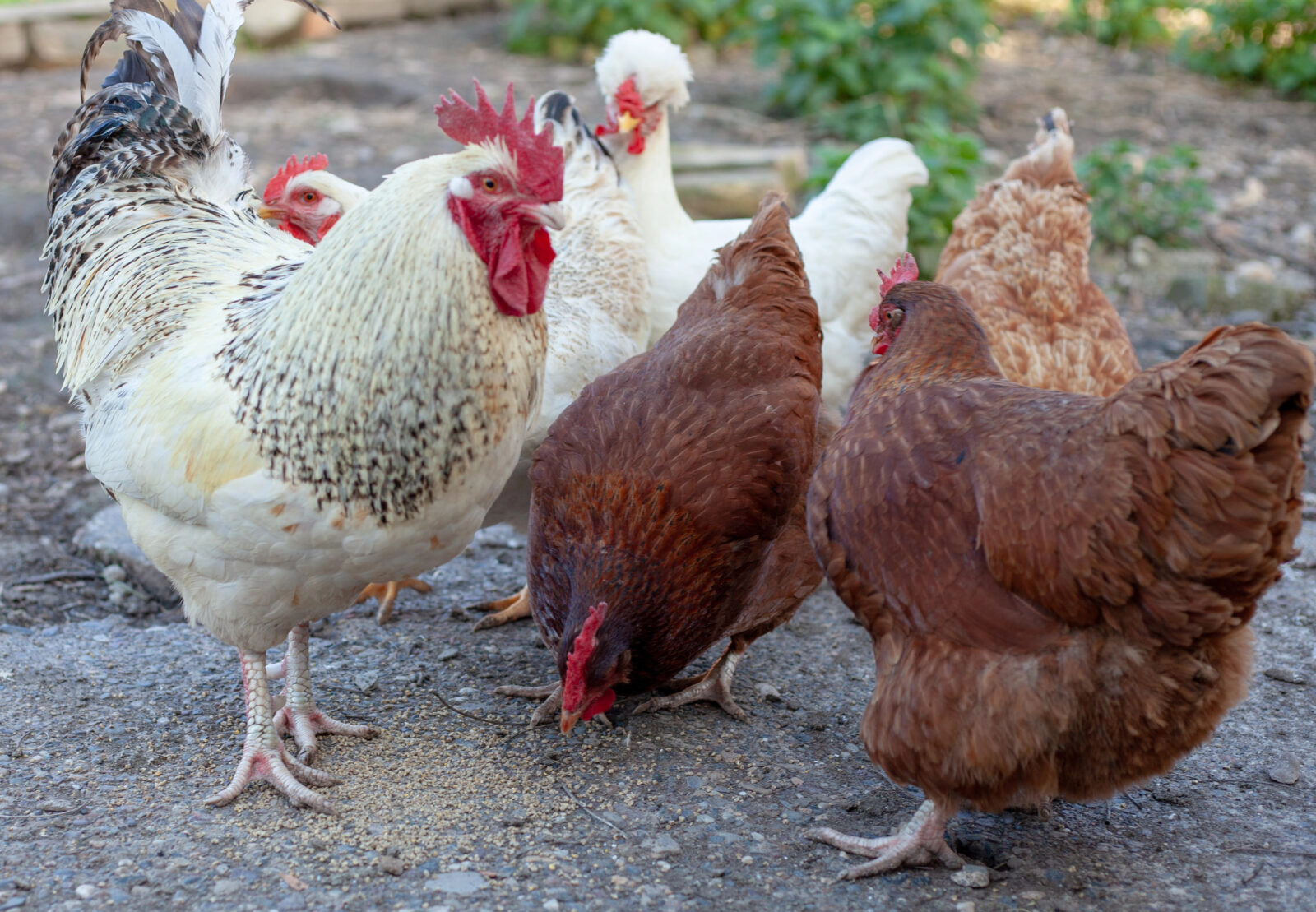
Some foods can harm hens even if they look like ordinary leftovers. Skip mouldy and spoiled feed, as it can contain toxins and cause serious problems. Raw potatoes are also unsuitable, as are larger amounts of salty foods, sweets and heavily spiced dishes. This sort of diet strains digestion, can trigger diarrhoea and, if fed long-term, weakens both the birds and their laying.
A simple rule of thumb
If you want steady laying and healthy hens, stick to a combination of a complete feed, sensible protein top-ups and green feed, don’t underestimate minerals for shells, and provide constant clean water. Treat kitchen scraps as an occasional extra only, and always check they’re fresh and safe for hens.
Source: Garden Wild Life, Farm Keep, Pestrazahrada.cz

A lover of nature, gardens, and everything that moves, blooms, or grows. He literally grows everything, from herbs to rare species, and he enjoys caring for animals just as much. In his work, he connects modern technology with tried-and-tested grandmotherly methods and is happy when both paths lead to the same goal.
Related articles
How to Choose a Chicken Feeder That Keeps Feed Dry, Clean and Pest-Free
A good chicken feeder should keep feed dry, reduce waste, and make access difficult for rats and wild birds. The right design and placement can save money and keep your coop cleaner year-round.
Which vegetables can chickens safely eat every day
Vegetables make a brilliant daily treat for chickens, adding moisture, fibre and valuable vitamins. The key is to use them as a supplement to a balanced complete feed, not a replacement.
How to Compost Chicken Coop Bedding Safely and Make Nutrient-Rich Fertiliser for the Garden
Keeping chickens produces more than eggs—it also provides a highly valuable source of nutrients for your soil. With proper hot composting, chicken bedding and manure can be turned into safe, crumbly compost that feeds plants steadily and improves soil structure.
Comments (0)
Be the first to comment.