
 English
 Polski
 Deutsch
 Nederlands
 Svenska
 Norsk
 Dansk
 Français
 Italiano
 Español
 Português
 Slovenčina
 Suomi
 Gaeilge
The Toughest Animal on Earth Is a Fraction of a Millimetre Long and Its Survival Trick Fascinates Even NASA Scientists
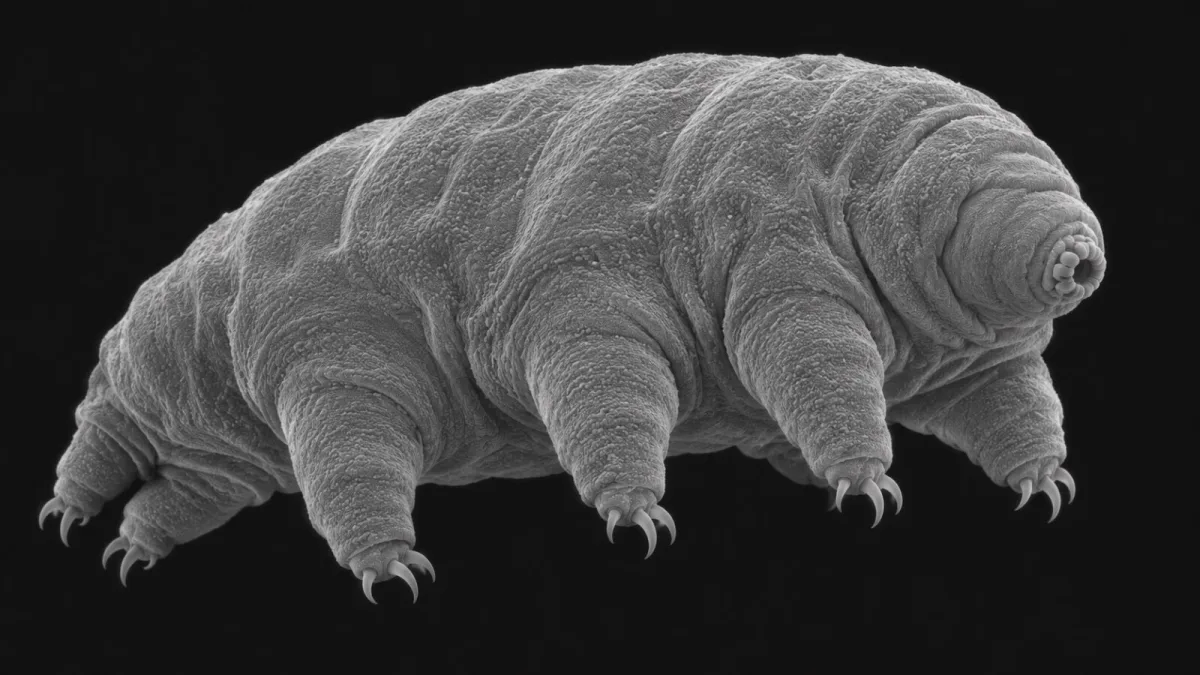
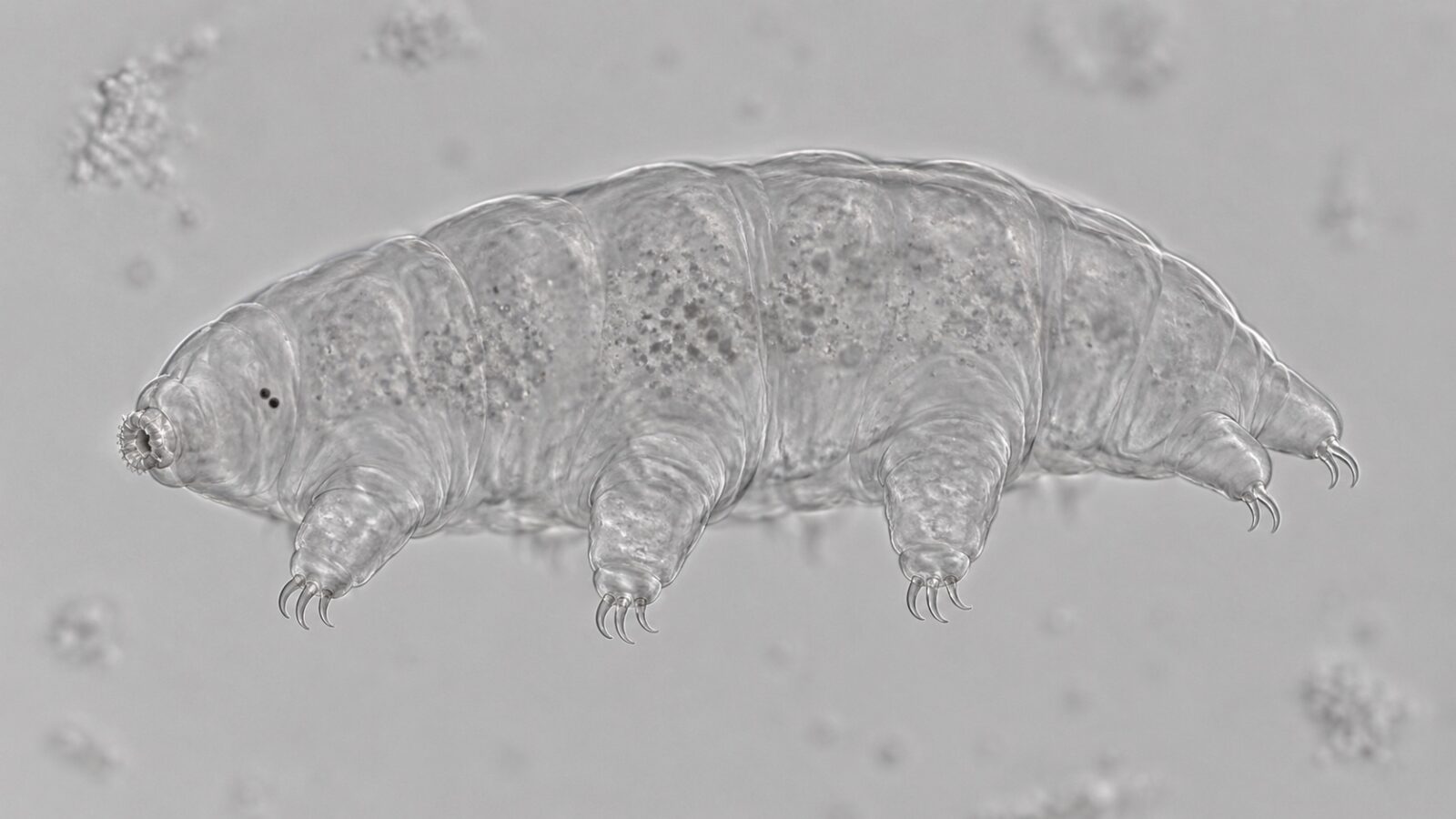
Tardigrades are among the most remarkable animals on Earth. They are microscopic, often measuring only a few tenths of a millimetre, yet they have earned a reputation as almost indestructible organisms. Science has known about them since the 18th century, when the German zoologist Johann August Ephraim Goeze described them. Because of their appearance, he gave them the nickname little water bear.
These invertebrates have been on the planet far longer, though. Their evolutionary history goes back more than half a billion years. They have a segmented body, four pairs of legs ending in tiny claws, and despite their minute size a surprisingly complex anatomy. They occur in an astonishing range of habitats, from moss and soil to freshwater and the ocean floor, polar regions, mountains, and places with extreme conditions.
Life in moss and in the deep freeze
Tardigrades are known for their ability to adapt to environments that would kill most other organisms. They can be found in Antarctic cold, in hot springs, and even in volcanic mud. Some species live in the thin film of water on moss, where they search for food. They may feed on tiny microorganisms such as nematodes or rotifers; other species pierce and suck out the contents of plant cells.
With enough water, they lead a normal, active life. The problem comes when their surroundings dry out. That is when their extraordinary biological toolkit shows itself, allowing them to survive stretches that would mean the end for other creatures.
When the body turns into a tough little barrel
When water is scarce, a tardigrade pulls into a special dormant state. It tucks in its legs, reduces its body surface area, and dramatically limits moisture loss. At the same time, chemical changes take place in its body that protect cells from damage. A key role is played by trehalose, a sugar that can form a glass-like structure. This helps to preserve the body, as if sealed in place.
During this process, metabolism slows to almost zero, down to a tiny fraction of normal activity. This state is called anabiosis. Thanks to it, some terrestrial tardigrades can withstand drought, severe freezing, radiation, and toxic environments. It is not an ability shared by every species, however. Those that cope best are typically the ones that, over evolutionary time, repeatedly encountered drying conditions.
Record survival after decades
One of the most striking cases involved the Antarctic tardigrade species Acutuncus antarcticus. Scientists froze it along with a moss sample at −20 °C, then thawed it out again thirty years later. Not only did it wake back up, one of its eggs also resumed development. Both individuals then returned to normal activity and reproduction.
This result showed it is not merely a short-term way to ride out a tough spell. In the right state, tardigrades can survive for truly extraordinary lengths of time. Their resistance to low temperatures remains one of the great mysteries of the animal world.
Trials in space and under extreme pressure
A 2007 experiment by the European Space Agency drew major attention as well. Dehydrated tardigrades were exposed to the open space environment: vacuum, intense radiation, solar UV, and sharp temperature swings. After returning to Earth and being rehydrated, some of them went back to normal life. They began feeding, growing, and reproducing.
It has also been shown they can handle conditions approaching absolute zero. Other tests provided evidence of their exceptional tolerance to pressure. Japanese researchers found that some specimens endured 7.5 gigapascals for several hours, which is comparable to pressures far beneath the Earth’s surface.
Tardigrades became the first known multicellular animal to survive direct exposure to the conditions of outer space.
They could even be on the Moon
This extreme hardiness has led scientists to wonder whether tardigrades could, in theory, survive a journey through space. That idea gained traction after the crash of Israel’s Beresheet probe on the Moon in 2019. On board were thousands of tardigrades intended for research. If they endured the impact in their preserved state, they could have become, after humans, only the second multicellular organism to reach the Moon.
That certainly does not mean they are actively living on the lunar surface. Without water and suitable conditions, they would remain only in an inactive state. Still, the very possibility that they may be lying there, waiting for circumstances to become favourable, highlights just how extraordinary these inconspicuous creatures are.
A tiny animal with enormous significance
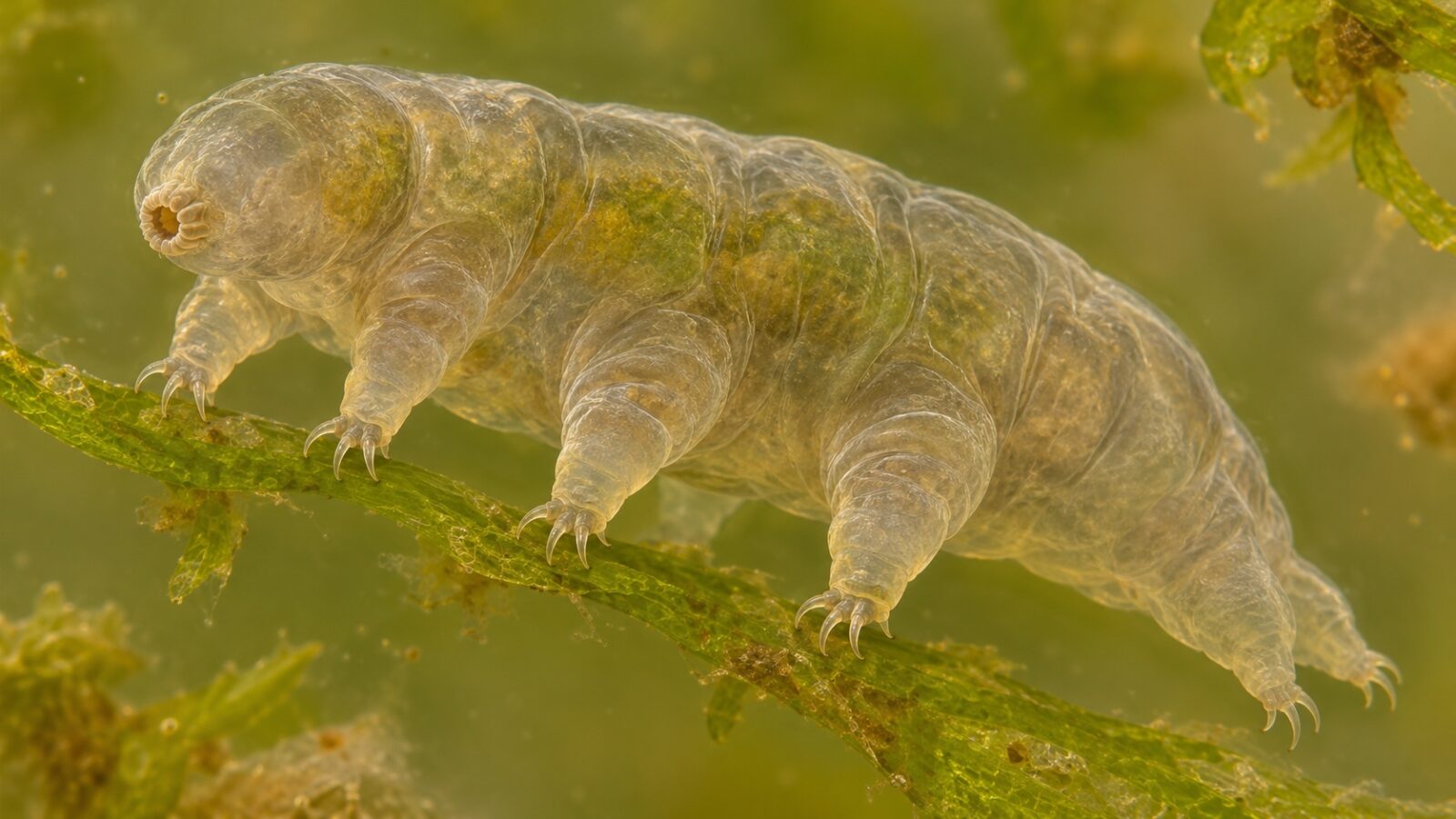
Tardigrades are a reminder that size has little to do with biological resilience. Although they are barely visible, they can withstand freezing, radiation, vacuum, and prolonged desiccation. That is why they fascinate biologists, astrobiologists, and researchers studying how life might persist under extreme conditions. It is possible that their secrets may one day help medicine, cell preservation, or the search for life beyond Earth.
Source: National Geographic, BBC, Newsweek, Pestrazahrada.cz

A lover of nature, gardens, and everything that moves, blooms, or grows. He literally grows everything, from herbs to rare species, and he enjoys caring for animals just as much. In his work, he connects modern technology with tried-and-tested grandmotherly methods and is happy when both paths lead to the same goal.
Related articles
The Invasive Ladybird That Bites Has Settled in the Czech Republic Prevention Is Easier Than You Think
The harlequin ladybird (Asian lady beetle) is spreading rapidly, crowding out native species and often turning up indoors in autumn. Learn how to recognise it, why it invades homes, and the simplest prevention and removal methods.

Cutting Away the Green on Potatoes Isn’t Enough Experts Warn Hidden Compounds Can Linger Elsewhere
Green patches on potatoes aren’t just a cosmetic issue: light exposure can raise levels of natural toxins such as solanine and chaconine. Learn when to discard tubers and how to store potatoes so they keep well and stay safe.

The herb that smells of lemon and helps you drift off to sleep: you’ll love lemon verbena after the first rub of a leaf
Lemon verbena wins you over with its clean, lemony fragrance and a soothing herbal tea that many people enjoy in the evening. Its leaves are also surprisingly versatile in the kitchen, from desserts to refreshing drinks.
Comments (0)
Be the first to comment.