
 English
 Polski
 Deutsch
 Nederlands
 Svenska
 Norsk
 Dansk
 Français
 Italiano
 Español
 Português
 Slovenčina
 Suomi
 Gaeilge
Why Leave Old Plant Roots in the Bed Instead of Pulling Them Out
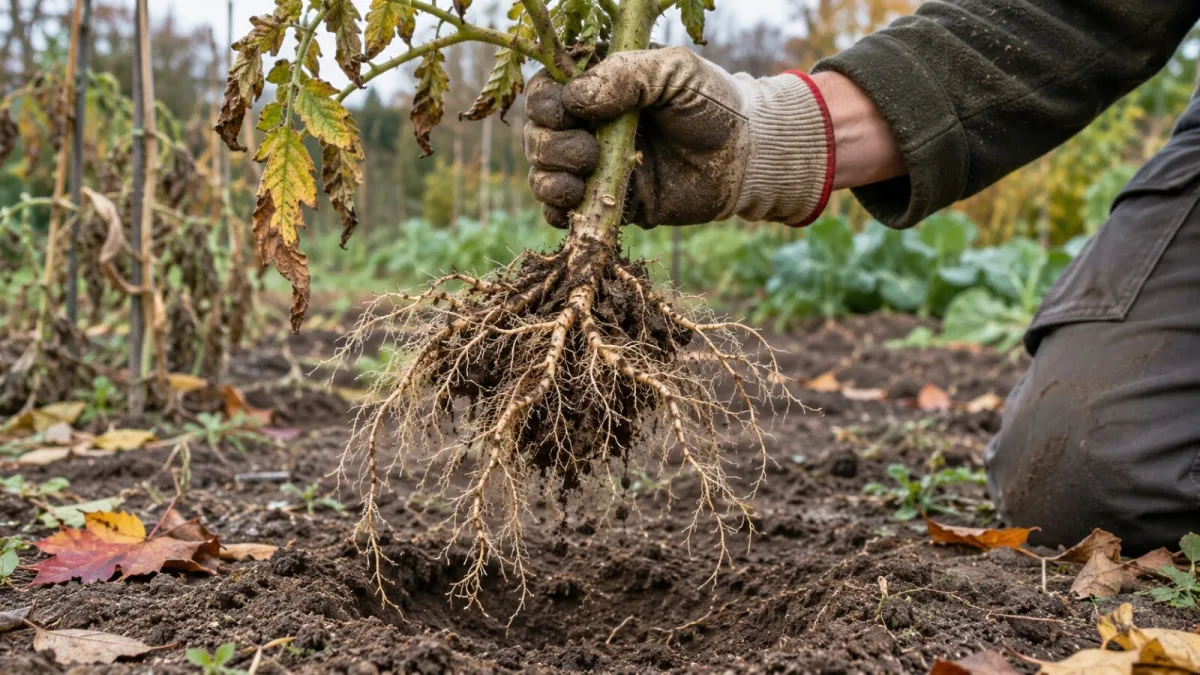
At the end of the growing season, many gardeners feel the urge to tidy beds quickly. The last crops are picked, faded or drying plants are cleared away, and the soil is readied for the next phase. But this is often where unnecessary extra work creeps in. If the plants were healthy, there’s no need to dig them out with their roots every time. It’s often better to snip them off right at the surface and leave the underground part in the soil.
Hidden value below the surface
A root system does far more than simply anchor a plant as it grows. It takes up water and nutrients, moves through the soil, and creates a zone where bacteria, fungi, and other soil organisms work together. When the above-ground part of the plant is finished, the roots left in the ground gradually rot down and become a source of organic matter.
That decomposing material feeds soil life and returns valuable compounds to the soil. Healthy soil isn’t just a mix of minerals. It’s a living system with a constant cycle of activity. The more you support natural processes in it, the better it will function over the long term.
Better soil structure with less disturbance
As they grow, roots create fine pathways in the soil that allow water and air to move through. When those roots later break down, tiny channels remain behind. New plants can take advantage of them, with roots that find it easier to travel deeper. The added organic matter also helps the soil hold moisture and nutrients more effectively.
Pulling an entire plant out by the roots, on the other hand, disturbs the soil unnecessarily. It can also damage the delicate relationships between roots and mycorrhizal fungi, which help plants access water and key elements such as phosphorus. If you want to garden more gently, leaving roots in place is a simple, highly effective step.
How to do it in practice
The method is very straightforward. With tomatoes, lettuce, beans, or annuals, simply take pruning shears and cut the stem as low to the ground as possible. For thicker stems, such as sunflowers or overgrown brassicas, sturdier pruners or long-handled loppers are helpful.
You can chop the above-ground parts into smaller pieces and leave them on the bed as mulch. This layer reduces drying out, softens the impact of heavy rain, and also serves as food for soil organisms. If you prefer a neater bed or there’s simply too much material, healthy plant debris belongs in the compost. You can then top the surface with a layer of finished compost.
When you plant again, you don’t need to wait for old roots to disappear completely. Just set the seedling a few centimetres to the side of the original spot.
When it’s better to remove the roots
Leaving roots in the soil isn’t a hard-and-fast rule. It mainly applies to healthy plants. If diseases or pests showed up in the bed, you need to consider exactly where they overwinter and whether they can persist in the roots or in the surrounding soil.
Extra caution is needed especially with plants affected by root and soil-borne diseases. In tomatoes, for example, Fusarium wilt can persist in the soil and infect plants through their roots. In that case, you should remove the whole plant, roots and all, and not put it into a typical home compost pile.
The same is true for brassicas affected by clubroot. The pathogen forms tough, long-lived spores in the roots, and as they decompose the disease can continue to spread through the soil for many years. It also makes sense to pull roots when you’re harvesting root crops, or with invasive species that readily regrow from root fragments.
Legume roots as a bonus for the bed
Leaving healthy roots is especially valuable with peas and beans. Their roots host bacteria that fix atmospheric nitrogen in small nodules. The plant uses that nitrogen for growth, and some remains in the underground residues. This doesn’t mean a bed after legumes is automatically heavily fertilised, but the gradual breakdown of the roots can still benefit the soil.
A small change in how you tidy your beds can save work while supporting the soil’s natural fertility.
Less work, more life in the soil
So the next time you do an autumn or end-of-season clear-up, you don’t need to automatically reach for a spade and dig out every spent plant. With healthy ones, it’s usually enough to remove the top growth, use it as mulch or compost, and leave the roots where they grew. The soil stays less disturbed, gains more organic matter, and supports the living community that’s essential for good harvests.
Source: Garden Betty, Laidback Gardener, Pestrazahrada.cz, Pestrazahrada.cz

A lover of nature, gardens, and everything that moves, blooms, or grows. He literally grows everything, from herbs to rare species, and he enjoys caring for animals just as much. In his work, he connects modern technology with tried-and-tested grandmotherly methods and is happy when both paths lead to the same goal.
Related articles
Experienced gardeners don’t throw leaves away and use them in six smart ways
Fallen leaves are a valuable, free resource that feeds soil life, improves structure, and protects plants. Use them as mulch, compost, leaf mould, lawn feed, winter insulation, and wildlife habitat.
A Winter Soil Mound Protects Roses but Where You Take the Soil From Matters
Mounding soil around roses for winter works only if you don’t scrape it from right at the plant. Taking soil from elsewhere protects the graft union without exposing or damaging shallow roots.
What to Do with Chrysanthemums in November So They Last Longer
Chrysanthemums brighten late autumn, but the first cold nights can cut their display short. With the right November care, many will flower longer and some can be kept for next season.
Comments (0)
Be the first to comment.