
 English
 Polski
 Deutsch
 Nederlands
 Svenska
 Norsk
 Dansk
 Français
 Italiano
 Español
 Português
 Slovenčina
 Suomi
 Gaeilge
How to prune an apple tree in autumn for a heavy crop next year
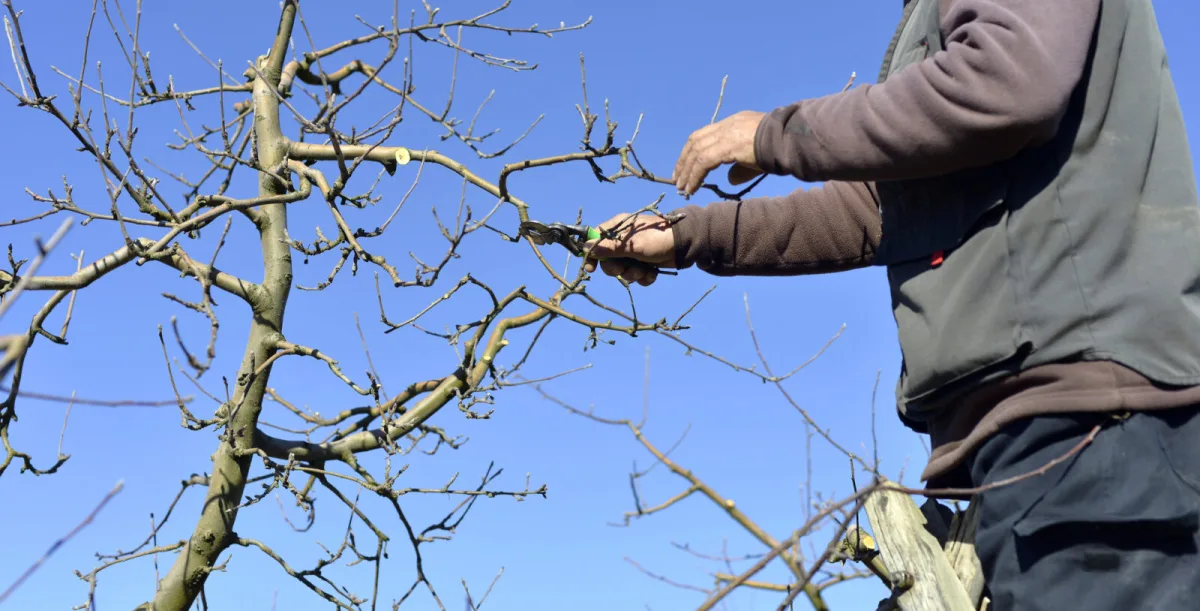
Many growers know the situation: an apple tree sets a huge number of fruits one year, but the following season the harvest is noticeably weaker. A common reason is an overly dense canopy that lets in too little light and air. Autumn pruning helps keep the tree in good condition, encourages healthy growth, and improves conditions for forming quality apples in the years ahead. But you can’t prune at random. You need to know which branches benefit the tree and which ones hold it back.
When to pick up the secateurs
The best time is after leaf fall, when the apple tree is gradually entering dormancy. The tree is no longer in active growth, so it tolerates pruning better. At the same time, don’t leave it too late. There should still be enough time before hard, lasting frosts arrive, so pruning cuts aren’t needlessly damaged by cold.
Choose a dry day with temperatures above freezing. If severe frosts have already set in, postpone pruning until late winter or early spring. In freezing weather, wood is more brittle and healing processes are slower.
Which branches to remove first
Before you start, inspect the tree carefully. The goal isn’t to remove as many branches as possible, but to rid the apple tree of what weakens it or makes it unnecessarily crowded. Dry and broken branches should go first, because they no longer benefit the tree and often become an entry point for disease.
It’s just as important to cut out diseased wood. If you see damage, dieback, or signs of fungal infection on a branch, prune back to healthy wood. Next, focus on branches growing into the centre of the canopy. They block light and air, which reduces fruit ripening and worsens the tree’s overall health.
It’s also wise to remove branches that cross and rub against each other. Rubbing damages the bark and makes the tree more susceptible to infection. Pay attention, too, to strong vertical shoots, often called watershoots. Most of them simply congest the canopy, although some can be used as replacements for older or poorly positioned branches.
How to make the right cut
Use sharp secateurs for thinner branches and a pruning saw for thicker ones. Tools must be clean and well sharpened so the cut is smooth and the wood doesn’t tear. If you’re removing a branch entirely, cut close to the branch union at its base, at the natural swelling. Don’t leave long stubs, but don’t cut flush to the trunk either.
When shortening a shoot, make the cut just above a bud that points in the direction you want the next growth to go. After working on diseased branches, remember to disinfect your tools so any infection isn’t carried to healthy parts of the tree.
How much can you safely remove
In autumn, aim mainly for a санитарy prune and light thinning. That means removing damaged, poorly placed, and excess branches, but avoiding a drastic cut-back. Over-pruning can weaken the apple tree and trigger vigorous watershoot growth in spring instead of forming fruitful spurs.
This is even more true for older trees. If you haven’t pruned an apple tree for several years, don’t try to fix everything in a single season. It’s better to reshape the canopy gradually over several years.
Young apple trees need a gentle approach
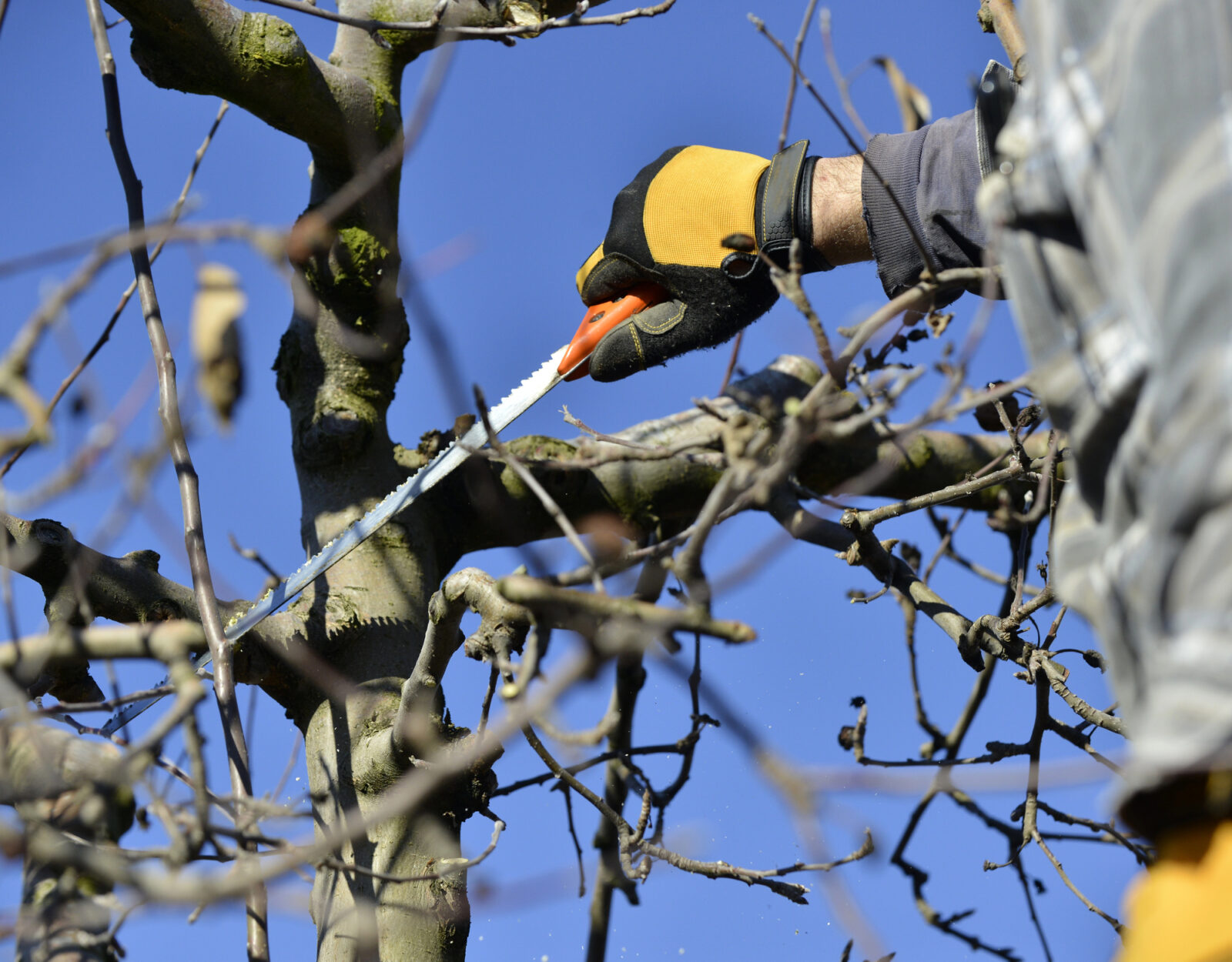
On young trees, autumn pruning is usually very light. Remove mainly dry, damaged, or poorly growing shoots. Major training of the canopy is better left until spring. Especially with one-year-old trees, proceed carefully, because a hard cut before winter could weaken them unnecessarily.
A mistake that can reduce next year’s crop
A common misconception is that the more a gardener shortens branches, the bigger the apples will be. In reality, it can turn out exactly the opposite. Apple trees carry a substantial part of the future crop on short fruiting spurs. If you remove these small плодоносящие shoots indiscriminately, there may be far fewer fruits the following year.
Not every shoot that seems to be in the way at first glance is pointless. Before every cut, you need to tell the difference between what merely thickens the canopy and what actually carries, or will carry, the crop.
What to do after you’ve finished
After pruning, clear away all diseased branches and infected fallen leaves. Don’t leave them lying under the tree, as they can be a source of further infection. Check larger wounds, but there’s no need to automatically paint every cut. A correctly made cut will usually heal on its own under normal conditions.
It’s worth remembering that pruning alone won’t guarantee a heavy crop. Over the year, an apple tree also needs sufficient moisture, balanced feeding, and protection from diseases and pests. When these basics are combined with regular, thoughtful pruning, the tree has a much better chance of cropping healthily, reliably, and in abundance.
Source: To je nápad, Gardeners World, Gardening Know How, Pestrazahrada.cz

A lover of nature, gardens, and everything that moves, blooms, or grows. He literally grows everything, from herbs to rare species, and he enjoys caring for animals just as much. In his work, he connects modern technology with tried-and-tested grandmotherly methods and is happy when both paths lead to the same goal.
Related articles
A Garden Shed Can End in a Fine or Even Demolition Many People Make a Mistake Without Realising It
Building a garden shed isn’t just about putting up walls. Smart planning, a level base and checking local rules early can save you costly fixes, fines or even an order to remove the shed.
Make an Old Tree Stump Disappear Without Digging or Chemicals
Removing an old stump doesn’t have to mean backbreaking digging or harsh chemicals. With the help of mushroom mycelium, the wood can break down naturally over time and become far easier to remove.
Pruning raspberries in November, experienced gardeners leave only a few canes and harvest more next year
Autumn raspberry pruning helps keep canes strong, reduces disease pressure, and sets you up for a bigger crop next season. Once the leaves drop, thin and cut back correctly based on whether your variety fruits once or is everbearing.
Comments (0)
Be the first to comment.