
 English
  Polski
  Deutsch
  Nederlands
  Svenska
  Norsk
Norsk  Dansk
Dansk  Français
  Italiano
  Español
  Português
  Slovenčina
  Suomi
Suomi  Gaeilge
 Summer pruning of fruit trees catches up on delays and boosts the crop
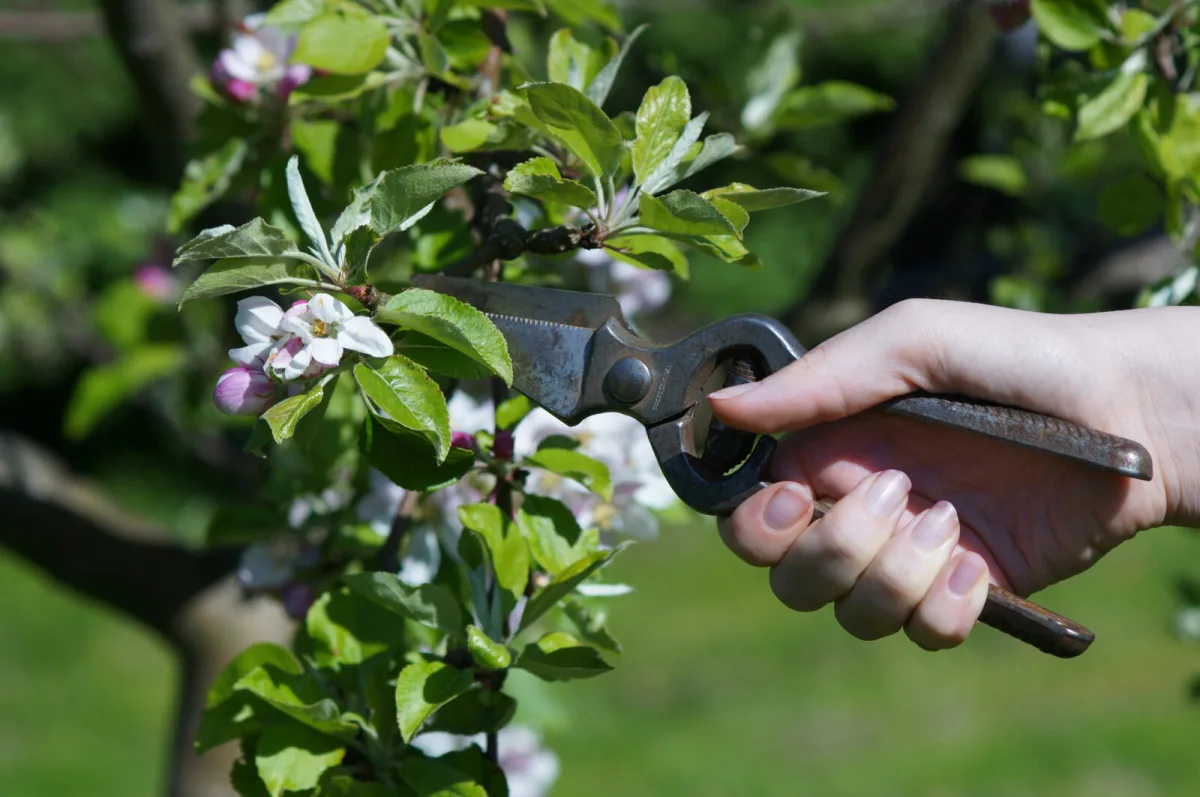
If you didn’t manage to prune your fruit trees in late winter or early spring, it often isn’t a lost cause. Summer pruning can help, carried out from late spring, continuing through the whole summer, and in practice it can be done roughly up to the end of September. It’s especially valuable for shaping the canopy and keeping the tree to a sensible size, so it’s worth not skipping. It’s most commonly used on trained and intensively grown trees, typically peaches and apricots, where the crown thickens easily and quickly becomes overgrown.
The summer period also includes so-called formative pruning, where you don’t work only with a pruning saw, but mainly with your fingers and secateurs. On young trees, the current season’s shoots are pinched back to encourage branching, improve light penetration, and guide the crown into the desired shape without creating unnecessarily large wounds.
You can thin stone fruit in summer without fearing next year’s harvest
With plums, peaches, and cherries, the advantage is that they flower mainly on one-year-old wood. Thanks to that, you can thin the crown in summer and remove congesting shoots without sacrificing the future crop. On the contrary, summer pruning often encourages the formation of new shoots, meaning fruiting wood the tree needs for regular cropping. If you delayed the same work to a very late date or left it until late winter, it’s easy to cut off the beginnings of flower buds and weaken the harvest.
Be careful with apples and pears, the rules are different
With pome fruit, the same simplification as for stone fruit doesn’t apply. Apples and pears often set flower buds at the tips of short branches on two- to three-year-old wood. That’s why you need to be more cautious with summer cuts and always consider the goal. Here, summer pruning is used more as a gentle regulation, such as removing overcrowding, unproductive, or poorly placed shoots, rather than heavy shortening.
Why ornamental gardens are pruned in summer too
July is often one of the hottest months, when the garden grows quickly, but with a lack of rainfall it can look tired. Plants without watering sometimes wilt, drop flowers or leaves, and generally respond worse to interference. At the same time, there may be a period when some plants have already finished flowering and others haven’t started yet, making it a good time to pick up the secateurs and tidy growth.
In summer, overgrown climbers, shrubs, and evergreens are often trimmed back to the desired size. Before you start, it makes sense to check whether there is a bird’s nest inside the shrub. The shoots that grow after pruning in July usually have time to harden off and mature before winter, so they are less prone to frost damage.
Summer pruning tends to slow growth and supports plant health
Compared with winter pruning, summer pruning tends to check growth rather than strongly stimulate it. That’s useful with trained fruit trees, where you want to keep an airy canopy and remove new shoots that only thicken the crown and don’t carry fruit. At the same time, pruning can improve plant health, because diseased or dying parts are removed and more light and air can reach the interior.
In extreme heat and drought, though, it’s better to postpone pruning, because cut surfaces increase moisture loss and put the plant under unnecessary stress. There are situations where a cut can help, however. If some twiggy growth is drying out, it may mean the plant is shedding it because it can’t supply it with water and nutrients. In that case, removing the dead parts can take pressure off the rest of the crown.
A check after earlier pruning will show you what to do next
In summer, it’s worth going over woody plants pruned in previous months and assessing how they responded. If, for example, a shrub was hard rejuvenated in winter, in summer you’ll easily see whether it’s producing strong, healthy shoots that will flower well next season. This kind of check is practical for fruit trees too, because it shows where the crown is thickening again and where it is, conversely, too open.
What you can comfortably prune in July and how
Wisteria
On wisteria, long whippy shoots are shortened in summer to around seven buds. More substantial shaping is then usually done in winter, most often in January to February, when the plant’s framework is easier to read.
Plums and other stone fruit
Stone fruit can be sensitive to blossom blight (monilia) and other diseases. In summer, remove diseased, dying, and dry shoots back to a healthy bud or healthy wood. It’s important to keep good hygiene and disinfect secateurs between individual trees so infection isn’t spread.
Mock orange
Mock orange is best pruned straight after flowering. Roughly a third of the shoots can be cut out low at ground level, which opens the shrub up, improves airflow, and encourages new shoots for flowering next season.
Bay laurel
If you pinch bay laurel regularly, in summer it can be cut back to a bud pointing in the direction you want the next growth to go. The cut leaves can be dried and used in the kitchen.
What is better left alone in summer
Willows and shrubby dogwoods
With willows and shrubby dogwoods, summer pruning would rob the plants of young, often brightly coloured stems, which are their biggest ornament in winter. These are therefore usually pruned only in late February or in March.
Persian ironwood and shrubs valued for autumn colour
On woody plants grown for strong autumn colour, summer pruning can mean an unnecessary loss of leaf area. That would cost you the effect that starts to show within just a few weeks.
Autumn-fruiting raspberries
Ever-bearing raspberries crop again in autumn. If you cut them down to the ground after the first harvest, you would lose the second flush of fruit. With these raspberries, the timing of any cuts should be adjusted to whether you want one harvest or two.
Source: Záhrada,Gardeningn Know How, The Spruce, Pestrazahrada.cz

A lover of nature, gardens, and everything that moves, blooms, or grows. He literally grows everything, from herbs to rare species, and he enjoys caring for animals just as much. In his work, he connects modern technology with tried-and-tested grandmotherly methods and is happy when both paths lead to the same goal.
Related articles
How to Keep Your Pool Sparkling Clean Without Unnecessary Effort or Stress
Keeping pool water crystal clear doesn’t have to be hard work. With a simple daily-and-weekly routine, you’ll prevent cloudiness, algae and breakdowns before they start.
A Simple Trick for a Bigger Pepper Harvest and Faster Ripening
Regular watering and feeding aren’t always enough for a heavy pepper crop. Pinching out the growing tips redirects the plant’s energy into branching, flowering, and ripening fruit faster.

Fireflies are disappearing from the landscape, learn how to create a safe garden home
Warm summer nights are even more magical when fireflies start flashing at dusk—but their numbers are falling. With a few simple changes to mowing, planting, lighting and chemical use, your garden can become a safe refuge again.
Comments (0)
Be the first to comment.