
 English
  Polski
  Deutsch
  Nederlands
  Svenska
  Norsk
Norsk  Dansk
Dansk  Français
  Italiano
  Español
  Português
  Slovenčina
  Suomi
Suomi  Gaeilge
 Time to Protect Your Crop, Codling Moth Is Flying Again and Laying Eggs
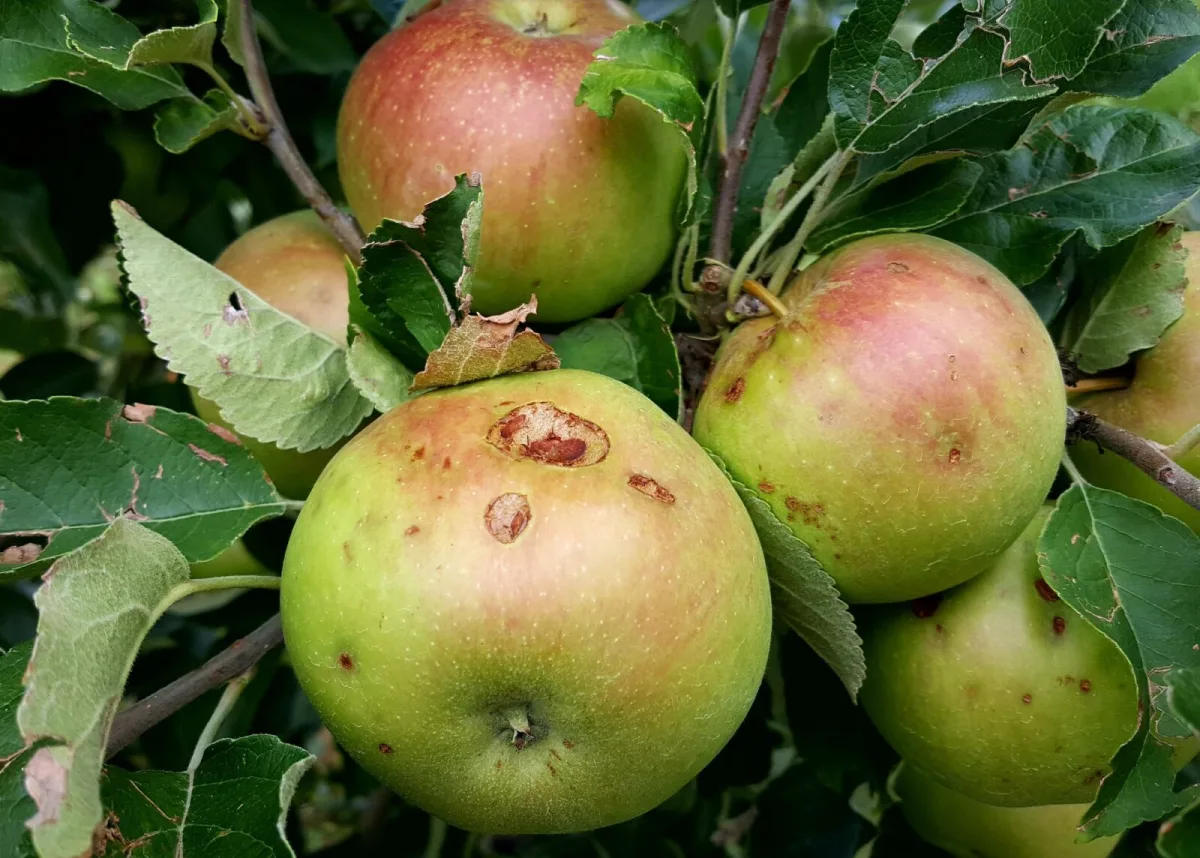
Wormy fruit in summer doesn’t have to be inevitable. Right at this turning point in the season, the second generation of codling moth is taking flight, and its caterpillars can damage a large part of the harvest. Anyone who wants to act effectively while avoiding unnecessary spraying should follow the pest’s development and choose the timing of treatment carefully.
Without protection, the first generation can cause significant damage, and the second generation is often even more destructive because it attacks a large proportion of the fruit. The damaged spots also frequently open the door to other diseases, which can easily enter the wounds and cause the fruit to rot.
How codling moth causes damage and why the second wave is so dangerous
Codling moth is among the most important pests of apple trees, but it can also attack pears and quinces. Adults appear from the end of May, sometimes as late as July depending on the weather. Fertilised females lay single eggs on young fruit.
The larvae hatch in roughly one to two weeks. After a brief period of surface feeding, they bore into the fruit and eat irregular tunnels towards the core. They leave frass behind, which is often pushed out, a classic sign of infestation. Caterpillars develop for several weeks and then leave the fruit. It’s not uncommon for one larva to damage two to three fruits over its lifetime.
Warm nights speed development and can add another generation
Codling moth activity rises sharply as temperatures warm in May and early June, especially when night-time temperatures stay around 15 °C. Mating and egg laying typically occur at around 16 to 17 °C. In warm years and at lower elevations, a third generation can appear within a single season.
The most reliable approach is not to rely on a single date, but to keep tracking activity and repeat the intervention as needed.
Prevention and monitoring are the foundation of success
Protection starts as early as spring. It helps to remove loose bark from trees, where cocoons may be hidden. An important step is monitoring with pheromone traps. These make it harder for males to find females, and they also give the grower a clear picture of flight intensity. The number of moths caught indicates when larval hatch is approaching and when treatment makes the most sense.
A more eco-friendly spray only works before the caterpillars bore in
For caterpillars, you can use a product based on the bacterium Bacillus thuringiensis, which is gentle on people and most beneficial organisms, but targets moth larvae. After ingestion, it disrupts their digestive tract and the caterpillars usually die within two to three days. The key is to treat in time, during the hatching period, while the larvae are still on the fruit surface.
The first application should be made at larval hatch from eggs and requires thorough coverage. A second treatment is carried out during intensive feeding. If pest pressure persists, a third intervention can be added after about seven to ten days, always according to the current situation in the orchard and the results from trap monitoring.
Source: Gardening Know How, Zahrádkár, Pestrazahrada.cz

A lover of nature, gardens, and everything that moves, blooms, or grows. He literally grows everything, from herbs to rare species, and he enjoys caring for animals just as much. In his work, he connects modern technology with tried-and-tested grandmotherly methods and is happy when both paths lead to the same goal.
Related articles

How to Keep Your Pool Sparkling Clean Without Unnecessary Effort or Stress
Keeping pool water crystal clear doesn’t have to be hard work. With a simple daily-and-weekly routine, you’ll prevent cloudiness, algae and breakdowns before they start.

A Simple Trick for a Bigger Pepper Harvest and Faster Ripening
Regular watering and feeding aren’t always enough for a heavy pepper crop. Pinching out the growing tips redirects the plant’s energy into branching, flowering, and ripening fruit faster.
Fireflies are disappearing from the landscape, learn how to create a safe garden home
Warm summer nights are even more magical when fireflies start flashing at dusk—but their numbers are falling. With a few simple changes to mowing, planting, lighting and chemical use, your garden can become a safe refuge again.
Comments (0)
Be the first to comment.