
 English
  Polski
  Deutsch
  Nederlands
  Svenska
  Norsk
Norsk  Dansk
Dansk  Français
  Italiano
  Español
  Português
  Slovenčina
  Suomi
Suomi  Gaeilge
 Sow Phacelia and Let It Do the Work Your Bed Will Be Weed Free and Crumbly by Spring
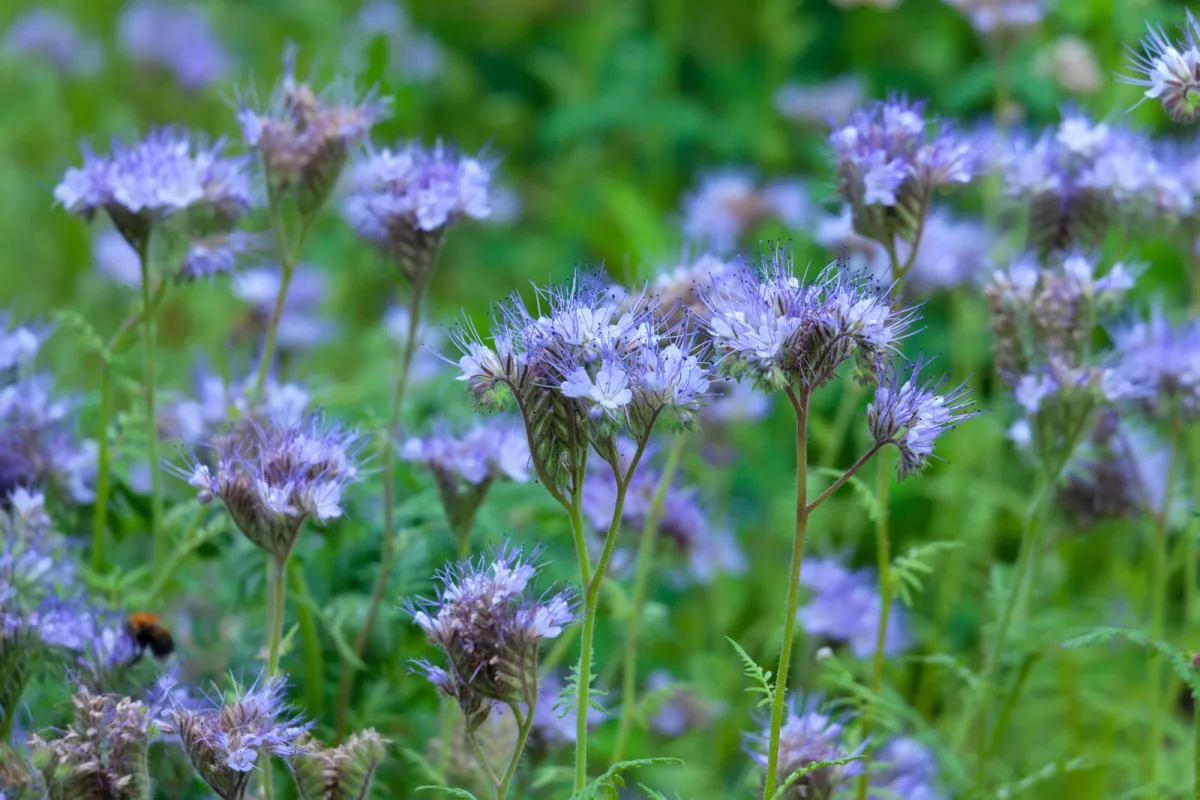
Tansy phacelia is an annual cultivated plant in the waterleaf family, valued mainly as a cover crop. Thanks to its strong root system, it penetrates the soil thoroughly and improves its structure. The taproot branches abundantly, especially in the top layer, and commonly reaches a depth of roughly 30 to 80 cm.
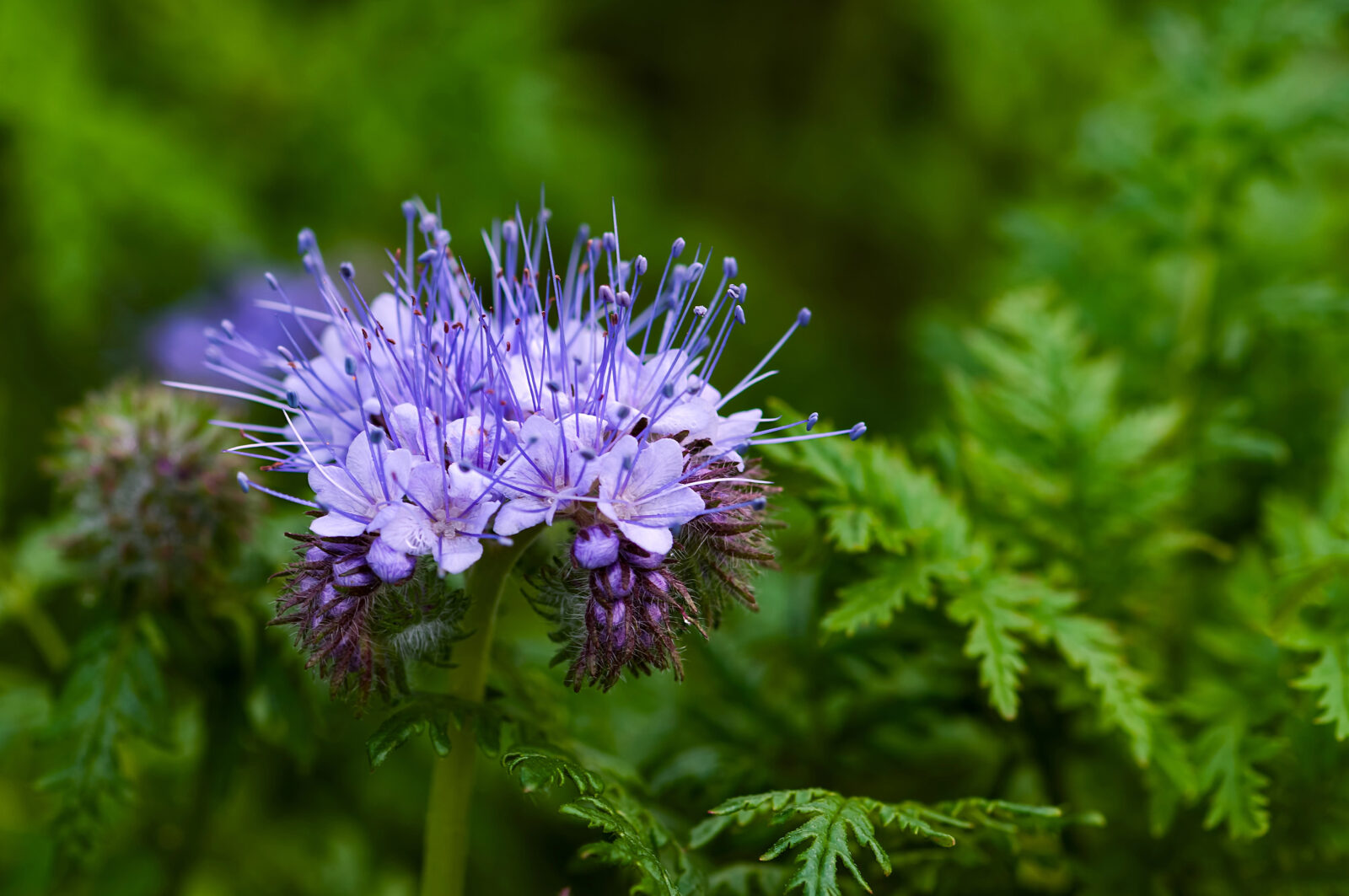
The plant typically grows to around 80 cm, and in good conditions even over 1 m, which can lead to lodging. The leaves are alternate, pinnately lobed, and noticeably hairy. Phacelia begins flowering about 6 to 9 weeks after sowing, and the flowering period often lasts 5 to 8 weeks depending on sowing date, variety, and weather. The flowers are typically blue to violet and provide high-quality nectar and pollen.
Phacelia attracts honeybees, bumblebees, and other beneficial insects, including predators and parasitoids.
Use in crop rotations and as green manure
A major advantage of phacelia is that in crop rotations it works as a reliable break crop, because it has few close relatives among commonly grown crops. It closes over quickly, suppresses weeds, and is grown both as a pure stand and in mixtures. It is often used for green manuring because it has a favourable C:N ratio and its biomass breaks down relatively quickly, releasing nutrients for the following crop.
It is also used in orchards and vineyards as in-row strips and in anti-erosion systems. It can be grown for forage too, although the hairiness reduces palatability and the forage can turn bitter as it wilts. After a short wilt, it can be considered for making haylage, or silage.
Soil and climate requirements
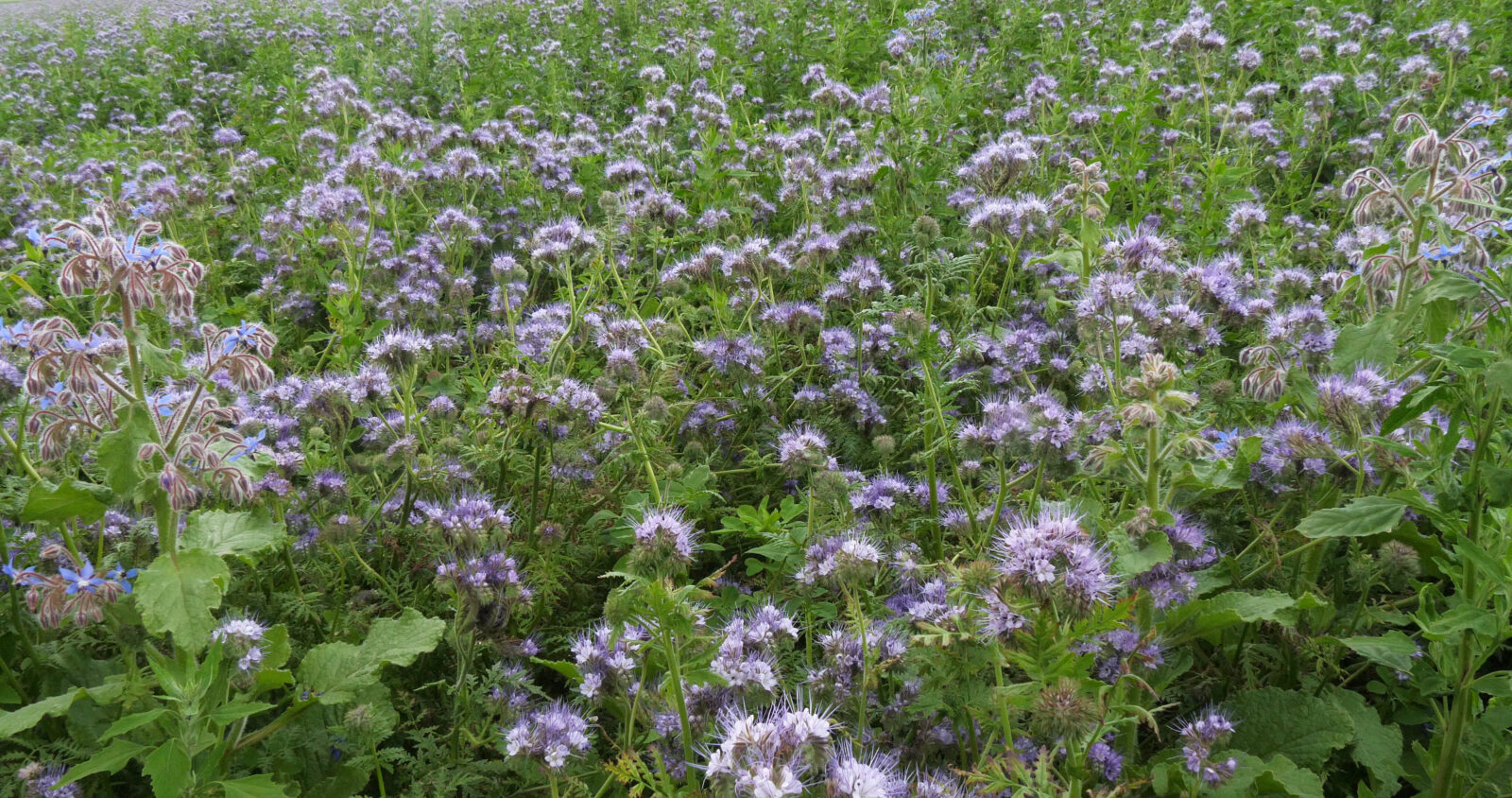
Phacelia is generally undemanding and, aside from the emergence stage, tolerates drought well. Annual rainfall of roughly 200 to 500 mm is often sufficient. It performs best in lighter, well-aerated soils with a good nutrient supply, with a reaction of about pH 6.5 to 8.5. By contrast, it dislikes compacted, waterlogged, or strongly acidic soils.
In our conditions it usually does not overwinter, but young plants before stem extension can briefly withstand frosts around -8 °C. In warmer areas it is sometimes grown as an overwintering crop.
Sowing, nutrition, and pollination
When grown for seed, the earliest possible spring sowing is recommended once the risk of severe frosts has passed, because the plant germinates at temperatures around 3 °C. As a cover crop, it is most often sown from July to September. A typical seed rate for narrow rows is about 15 to 18 kg per hectare, and sowing depth is usually 1 to 2 cm.
On poorer soils, seed crops may benefit from a pre-sowing nitrogen application of roughly 30 to 60 kg N per hectare, and possibly topping up phosphorus and potassium. For good pollination of seed crops, it is recommended to ensure an influx of honeybee colonies, roughly 2.5 colonies per hectare.
Harvest and terminating the stand
For forage, phacelia is harvested at the bud stage, at the latest before flowering, because later the plants become tough and dry out. For green manuring, it is best to terminate the stand from bud formation to the start of flowering. At the same time, it is often left to grow until late October to early November, when biomass can still increase. A stand sown in August usually does not set seed at this time, reducing the risk of volunteer weeds.
For seed, it is harvested mainly from spring sowings, usually at the turn of July and August. Swathing and then combining is risky because phacelia tends to shatter heavily and losses can be very high compared with direct combining. In some cases, a pre-harvest desiccant treatment is used if needed to even up ripening.
Diseases, pests, and weeds
Phacelia typically does not suffer from major diseases or pests. Problems can arise on waterlogged and compacted fields, where damping-off of seedlings may occur, so it is better to avoid such soils. From the perspective of nematodes, it is interesting that it does not support the multiplication of sugar beet cyst nematode and may even reduce its presence, although other species may appear.
The biggest practical risk is usually weeds, especially in seed crops, where they complicate harvest and reduce seed quality. Good agronomy is key: choosing the right field, sowing on time, and preparing a quality seedbed with the destruction of emerging weeds before sowing. Late spring sowings tend to have higher weed pressure and later spring species also join in. With a well-established stand, chemical control is often unnecessary, but if needed there are registered options mainly for grass weeds and, to a limited extent, broadleaf weeds.
Final summary
Tansy phacelia is a resilient, versatile crop suitable for cover cropping, green manuring, and supporting pollinators. It does best in non-waterlogged, not overly acidic soils, and one of its strengths is rapid canopy closure. For seed crops, early sowing and careful soil preparation are crucial, because the main limiting factor is usually weeds rather than diseases or pests.
Source: Nature Hills, Agromanuál, Pestrá zahrada, , Pestrazahrada.cz

A lover of nature, gardens, and everything that moves, blooms, or grows. He literally grows everything, from herbs to rare species, and he enjoys caring for animals just as much. In his work, he connects modern technology with tried-and-tested grandmotherly methods and is happy when both paths lead to the same goal.
Related articles
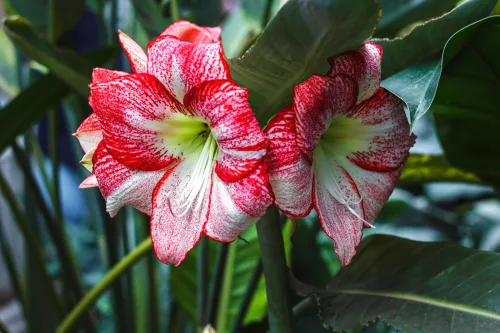
The Christmas Amaryllis That Can Bloom for Years but Most People Throw It Away After Flowering
Hippeastrum is a spectacular winter-blooming bulb that, with the right care, will flower again year after year. Learn how to plant it correctly, look after it after flowering, and bring it into dormancy so it reliably reblooms.
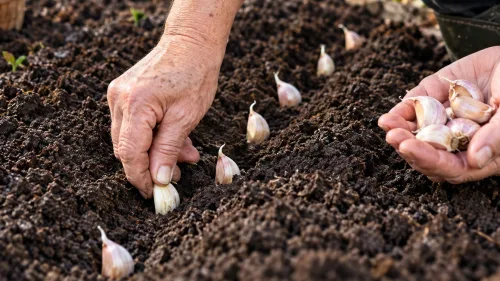
How to Grow Winter Garlic for a Much Bigger Harvest
Autumn planting is the key to strong, healthy winter garlic, but the details make all the difference. With the right timing, bed choice, seed-clove treatment and a simple bicarbonate trick, you can noticeably boost yield.
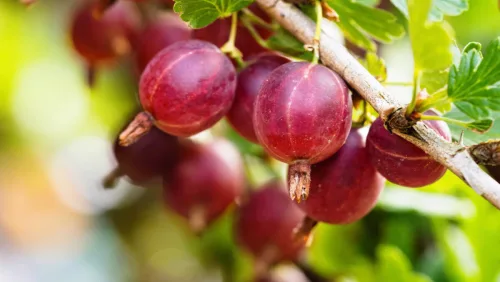
A tree or shrub planted properly in autumn can outpace spring stock and improve fruiting
Many fruit trees and soft-fruit shrubs establish better when planted in autumn, because roots keep growing while the top is dormant. Done well, this head start means stronger spring growth, less watering, and a healthier first year.
Comments (0)
Be the first to comment.