
 English
  Polski
  Deutsch
  Nederlands
  Svenska
  Norsk
Norsk  Dansk
Dansk  Français
  Italiano
  Español
  Português
  Slovenčina
  Suomi
Suomi  Gaeilge
 Process Pears Without Stress the Best Methods Even a Beginner Can Master
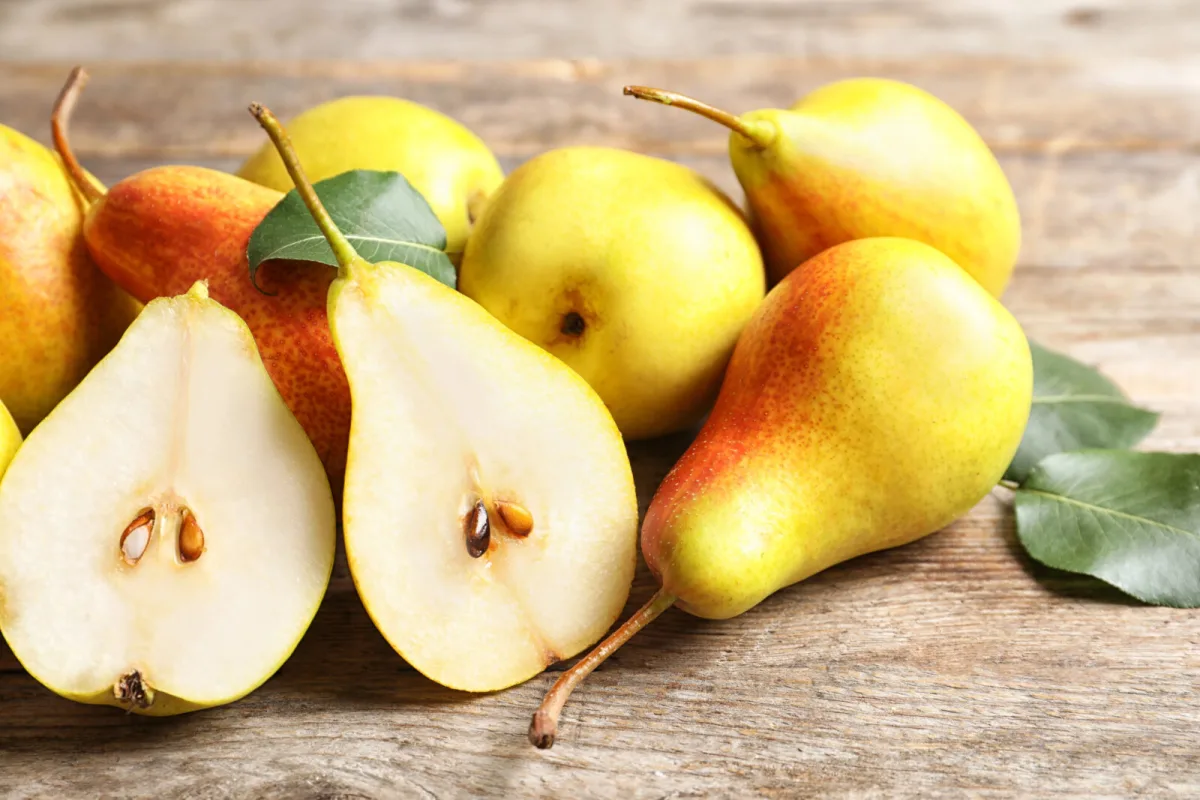
Pears are typically a fruit best suited to eating fresh. They have a tender texture and a gentle sweetness that can disappear quickly with heat if you overdo the sugar or spices. These days, people most often reach for dessert varieties meant for eating raw, rather than old-fashioned firm pears made for long, slow baking. That’s exactly why it pays to stick to straightforward methods that lift the flavour instead of overwhelming it.
Delicate pears pair beautifully with vanilla and almond notes. They also work well with butter and chocolate, which add richness without stealing the fruit’s character.
The simplest treatments that work almost every time
One of the best methods is poaching: a very gentle simmer in a light syrup, ideally scented with vanilla. The result is juicy fruit you can serve as a bowl of pears with cream, or as individual portions reminiscent of the classic Poire Belle Hélène with ice cream and chocolate sauce.
Another quick option is a brief sauté in butter. The pear is just warmed through, takes on a little colour, then is mellowed with a splash of Marsala and a few spoonfuls of cream. If you want something more celebratory, choose bakes like pear Tatin or a fruit tart, where pear halves sit on almond cream or pastry cream.
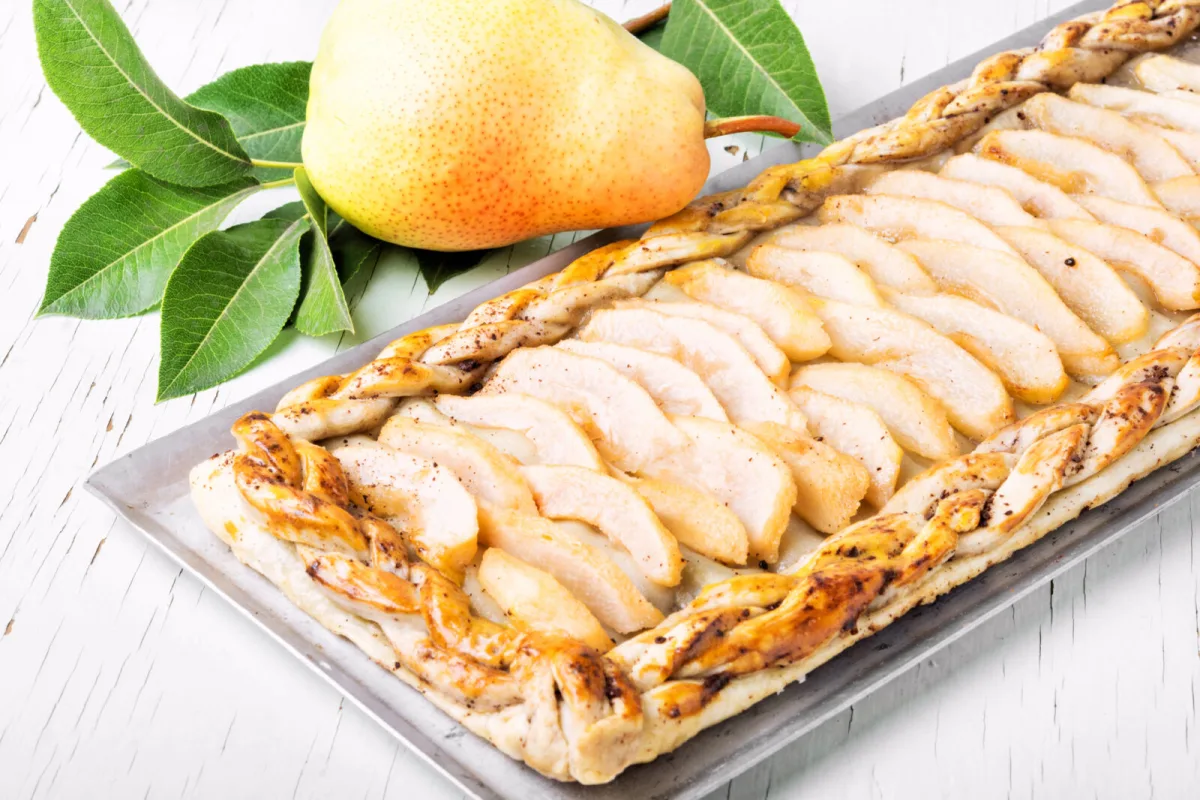
A more restrained but impressive approach is baking pears individually wrapped in a strip of pastry, spiralled around the fruit. It looks festive, yet the process is surprisingly straightforward.
Rules for choosing and preparing pears before cooking
For common market varieties, the best choice is pears that are just ripe but not overripe. Under-ripe fruit tends to taste flat; cooking may soften the flesh, but it won’t magically improve the flavour. Overripe pears, on the other hand, break down quickly and easily turn to mush.
After peeling, it helps to rub the surface with a cut lemon to prevent browning. If you want to serve pears whole, remove the core from the bottom end so the stem stays intact, which looks best on the plate. When using halves or slices, you usually remove the stem as well and cut out the core completely. Dessert pears need only brief cooking; often just a few minutes of poaching or a quick butter sauté is enough.
Baking pears and why they used to be cooked for hours
Old varieties intended for baking were traditionally described as pears that require long hours of cooking. In practice, though, they often soften faster than you’d expect when poached. Their true flavour shows up when they are stewed so the liquid gradually absorbs back into the flesh. That’s what creates a fuller, more concentrated result.
In the past, pears were left to gently cook at the edge of the fire or in a mild, dying oven with almost no attention. In the end, they turned into something like a sweet treat with denser flesh. Sometimes sugar or wine was added, but some baking pears can sweeten even in plain water. During stewing, the flesh also tends to take on a lovely reddish tint.
How baking pears behave during the season and in storage
Baking varieties often keep a slight astringency even early in the season. That can be pleasant because it adds depth, but it usually means you need truly slow, longer cooking for the colour and aroma to develop. They’re typically harvested in October and, if stored well, will keep into the new year, sometimes even into February or March.
As with late apples, however, the flavour can flatten over time. The pears stay hard and look fine, but after longer storage they tend to have less acidity and a less pronounced taste. Even so, once cooked they usually hold their shape and remain firmer than standard dessert pears, which break down more easily with heat.
Dual-purpose varieties and small summer pears
Some pears can be used in two ways. They’re considered cooking pears, yet in a good year they can taste lovely fresh as well. Once cooked they don’t feel coarse like old baking types; instead, they often have a finer texture. With some popular cultivars, the fruit can be quite sharp when raw, but in a warm dessert the flavour rounds out beautifully.
Small summer pears are usually juicy and tasty, but they overripen quickly. That’s why they were traditionally preserved in a heavy syrup or made into candied fruit to extend the season.
Pears in savoury dishes and why they pair so well with cheese
Pears also work well in savoury dishes and salads. A ripe pear sliced thinly pairs wonderfully, for example, with chicory and walnuts; all you need is a simple dressing of oil and lemon juice. Even more classic, though, is the pairing of pears with cheese, which in Europe is taken almost as a given.
An old Italian saying reminds us how exceptional cheese tastes with pears, and how easily such a delicacy might disappear if everyone knew about it.
Choose a perfectly ripe, aromatic pear and a more assertive cheese, and you get a combination that works without any extra embellishment and often outshines even complicated desserts.
Recipes you can manage without specialised equipment
Vanilla-poached pears
Peel and core four medium to large pears and immediately rub them with lemon juice. Make a poaching liquid from water, a little sugar and a glass of white wine; heat first so the sugar dissolves, then bring to the boil. Add vanilla, add the pears whole or cut up, and let them gently bubble for just a few minutes. Lift them into a bowl, reduce the liquid by about half, and pour it over the fruit. Serve chilled with cream.
Pears Belle Hélène style
Poach whole pears and stand them on their base so the stem points upward. If a pear topples, trim just a thin slice from the bottom to create a stable base. Serve with vanilla ice cream and drizzle with chocolate sauce. You can make a simple homemade sauce by melting dark chocolate with a little hot coffee in a bain-marie.
Quick butter-tossed pears with cream
One pear is usually enough per serving. Peel it, remove the core, splash with lemon, and cut into thick wedges. Melt a knob of butter in a small pan, add the pear, optionally a little vanilla, a pinch of sugar and a few more drops of lemon. On low heat, gently turn the pear so it lightly browns. Finish with a little Marsala and a few spoonfuls of cream, warm through briefly and serve at once.
Pears baked in pastry strips with vanilla custard
Peel the pears, core them so the stems remain, and protect the flesh with lemon. Make shortcrust pastry, roll it into a thinner sheet and cut it into long strips. At the same time, cut smaller squares to act as bases. You can tuck a little lemon zest into the centre of the pears and add a few drops of juice. Trim the bottom of each pear slightly, stand it on a pastry square, and spiral a pastry strip around it from bottom to top so the bands overlap slightly. Press the pastry in at the top around the stem, and seal it carefully at the bottom to the base. Brush with milk or a mixture of egg and milk, and bake until golden at a moderate temperature, about three quarters of an hour. The result is a soft, fragrant pear that’s excellent warm with cream, even better with a proper vanilla custard.
Vanilla custard in the style of crème anglaise
In a bowl, whisk the egg and yolk with the sugar. Heat the milk with the vanilla until just below boiling, pour it into the eggs and stir so the sugar dissolves. Return the mixture to a saucepan and heat over very low heat until the custard thickens enough to coat the back of a spoon. The key is not to rush, so the eggs don’t curdle.
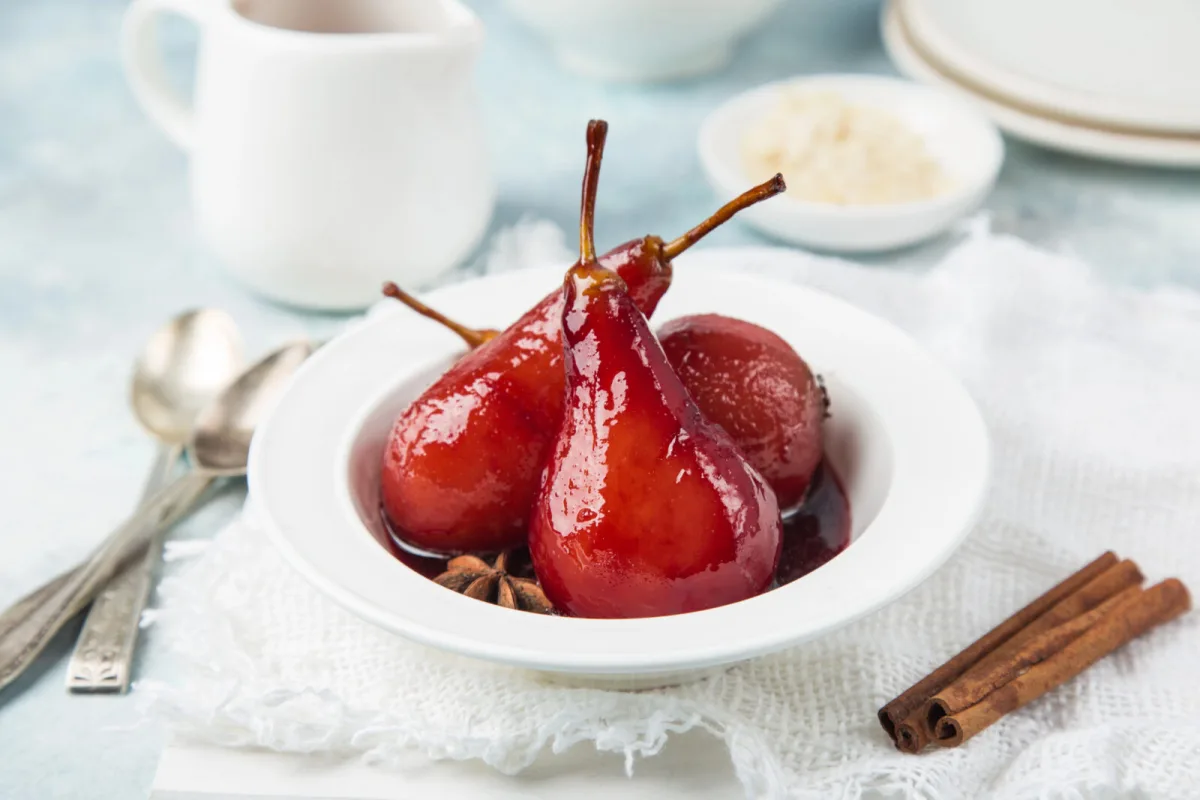
Pears in red wine
This dessert is best made with baking pears. Use a pan that fits the pears snugly side by side. Bring a mixture of water and red wine to the boil, add sugar and cinnamon. Peel the pears, core them, rub with lemon, and leave the stems on. Then add them to the liquid and simmer very gently until tender; with whole pears this can take more than an hour depending on the heat. The liquid will gradually reduce by about half. Let the pears cool directly in the poaching liquid and serve with cream. For a more dramatic finish, you can reduce the liquid further to an almost syrupy glaze, just be careful not to overcook the pears in the process.
Source: Chelsea Green, Prima receptar , Pestrazahrada.cz
Related articles
Why the Tree That Feeds a Family for Generations Is Disappearing from Czech Gardens
The English walnut used to be a staple of larger gardens and farmyards, valued for its nutritious nuts and many practical uses. With the right site and variety, it remains one of the most rewarding long-lived trees you can plant.

How to Get Rid of Mice and Rats in the House, Loft and Garden Effectively
Mice and rats don’t leave quietly—scratching sounds, droppings and gnaw marks are clear warnings. A lasting solution comes down to three steps: block entry points, remove food sources, then use traps or professional control.
Two Mistakes When Harvesting Onions Can Cut Your Supply by Months
With good growing and the right handling, onions can turn into a near year-round pantry staple. These simple harvest and curing steps determine whether they keep for weeks or for months.
Comments (0)
Be the first to comment.