
 English
 Polski
 Deutsch
 Nederlands
 Svenska
 Norsk
 Dansk
 Français
 Italiano
 Español
 Português
 Slovenčina
 Suomi
 Gaeilge
An invasive pest is reaching Czechia it can devour hundreds of plant species and has no natural enemies here and the tell-tale sign is white spots
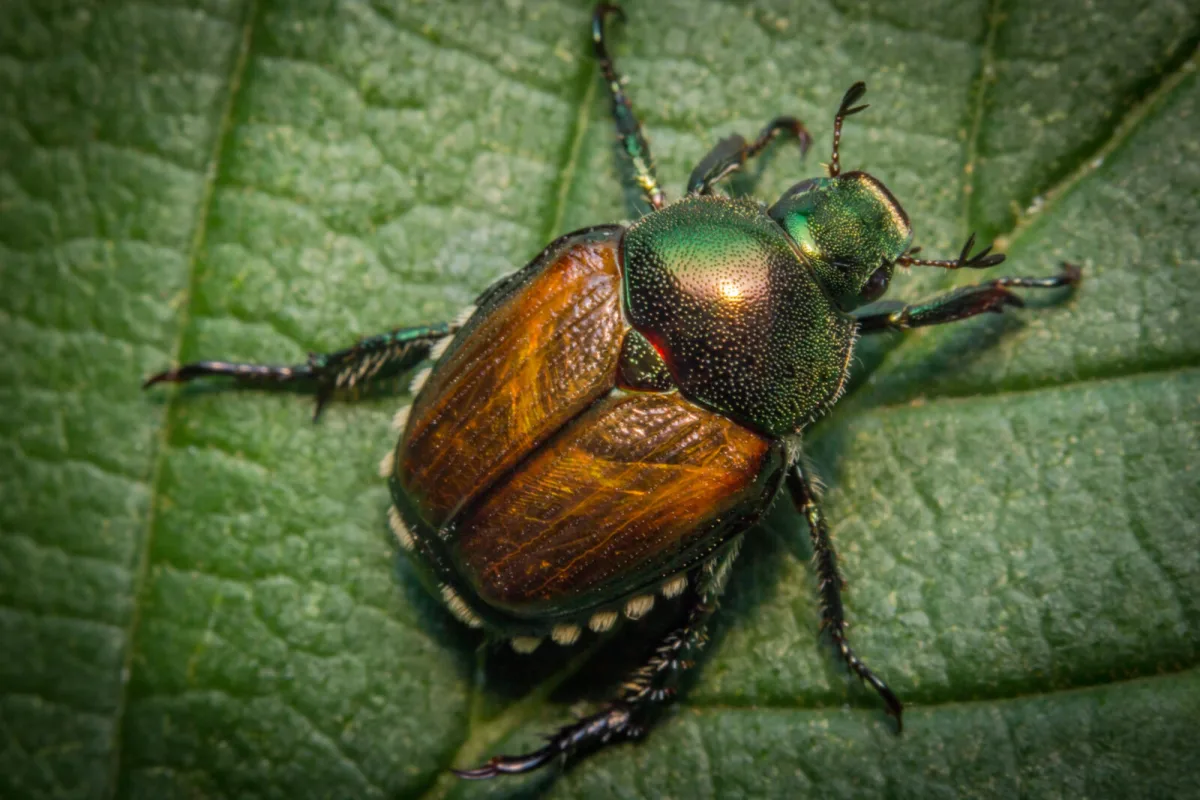
An invasive insect is gradually making its way into the Czech environment, and it can cause serious damage in gardens, orchards and ornamental plantings. We’re talking about the Japanese beetle (Popillia japonica), also known as the Japanese leaf beetle. Although it isn’t large, its appetite is exceptional and, in an outbreak, it can quickly weaken or completely ruin many plants.
For gardeners, it’s especially dangerous because it doesn’t stick to one host plant. It attacks a wide range of species, and that very greed makes it a problem that needs to be caught as early as possible. Once it settles in, it can spread very fast.
Where it comes from and why it’s so problematic
The Japanese beetle originates from northern Japan and parts of the Far East. In its native range it isn’t as destructive, because the local ecosystem includes natural enemies that keep its population in check. In other parts of the world, that balance is often missing, which is exactly why it becomes a major pest.
Historically, its presence outside its original area was recorded as early as the beginning of the 20th century in the USA, where it likely arrived via transport. From there it gradually spread to other countries. Today it is a problem in Europe as well, and sightings are no longer unheard of in the Czech Republic.
The biggest threat is its ability to attack hundreds of different plant species. It threatens not only crops, but also fruit trees, ornamental shrubs, flowers and some forest stands.
How to recognise the Japanese beetle
The adult beetle is quite distinctive. It has a metallic green body and copper-coloured wing cases. A typical identifying feature is the white spots along the sides of the body, creating a very characteristic look. Thanks to this colouring, it’s usually easier to tell apart from common native species.
Its larvae are no less damaging. They live in the soil and at first glance resemble the typical grubs of scarab beetles. They are whitish to creamy, later they can take on a light brown tint, with a darker rear end and a brown head. Their body is curved into a C shape and they have three pairs of legs. They can grow to several centimetres long.
What damage it causes in the garden
Adults chew on leaves, flowers, fruit and the tender parts of shoots. Plants then lose the ability to grow well, weaken and produce less. On heavily attacked specimens, extensive loss of leaf area can occur, which quickly shows in the overall condition of the whole plant.
Meanwhile, the larvae do their damage underground. They feed on roots, limiting the uptake of water and nutrients. Plants attacked this way may wilt, fall behind in growth and, in extreme cases, die. Both stages are therefore dangerous: the adult beetle above ground and the grub hidden in the soil.
It is precisely the combination of above-ground and below-ground damage that makes the Japanese beetle an exceptionally difficult pest.
Why it spreads so easily
A major issue is that, in our conditions, it doesn’t have enough natural enemies. Nothing holds it back significantly, so it can multiply with few limits. Add to that its high appetite and rapid colonisation of new sites.
An outbreak isn’t just a complication for individual gardeners. It can have a broader impact on the landscape, biodiversity and the economic results of growers. The damage may therefore be not only aesthetic, but also financial.
How to defend your plants and what to do if you find it
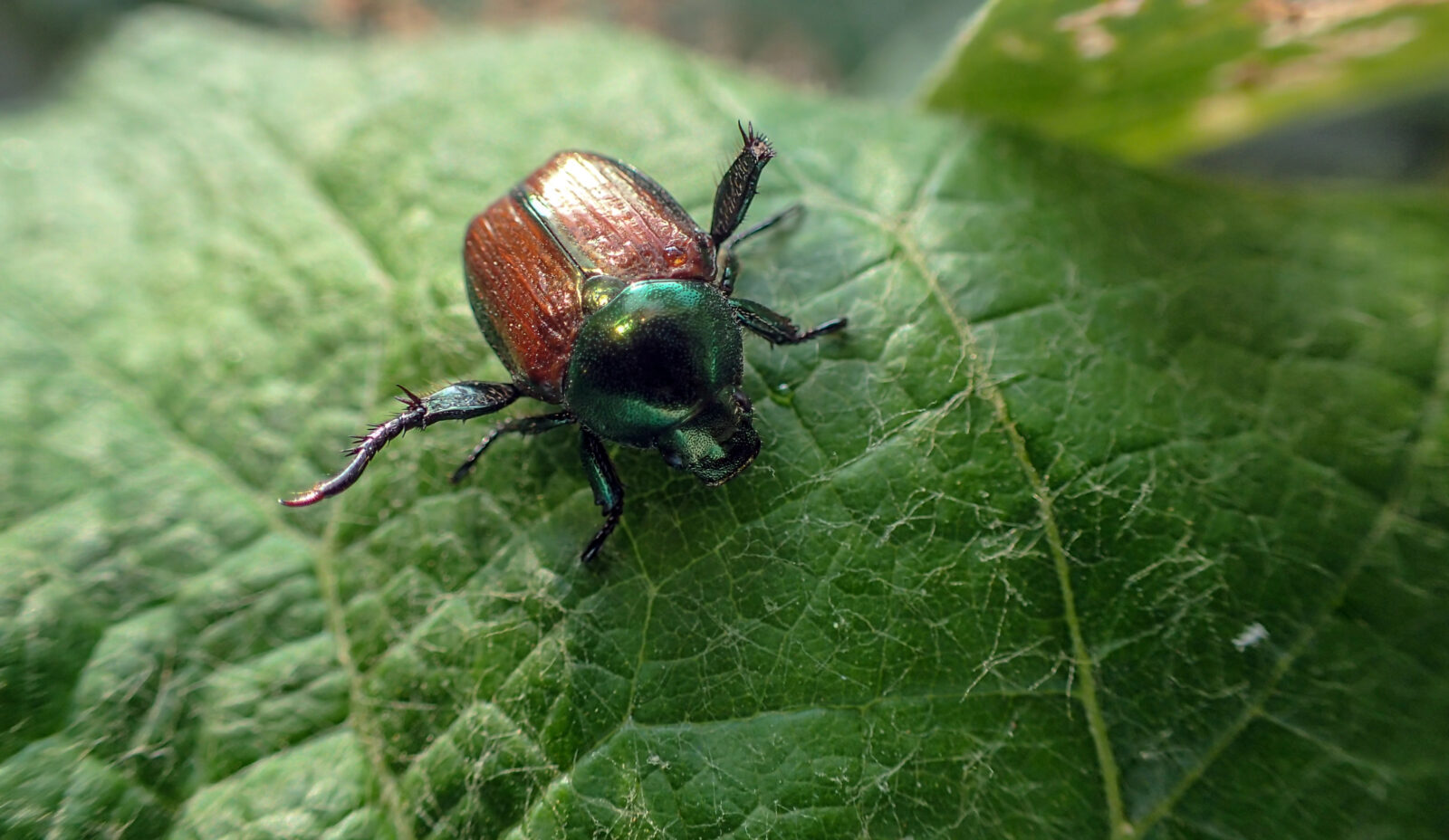
The foundation of defence is regular garden checks. Watch leaves, flowers and young shoots, and look for unusual feeding damage or the beetles themselves. If they appear, it’s best to remove them immediately by hand and destroy them so they can’t reproduce further.
Baited traps, which are widely available, can also help. In a heavy infestation, the use of suitable insecticides may be considered, but always with careful attention to correct use and protecting the surrounding environment. A quick response is important, because if you delay, the number of pests can rise rapidly.
If you suspect the presence of this invasive beetle, it’s sensible to inform the relevant authority as well. Early reporting can help limit further spread and protect not only one garden, but the wider area too.
Early action can save the whole garden
The Japanese beetle is a reminder that even a small insect can be a big disaster. It attacks many plant species, spreads quickly and, without timely intervention, can cause extensive damage. Vigilance, regular inspections and immediate action are therefore the best defence. The sooner its presence is detected, the better the chance of protecting the garden from serious harm.
Source: MZe, Agromanuál, iRozhlas, Pestrazahrada.cz

A lover of nature, gardens, and everything that moves, blooms, or grows. He literally grows everything, from herbs to rare species, and he enjoys caring for animals just as much. In his work, he connects modern technology with tried-and-tested grandmotherly methods and is happy when both paths lead to the same goal.
Related articles
Cutting Down Thuja in Your Own Garden May Not Pay Off Without a Permit You Could Face a Fine of Tens of Thousands
Many homeowners assume they can remove trees and mature thuja on their own land freely, but Czech rules can still require official consent. Getting it wrong can mean a substantial fine.
Pantry Moths Won’t Be Wiped Out by Vinegar or Bleach
Finding pantry moths in flour or cereal is unpleasant, but it’s usually fixable without drastic measures. The key is to locate the source, discard infested foods, and clean and store staples so the moths can’t return.
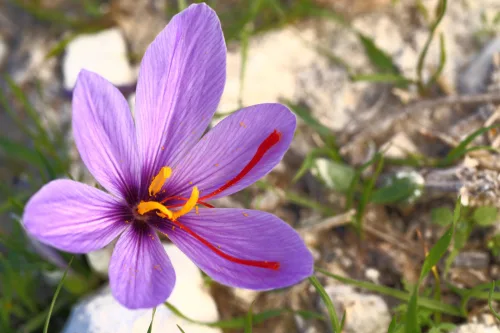
Saffron Costs More Than Gold and Will Grow in a Czech Garden, but You Need 200 Flowers for a Single Gram
Saffron is among the world’s most expensive spices because harvesting and processing it is painstakingly done by hand. Even at home, the real challenge is the sheer number of flowers needed to produce just a tiny amount of dried saffron.
Comments (0)
Be the first to comment.