
 English
  Polski
  Deutsch
  Nederlands
  Svenska
  Norsk
Norsk  Dansk
Dansk  Français
  Italiano
  Español
  Português
  Slovenčina
  Suomi
Suomi  Gaeilge
 How to Harvest and Store Apples Properly So They Keep as Long as Possible
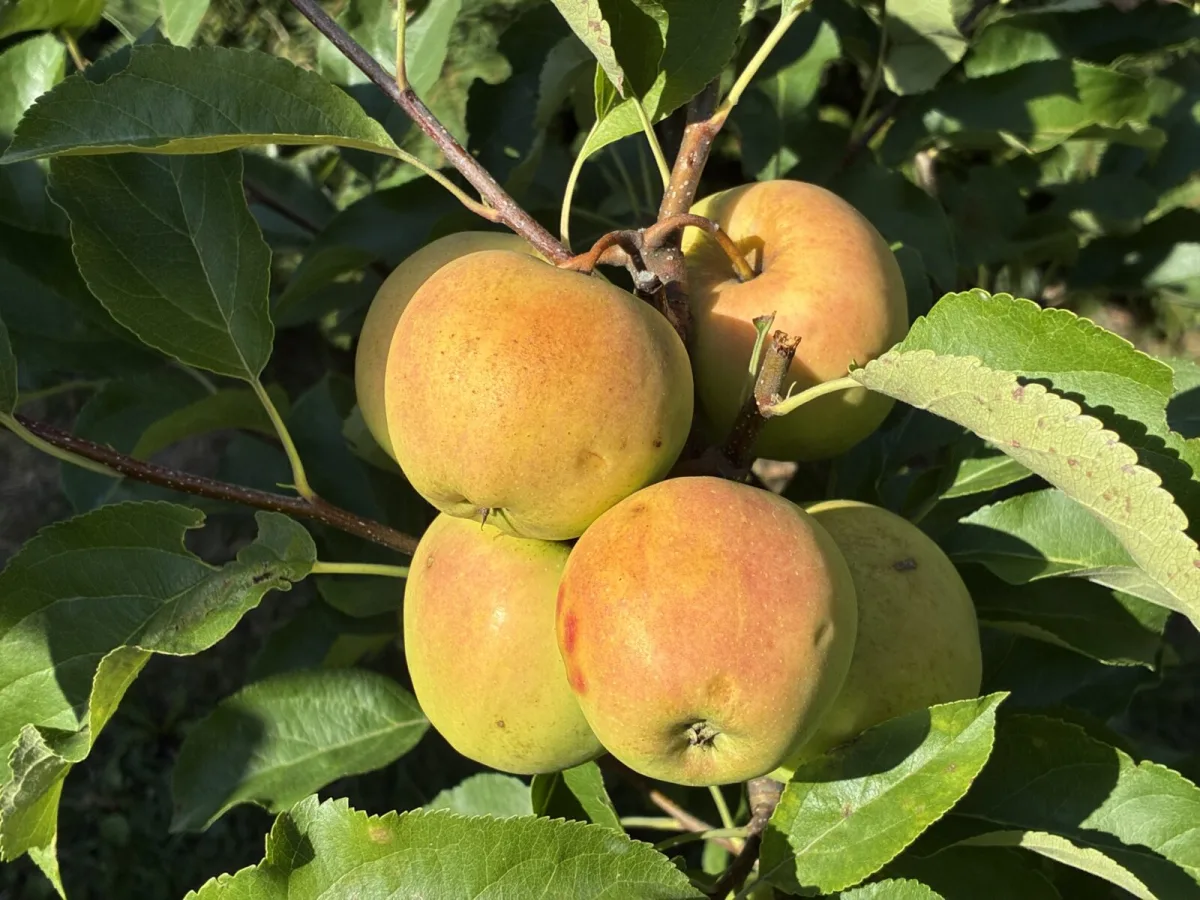
Harvest time for apple trees varies widely by variety and also by what you expect from the fruit. Some apples ripen very early and can be picked as soon as August, while others are ready only in September and October. There are even varieties that are harvested in autumn but reach their best flavour only after a longer period in storage, and are commonly eaten in December. That’s exactly why there isn’t one universal date for when it’s “right” to harvest.
If you want to enjoy homegrown apples for as much of the year as possible, it pays to grow a mix of early and late varieties. In your garden you can naturally extend the picking season over several months. Sometimes that means accepting that early apples often have a different taste and texture from late, good-keeping types, but the reward is your own fresh fruit for a long time.
The difference between picking maturity and eating maturity
With apples, two stages of ripeness are often mentioned. The first is picking maturity, meaning the point when it’s best to harvest the fruit so it stores well and can continue to develop in storage. The second is eating maturity, when the apple tastes best and is ready to eat. Summer apples are typically ready to eat straight off the tree and can be enjoyed immediately after picking. By contrast, many late varieties need a few quiet weeks after harvest for the aroma to develop, the acidity to mellow and the flesh to settle into the right texture.
A benefit of apple trees is that fruit on the same tree doesn’t all ripen at exactly the same time. That naturally spreads harvesting over a longer period, which is practical, but it can also make it harder to judge which apples are ready and which are better left a little longer.
How to tell when apples are ready to pick
When judging ripeness, it helps to note where the fruit is growing on the tree. Apples on the sunny, south-facing side usually ripen sooner than those deeper in the canopy or in shade. The simplest hands-on test is a gentle twist. Cup the apple in your palm, lift it slightly and carefully turn it. If it comes away easily with the stalk attached, it’s usually at the right stage for harvesting. If it clings firmly and you have to pull, it’s often better to give it more time.
For apples meant for eating fresh, desserts or baking, careful hand-picking matters, because even a small bruise can later reduce quality. For fruit higher up in the canopy, a fruit picker (apple picker) is useful for reaching safely while minimising damage.
It’s different if the apples are mainly for cider, juice or purée. In that case, appearance matters less and you can also use windfalls. Some people gently shake the tree to speed up harvesting, but keep in mind that fruit collected this way stores poorly and is best processed quickly.
What to watch out for at harvest
Before you start, clarify whether you’re growing an early, mid-season or late variety, and whether you want to harvest at eating maturity or picking maturity. A practical guide is how easily the fruit detaches with a gentle twist. For fresh eating and desserts, the safest approach is to select and hand-pick apples over several passes, while for juices and purées you can also gather less-than-perfect fruit and process part of the crop promptly.
How to store apples so they stay fresh for a long time
Successful storage starts at harvest. Apples must be protected from bruising, because damaged spots soften quickly and rot readily. For that reason, windfalls are generally unsuitable for long storage, even though they may still be fine for immediate processing. Likewise, don’t store apples with visible damage or worm holes. Such fruit spoils sooner, and the problem can spread to sound apples.
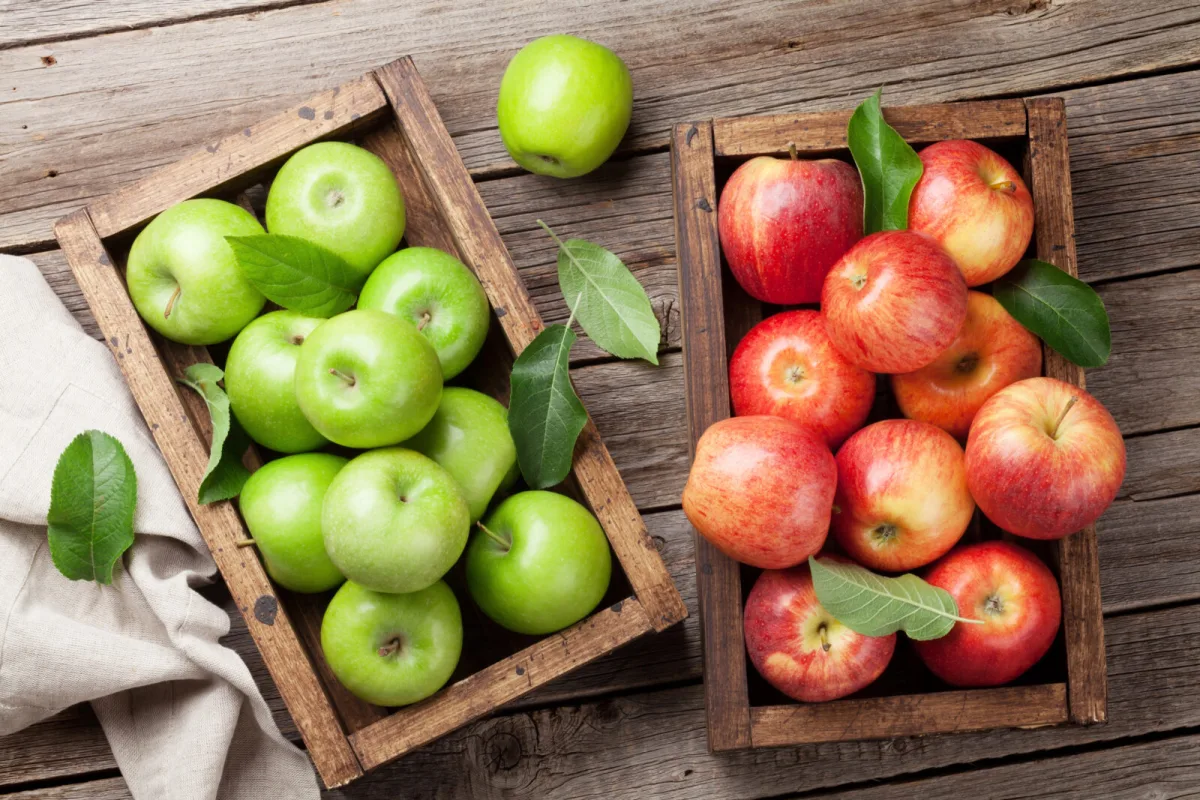
For storage, a wooden or sturdy crate lined with paper, such as newspaper, works well. Store apples in a single layer so they don’t press against one another. Stacking in multiple layers increases the risk of bruising, which may only show up later. It’s also important not to wash or polish apples before storing. Their skin has a natural waxy bloom that limits gas exchange and slows respiration, and therefore slows further ripening. If you remove that protection, apples usually won’t keep as long. It also helps to keep conditions such that the production and effects of ripening gases, typically ethylene, are slowed.
Place the crates in a cool, dark location where the temperature is steady. Apples need protection from frost, but also from frequent temperature swings, which encourage faster ageing. During storage, it’s worth checking the fruit regularly and removing immediately any apples that begin to soften, mould or rot.
Varieties and keeping quality
Not all apples are equally suitable for long storage. Some varieties are true keepers and, under good conditions, remain in excellent shape for a long time, while others are intended mainly for quick use soon after harvest. If long keeping is important to you, it’s worth considering right when choosing a tree. Varieties often mentioned as good keepers include Cox Orange, Jonagold and Red Boskoop. By contrast, early types such as Early Windsor or Gravenstein are usually less suited to long storage and are best eaten or processed sooner.
Quick rules for proper storage
The essentials are cool and dark conditions, protection from frost and temperature swings, and careful selection of only healthy fruit without bruises, worm tunnels or suspicious spots. Just as important is ongoing checking of stored apples, because removing one spoiling apple in time can save the rest of the crate.
Using apples that aren’t suitable for the cellar
Apples rejected from storage don’t have to go to waste. Smaller, bruised or wormy fruit can be put to excellent use for cider, juice, jelly, purée or other homemade staples. Even windfalls can be useful if they aren’t rotten and the damage is only superficial. Often the easiest approach is to process such fruit straight away, for example into a cake or a quick batch of applesauce.
A practical option can also be a local cider mill or community press, where you can drop off apples and receive ready-made cider in return, or borrow a press and process the crop yourself.
If you want to support a heavy harvest in future years too, it pays to care for the soil beneath the apple tree and provide balanced nutrition. Healthy soil and active soil life make it easier for the tree to take up nutrients, which usually shows in both vigour and the quality of the crop.
Source: Grow Veg, Plantura , Pestrazahrada.cz
Related articles
Not all green tomatoes will ripen. Experienced growers know which to pick and which to leave
As the tomato season winds down, it pays to judge green fruit by maturity and the forecast rather than the calendar. Size, skin colour and a quick seed check will tell you what can finish ripening indoors and what won’t.
Don’t Throw Away Green Tomatoes They’ll Ripen Indoors and the Rest Belongs in the Pan
As temperatures drop at the end of summer, tomatoes often struggle to finish ripening on the plant. With a few simple tweaks you can help them colour up, ripen the rest indoors, and use any stubborn green ones in delicious recipes.
Walnuts will keep until next year’s harvest, but one post-harvest mistake can ruin them with mould
Home-grown walnuts can stay delicious for months—often right up to the next harvest—if you dry and store them properly. Moisture trapped in the kernel is the quickest route to musty flavour, rancidity and mould.
Comments (0)
Be the first to comment.