
 English
 Polski
 Deutsch
 Nederlands
 Svenska
 Norsk
 Dansk
 Français
 Italiano
 Español
 Português
 Slovenčina
 Suomi
 Gaeilge
The Most Beautiful Autumn Climber Comes With a Catch: It Can Leave Permanent Marks on Your Facade
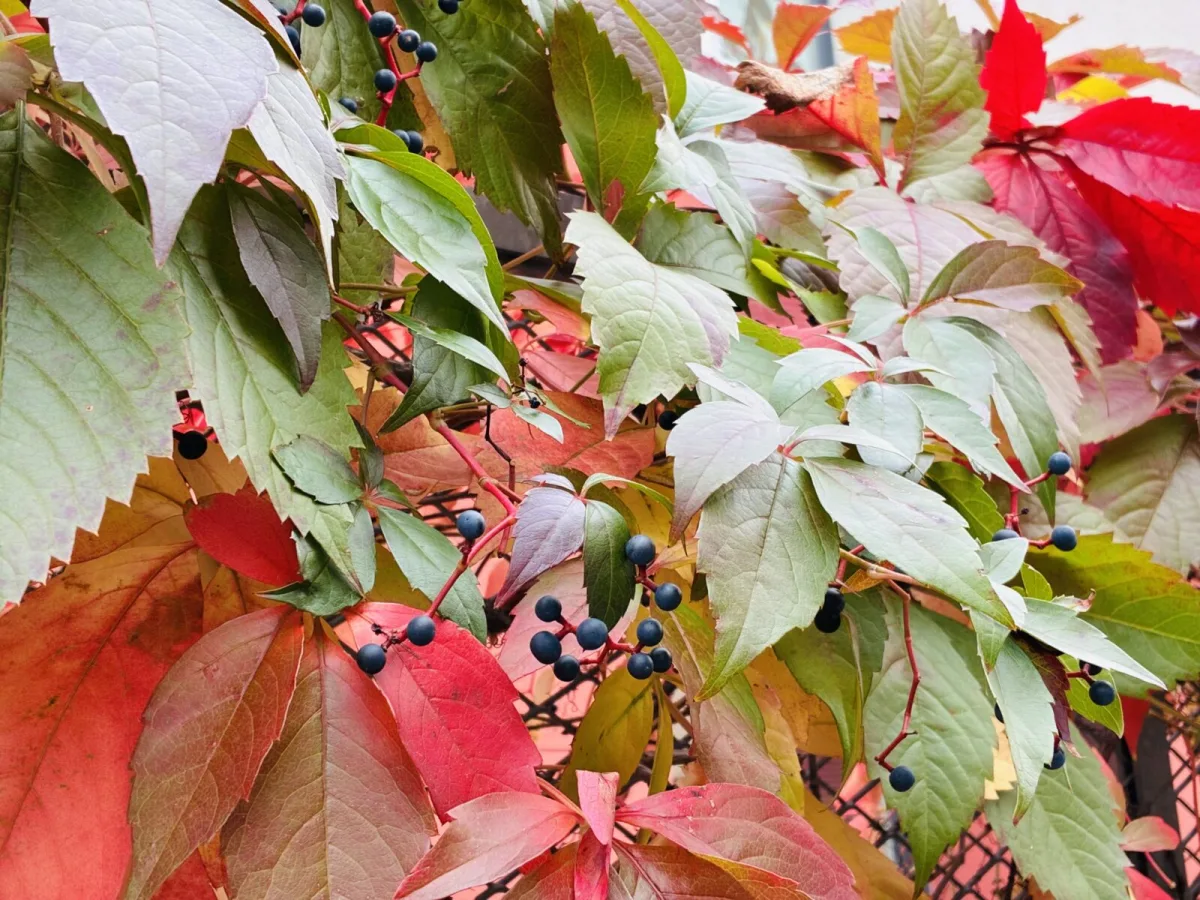
Virginia creeper (Parthenocissus quinquefolia), also known as five-leaf ivy, is a fast-growing climbing plant that can cover a fence, pergola and even larger areas of ground in a short time. In summer it stands out with deep green leaves made up of five leaflets, but in autumn it transforms into an exceptionally eye-catching woody vine in shades of red, burgundy and orange. Thanks to this striking fall colour, it ranks among the most attractive deciduous climbers for ornamental use.
The plant is native to the eastern and central United States and, in favourable conditions, reaches roughly 9 to 15 metres in length. You can grow it as a climbing vine or as a groundcover that helps protect slopes from erosion. Do bear in mind, however, that it’s a very vigorous, expansive species that needs regular monitoring.
What to watch out for when handling it
Although Virginia creeper is decorative, it isn’t entirely without risks. Its dark blue berries contain substances that are poisonous to humans, even though they don’t harm birds. If you’re growing it in a garden where children play, it’s sensible to keep an eye on the plant and, if necessary, remove the flowers or fruit before they ripen.
Another issue can be the plant sap. In more sensitive people it can cause skin irritation because it contains tiny crystals of irritating compounds. When pruning or transplanting, it’s best to wear gloves and wash your hands thoroughly afterwards.
What conditions Virginia creeper needs
Position and light
Virginia creeper tolerates full sun, partial shade and shade. The best autumn colour, however, is usually produced in a sunny spot. In warmer areas, light partial shade can suit it, especially during the hottest part of the day. It does well, for example, on walls with an east or west aspect.
Soil
A major advantage of this plant is its adaptability. It grows in clay, sandy and loamy soils as long as they drain well. It prefers soil that’s slightly acidic to neutral, but it can cope with a broader pH range. The key isn’t the soil type, but making sure it doesn’t sit in water long term.
Watering and feeding
In the first year after planting, it needs regular, more generous watering to establish well. Once settled, it’s fairly resilient and usually manages with occasional deep watering. During prolonged drought and high temperatures, though, it’s best to water more often.
To keep growth lush, feeding once a year in spring is enough. You can use a standard granular all-purpose fertiliser, scattered over the soil surface around the plant.
Hardiness and winter behaviour
Virginia creeper is highly resilient and tolerates even hard frosts without major problems. In winter it drops its leaves, which is natural, but in spring it quickly shoots again. The greater risk can be late spring frosts if the plant has already started new growth.
Varieties suitable for the garden
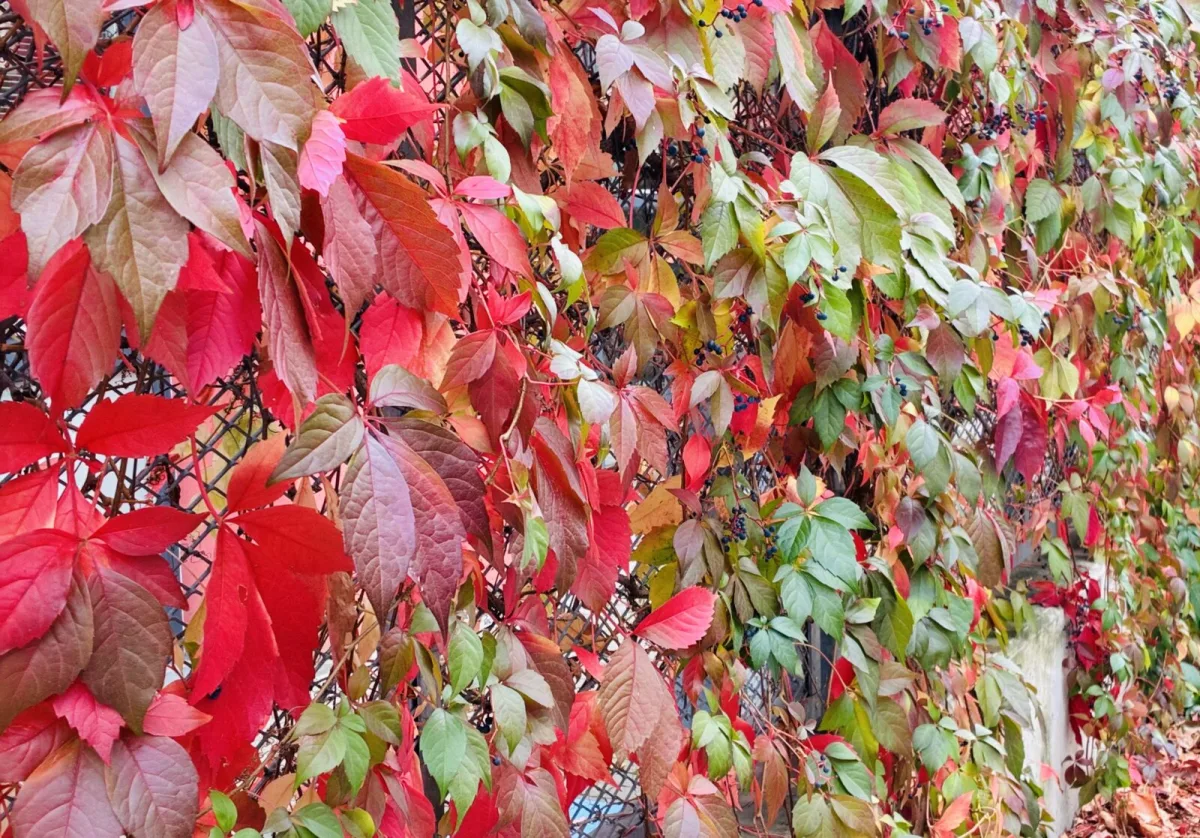
Besides the straight species, there are also selected cultivars. Some grow a little less aggressively, others have more variegated foliage or more intense autumn colour. Popular are forms with white or yellow-variegated leaves that turn pink and red in autumn. Another cultivar is valued for a bright red fall display. If you want a plant with less tendency to overrun its space, it’s worth choosing among the cultivars.
When and how to prune Virginia creeper
Without pruning, this woody climber can easily turn into a thicket that’s hard to control. The best time to prune is winter or early spring. Then you can shorten shoots, guide their direction and prevent them from growing into gutters, roofs or nearby trees.
If some shoots tear away from their support, they usually won’t reattach. It’s best to remove such sections, as well as any dead or diseased branches. If needed, you can cut the plant back very hard, almost to ground level. Its vigorous growth usually allows it to recover quickly.
Where to grow it and where not to
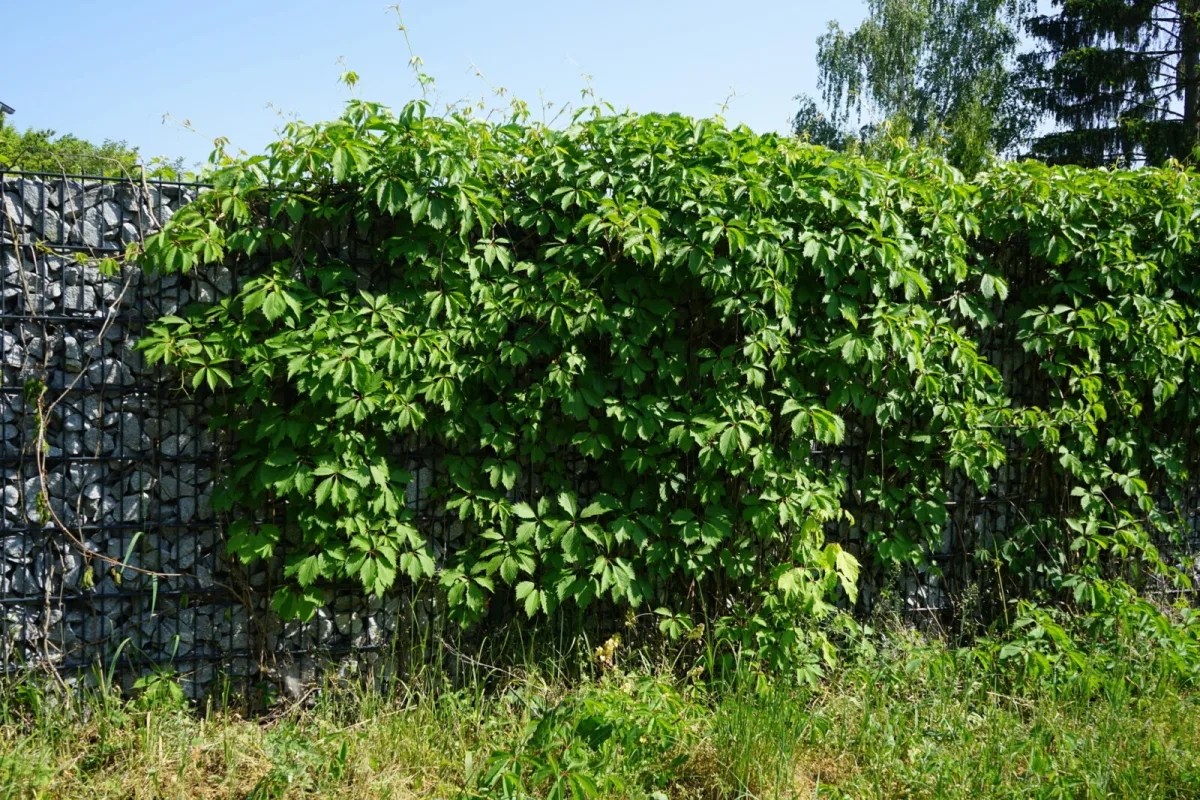
Virginia creeper is often planted against walls and fences because it clings well to surfaces using its tendrils. That can also be a drawback. After removal, marks from the adhesive pads often remain on render or cladding, and older growth can be difficult to pull down. If you want the look of a greened wall without the risk of damaging the facade, it’s better to use a sturdy support set a short distance away from the wall.
It’s not a good idea to let the plant climb valuable specimen trees. Its dense foliage would reduce light in their crowns. Much better is to train it over pergolas, garden arches and fences, or let it spread over a slope as protective ground cover.
Propagation from cuttings and from seed
Propagation from cuttings
The simplest way to get new plants is by taking cuttings. Choose a healthy shoot at least 30 cm long with several nodes. Strip the leaves from the lower part, optionally treat the end with rooting hormone, and insert the cutting a few centimetres deep into a good-quality potting mix. Keep the compost slightly moist. Within a few weeks it will usually produce enough roots to plant out.
Growing from seed
It’s also possible to propagate from seed, although it tends to be less practical than taking cuttings. Seeds are sown directly into prepared soil amended with peat or sand. Cover them only lightly, and during germination a regular deep watering once a week is important. Young plants grow quickly, so they often need thinning early, leaving only the strongest seedlings.
Pests, diseases and other issues
Virginia creeper can attract caterpillars and other insects, such as flea beetles, leafhoppers, scale insects, or some types of bees that chew parts of the leaves. Control depends on the specific pest and includes hand removal, the use of horticultural oils, insecticidal soaps, or other gentler products.
As for diseases, the main problems are fungal infections such as leaf spots, powdery mildew, anthracnose or canker damage to the tissues. The basis of control is early identification, removal of affected parts and the use of products intended for fungal diseases.
The most common problem is overly vigorous growth
Most trouble isn’t caused by pests or weather, but by the plant’s own growth energy. Virginia creeper can spread very quickly and, without regular checks, it can easily take over more space than you intended. If an older plant needs to be removed, it’s often more complicated. Spraying the foliage on tall specimens is frequently not enough. More effective is cutting the main stem at ground level and treating the fresh cut with a suitable product, or thoroughly digging out the roots and underground runners.
Virginia creeper is a beautiful, hardy and versatile climber, but it needs a firm hand. Give it the right place and regular pruning, and you’ll be rewarded with a striking plant and an exceptional autumn display.
Source: The Spruce, Gardening Know How , Pestrazahrada.cz
Related articles
Drought tolerant fruit trees for Czech gardens that handle heat and winter frosts
Warmer summers and longer dry spells are changing what can be grown in Czech gardens. With the right variety and a sunny, sheltered spot, olives, pomegranates and figs can cope with heat, drought and even winter cold.
Thuja hedges are on the way out gardeners are choosing a shrub that shrugs off frost and drought and never looks dull
Thuja may be a long-standing classic, but today’s hedges are increasingly built from more varied shrubs that look better through the seasons. One standout choice is ninebark, prized for its toughness, colour and easy care.
Autumn planted grapevines bud earlier the most common mistake happens before they even go in the ground
Planting grapevines in November can give them a head start in spring, as roots can still establish in warm soil. Success depends mainly on proper planting depth and reliable winter protection.
Comments (0)
Be the first to comment.