
 English
  Polski
  Deutsch
  Nederlands
  Svenska
  Norsk
Norsk  Dansk
Dansk  Français
  Italiano
  Español
  Português
  Slovenčina
  Suomi
Suomi  Gaeilge
 A Pile of Leaves Becomes Soil Gold Gardeners Swear by the Mesh and Bag Trick

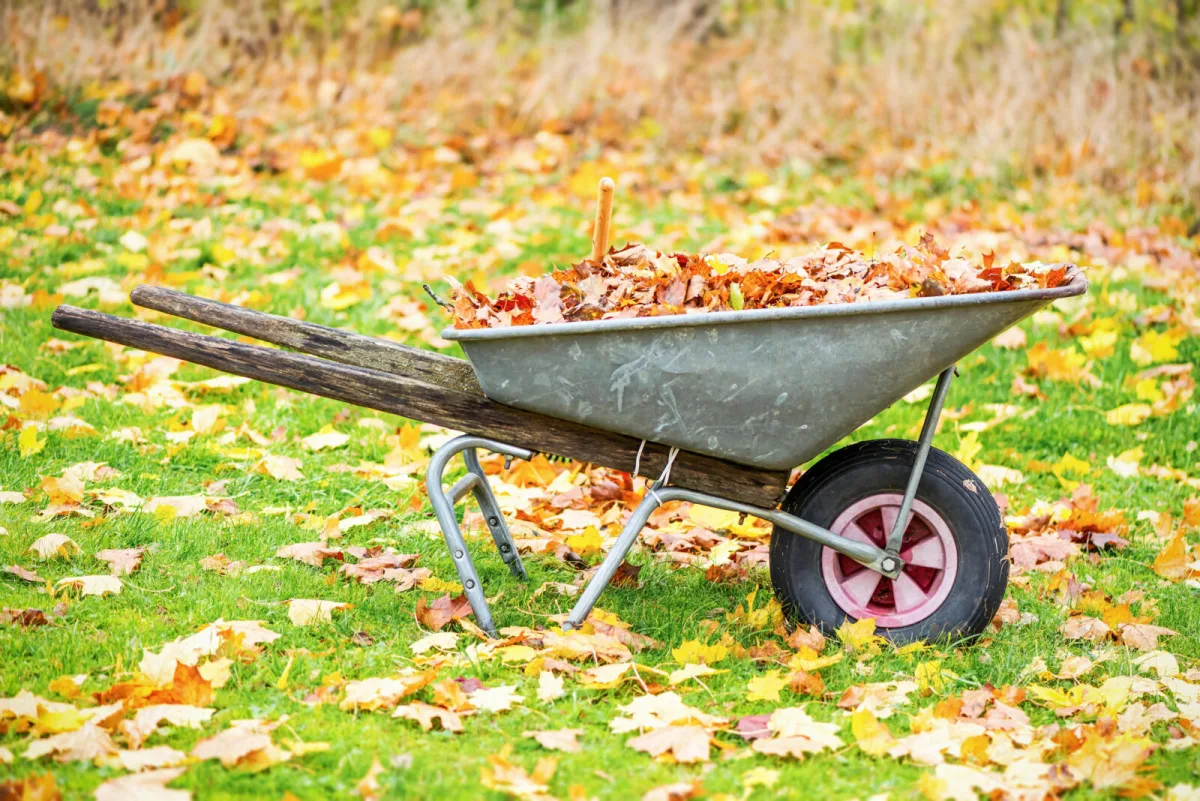
Autumn leaves are often seen as waste that needs to be cleared away as quickly as possible. Yet they can be an excellent, completely free material for the garden. When left to break down properly, they become leaf mould: a dark, crumbly organic matter ideal for mulching and improving soil. It’s a slow, natural process driven mainly by fungi and a consistently moist environment. That’s where the magic lies—without complicated interventions you can make a valuable material that benefits borders, beds, and soil life.
You only need a small space and simple kit
Making leaf mould doesn’t require a large garden or any elaborate setup. A quiet, shaded, slightly damp corner is ideal, where leaves can rot down undisturbed. A simple leaf-mould bin can be made from four posts, wire mesh, and a few fixing clips. This creates a space in which the leaves will gradually soften and break apart.
If you don’t have a suitable spot, sturdy refuse sacks with a few holes punched in them work well too. You can store them in a garage, shed, or another sheltered place. The leaves will decompose slowly but reliably. After a year or more, the contents can be used as spring mulch. Another advantage is that, handled carefully, the same bags can be reused.
Leaf mould behaves differently from regular compost
Unlike traditional compost, leaf mould doesn’t need high temperatures or a balanced mix of different materials. Composting relies on combining ‘greens’ and ‘browns’—nitrogen-rich and carbon-rich ingredients. With leaf mould, the recipe is much simpler. It’s just leaves and moisture. That’s why it’s best to gather leaves when they’re already slightly damp, or to lightly moisten them as you stack them.
Decomposition also happens in cooler conditions and without the need for regular turning. That makes it a convenient way to process garden material for anyone who doesn’t want to actively manage a compost heap. The whole process is slower, but also very low-effort.
Shredding leaves will speed the whole process up dramatically
A big help is to shred the leaves before you store them. A practical method is to run over them with a lawn mower on the lawn, combining tidy-up and processing in a single step. Smaller pieces break down faster and more evenly, so usable, fine leaf mould can form in as little as six to twelve months. Whole leaves usually turn into a coarser material and take longer.
Some leaves have tougher or waxier surfaces, so they resist rotting for longer. This includes horse chestnut, sycamore, evergreen shrubs and trees, and other leathery leaves. Shredding helps overcome that natural resistance. Shredded leaves also don’t compact as much in the heap, air moves through better, and fungal activity is more effective. This matters especially with wet whole leaves, which tend to form dense, heavy layers.
Which leaves are best, and which simply need time
Almost any leaves will eventually break down, but some give better results than others. Oak, birch, beech, maples, hazel, and hornbeam leaves work particularly well. They produce good-quality leaf mould fairly reliably and without much trouble.
Leaves that tend to be slower include walnut, plane, sycamore, and sweet chestnut, as well as many evergreens. That doesn’t mean they’re unusable. They simply need more time, and ideally shredding too. With enough patience, they will also become useful material that—rather than being thrown away—enriches the soil and supports its health.
What to do with needles
Conifer needles will break down too, but it usually takes two to three years. Trimmed clippings from conifer hedges are better added to a compost heap than used on their own for making leaf mould. Pine needles can be stored separately, because the resulting material is more acidic. That’s useful, for example, for blueberries and other acid-loving plants.
How to use leaf mould in the garden
Finished leaf mould is dark in colour, with a fine, crumbly texture, and it has many uses. It improves soil aeration and helps soil hold onto moisture. That makes it valuable for heavy clay soils as well as light, sandy beds that dry out quickly. Spread around plants as a mulch, it reduces water loss and encourages healthy root growth.
Thanks to its high humus content, it helps improve soil structure and creates good conditions for beneficial microorganisms. The soil then becomes more resilient to weather swings and long-term stress. Although leaf mould doesn’t contain high levels of nutrients, in many situations that’s actually an advantage.
When it’s ready to use
After a year, partially broken-down material can already be suitable as a mulch. If it matures for two years or longer, it turns into a finer, soil-like material. In that form, it’s ideal as a soil conditioner or as part of seed and potting mixes.
Because it isn’t too rich in nutrients, it’s also suitable for young plants and seedlings. Mixed into growing media, it improves moisture retention without risking root damage from excess nutrients. That makes it a highly versatile material with wide use throughout the season.
From ordinary fallen leaves, you can create a useful material at very little cost—one that helps the soil, the plants, and the whole garden.
A simple way to get something for free
Making leaf mould is proof that gardening doesn’t have to be complicated or expensive. All you need to do is gather leaves, store them in suitable conditions, and give them time. The result is a natural mulch and soil improver that might otherwise end up as waste. Even in a small space, this approach can turn autumn clear-up into a long-term benefit for the whole garden.
Source: Rhs, Plantura.Garden, Pestrazahrada.cz
Related articles

Gardeners strengthen roses before winter with a simple kitchen mix, no chemicals needed
To help roses overwinter well and bloom more strongly next season, focus on gentle autumn feeding, moisture management and sensible protection. A simple homemade mix from everyday kitchen scraps can support root health without resorting to harsh chemicals.

Stop the spring slug battle before it starts
Tackle slugs where it really counts: their eggs. A careful autumn check of damp hiding places can significantly reduce next spring’s damage to seedlings and ornamentals.
How to Tell When to Stop Mowing in Autumn and Get Your Lawn Ready for Winter
There’s no fixed date for the last mow of the season—the key is whether your grass is still actively growing. Watch temperatures and growth rate to time the final cut and set your lawn up for a stronger spring recovery.
Comments (0)
Be the first to comment.