
 English
 Polski
 Deutsch
 Nederlands
 Svenska
 Norsk
 Dansk
 Français
 Italiano
 Español
 Português
 Slovenčina
 Suomi
 Gaeilge
Is a Woodpecker Destroying Your Insulated Façade Here’s a Surprisingly Simple Fix
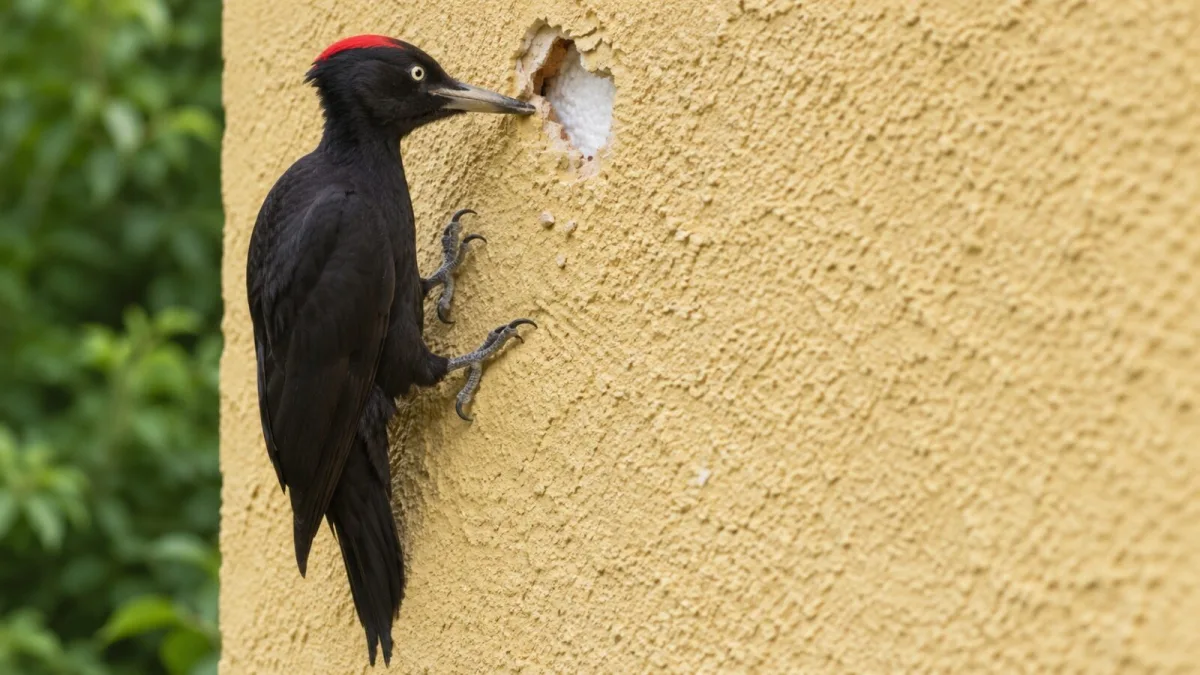
Woodpeckers are admired birds in the wild, but homeowners see them very differently when they discover one hole after another in an insulated façade. What feels natural in the forest can quickly turn into an unpleasant and costly problem on a house. Loud drumming, damaged EPS polystyrene insulation and repeated repairs can become a headache in no time.
An interesting experience was shared by a family in the foothills of the Jeseníky Mountains. Their home had repeatedly been targeted by a woodpecker pecking holes into the façade. This year, however, brought an unexpected change. Instead of causing more damage, the bird began taking an interest in a new feeding spot in the garden, where suet balls and peanuts were hung. This simple change may have diverted its attention away from the house.
Simple suet balls as unexpected help
The homeowner said that this year the woodpecker tried the food put out for other birds instead of going for the façade. That raised hope that supplementary feeding could work as a low-cost, low-effort way to protect the exterior. There is nothing complicated or expensive about it. Suet, sunflower seeds or peanuts can be placed on a tree or in a feeder at a sufficient distance from the house, giving the bird a more tempting alternative.
A similar approach can be effective especially when a woodpecker is pecking at the façade in search of food. If it finds an easier-to-access energy source, it may have less reason to return to the house so often. Another advantage is that this is a humane method that does not harm the bird while helping to limit damage.
Sometimes it works, sometimes it doesn’t
Even so, it’s best not to treat this experience as a guaranteed solution for every situation. Some people point out that woodpeckers change their territories without any obvious reason and sometimes simply move on. That means a house may stop being targeted regardless of a feeder. In other cases, a bird may visit suet balls regularly yet still continue damaging a neighbouring façade.
Expert opinion is cautious on this point. Alternative food can redirect a bird’s attention, but it is not 100% protection. It depends on why the woodpecker is interested in the façade in the first place. If it is simply searching for food, the chances of success are usually higher. But if it is choosing a nesting site or using drumming to mark territory, the situation is more complicated.
Why insulated homes are so attractive to woodpeckers
Insulated façades, especially those with EPS polystyrene, can feel to woodpeckers similar to hollow or softer trees. When pecking, birds register the sound and the resistance of the material and use that to judge whether there might be food inside, a suitable cavity or room to enlarge an opening.
Sometimes a woodpecker tests whether it can find insects beneath the surface. Other times it may be looking for shelter or a nesting site. Another reason can be territorial behaviour. Loud drumming on the façade serves as a signal to other birds that the area is already occupied. That is why the problem often repeats in the same spot and is not easy to stop with a single measure.
Protection options worth considering
Besides feeding, people also use common deterrents. Some homeowners try hanging bottles, objects that make noise in the wind, or decoy birds of prey. With territorial birds, some recommend decoys of another woodpecker, suggesting that the site already has an “owner”. Effectiveness varies, and it is often only temporary.
If a woodpecker focuses on one specific spot, mechanical protection may be worth considering. A grille, netting or other cover over the attacked area can help. It doesn’t guarantee the bird won’t choose a section of façade nearby, but it does make access harder at the most vulnerable point. In some cases, ultrasonic deterrents are also used; they vary in tone and are meant to discourage birds without much ongoing attention.
Once a woodpecker settles in, the solution is usually more complicated
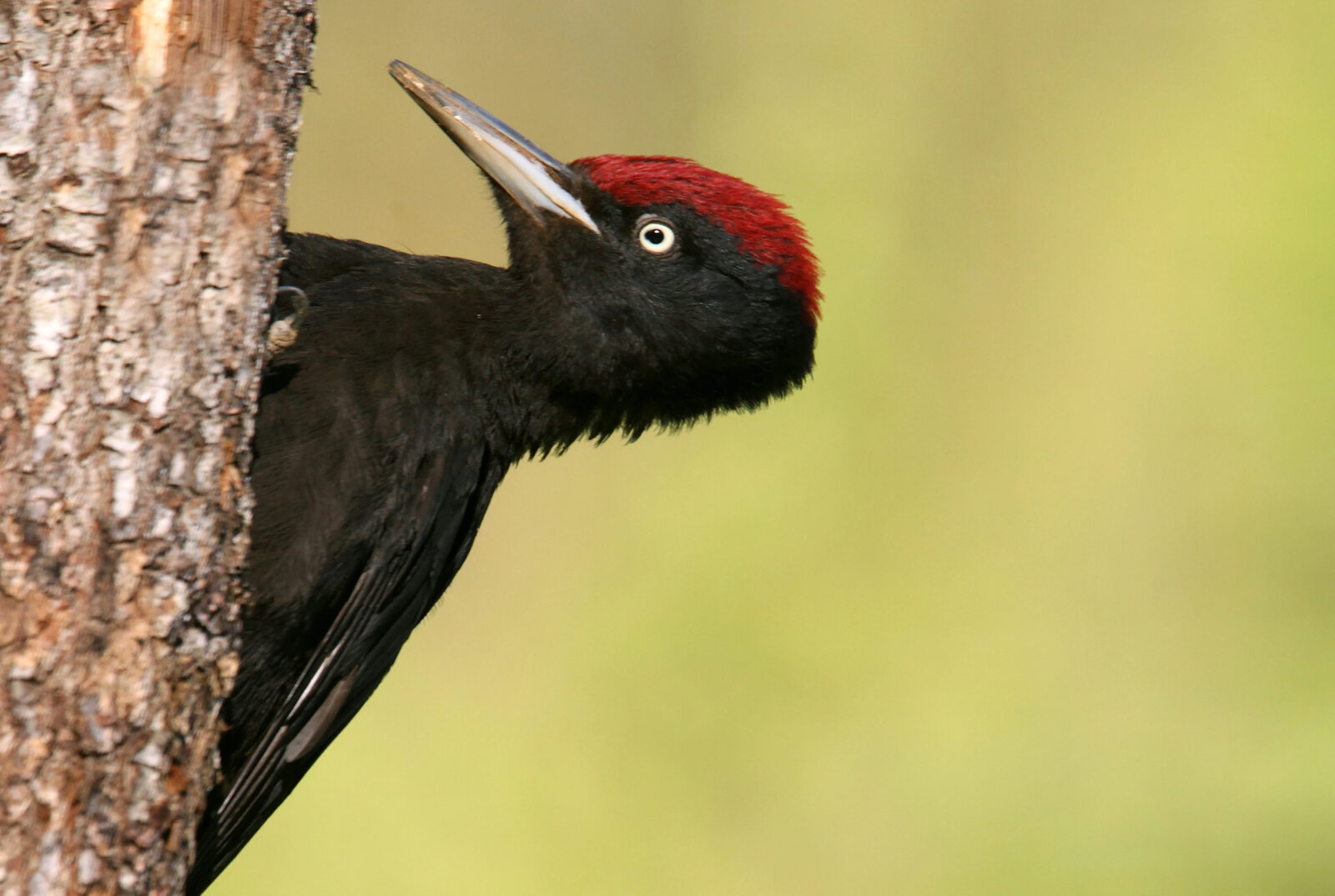
Once a bird takes a liking to a place, or even starts nesting there, defence becomes much harder. Woodpeckers learn quickly and hold their territory persistently. At that point, neither feeding nor deterrents may be enough. If intervention is necessary, it must be carried out legally and with regard to the protection status of these birds.
The woodpecker is a protected species, and killing it, disturbing a nest or destroying chicks is unacceptable and may be punishable.
If a woodpecker is nesting in the façade, you need to wait until it has fledged the young. Only then, in justified cases, may an authorised specialist intervene. Capture and relocation may only be carried out by someone with the necessary permit. Even that may not mean a permanent end to the trouble, because another bird may appear in the area.
Prevention is cheaper than repairing a façade
From a practical perspective, early prevention works best. Regular feeding during periods when birds are searching for food can be a simple step that helps protect the house before a woodpecker develops a habit of returning to a specific façade. It also makes sense to watch for the first signs of interest, such as repeated tapping or minor damage, and respond as early as possible.
After repairing holes, it’s wise to add further protective measures so a new bird isn’t attracted to the same spot. Some people choose mechanical protection, others try deterrents or territorial decoys. Vegetation close to the house may also help, for example climbing plants, if suitable for the building.
A simple idea can help, but it’s wise to have a backup plan
The Jeseníky experience shows that a surprisingly straightforward solution can sometimes work. Suet balls and other bird food may lure a woodpecker away from the façade and save homeowners both worry and money. At the same time, it’s sensible to bear in mind that every case is different and there is no universal recipe.
The best approach is a combination of humane measures, quick response and prevention. Offering birds a better food source is cheap and easy, so it makes sense to try it first. If that isn’t enough, other protective methods come into play. The key is to act early and always with respect for the fact that a woodpecker is not a “pest” in the true sense of the word, but a protected wild bird drawn to the house by conditions created by people.
Source: Pestrá zahrada, Dům a zahrada, TN, iReceptář, Pestrazahrada.cz

A lover of nature, gardens, and everything that moves, blooms, or grows. He literally grows everything, from herbs to rare species, and he enjoys caring for animals just as much. In his work, he connects modern technology with tried-and-tested grandmotherly methods and is happy when both paths lead to the same goal.
Related articles
Do You Prune Roses in Autumn You Might Be Doing More Harm Than You Think
Autumn rose care is less about hard pruning and more about helping plants slow down naturally and protecting the crown from winter swings. Stop deadheading and feeding, tidy up only what’s necessary, and focus on mulching the base well.
One mistake when winterising hydrangeas will cost you flowers
How your hydrangeas come through winter directly affects next season’s flowering. Don’t mulch too early, protect buds and roots from cold and wind, and avoid rushing pruning.
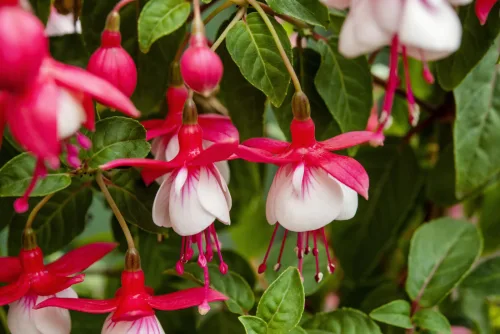
Don’t Throw Away Fuchsias After the Season With Proper Overwintering They’ll Bloom for Years
Most fuchsias don’t need to be replaced every year. With timely preparation, the right pruning, and frost-free winter storage, they’ll come back strong and flower beautifully for years.
Comments (0)
Be the first to comment.