
 English
 Polski
 Deutsch
 Nederlands
 Svenska
 Norsk
 Dansk
 Français
 Italiano
 Español
 Português
 Slovenčina
 Suomi
 Gaeilge
Plant Garlic Now Cool Soil Protects It From Rot Depth and One Small Mistake Matter
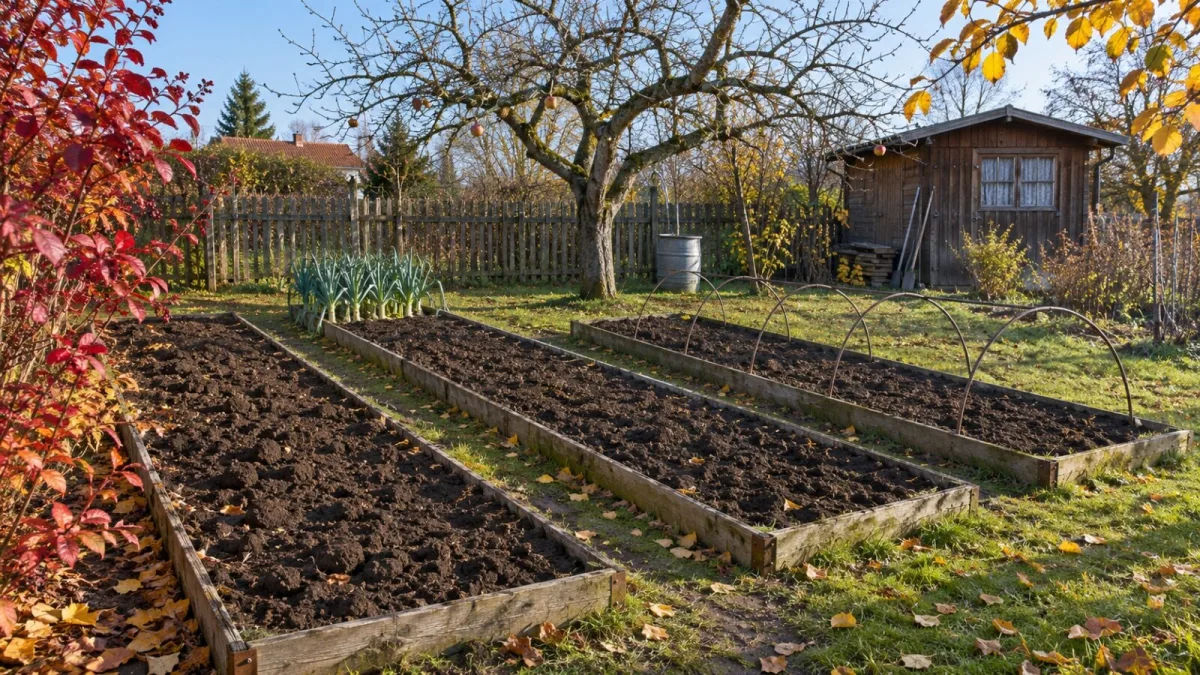
November in the garden isn’t the main sowing season, but it’s certainly not a month for doing nothing. Right now is a great time to prepare beds so they’re ready to get growing quickly in spring. Autumn soil work also benefits structure, moisture retention, and the life within it. At the same time, it’s the ideal window for planting garlic, which prefers cooler soil over an overly warm autumn.
Dig or don’t dig depending on soil condition
Autumn digging has both pros and cons. It can loosen compacted ground and improve air access to roots. On the other hand, it often brings dormant weed seeds up to the surface, where they can germinate. Digging on its own also won’t eliminate perennial weeds, because their roots still need to be removed by hand.
Turning the soil can disrupt its natural layering, its ability to move water, and the complex relationships between soil organisms. The top layer is home to oxygen-dependent microbes, while deeper down are organisms that don’t cope well with light and air. When soil is flipped, some of that beneficial life is lost. If your soil is healthy and crumbly, it’s usually kinder to simply loosen it and cover it with a layer of organic material.
How to improve soil without unnecessary turning
A good bed often only needs to be worked through with a garden fork: lift and gently aerate the soil without inverting it. Then add a layer of compost at least a few centimetres thick, and top it with leaves as a protective cover. This surface helps retain moisture, protects the ground from deep freezing, and supports earthworms and other helpful allies.
You can also add grass clippings or green plant material with no seed heads. Soil organisms will gradually pull it down and convert it into nutrients. If the bed is plagued by perennial weeds, a layer of cardboard or clean, unprinted paper covered with compost or well-rotted manure can help. In spring, you can plant straight into a spot prepared this way.
Heavy clay soil needs adjustment
In clay and other heavy soils, digging is often necessary—otherwise vegetables struggle. It makes the most sense, though, when you also incorporate materials that lighten the soil. Suitable options include sand, fine gravel, wood chips, or charcoal. Digging alone won’t solve the issue long-term, whereas regular additions of compost and loosening ingredients can gradually turn heavy ground into a much friendlier growing medium.
In very challenging conditions, raised beds can also help. They suit garlic especially well because its roots don’t go very deep. A gentler method can work too: move the top layer aside without flipping it, loosen and lighten the lower layer, then return the topsoil. It’s more work, but far more respectful to soil life.
November is the best time to plant garlic
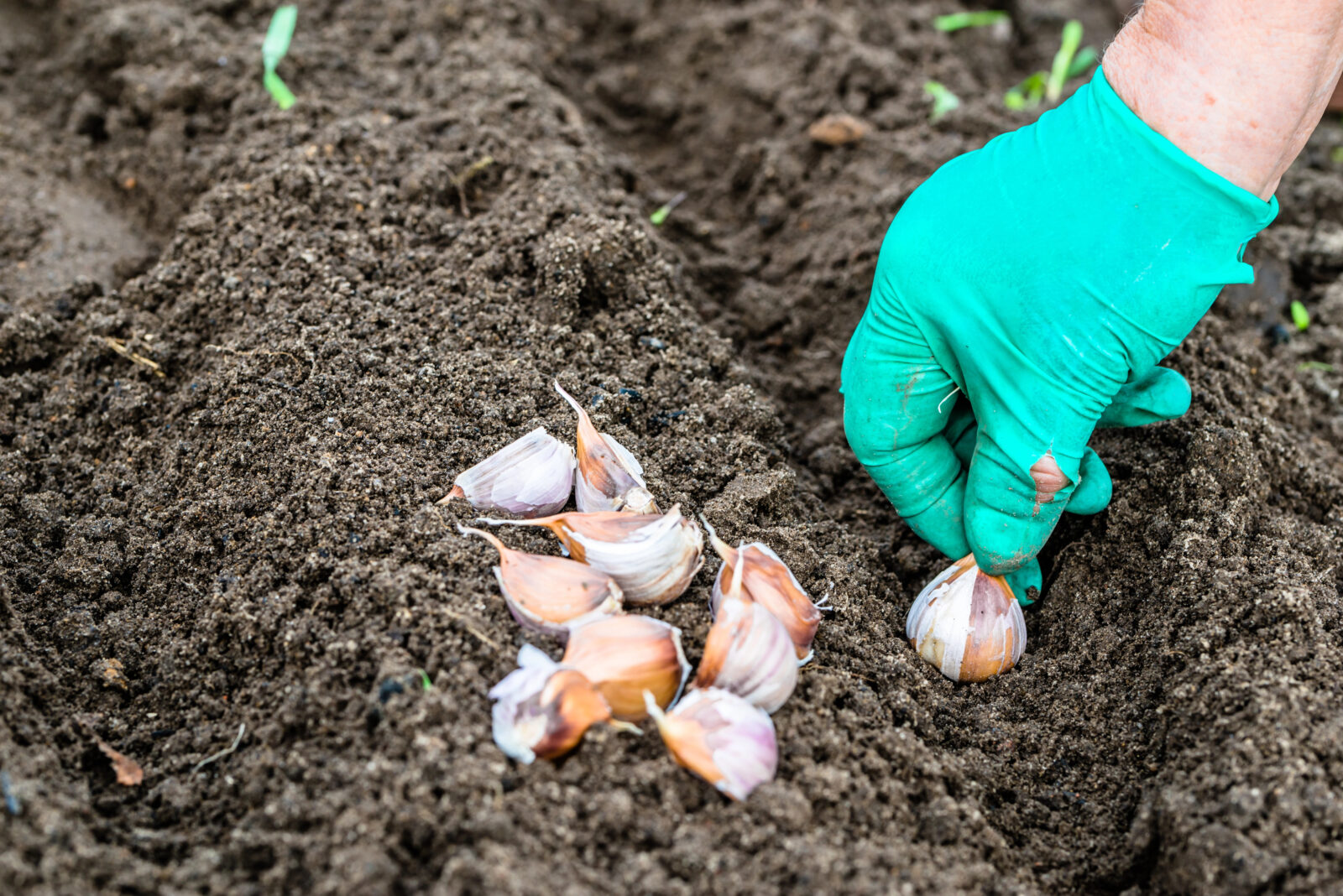
In November, the ground is usually cool enough that, after planting, cloves are less at risk from Fusarium basal rot. Garlic likes a sunny, warmer position and humus-rich soil that still drains well. Compost benefits it, while waterlogged, compacted soil does it harm.
Crop rotation matters. Garlic shouldn’t follow onions or leeks. It does well after potatoes, brassicas, or a green manure crop. It can also grow well among strawberries, because they don’t compete and have similar needs.
The correct way to plant cloves
It’s best to split the bulb into individual cloves only right before planting. Plant with the basal plate down, with the tip about 5 cm below the surface—slightly deeper in colder areas. Leave at least 10 cm between cloves, and around 20 cm between rows.
Instead of a dibber, it’s better to use your hand, a small trowel, or a hoe. A dibber often compacts the sides of the hole and leaves an air pocket beneath the clove. But garlic produces roots from the base, and those roots need firm contact with the soil. If you want to reduce disease risk, use certified planting stock, or suitable clove treatments and supportive products.
Hardneck and softneck garlic have different qualities
A healthy clove will grow reliably, but varieties differ in flavour, clove count, and storage life. Hardneck types tend to have a stronger taste and larger cloves, and they’re often more cold-tolerant. Softneck types, by contrast, usually store better. With hardnecks, it’s recommended to snap off the flower stalks (scapes) during growth so the plant puts more energy into the bulb.
For winter, garlic and the soil both benefit from a light mulch of leaves or straw. It protects the bed from severe freeze-thaw swings and helps maintain better conditions for roots and soil life. A well-prepared November bed then rewards you in spring with a fast start to the new season.
Source: Nature & Garden, Cornell Small Farms, Pestrazahrada.cz

A lover of nature, gardens, and everything that moves, blooms, or grows. He literally grows everything, from herbs to rare species, and he enjoys caring for animals just as much. In his work, he connects modern technology with tried-and-tested grandmotherly methods and is happy when both paths lead to the same goal.
Related articles
When to Plant a Cherry Tree in Your Garden for Strong Roots and Heavy Crops
Cherry trees establish best when planted during dormancy, either in autumn after leaf fall or in early spring before bud break. The right timing depends as much on soil and weather conditions as it does on the type and quality of the young tree.

When to Plant a Butterfly Bush for Heavy Bloom and Better Winter Survival
Butterfly bush (Buddleja davidii) rewards you with months of flowers when it’s planted at the right time. Spring planting is usually the safest choice, giving the shrub time to root well before winter.

In Mid-November You Can Still Safely Plant Trees, Fruit Bushes and Roses
Mid-November can still be a good time for planting, provided the soil isn’t frozen and can be worked. With sensible aftercare and frost protection, woody plants, fruit trees and bushes, and even roses can settle in well before winter.
Comments (0)
Be the first to comment.