
 English
 Polski
 Deutsch
 Nederlands
 Svenska
 Norsk
 Dansk
 Français
 Italiano
 Español
 Português
 Slovenčina
 Suomi
 Gaeilge
How to Get a Christmas Cactus to Bloom Right on Time for the Holidays
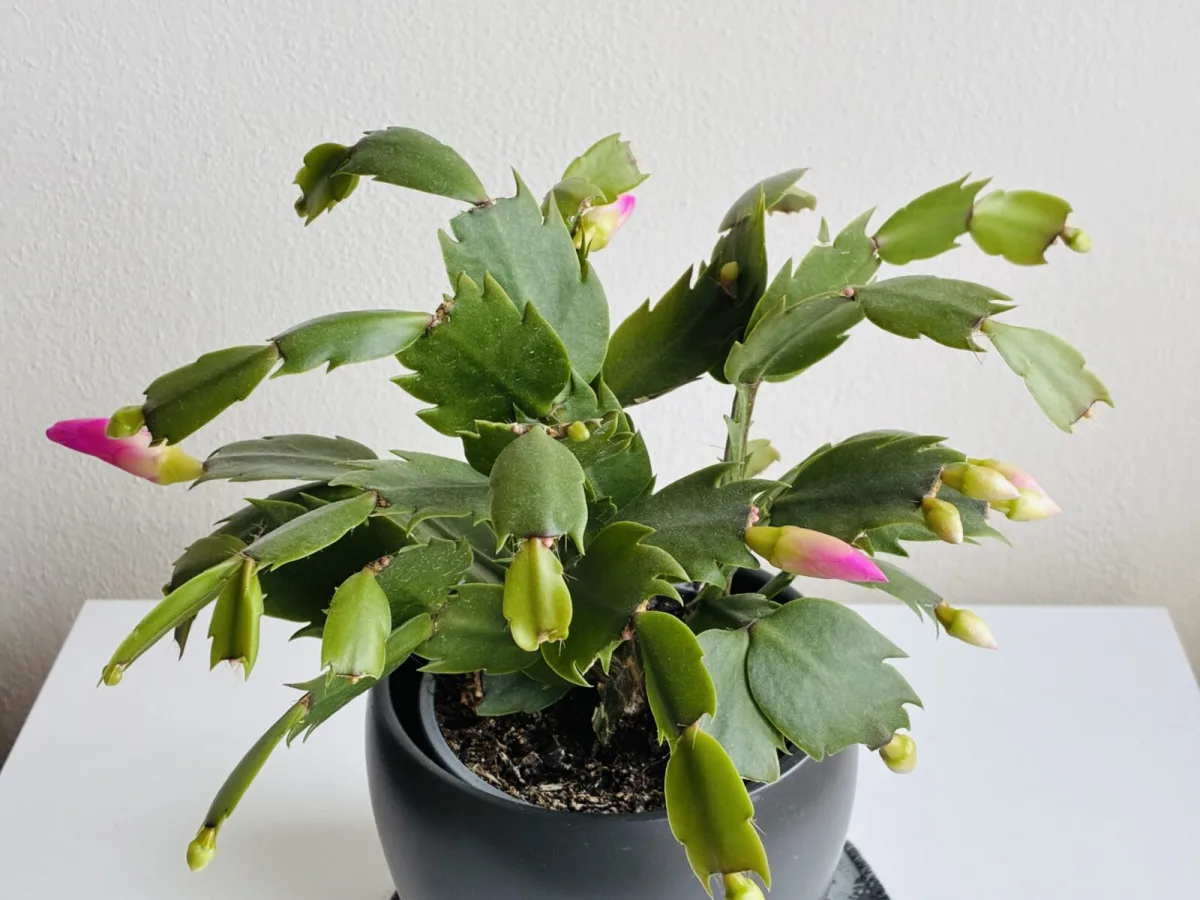
The Christmas cactus is one of the most popular winter houseplants, because during the holiday season it can brighten a home with showy pink or richly coloured blooms. But if you want flowers exactly when you’re hoping for them, you can’t leave it to chance. The plant needs the right conditions several weeks beforehand. The good news is it isn’t complicated, as long as you know what a Christmas cactus actually requires.
What makes a Christmas cactus different
The Christmas cactus, botanically Schlumbergera, is a true cactus, but it’s very different from desert types. It doesn’t come from an arid climate, but from tropical regions, so it doesn’t like being left dry for long. It needs more regular moisture and does best in conditions that mimic humid air and rainfall rather than extreme drought. That’s why you can’t care for it like a typical desert cactus in a gritty, sandy mix with only occasional watering.
The plant is usually around 30 cm tall and wide, although its exact size varies with age and growing conditions. For most of the year it decorates interiors with its flat, segmented stems, and in winter it adds the striking flowers that make it so popular.
Why timing matters
Unlike some houseplants that set buds readily, a Christmas cactus builds up the energy for flowering gradually. It blooms dramatically, but usually only for a limited time, so it’s important to encourage bud formation at the right moment. When you grow the plant indoors, creating suitable conditions is up to you.
Confusion is also common because of its similarity to the so-called Thanksgiving cactus. At first glance they look very much alike. A true Christmas cactus tends to have more rounded segment edges, while its close relative has sharper, more pointed “teeth”. They also differ in flowering time. The Christmas cactus typically blooms later, more in mid-winter.
How to encourage bud formation
Preparing for flowering starts well ahead of time. The plant needs a cool period that mimics the seasonal change in its natural habitat. That drop in temperature is one of the main signals that it’s time to set buds. Experts recommend giving a Christmas cactus about four weeks in a cooler room in autumn, ideally at around 13–16 °C.
At the same time, longer darkness is crucial. The plant should have about 13 hours of uninterrupted darkness each day. The combination of cooler conditions and reduced light greatly increases the chance it will bloom at the right time. If you don’t want to create these conditions artificially, you can use the natural progression of autumn instead. If your Christmas cactus spends summer outdoors, you can leave it out until night temperatures drop to around the lower limit of about 10 °C. Then bring it indoors.
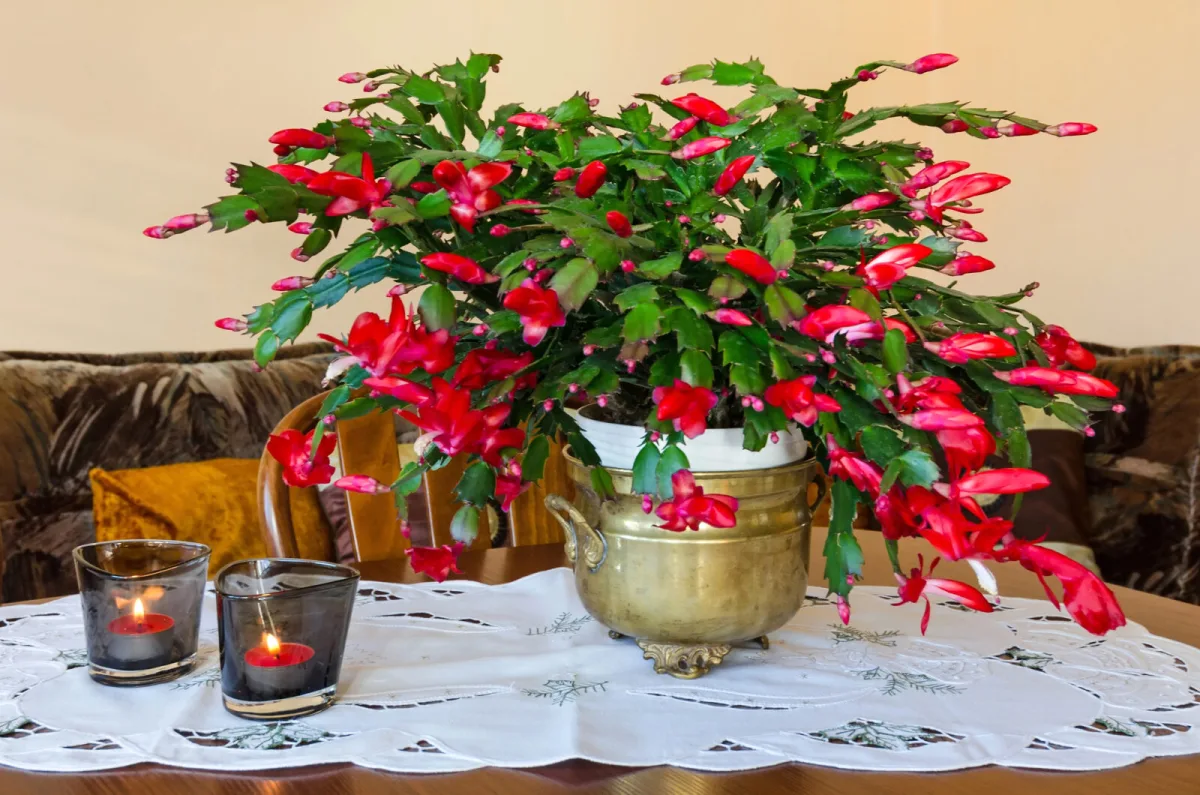
Light through the year matters more than you’d think
A very important factor is adequate light all year round. Without it, buds may not form at all, even if you provide cool temperatures and darkness in autumn. A Christmas cactus doesn’t need harsh, all-day sun, but it does appreciate a bright spot with filtered light. It does well, for example, near a bright window where it gets a steady supply of daylight without scorching midday rays.
If the plant sits long-term in a dark corner, it may produce plenty of green growth, but you may never see flowers. Lack of light is one of the most commonly overlooked reasons a Christmas cactus fails to bloom.
Watering and even flowering
Another key to success is correct watering. The potting mix should stay slightly moist, but never waterlogged. A Christmas cactus doesn’t tolerate complete dryness as well as desert cacti, yet it also doesn’t want to sit in water. It performs best with consistent care and without major ups and downs.
For an attractive, balanced plant, it also helps to rotate the pot regularly. If one side always faces the light, that side often blooms more heavily while the opposite side looks sparse. Turning the pot slightly when you water helps the flowers appear more evenly all around the plant.
How to make the flowers last longer
Once the buds open, it would be a shame to lose the blooms quickly. For longer-lasting flowers, place the plant in a cooler room and definitely don’t set it next to a radiator or a warm air vent. Higher temperatures can shorten the flowering period and make the blooms fade faster.
While it’s in bloom, never let the plant dry out. Buds and flowers are especially sensitive to a lack of water. If the mix dries, buds may fail to open and already opened flowers can wilt and drop. At this stage, regular, but still moderate watering is absolutely essential.
Care after flowering
After flowering ends, the Christmas cactus moves into a resting period and rebuilds its reserves. At this time it’s best to reduce watering slightly and keep the plant a bit drier than during active growth. It’s a good idea to remove spent blooms as you go, so the plant stays tidy and doesn’t waste energy unnecessarily.
In spring, you can also do a light trim. Gentle pruning encourages branching and the formation of new segments. The more of these flat stems the plant produces, the more potential sites it will have for buds next season. Consistent, careful year-round care is therefore the best way to enjoy reliable winter flowering again and again.
What to remember for next holiday season
Success comes down to a few simple rules: provide plenty of light through the year, give it cool temperatures and longer darkness in autumn, keep the mix slightly moist, and during flowering protect the plant from heat and from drying out. Put these conditions together and your Christmas cactus has an excellent chance of blooming right when you want it as a festive feature in your home.
Source: Martha Stewart, RHS , Pestrazahrada.cz

A nurse by profession, she is passionate about healthy living, nature, and everything that benefits both people and the world around them. In her free time, she enjoys gardening, cooking, sewing, and caring for her family. In her articles, she loves combining professional expertise with practical experience from the garden and everyday life.
Related articles
Eucalyptus can be quite demanding, the right pruning and care are the key to healthy growth
Eucalyptus can make a striking specimen, screen or neatly maintained shrub, but it only thrives when pruned at the right time and in the right way. Learn when to cut, how to shape it, and how to care for it afterwards so it stays strong and long-lived.

Three simple steps to help rhododendrons and azaleas survive winter and flower at their best in spring
A few well-timed autumn jobs make a real difference to rhododendrons and azaleas. Protect the shallow roots, tidy the plant lightly, and keep watering so shrubs head into winter strong and ready to bloom.
Is your oleander dropping leaves in winter It might not be a problem the mistake is what you do next
Oleander can shed some leaves in winter as part of its natural rest period. With cool, bright overwintering and careful watering, it will rebound in spring and flower well in summer.
Comments (0)
Be the first to comment.