
 English
  Polski
  Deutsch
  Nederlands
  Svenska
  Norsk
Norsk  Dansk
Dansk  Français
  Italiano
  Español
  Português
  Slovenčina
  Suomi
Suomi  Gaeilge
 Mulberry in the Garden a Traditional Tree With Surprisingly Great Fruit
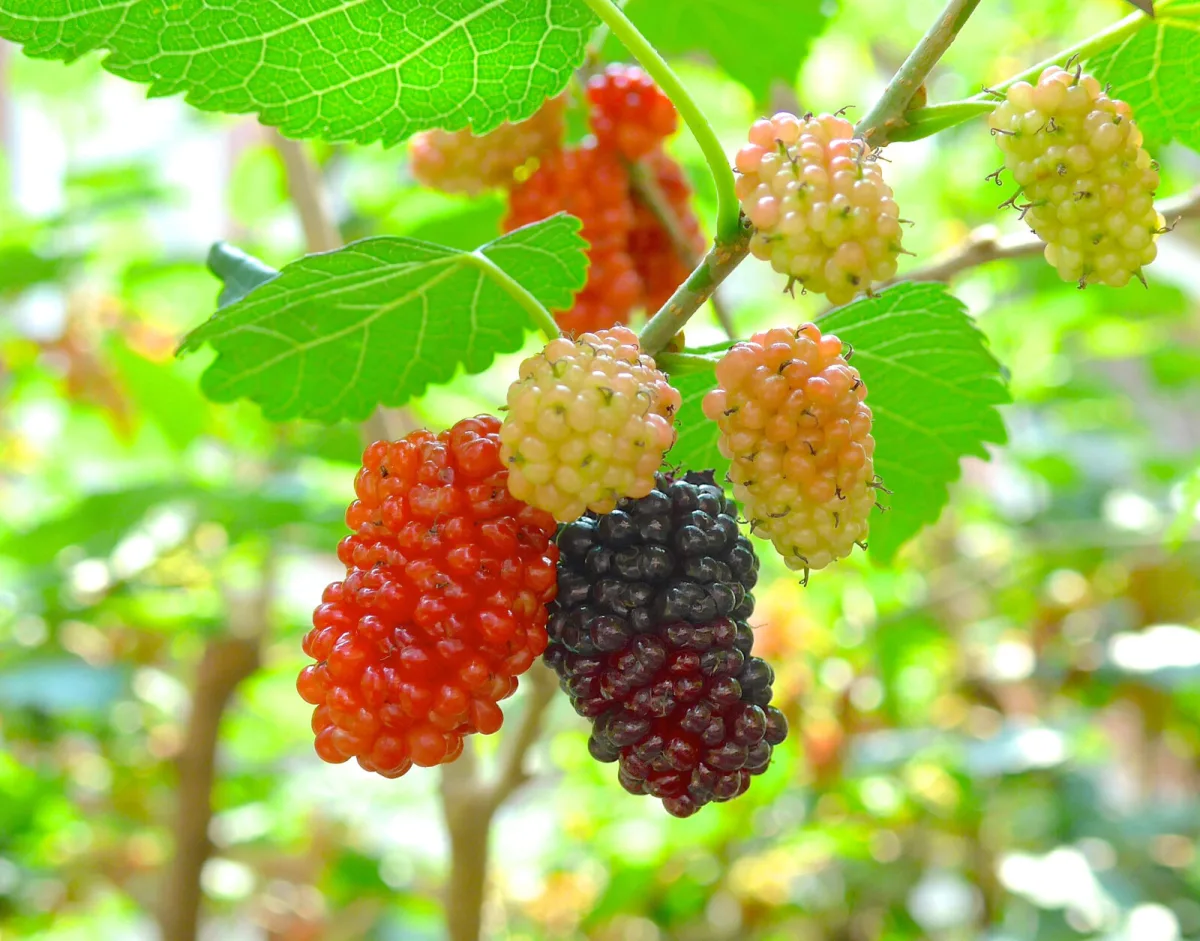
For many years, mulberries here were associated mainly with growing leaves used as feed for silkworm caterpillars. Less well known is that their branches also carry very tasty fruit. Although many growers today barely recognise the genus Morus, it’s nothing new. Mulberries were grown in our region as far back as the Middle Ages, and in warmer areas there were even orchards where people went for a reliable annual crop.
Another advantage of mulberries is that the fruit doesn’t ripen all at once. It typically appears from July through to the end of August, depending on species and cultivar, and the tree crops in stages. That means you can enjoy fresh fruit over a longer period, often for several weeks.
Where mulberries do best
They thrive most in warm sites, typically wine-growing areas, and in soil that drains well. That doesn’t mean they can’t be grown elsewhere. Mulberries usually tolerate frosts down to around minus thirty degrees, so with a suitable position they can grow in cooler locations too.
In higher, colder areas it’s best to choose the sunniest spot you can and a lighter, sandier soil. Heavy, permanently wet ground is unsuitable, as roots suffer and the tree grows poorly.
Tree size and choosing a suitable form for a smaller garden
Mulberries are vigorous woody plants and often grow to more than ten metres. If space is limited, there’s a solution in the form of grafted weeping types, which are decorative and don’t take up as much room. With black mulberry, the cultivar Pendula is popular and typically stays at around three metres.
The most common species and how their fruit differs
Black mulberry
Black mulberry originates from the region of present-day Iran and is also widespread in southern Europe. Its fruit is deep purple to almost black, noticeably sweet with a pleasant tang. The tree can reach 10 to 15 metres, though smaller grafted forms can also be grown. The fruit is suitable for drying, jams and syrups, and it stains strongly to the touch, so it can also serve as a natural dye. Under some conditions it may begin ripening as early as around mid-June.
White mulberry
This species often grows even more vigorously than black mulberry. The fruit is pale, sometimes with a faint pink blush, and typically ripens from July to August. Fresh white mulberry can taste milder and more subtle, but dried fruit has become highly sought after in recent years. It’s often used as a naturally sweet snack or stirred into breakfast mixes.
Red mulberry
Red mulberry is less common among growers, even though it’s an undemanding species. Compared with its relatives it tends to be smaller, about 4 to 7 metres, and can resemble a small tree or a tall shrub. The fruit is dark purple with a reddish tint and usually ripens in July.
Why give mulberries a chance for health reasons too
Mulberry fruit looks a bit like blackberries, yet it’s still used less than it deserves. It contains water, sugars and proteins, plus vitamins C and K as well as B vitamins, especially B1, B2 and B3. Among the minerals you’ll find, for example, iron, calcium, magnesium, potassium and phosphorus.
Mulberries are also valued for their antioxidant content, including the polyphenol resveratrol. Regular consumption is mentioned in connection with supporting good sleep and healthy digestion. They’re also appreciated because they may help maintain normal blood sugar levels.
When and how to harvest mulberries without unnecessary losses
It’s worth planning the harvest in advance. Young trees usually start fruiting after about five years. When planning a planting, it pays to consider not only the tree’s eventual size but also how practical it will be to pick. Mulberries ripen gradually and the fruit often drops on its own, so it needs to be gathered regularly.
With larger trees, it works well to plant the mulberry into a lawn and spread a sheet or tarp under the canopy. Fruit can fall onto it naturally, or you can gently shake the branches. You can also pick directly from the lawn, but it’s best to mow first so the fruit doesn’t get lost. Fallen fruit also attracts wasps quickly, so it’s better to collect as often as possible and not leave the crop lying around.
Mulberries in the kitchen, from fresh snacking to preserving
Black and red mulberries tend to have the boldest flavour, sweet and blackberry-like. The simplest way is to eat them fresh, but they’re excellent for processing too. They’re ideal for jams, syrups and baking, and you can also make ice cream or sorbet from the fruit.
Dried mulberries are handy stirred into yoghurt, muesli or porridge. With white mulberry in particular, drying, ideally in the sun, often brings out a fuller aroma and stronger flavour, turning a mild fruit into a very pleasant naturally sweet treat.
Source: Záhrada, The Spruce, Gardening Know How, Pestrazahrada.cz

A lover of nature, gardens, and everything that moves, blooms, or grows. He literally grows everything, from herbs to rare species, and he enjoys caring for animals just as much. In his work, he connects modern technology with tried-and-tested grandmotherly methods and is happy when both paths lead to the same goal.
Related articles
Next year you can harvest better if you don’t sow carrots where they won’t thrive
Carrot root fly can ruin carrots, parsley and celery from the inside out, often without obvious warning until harvest. Better site choice, rotation, later sowing and simple physical barriers can dramatically cut damage next season.
How to Propagate Roses from Cuttings at Home and Fill Your Garden with Blooms Almost for Free
Want more roses without paying for new plants? With a few healthy cuttings and a simple plastic-bottle mini greenhouse, you can root new bushes at home in just a few weeks.
Heathers can cope where other plants won’t, but one soil detail decides everything
Heathers and heaths are tough evergreen shrubs that can flower across the seasons when you choose the right types. Success hinges on matching the plant to your soil pH and ensuring free drainage.
Comments (0)
Be the first to comment.