
 English
  Polski
  Deutsch
  Nederlands
  Svenska
  Norsk
Norsk  Dansk
Dansk  Français
  Italiano
  Español
  Português
  Slovenčina
  Suomi
Suomi  Gaeilge
 In September, One Simple Step Decides Whether Your Christmas Cactus Blooms in Winter
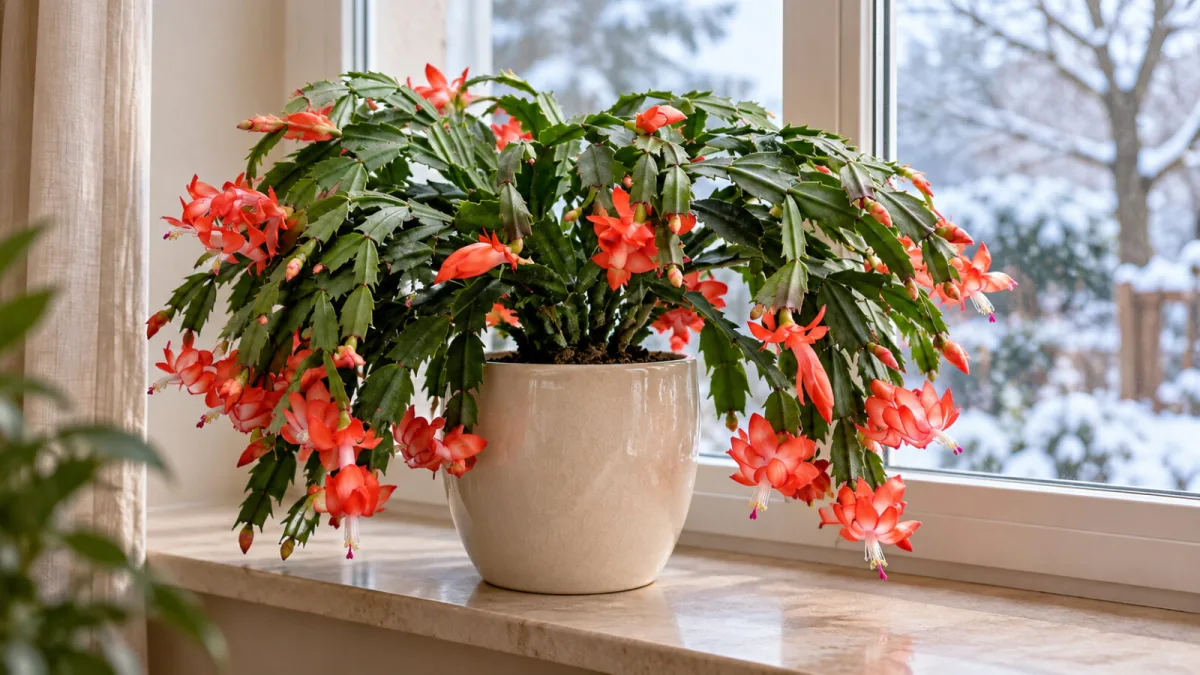
With a Christmas cactus, winter flowering isn’t decided by watering or feeding alone. The key factor is light after dark. If the plant sits in a room where lights are usually on in the evening, it often won’t set buds at all. Then in December it may produce only a few flowers, or none.
September is exactly when you need to change the routine. The plant needs several weeks of long, uninterrupted night-time darkness. Without it, it won’t switch into bud formation and will keep producing new green segments instead.
A long night matters more for bud set than everyday care
Schlumbergera is one of those plants that responds mainly to the length of the night. It’s not about how many hours of daylight there are, but whether darkness lasts long enough without interruption. The plant has a natural mechanism that evaluates this period. As soon as a lamp is switched on in the evening or at night, light from the TV, or any other source of illumination, the whole process is disrupted.
Even a brief spell of light is enough and it’s as if the plant starts counting from the beginning again. In a typical heated home this is a major issue, because at higher temperatures the light regime is the main trigger for flowering. If the cactus is around 20 °C and spends its evenings in a lit living room, it simply won’t receive the signal it needs.
How much darkness a Christmas cactus needs
To form buds, the plant needs roughly five to six weeks with at least twelve hours of uninterrupted darkness every night. In practice, that means that from mid-September it’s no longer enough to rely on natural conditions at the window. The days are still fairly long, and evening lighting in the home extends them even more.
When the sun goes down but the room stays lit for several more hours, the cactus gets only a shortened version of the long night it requires. That routine usually isn’t enough for bud formation. Regularity matters, too. Missed or disrupted evenings push the whole process back.
Where to move the plant at home so it truly gets darkness
The simplest solution is to place the cactus in a room where no lights are used after dusk. A bedroom, a rarely used room, or any space where you can close the door in the evening and leave the plant undisturbed works well. During the day, however, it should still have plenty of bright, indirect light.
If you don’t have such a room, an ordinary cardboard box or another opaque cover can help. The important thing is to cover the plant at the same time every day and uncover it again in the morning. The cover must not cause overheating, so don’t place the cactus near a radiator or in a stuffy corner.
A cooler hallway or an enclosed balcony can also be a good option, provided the temperature doesn’t drop below 10 °C. Slightly cooler conditions can actually help bud set, because at lower temperatures the plant isn’t as sensitive to night length as it is in a warm living room.
At this stage, cut back on water and stop feeding
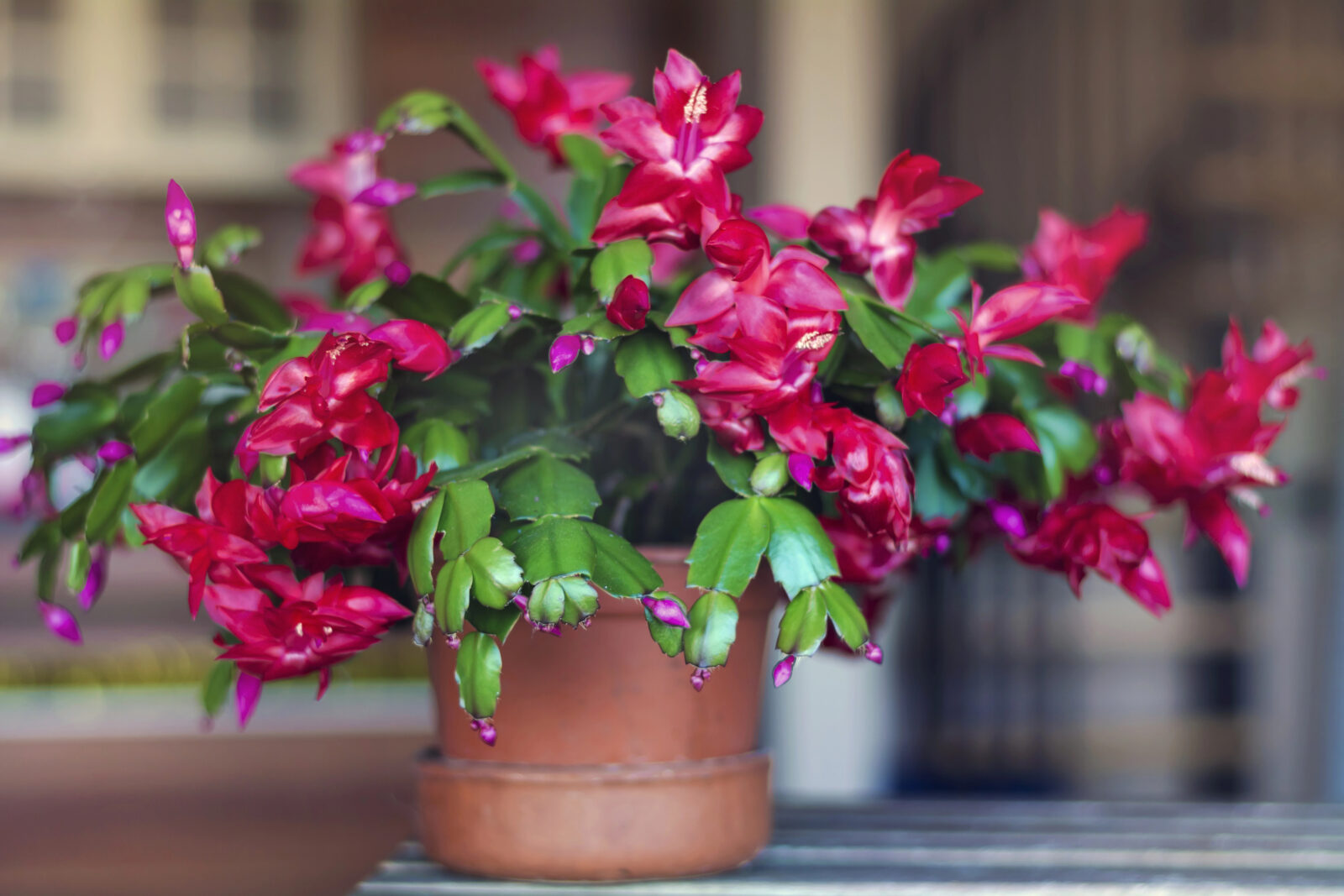
Along with changing the light regime, it’s worth adjusting care as well. Let the potting mix partially dry out between waterings. The plant doesn’t need heavy watering at this time and waterlogging is more likely to harm it. It’s best to pause fertilising altogether for a while.
A darker, cooler and drier regime is far more important for initiating buds than trying to boost the plant with extra nutrients. It’s the combination of these conditions that best mimics the signal a Christmas cactus naturally responds to.
Not every Christmas cactus blooms at the same time
Under the name “Christmas cactus”, different types of Schlumbergera are often sold. One very common type flowers earlier and needs the dark regime to start as early as September. Another type blooms a little later and can tolerate a slightly delayed schedule. Even so, it doesn’t pay to put it off for long, because in October the time buffer quickly disappears.
If you want abundant winter flowering, the safest approach is to start limiting evening light during September.
When buds appear, change conditions again—carefully
As soon as small buds appear on the tips of the segments, it means the routine has worked. At that point you can return the plant to the spot where you want it to be during flowering. You can also resume more normal watering, and the cactus no longer needs to be kept in darkness in the evening.
But then comes another important rule. Don’t move the plant unnecessarily. Frequent carrying, turning the pot, drafts from doors, or placing it close to a radiator can cause buds to drop. Once the cactus begins to flower, it mainly needs stable conditions and peace and quiet.
Winter flowering of a Christmas cactus is often decided not by the watering can, but by switching the lights off at the right time.
So if you want your cactus covered in flowers in December, sometimes it only takes a small change. Move it in time to a calmer, darker spot, reduce watering, and give it several weeks of regular long nights. This subtle step is often the difference between a plant packed with buds and one that stays green through the holidays.
Source: Garden Lover, Garxeningn Know How, Pestrazahrada.cz

A lover of nature, gardens, and everything that moves, blooms, or grows. He literally grows everything, from herbs to rare species, and he enjoys caring for animals just as much. In his work, he connects modern technology with tried-and-tested grandmotherly methods and is happy when both paths lead to the same goal.
Related articles

A Simple Trick to Help Geraniums Survive Winter Without Water or Soil
Store geraniums bare-root in a cardboard box over winter—no watering, no pots, and hardly any space needed. With the right cool, frost-free spot, they’ll wake up quickly in spring and flower strongly again.
Picking Apples Without Mistakes Helps Keep Your Harvest Fresh and Rot-Free for Longer
How you handle apples at harvest has a huge impact on how long they keep. Gentle picking, careful sorting and the right storage conditions will help prevent rot and unnecessary losses.

A Lawn Without Bare Patches Depends on Two Things People Rarely Mention
Sowing a lawn from seed is affordable and flexible, but success hinges on careful soil preparation, the right seed mix, and patient aftercare. Follow proven timing and sowing techniques to get a dense, even sward without bare patches.
Comments (0)
Be the first to comment.