
 English
  Polski
  Deutsch
  Nederlands
  Svenska
  Norsk
Norsk  Dansk
Dansk  Français
  Italiano
  Español
  Português
  Slovenčina
  Suomi
Suomi  Gaeilge
 How St John’s Wort Affects Mood and Health and Why to Watch for Drug Interactions
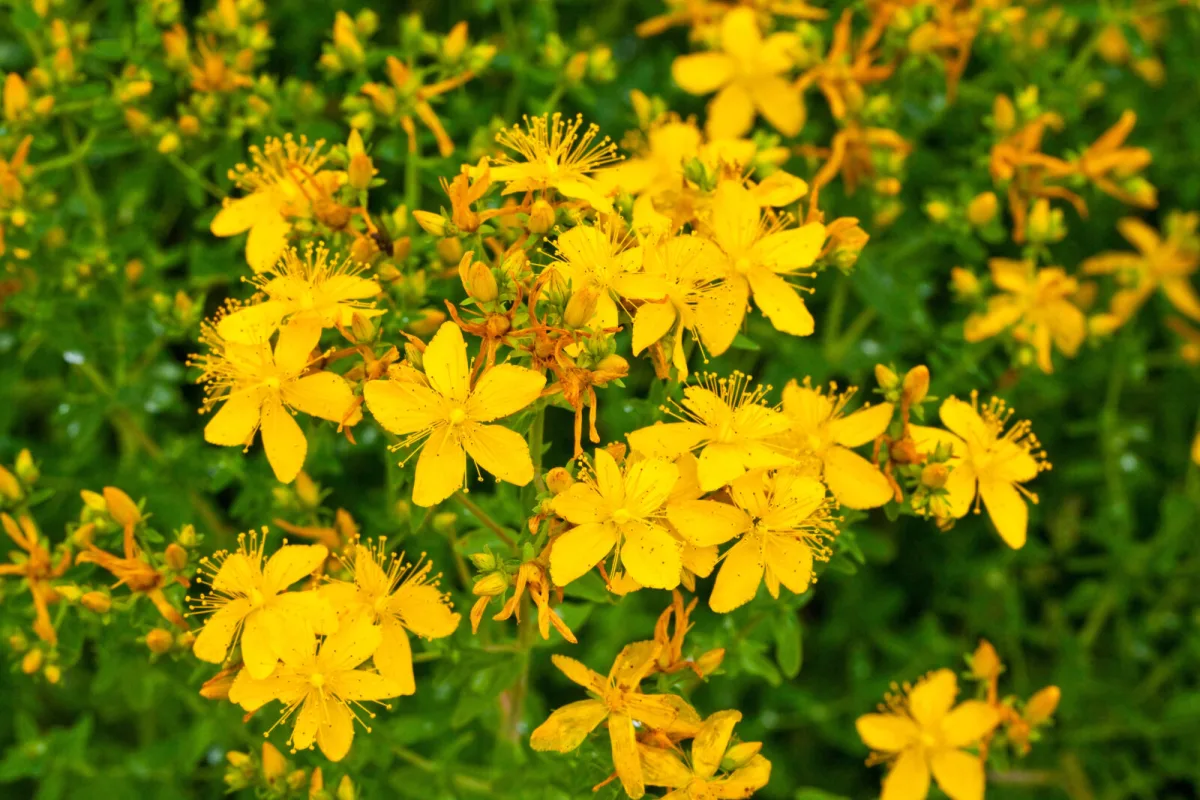
St John’s wort, in Latin Hypericum perforatum, is a herb with deep yellow flowers that has appeared in traditional healing systems for centuries. It is mentioned in ancient Greek tradition, was also used in the medical practice of Islamic countries, and features in selected strands of traditional medicine in Asia. The common name refers to the feast day of St John the Baptist, because the plant often flowers in late June, when this feast is observed.
Historically, St John’s wort was used for many different complaints. Sources mention support for wound healing, use for colds, digestive troubles including ulcers, and conditions resembling low spirits and a long-term depressed mood. Today it is most often linked primarily with mental wellbeing, especially symptoms of depression. Alongside that, it also appears in recommendations for the menopause transition and in some preparations intended for use on the skin.
What St John’s wort is most commonly used for today
St John’s wort’s modern popularity rests mainly on its use for mild to moderate depression. It is also mentioned for other issues, for example hot flushes associated with menopause, or situations where someone is greatly troubled by physical symptoms and anxiety about them.
External application to the skin is promoted mainly for minor injuries, irritation, and selected skin problems. It’s important, however, to distinguish between traditional use and what is genuinely well supported by research.
What research says about effectiveness for depression
There is a fairly large body of studies on St John’s wort that have examined its benefits in depression. In short, the results tend to converge on the idea that for mild to moderate depression it may be more effective than placebo and, in some comparisons, performs similarly to commonly prescribed antidepressants. Uncertainty remains, however, about whether the same conclusions apply to severe depression, and also how well the effect holds up with longer use—typically beyond about 12 weeks.
Depression is not simply a bad mood; it can be a serious illness with a major impact on a person’s ability to function. If symptoms appear such as persistent sadness, loss of interest, sleep disturbances, hopelessness, or thoughts of self-harm, it’s appropriate to address the situation with a professional rather than relying on self-treatment alone.
Other areas studied and limits of the evidence
Beyond depression, St John’s wort has also been studied for a range of other conditions—for example premenstrual problems, obsessive-compulsive symptoms, irritable bowel syndrome, ADHD, or as a possible aid for smoking cessation. In these areas, however, there are usually only a limited number of studies, often of mixed quality, and results do not yet provide clear enough evidence to reliably claim that St John’s wort truly helps.
For menopause, some small studies suggest a potential benefit for hot flushes. Similarly, there are partial data for somatic symptom complaints where marked anxiety about physical symptoms is present. Even here, though, the certainty is lower than for mild to moderate forms of depression.
Safety and common side effects
In adults who are not taking any other medicines, St John’s wort is generally considered relatively safe for short-term use, typically up to 12 weeks. Some research suggests it may be used safely for longer periods, even around a year, but caution is still warranted.
Possible side effects include diarrhoea, dizziness, restlessness, sleep problems, or an unpleasant tingling sensation of the skin. Also significant is the risk of photosensitivity, meaning increased sensitivity to sunlight. At higher doses or with certain forms of skin application, pronounced skin reactions can appear after sun exposure. It’s therefore sensible to limit time in direct sun and protect the skin, especially in sensitive individuals.
The major issue with St John’s wort is drug interactions
For St John’s wort, it is well established that it can enter into dangerous interactions with a wide range of medicines, and in some cases these can be situations that threaten health or life. A typical problem is that St John’s wort can reduce the effect of certain medicines, thereby worsening control of the condition they are intended to treat.
Groups of medicines for which reduced effectiveness is often reported include some antidepressants, hormonal contraception, immunosuppressants used after transplants, some anti-seizure medicines, selected heart medicines, parts of HIV therapy, some anticancer drugs, warfarin, and certain statins. The practical impact can be very serious—for example an increased risk of pregnancy while using contraception, risk of rejection of a transplanted organ, or reduced effectiveness of therapy for serious illnesses.
Risk when combined with medicines that affect serotonin
Another important topic is combining St John’s wort with antidepressants and other products that act on the serotonin system. In such situations, serotonin-related side effects may increase, and in some people this can be serious. For that reason, it is not appropriate to add St John’s wort to antidepressants without a clear plan and oversight from a healthcare professional.
If you take any medicines, it’s essential to consult a doctor or pharmacist before starting St John’s wort, because interactions can reduce the effectiveness of life-saving drugs or trigger dangerous side effects.
Pregnancy and breastfeeding
In pregnancy, using St John’s wort may be problematic, as a possible increased risk of birth defects has been reported. During breastfeeding, it is described that breastfed babies of mothers taking St John’s wort may have colic, be drowsy, or seem generally subdued. For these reasons, extra caution is warranted and professional guidance is preferable.
Why supplements need the same care as medicines
Herbal products are often sold in practice as dietary supplements, and people sometimes approach them as something automatically safe. With St John’s wort, however, that doesn’t apply, because its ability to influence how medicines work is exceptionally strong. In addition, extracts, concentrations of active compounds, and product quality can vary, which makes the effect less predictable.
A sensible approach is to take an active role in your health and talk with healthcare professionals about everything you use, including teas, tinctures, capsules, and over-the-counter blended products. With St John’s wort, this openness is especially important precisely because of interactions.
Key takeaways about St John’s wort
St John’s wort is a traditionally used herb with fairly convincing evidence of benefit for mild to moderate depression, alongside only limited evidence for many other claimed uses. The greatest risk is not the usual side effects, but strong drug interactions that can undermine treatment for important conditions or cause serious complications. That’s why its use should be well considered, time-limited, and ideally discussed with a professional—especially if you take any medicines.
Source: National Center For Complementary and Integrative Health, GoodRX, Moje Medicína, Pestrazahrada.cz
Related articles
How to Safely Tell Czech and Chinese Garlic Apart in the Shop by Taste, Appearance and Quality
Czech and Chinese garlic can look similar at first glance, but they differ noticeably in flavour, aroma, bulb structure and keeping quality. Learn the quick visual and kitchen tests that help you choose the better bulb with confidence.
Three Mistakes When Packing Cabbage into a Crock That Can Turn Your Winter Stores into Waste
Traditional crock-fermented sauerkraut keeps for months and stays wonderfully crisp—if you avoid a few common missteps. Here are the three mistakes that most often lead to soft, grey, foul-smelling cabbage and how to prevent them.

One Rat in the Garden Can Quickly Turn Into a Colony How to Prevent It Without Chemicals
A rat on your property is a warning sign that your garden is offering food and shelter. With a few practical, chemical-free changes, you can make the area far less attractive and stop a bigger infestation taking hold.
Comments (0)
Be the first to comment.