
 English
  Polski
  Deutsch
  Nederlands
  Svenska
  Norsk
Norsk  Dansk
Dansk  Français
  Italiano
  Español
  Português
  Slovenčina
  Suomi
Suomi  Gaeilge
 Grow This Flower and You’ll Have a Homegrown Treasure All Season
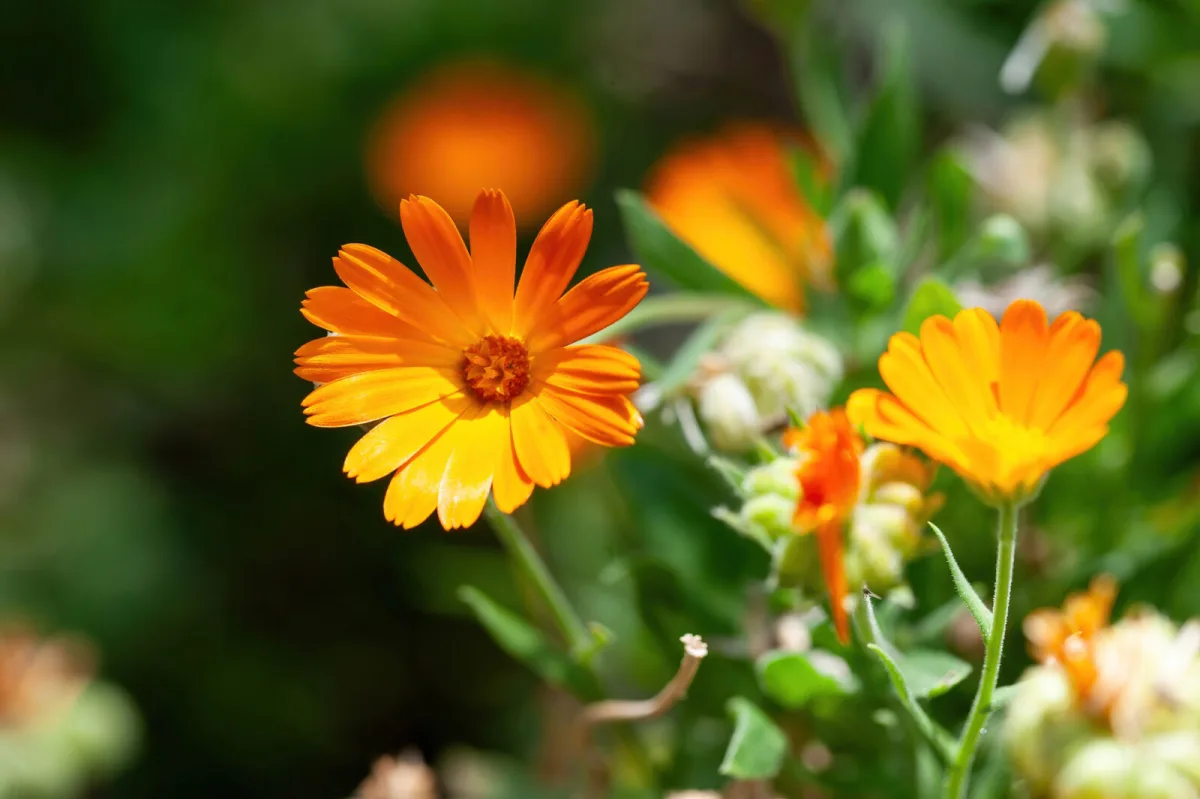
Pot marigold (Calendula officinalis) is one of the most rewarding herbs for the garden and the balcony alike. It grows quickly, flowers for a long time, and its orange-to-yellow blooms have traditionally been used in skin care. It’s most often credited with soothing, healing, antiseptic and anti-inflammatory properties, which is why it shows up in homemade salves, infused oils, creams and baths.
Watch out for mix-ups: calendula is sometimes confused in everyday speech with ornamental marigolds (French/African marigolds, Tagetes). For cosmetics and homemade preparations, use true pot marigold (Calendula officinalis), ideally home-grown or from a trusted source.
Calendula: how to grow it step by step
Site and soil
Calendula likes sun to light partial shade. In full sun it usually blooms most heavily and produces the best-quality flowers for harvesting. Soil can be ordinary garden soil, free-draining and moderately fertile. Overly rich soil often means more leaves and fewer flowers.
Sowing and care
The simplest method is direct sowing outdoors in spring. Sow the seeds shallowly and keep the soil evenly moist until germination. Calendula sprouts readily and often self-seeds, so it can bring you joy in the same spot for several seasons in a row. During growth, water occasionally in prolonged drought and regularly deadhead spent blooms to encourage more buds.
Harvesting flowers for the best effect
Pick flowers in dry weather, ideally in the morning once the dew has dried. Choose fully open flower heads with no brown edges. Frequent harvesting is an advantage: the more flowers you pick, the more the plant usually blooms.
Drying and storage
For most homemade products, it’s best to dry calendula first. Spread the flower heads in a single layer on a clean cloth or paper and let them dry freely for several days to a week in an airy place out of direct sun. Properly dried flowers should not feel damp or “rubbery.” Store in a dry, dark place in a tightly sealed container.
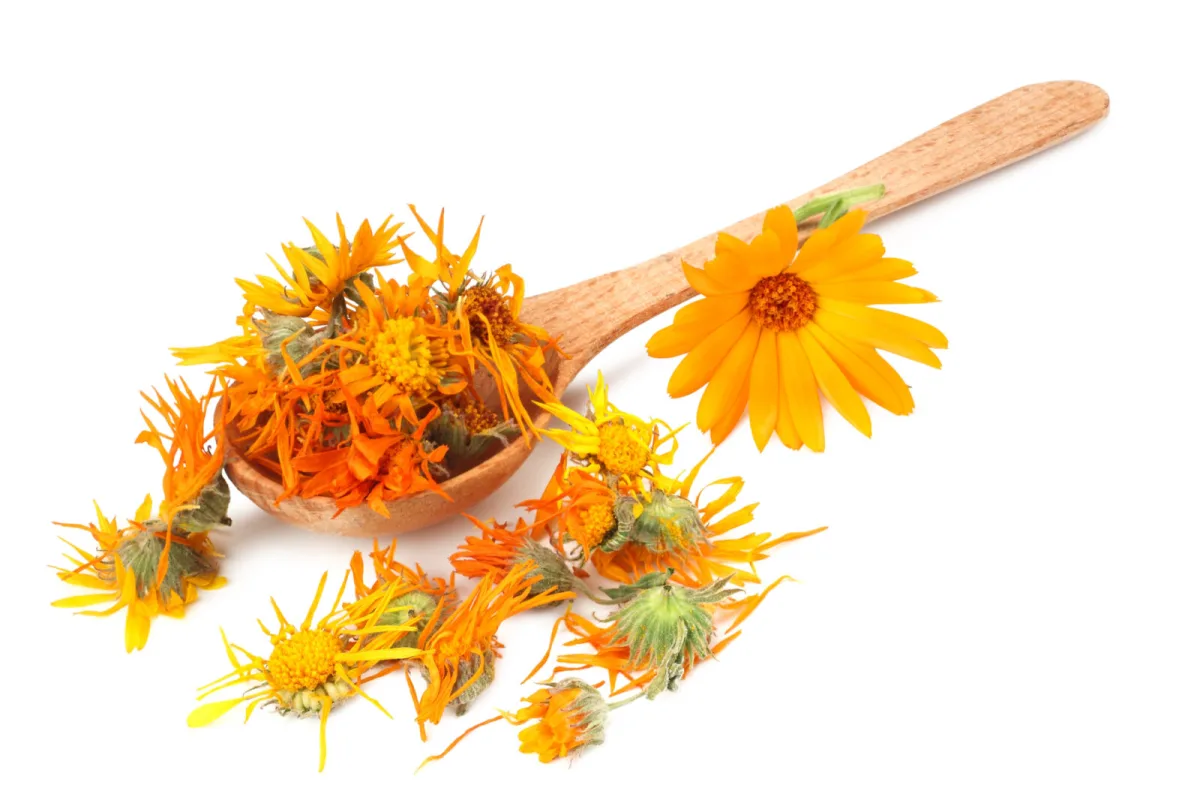
The foundation for DIY making is calendula-infused oil
Calendula oil infusion is a key ingredient: you can use it on its own for dry, irritated skin, or turn it into salves, balms, creams, or solid body butters.
Calendula oil the slow way
Fill a clean jar with dried flowers to about half its volume. Pour in a plant oil so the flowers are well submerged and the oil comes up to the base of the neck. Sunflower, almond, apricot kernel, or rice bran oil all work well. Close the jar and leave it in a dark place for 4 to 6 weeks, shaking occasionally. Then strain through a fine cloth and store in a dark bottle.
Calendula oil the quick way
If you’re in a hurry, use gentle heat in a bain-marie. Place the jar with oil and flowers in a pot with a few centimetres of water and warm very slowly for several hours. The water must not boil dry and the oil should not overheat. The quick method also works well for coconut oil, which solidifies.
Tip: Whichever method you choose, the flowers must be dry. Moisture in the oil increases the risk of spoilage.
What you can make with calendula at home
Calendula salve for the home medicine cabinet
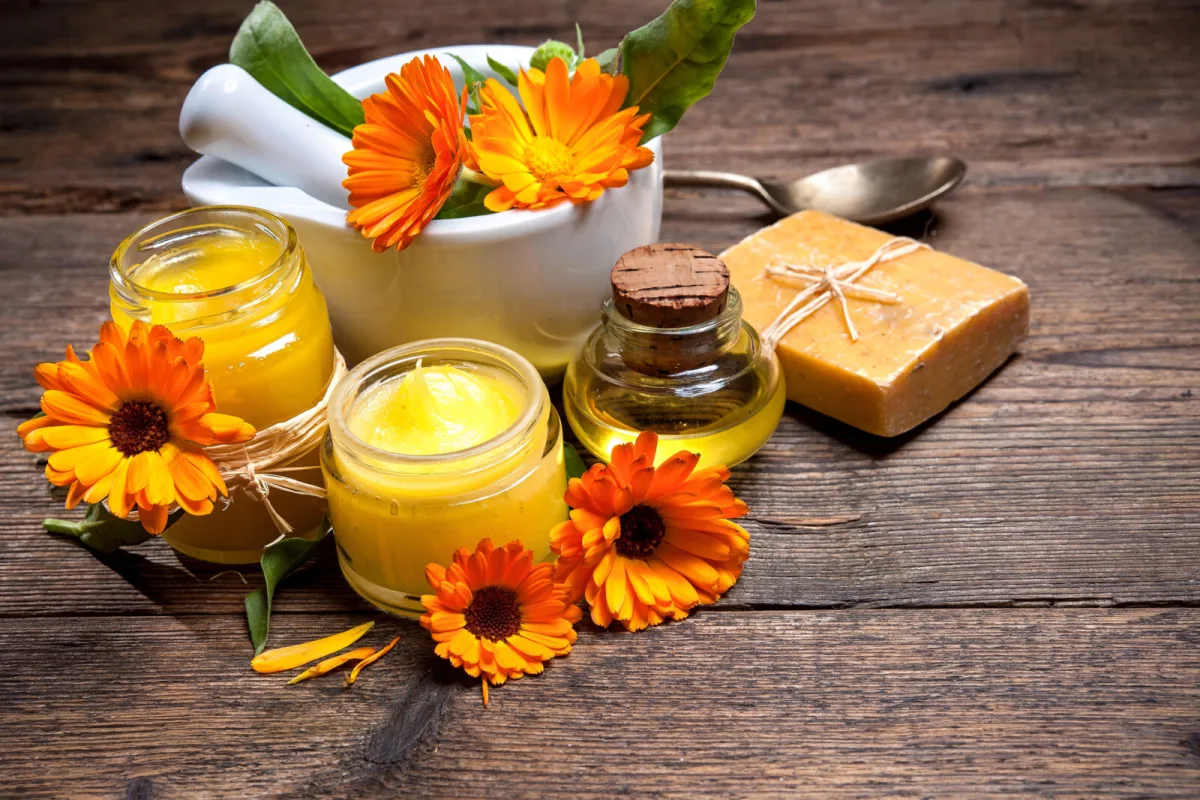
This salve is traditionally used for minor scrapes, dry patches, post-shave irritation, insect bites, or nappy rash. It’s easy to make from calendula oil and wax. In a bain-marie, melt about 100 g of calendula-infused oil with about 15 g of beeswax, stir, and pour into small pots. Once set, store cool and dark.
Whipped calendula coconut oil
If you want a lighter texture than plain oil, infuse calendula in coconut oil (using the quick method), then let it cool briefly until it starts to firm up and whip with a hand mixer into a fluffy cream. The result is a gentle “body butter” that’s great for dry hands and elbows. Store below the melting point of coconut oil.
Solid moisturising bars, aka lotion bars
So-called lotion bars are handy for travel and brilliant for cracked skin. They’re usually made from equal parts oil, wax and a plant butter (such as shea or cocoa butter). Melt the mixture in a bain-marie, optionally add a few drops of fragrance, and pour into silicone moulds. If they’re too soft once set, add more wax next time; if too hard, add more oil.
Calendula soap
Calendula is useful in homemade soap in two ways: as part of the oil phase (calendula-infused oil) and also as calendula tea in place of water. The result is often a very gentle, non-irritating soap. If you’re new to soapmaking, stick to trusted recipes and follow safety rules for working with lye.
A bath and herbal soak for sensitive skin
For a soothing bath, grind oats with dried calendula petals into a fine powder and mix with salt. Add the blend to warm bath water. It’s a simple way to use calendula when you don’t want to make a salve or cream.
Calendula tea for compresses and gargling
Calendula infusion is often used externally. Make it like a standard herbal tea, let it cool, and use it to rinse minor cuts, as a compress, or for gargling when the throat feels irritated. Ice cubes made from the cooled infusion are also handy for quick soothing after bites or minor irritation.
Edible flowers in the kitchen
Calendula is edible, and the petals are used as a natural colouring and garnish. You can rub dried petals between your fingers and add them to sugar, which then works beautifully for decorating bakes. In small amounts they also add interest to butter, curd-based spreads, or homemade pasta, bringing colour and a gently herbal note.
Calendula cream or a rich balm
If you want something between a salve and a body butter, make a richer, cream-style balm from calendula oil with cocoa or shea butter. The butters add nourishment, while beeswax firms it up and creates a protective barrier. This kind of balm is excellent for hardworking hands, heels, and skin dried out by winter weather.
Safety and quality in DIY making
When harvesting, use only healthy flowers with no mould, and dry them thoroughly. Always label finished oils and salves with the date and store them out of direct sunlight. If you have sensitive skin, do a patch test on a small area first. If you’re dealing with larger or infected wounds, persistent eczema, or strong allergic reactions, consult a doctor.
Calendula as a homegrown treasure for the whole season
Calendula is beautiful, useful, and easy. If you grow it, dry the flowers as you go, and make a basic calendula-infused oil, a wide range of options opens up: from a simple salve to solid moisturising bars, bath blends, tea for compresses, or edible decorations. All it takes is a few jars, a little patience, and your garden will turn into a small home workshop.
Source: Gardenia.net, The Nerdy FarmWife, Moje medicína, Pestrazahrada.cz
Related articles

The More Often You Harvest, the Longer Plants Keep Cropping
With fruiting vegetables, frequent picking keeps plants flowering and producing for longer. A few crops, such as aubergines, are tastiest when harvested slightly earlier rather than fully mature.

Wasps Aren’t Just a Barbecue Menace They Can Ruin Your Garden Woodwork Too
Weathering isn’t always the main culprit behind damaged outdoor timber. Wasps can scrape fibres from boards and beams surprisingly fast, leaving grooves that soak up water and accelerate decay.
Why hydrangeas wilt in summer even when watered and how to save them fast
Hydrangeas can look limp in hot weather even if you’ve been watering faithfully. The key is to check what’s happening in the root zone, then adjust watering, shade and mulching so the plant can actually use the moisture available.
Comments (0)
Be the first to comment.