
 English
  Polski
  Deutsch
  Nederlands
  Svenska
  Norsk
Norsk  Dansk
Dansk  Français
  Italiano
  Español
  Português
  Slovenčina
  Suomi
Suomi  Gaeilge
 Cherry plum brightens the garden in spring and showers you with juicy fruit in August
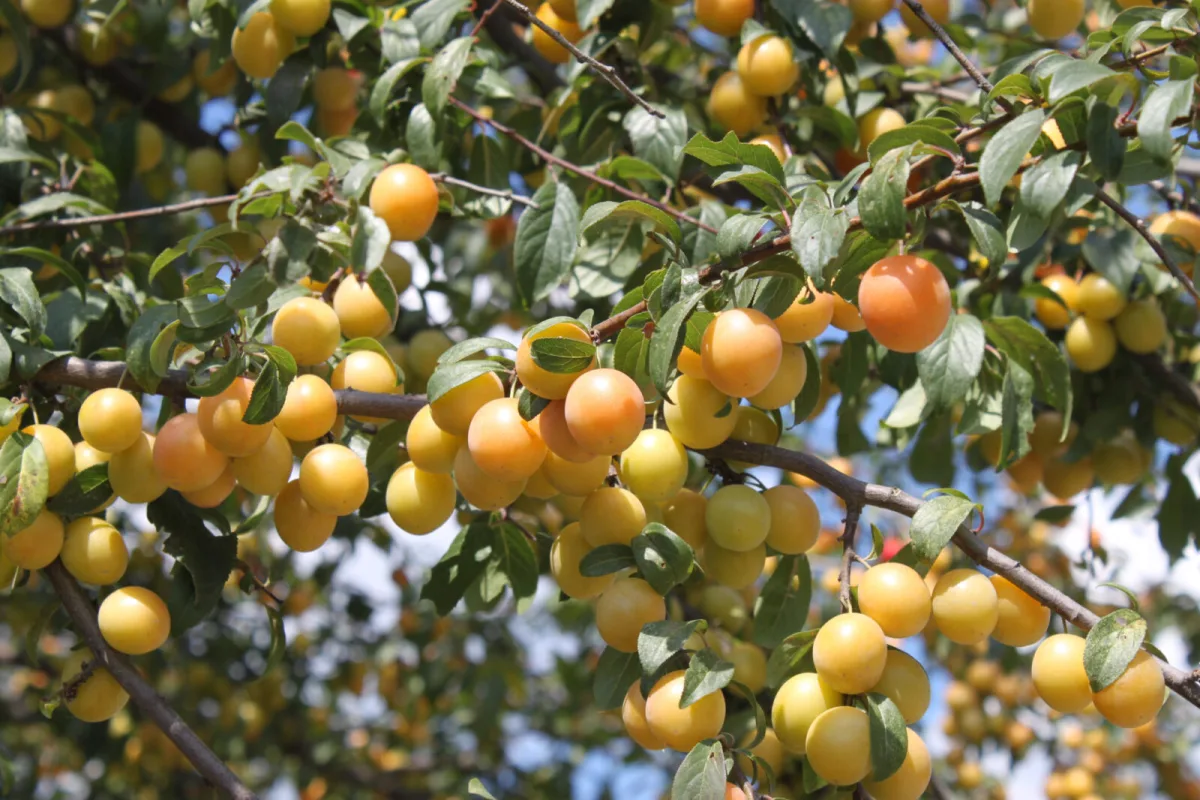
Cherry plum, also known as myrobalan plum (Prunus cerasifera), is one of the hardiest and most vigorous-growing plum trees, and you’ll come across it surprisingly often here. Some people think of it mainly as an unassuming tree along roads and in parks, while others value it as a handsome ornamental with striking foliage and abundant spring blossom. The truth is that cherry plum manages both roles at once: it can beautify the garden while also offering edible fruit suitable for eating fresh and for preserving.
In warmer parts of the Czech Republic it can even naturalise, as it spreads readily by seed and adapts well to local conditions. That’s why it has become part of the countryside much like dog roses or sloes, with the difference that it often produces a larger, juicier crop.
What cherry plum looks like and when it flowers
Cherry plum grows as a large shrub or small tree, typically reaching about 3 to 10 metres in height and spread depending on the site, pruning and the particular cultivar. It has deciduous leaves that are usually oval and often carry a reddish tint. The trunk has dark brown bark that is often vertically fissured, and the young shoots can look smooth and glossy.
It really puts on a show in spring. In April to May, five-petalled flowers appear in white or pink, sometimes in soft pinkish-white shades. Flowering is typically profuse, making the tree noticeable even from a distance. Cherry plum is generally described as self-fertile, which is handy if you want a single specimen tree that will also crop.
Cherry plum fruit and common confusion with mirabelles
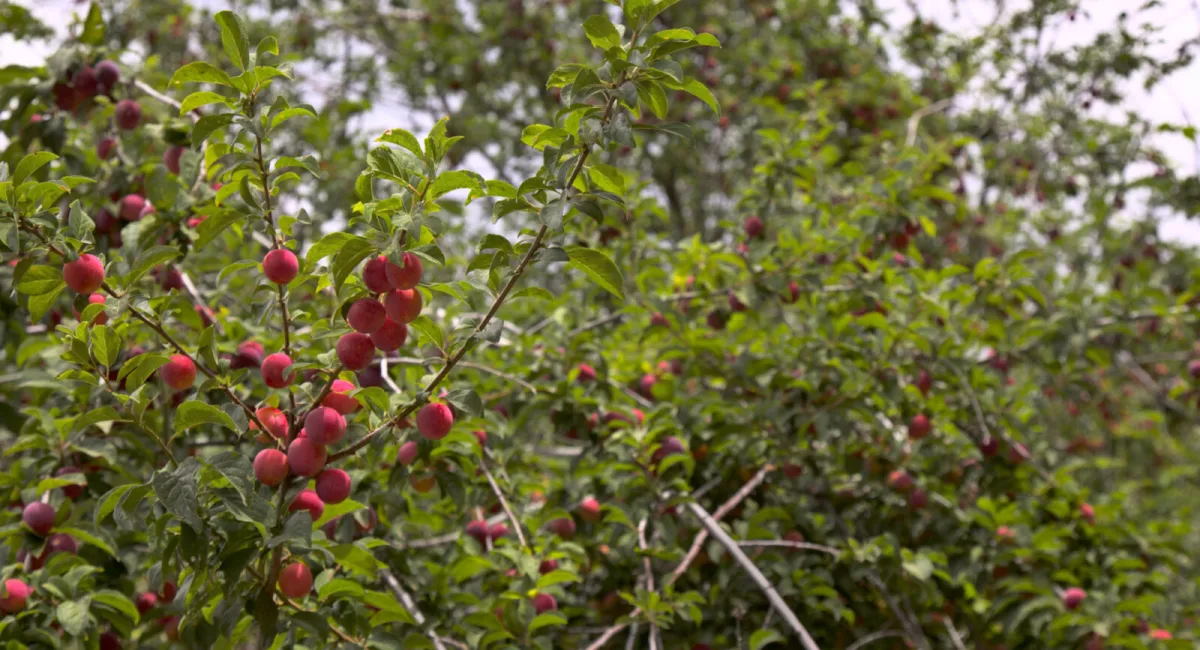
Cherry plum fruits are drupes, most often red, pink-red or yellow, though depending on the variety they can shift into darker tones as well. They usually ripen from August into September, and well-grown trees can carry truly impressive quantities. That’s why cherry plum is often picked “just because” on walks, even though people frequently confuse it with other plum types.
The easiest practical distinguishing feature: with cherry plum the flesh often clings more tightly to the stone, whereas with true mirabelles and similar small dessert plums the stone usually comes away more easily.
In everyday speech, these fruits are often called mirabelles, but in reality they’re very often cherry plums. On wild trees the fruits tend to be smaller and firmer, and removing the stones can be fiddly, which makes them best suited either to eating fresh or to methods where the stones aren’t such a problem.
Growing cherry plum and the right position
Cherry plum is popular partly because it’s undemanding. It grows well in sun to partial shade and appreciates fertile, well-drained soil. In urban settings it’s especially useful thanks to its toughness and ability to tolerate poorer conditions, dust and heat. After planting, regular watering is key, particularly in the first few years while the tree is establishing its root system.
Another advantage is good winter hardiness and fairly solid resistance to the usual stone-fruit problems. It takes pruning well, so you can shape the crown, limit height or improve light and airflow. In the garden it can work as a specimen, as part of a looser hedge, or as a productive tree towards the back of the plot.
The Hollywood cultivar and why it’s so popular
One of the standout ornamental forms is Prunus cerasifera Hollywood. It usually grows as a large shrub to a small tree, often around 4 to 6 metres tall and roughly 3 to 4 metres wide. The main attraction is its deep burgundy to purple foliage, which holds its colour throughout the season and creates strong contrast against surrounding greenery. In spring it adds pinkish-white blossom, so the tree looks striking even when the garden is only just waking up.
Hollywood also bears plenty of edible fruit. In practice, that means you get a tree that isn’t just “for looking at”, but can be put to use in the kitchen too. That’s a combination you don’t always get with ornamental trees.
Cherry plum in the kitchen jams jellies and smart ways to process it
The fruits can be eaten fresh, but most often they end up as jam, marmalade, jelly, or as a fruit base for other recipes. If the fruits are small and firm, stoning can be a nuisance. That’s exactly when it helps to briefly simmer the fruit with the stones, let it release its juice, then pass the mixture through a sieve or strain it. The result is an intensely fruity base with a beautiful colour, which you can flavour to taste.
Another practical option is to freeze the fruit, stones and all if they don’t come out easily. You can then process it gradually when you have time, or use it in cakes and sauces. Just bear in mind that with some recipes, “spitting stones as you eat” may be part of the experience.
Cherry plum as a rootstock for plums
In orcharding, cherry plum is also valued as a rootstock. It’s grown from seed and suits most plum varieties, especially in warmer, drier locations. Trees grafted onto cherry plum often ripen slightly later, but can produce heavy crops. It’s also worth knowing that with some plum varieties the flesh may separate less readily from the stone on this rootstock, which can be noticeable when preserving.
Foraging and what to watch out for
Because cherry plum often grows along roads, on field margins or in parks, it’s tempting to forage. For personal use this is common in many places, but it always depends on who owns the land and what rules apply locally. In general, it’s sensible to avoid picking right next to busy roads and also near fields where spraying may take place. With trees in towns and villages, it’s also worth remembering that even a publicly accessible area may have a manager and specific rules for use.
Cherry plum is, simply put, a tree that combines beauty, usefulness and a touch of tradition. Whether you choose an ornamental cultivar like Hollywood or give a chance to an ordinary tree from the wider landscape, it will reward you with spring blossom, summer colour and, towards the end of summer, a crop that can be turned into surprisingly delicious homemade preserves.
Source: Plantura Garden, Gardeners World , Pestrazahrada.cz
Related articles
A Pineapple Top Will Root in Two Weeks, but Success Depends on the Step Most People Skip
Don’t throw away the leafy crown when you cut a pineapple. With the right prep, light, warmth and careful watering, you can root it and grow a houseplant that may eventually fruit.
Overwintering Geraniums in a Box Ensures Stronger Growth and More Abundant Spring Bloom
Many people throw balcony geraniums away after the season, even though they can overwinter very well. Stored correctly in a box in cool, dark, dry conditions, they’ll come back stronger and flower generously in spring.
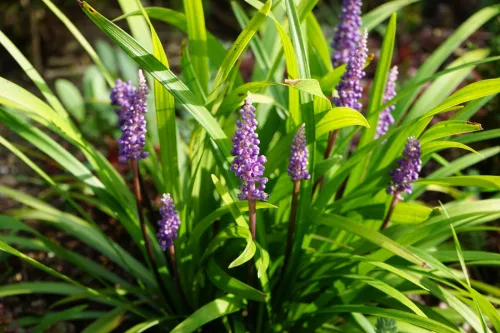
This perennial flowers when others are finishing, thrives in shade and is still little known in the Czech Republic
Liriope is a tough, evergreen perennial with grassy foliage that comes into its own at the end of summer, when many other plants are fading. It thrives in partial shade to shade, needs little care, and adds structure to borders year-round.
Comments (0)
Be the first to comment.